The Old Front Line
Walk the battlefields of the First World War with Military Historian, Paul Reed. In these podcasts, Paul brings together over 40 years of studying the Great War, from the stories of veterans he interviewed, to when he spent more than a decade living on the Old Front Line in the heart of the Somme battlefields.
Episodes

Questions and Answers Episode 61
In this Old Front Line Q&A, we explore four fascinating questions from the First World War, taking us from the Ypres Salient to German-occupied France and Belgium, and from wartime prisoners to the fate of battlefield cemeteries during the Second World War.We begin in the Ypres Salient and the often-overlooked French presence in 1914–15. When did French troops arrive, how was the Allied sector

The Missing of 1914
Between August and December 1914, the British Expeditionary Force fought its first battles of the First World War across Belgium and northern France and some 19,000 officers and men were missing. From Mons and Le Cateau to the Retreat and the First Battle of Ypres, thousands of men were killed and never recovered, becoming part of the great story of the Missing of 1914.In this episode of The Old F

Questions and Answers Episode 60
In this episode of The Old Front Line Podcast, we answer another fascinating selection of listener questions that explore the realities of life, death, remembrance and battlefield tactics on the Western Front during the First World War.How much safer were soldiers when they left the front line? We examine the British Army's system of rotating troops through front-line, support and reserve pos

Somme: Mighty Thiepval
The Thiepval Memorial to the Missing is the largest British war memorial in the world and one of the most powerful places where we remember the sacrifice of the Missing on the Western Front. In this episode, we explore the story behind "Mighty Thiepval" and uncover why this iconic monument continues to resonate more than a century after the Battle of the Somme.We begin by examining the s

Questions and Answers Episode 59
In this latest Old Front Line Q&A, we tackle four fascinating questions that take us from the opening moments of the Battle of the Somme to the long legacy of the Western Front landscape.We begin at Hawthorn Ridge on 1 July 1916 and ask whether the famous mine was detonated ten minutes early to help the attack, to provide Geoffrey Malins with the perfect filming opportunity, or for a combinati

The Great War Around Us
We begin Season 10 of The Old Front Line with a journey into The Great War Around Us: the First World War history that can still be found in the places where we live.In this episode, we visit the East Sussex village of Wadhurst and explore how the impact of the Great War can still be discovered more than a century later. Starting at the village war memorial in the church, we uncover the stories be

Bonus Episode: A Roll of Honour
For our final Bonus Episode before Season 10 begins in September, we look at a rare Roll of Honour for the Gravesend and Dartford area of Kent, and discuss the whole history of these Rolls of Honour and then look through this example seeing what it can tell us about the wider history of the Great War. Main Image: Extracts from the Gravesend and Dartford 'Peace Souvenir' 1919. (Old Front

Bonus Episode: Mapping The Old Front Line
How do you find the hidden story of the First World War landscape? In this special bonus episode of The Old Front Line, we explore the fascinating world of WW1 trench maps and discover how they can transform your understanding of the Western Front and beyond.We begin by looking at the Blue Series IGN maps that first inspired a deeper exploration of the battlefields, before uncovering the remarkabl

Questions and Answers Episode 58
In this episode of the Old Front Line Podcast, we answer another fascinating collection of listener questions that explore the people, places and practical realities of the First World War.We begin by asking why visitors can walk, play and live on some historic battlefields, such as the D-Day beaches, while places like Newfoundland Memorial Park on the Somme remain carefully preserved. What makes

Somme: The Dawn Attack
In this episode of the Old Front Line Podcast, we explore one of the most successful British attacks of the Battle of the Somme: the Dawn Attack of 14 July 1916. Launched before first light, the assault captured key objectives including Bazentin-le-Petit, Bazentin-le-Grand and Longueval, bringing British troops to the edge of High Wood and changing the course of the campaign.We examine the battle

Questions and Answers Episode 57
In this Questions and Answers episode we head beneath the battlefields to explore the hidden world of First World War dugouts and bunkers, asking whether the Ypres Salient saw more extensive underground construction than the Somme, and how geology shaped the way British, German, Australian and other armies built and occupied these remarkable underground shelters.We also examine one of the most fas

Old Front Line 300th Episode
For our 300th Episode we reflect on six years of the Old Front Line Podcast and go back to where we started in March 2020 by retaking a virtual walk through the battlefields and village of Pozières on the Somme.We start at the Pozieres British Cemetery and Memorial and then walk into the village seeing memorials, and discussing some of the 'characters of the Somme', walking up to Mouquet

Questions and Answers Episode 56
In this episode of the Old Front Line Podcast, we answer another fascinating selection of listener questions covering some of the most intriguing aspects of the First World War.We begin by exploring the formidable German concrete fortifications of the Somme, including the infamous Quadrilateral. How were these massive bunkers and strongpoints constructed so close to the front line, and why were th

Somme South: Mametz to Montauban
In this episode of the Old Front Line Podcast, we continue our exploration of the Battle of the Somme on 1st July 1916 by examining the southern sector of the British attack. Travelling across the battlefields of Mametz and Montauban, we uncover how some of the most successful attacks of the opening day unfolded and why this part of the front achieved results that proved elusive elsewhere.We explo

Somme Central: Ovillers to Fricourt
On the morning of 1st July 1916, as whistles blew along miles of the Somme front, the men of the III Corps and XV Corps rose from their trenches and walked into the centre of one of the most catastrophic days in British military history.In this second special episode of Old Front Line for the Somme 110th Anniversary, we focus on the brutal heart of the Somme battlefield, that stretch of scarred ch

Questions and Answers Episode 55
In this latest Questions & Answers episode of the Old Front Line podcast, we tackle another fascinating collection of listener questions that uncover some of the lesser-known aspects of the First World War.We begin by exploring the German tradition of Sterbebilder or Death Cards, the memorial cards issued to commemorate fallen soldiers. How were these cards produced, who organised them, and wh

Somme North: Serre to Thiepval
In the first of a three-part series marking the 110th anniversary of the Battle of the Somme, we explore the fighting in the northern sector of the battlefield on 1 July 1916.This episode examines the attacks at Serre, Beaumont-Hamel and Thiepval, where some of the most dramatic and costly actions of the opening day unfolded. We look at the ground over which the soldiers advanced, the plans behind

Questions and Answers Episode 54
For this episode of the Old Front Line podcast, we open the virtual mailbag once again for another Questions & Answers special covering some fascinating and lesser-known aspects of the First World War. From observation balloons hanging silently over the trenches to trench foot, white feathers and booby traps in No Man’s Land, this episode explores the realities of life on the Western Front bey
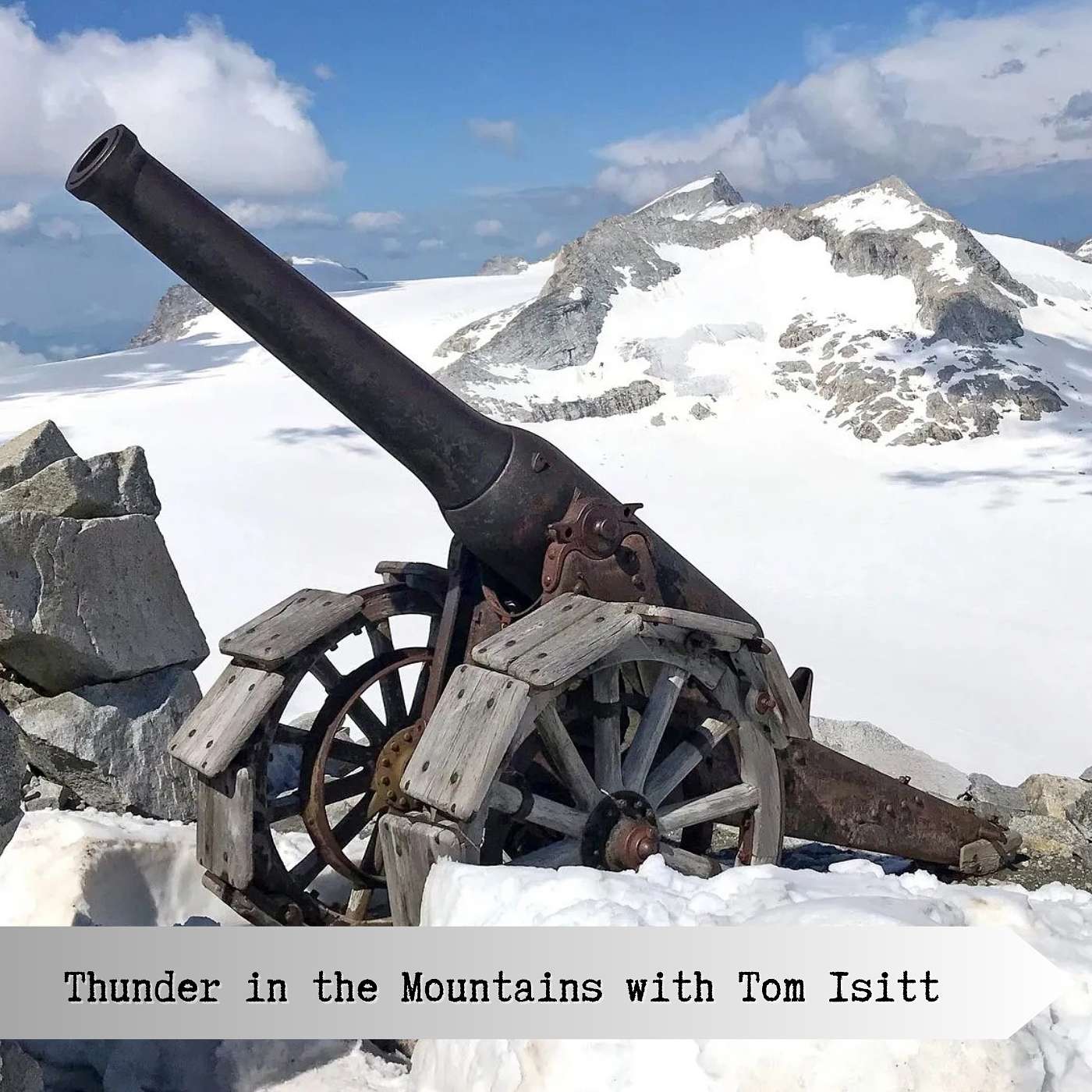
Thunder in the Mountains with Tom Isitt
In this special edition of the podcast we explore a lesser-known theatre of conflict from the First World War in Northern Italy with historian Tom Isitt. Tom's new book - Thunder in the Mountains - follows a journey he made across those battlefields and with him we discover the unique challenges of mountain warfare, the diverse nations involved, and personal stories from the battlefield.We ex

Questions and Answers Episode 53
In this wide-ranging listener Q&A episode of Old Front Line, we dive into some intriguing and human questions thrown up by the Great War.We begin with the fate of the missing. With hundreds of thousands of men listed as “missing” across the Western Front, is there any real evidence that some chose to disappear, seizing the chaos of war to start new lives elsewhere? We explore the realities of

St Eloi Craters 1916
Step into one of the most chaotic and little-known battles of the First World War in 1916 with this episode of The Old Front Line, as we explore the Battle of the St Eloi Craters (March–April 1916).Fought in the shattered landscape south of Ypres, this battle saw the devastating use of underground mines transform the battlefield into a nightmarish maze of mud-filled craters. We examine how British

Questions and Answers Episode 52
Step back from the battlefield and into the questions that bring the Great War to life in this special Q&A episode. Drawing on years of battlefield exploration and historical research, we tackle four fascinating listener questions centred on the Battle of the Somme and beyond.We begin on the heights above the battlefield, exploring the idea of Bouzincourt Ridge as a “grandstand view” on 1 July

The Bad Luck Battalion
With a special edition for ANZAC Day, in this insightful interview, playwright Arthur Meek discusses his project to bring to life the voices of Gallipoli veterans through oral histories and verbatim theatre. The conversation explores the power of personal stories, memory, remembrance, and the impact of war on individuals and collective memory.A bonus for TOFL pod listeners - 50% off for the first

Questions and Answers Episode 51
In this in-depth Questions & Answers episode of The Old Front Line, we tackle four fascinating listener questions exploring the aftermath and realities of the First World War.We begin in the Ypres Salient, examining how the Commonwealth War Graves Commission replaced thousands of temporary wooden crosses with the iconic headstones we see today. How was this monumental task organised? How many

Chalk, Englishness and the Great War
In this special episode with Professor Mark Connelly we explore the profound connection between landscape, memory, and national identity during the Great War, focusing on the significance of chalk landscapes in Britain and their influence on cultural memory and battlefield symbolism.We dive into how the beautiful, chalky terrains of England shaped the identity of soldiers during the Great War. Man
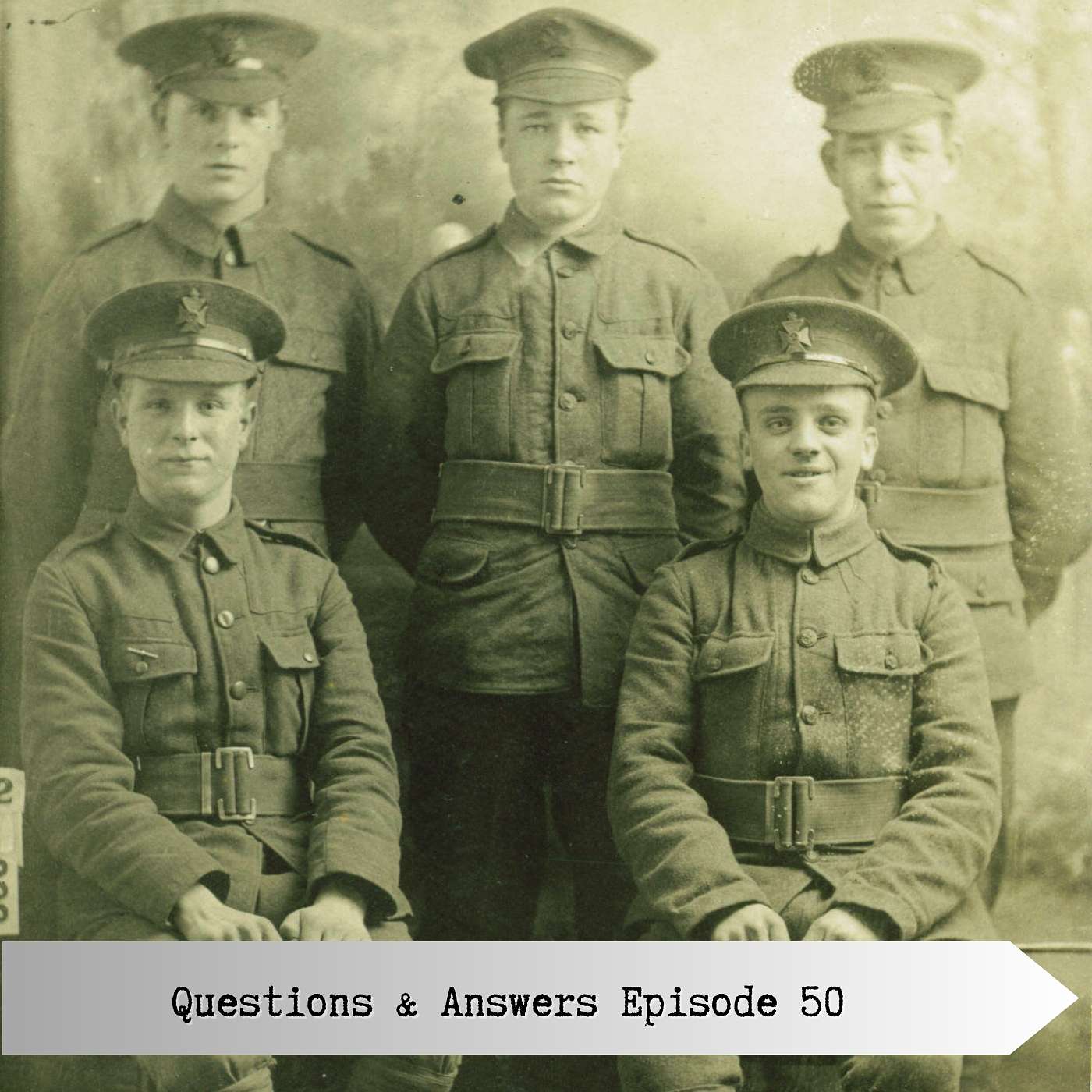
Questions and Answers Episode 50
We are now 50 Q&As in, and the questions keep getting better, sharper, and more human! This milestone edition of The Old Front Line is built around four listener prompts that take us from the small, intimate scale of one soldier’s photograph to the vast, uneasy scale of a battlefield that never fully stops giving things back to the surface.We start with the stories that first hooked me on Firs

Colonel Driant's Command Post
In this episode of The Old Front Line, we explore the dramatic opening moments of the Battle of Verdun, focusing on the heroic stand of Lieutenant Colonel Émile Driant and his men in the Bois des Caures on 21st/22nd February 1916.Commanding the 56th and 59th Battalions of Chasseurs à Pied, Driant faced the full force of the German offensive as it erupted with one of the most intense artillery bomb

Questions and Answers Episode 49
In this Old Front Line Q&A episode, we tackle a fascinating range of questions from listeners about life, death, and survival on the battlefields of the First World War. We begin by exploring whether veterans of the conflict were ever allowed to be buried within the official war cemeteries alongside the comrades who fell during the war, and look at the rules established by the Commonwealth War

From The Battlefield to the Tabletop
In this special episode of the Podcast, Paul Reed speaks with archaeologist and wargamer Alex Sotheran about his journey in battlefield archaeology and the evolution of wargaming. They discuss the significance of battlefield archaeology in understanding the human experience of war, the challenges faced in recovering human remains, and the impact of television on the field. Transitioning to wargami

Questions and Answers Episode 48
In this Old Front Line WW1 podcast Q&A episode, we answer listeners’ questions about the history of the First World War and the legacy of the conflict today. We begin by exploring British and Commonwealth war cemeteries, explaining how the headstones are kept perfectly aligned and why some graves appear in straight rows while others are spaced further apart, including the role of the Commonwe

Ypres: A Walk on The Bluff
Step onto the Western Front in Flanders as we explore the area near to Ypres known as The Bluff. In this episode we uncover the story of the fighting here in February-March 1916, when British and German forces struggled for control of the high ground overlooking Ypres. Using contemporary accounts and battlefield evidence, we explain why this small rise in the landscape mattered so much and how the

QnA Special: On The Battlefields
In this special Q&A episode of the Old Front Line podcast, recorded on location at Hooge, near Ypres, we answer questions about the battlefields of the Western Front and the legacy of the First World War.We begin by exploring what happened to the woods and forests on the Western Front during World War One. Were they completely destroyed by shellfire? Did they naturally grow back after the war,

London Pride: The London Territorials in WW1
In this episode of the Old Front Line podcast, host Paul Reed is joined by military historians Charles Fair, Richard Hendry, and Dr. Tom Thorpe to delve into the often-overlooked history of the London Territorial Force during the Great War. The discussion begins with an exploration of the origins and purpose of the Territorial Force, established in 1908, which served primarily for home defense bef

Questions and Answers Episode 46
In this latest First World War Q&A episode we tackle some of the most intriguing and overlooked questions about life, strategy and survival on the Western Front and after the guns fell silent.Why did the British Army so often attack on ground not of its own choosing, at places like Loos and the Somme? If British commanders could have picked the battlefield, where might they have fought instead

Winter in Flanders
In this episode, we explore the four brutal wartime winters in Flanders during the First World War, focusing on the Western Front around Ypres from 1914 to 1918. Beginning with the establishment of the British front line at Ypres in late 1914, we examine how soldiers endured cold, mud, and constant danger during the Great War’s earliest winter, including the famous Christmas Truce of 1914.Using fi

Questions and Answers Episode 45
In this latest Questions & Answers episode, we tackle some intriguing, and often misunderstood, aspects of life and fighting on the Western Front during the First World War.Who actually decided what a battle was called? Did the ordinary soldier know, at the time, which battle he was fighting in – or even when one battle had ended and another begun, during almost four years of near-continuous c

Demarcation Stones at Ypres
In this special episode, Paul Reed discusses the Ypres League's mission to preserve the history of the Ypres Salient and the significance of Demarcation Stones that mark the furthest advance of German forces during the First World War in 1918. Roger Stewart and Dr Dominiek Dendooven share insights into the history, design, and restoration efforts of these stones, emphasizing the importance of

Questions and Answers Episode 44
In this episode, we explore the role of British Army Chaplains during the First World War, examining who they were, what duties they performed at the front, and how effective they were in the brutal conditions of the Great War. We also ask whether chaplains are commemorated on their own permanent memorial today.We then tackle a persistent myth of the First World War: were German machine-gunners re

Are We Forgetting The First World War?
Is the First World War slowly fading from public memory, or has our relationship with the Great War simply changed? In this episode, Are We Forgetting The First World War?, we explore how interest in WW1 has grown, shifted, and adapted over the last forty years, and what the future may hold.We begin in the 1980s, with the formation and growth of the Western Front Association, a turning point that

Questions and Answers Episode 43
In this episode of The Old Front Line, we explore how individual lives and institutions reveal the human realities of the First World War.We begin by asking why only three officers were Shot at Dawn during the war, and what this striking disparity tells us about military justice, discipline, and class within the British Army.We then turn to the work of the Australian Wounded and Missing Enquiry Bu

Forgotten Memoirs of the Great War Part 2
We return to the subject of Forgotten Memoirs of the First World War and discuss The Years of Remembrance by Harold Maybury which was published in 1924. Maybury served in the ranks of the 2/4th Battalion South Lancashire Regiment in the 57th (2nd West Lancs) Division, on the Western Front in 1917 and 1918. We ask what the book tells us about the experience of the Great War and what value memoirs l

Questions and Answers Episode 42
In this episode, we delve into a lesser-known but essential aspect of First World War life: the use and organisation of latrines on the battlefield. Where did soldiers actually go to the toilet, how were these facilities constructed, and did men really need permission to use them?We then explore the history of the Military Police in WW1, from the Military Foot Police and Military Mounted Police to

A Tale of Two Veterans
In this episode we discuss the importance of oral history and what it tells us about the experience of conflict and the culture of the British military in the Great War, and we contrast two interviews I did with veterans in the 1980s: Jack Aston who served with 12th Squadron Royal Flying Corps and Aubrey Rose who was with the Queen's Westminster Rifles at Ypres and the Somme. The image for th

Questions and Answers Episode 41
In this episode, we unpack the meaning and origins of the term Downland, and explore how this distinctive landscape helps us better understand the geography and terrain of the First World War.We take a closer look at the Lewis Machine Gun, examining how it worked, how a Lewis Gun section operated in battle, and its role on the Western Front.We also consider the influence of the Franco-Prussian War

Caring For The Silent Cities
In this special edition, we’re joined by Jon Gedling, Director of Estates for the Commonwealth War Graves Commission, to discuss the challenges and responsibilities involved in caring for First World War cemeteries in Belgium and France. We explore the history behind making these cemeteries permanent after the Great War, how maintenance practices have evolved, and the background to the so-called “

Questions and Answers Episode 40
In this 40th Questions and Answers episode, we explore some of the lesser-known battlefields of the Western Front, uncovering places where traces of the First World War fighting can still be seen today. We examine what really happened to trenches after they were captured in battle, discuss whether WW1 historians face a new challenge from Artificial Intelligence, and debate the nature of First Worl

West of Arras: Behind The Lines
We travel to the area Behind the Lines of West of Arras, visiting cemeteries where Casualty Clearing Stations were moved back to in 1918, discuss a small village where WW1 meets WW2, discover some original Great War graffiti on a farm building wall and visit on the of the most important Arras cemeteries covering all four years of the fighting and seeing the grave of Canada's most decorated or

Questions and Answers Episode 39
In this episode we ask what is the current size of the 'Zone Rouge' and are there plans to clear it? We then look at the use of morphine to treat pain and was this misused? We then look at when Steel Helmets were first issued to British and Canadian troops, and end by asking what WW1 slang words are still in use today?The Old Front Line on YouTube: Old Front Line Channel.The OFL episode

Battle of Loos with Peter Doyle
In a special episode we are joined by Professor Peter Doyle who delivered this talk on Loos at a Podcast Supporters Evening for the 110th Anniversary of the battle last month.Peter's new edition of is book is found here: Loos 1915.Sign up for the free podcast newsletter here: Old Front Line Bulletin.You can order Old Front Line Merch via The Old Front Line Shop.Got a question about this episo

Questions and Answers Episode 38
In this latest QnA episode, we tackle a fresh set of listener questions about the First World War, ranging from battlefield geography to the realities of supply and discipline at the front. We start with how hills and features were numbered along the front line—was there really only one “Hill 80”? Then we turn to the huge challenge of logistics, exploring how both sides managed to feed, arm, and m

Gunner Officer: Malcolm Vyvyan
We return to the memories of WW1 veteran Malcolm Vyvyan MC, who served with 96th Siege Battery Royal Garrison Artillery on the Western Front from 1916, and then latterly the Royal Flying Corps and Royal Air Force. We follow him from the Somme to Arras, until he leaves his Battery for flying training in 1918.The previous episode covering Malcolm's memoirs: A Siege Battery Gunner.Sign up for th

Questions and Answers Episode 37
In this WW1 Q&A episode, we explore the lives and social backgrounds of British Army officers, ask whether First World War veterans hated their German enemies, and share the remarkable stories of soldiers who were discharged but re-enlisted to fight again. We also look at how people living on the Western Front battlefields today connect with the war, and whether interest in the Great War is fa

Remembering the Forgotten Front
What was the “Forgotten Front” of Northern France? In this episode, we explore the stretch of battlefield from Armentières on the Belgian border through La Bassée to the ground near Loos, scene of the Big Push of September 1915: fought 110 years ago this weekend. We uncover the history, walk the landscape, and share the stories of the men who fought and fell on this often-overlooked part of the We

Questions and Answers Episode 36
In our first QnA Episode for Season 9 we look at what happened to the German forces when the guns went silent on 11th November 1918, discuss the use of poison gas and it's legacy on the battlefields today, examine if British and German dead were buried in the same trenches on the battlefield, and ask what happened to the horses used by the British Army when the war came to an end?Sign up for

Walking the Somme: Gommecourt
In our first episode of Season 9, we walk the northern part of the Somme battlefield from Foncquevillers out to the ground before Gommecourt, and examine the attack here by the 46th (North Midland) Division on 1st July 1916. We examine the Court of Enquiry, the roles of the commanders Major-General Edward James Montagu-Stuart-Wortley and Lieutenant General Sir Sir Thomas D’Oyly Snow, and hear the

Bonus Episode: The Menin Gate at Night
In our third and final Bonus Episode that brings Season 8 to a close, we have a live recording from the Menin Gate Memorial in Ypres, recorded while out leading a battlefield tour a few weeks ago. We reflect on the subjects we have covered on the podcast, on what the Menin Gate means to us, and how the whole subject of the Great War continues to develop. Sign up for the free podcast newsletter her

Bonus Episode: A Siege Battery Gunner
In this second Bonus Episode to end Season 8 of the podcast we look at the subject of Great War veterans and in particular Malcolm Vyvyan who served as a Siege Battery officer in the Royal Garrison Artillery on the Somme, Arras and Flanders, and was awarded the Military Cross in 1917. Sign up for the free podcast newsletter here: Old Front Line Bulletin.Got a question about this episode or any oth

Bonus Episode: A Divisional Memorial
In the first of three Bonus Episodes of the podcast to end Season 8, we travel to Fricourt on the Somme and examine the journey to unveil a memorial to the 17th (Northern) Division in the church there in July 1938, just over a year before the outbreak of a Second World War. Who made that pilgrimage to Picardy, and what does it tell us about the experience of the Great War? The image used for this

RFC/RAF: Where They Flew & Fell
In the final episode of our Air War series we travel across the landscape of the First World War and discover what we can find that connects us to the story of the Royal Flying Corps and RAF in WW1, from memorials to cemeteries and sites of former aerodromes. Along the way we examine the stories of some of the Aces from James McCudden VC to Manfred Von Richthofen - The Red Baron - to Bob Little fr

Questions & Answers: RFC/RAF Special
In this special and extended QnA Episode we look at Parachutes in the Air Services in WW1, the Ground Crew who kept the planes in the air, what are the best RFC/RAF memoirs of WW1, how the filming of the Red Baron's funeral was received, and how men applied for transfers to the Air Services and what was the selection process for Pilots and Observers.Sign up for the free podcast newsletter her

The Air War in WW1 - with Josh Levine
In the second of our special interviews for the War in the Air series, we are joined by historian and broadcaster Josh Levine to discuss the war in the air in WW1, based on his best-selling book On A Wing and A Prayer.Josh's book 'On A Wing and A Prayer' is now published in paperback at Fighter Heroes of WW1 ( Harper Collins 2011)Sign up for the free podcast newsletter here: Old Fro

The Search for Mick Mannock with Andy Saunders
For our 250th episode of the podcast, and as part of our continuing Air War series, we are joined by aviation historian and author Andy Saunders to look at the life, and death, of Edward 'Mick' Mannock VC DSO & Two Bars, MC & Bar and the search for his potential burial place on the Western Front. Is the grave of an Unknown Aviator at Laventie British Cemetery Mick Mannock's

Above the Battlefield: Royal Flying Corps & RAF in WW1
For the start of our War in the Air Month, we begin with a look at the real story of the 'Twenty Minuters', the Royal Flying Corps and Royal Air Force in the First World War. We look at its history from formation in 1912, its role in the opening months of the conflict, and how the war on the Western Front changed military aviation forever.A good overview of the Air War from the Imperial

Questions and Answers Episode 34
For our latest questions submitted by podcast listeners, we examine what my first visit to the battlefields of the Great War with my school meant to me, ask what the Wiltshire Regiment did in the First World War, what sources in English can we look at to understand the German side of WW1 and what did British veterans think of their German foe?Brigadier E.A. James book - British Regiments 1914-1918

Questions and Answers Episode 33
Our latest questions from podcast listeners discuss what role German steel helmets, Stahlhelm, had on the First Day of the Somme, how did Great War veterans feel about WW2, how were women who fell pregnant from British soldiers treated during the conflict, and when we visit British and Commonwealth cemeteries are we walking over the graves of those buried there?For more information on the Battlefi

Return to the Somme
As the anniversary of the Battle of the Somme approaches, we walk part of the battlefield across the iconic Mash Valley, visit Ovillers Military Cemetery and walk through Ovillers village to the far end of the valley facing the Pozières Ridge.Alf Razzell discusses the burial of the dead at Ovillers: A Game of Ghosts.Got a question about this episode or any others? Drop your question into the Old F

Questions and Answers Episode 32
Our latest questions from listeners range from could Britain have stood back from conflict in 1914 and not been part of the Great War, how accurate was the final dugout scene in the film 1917, what duties did Royal Field Artillery Drivers have on the battlefields of WW1 and what was the story of the Canadian soldiers who rioted in Britain in 1919 while awaiting demobilisation?The Old Front Line Yo

The MOD War Detectives
In a Trench Chat special we speak to the Joint Casualty and Compassionate Centre Commemorations team - otherwise known as 'The MOD War Detectives' - who work to recover and identify the dead on the former battlefields of the Great War. Thanks to the Ministry of Defence for their help in making this possible, and special thanks to Rosie Barron, Nichola Nash and Alexia Clark who all appear

Questions and Answers Episode 31
Our listeners have a few intriguing questions: Is there still live ordnance in the moat at the Ypres Ramparts? What exactly was the role of Inland Waterways Transport during the First World War? How would the French portrayal of the Last Hundred Days differ from the traditional British narrative? And finally, if you could take any piece of modern military technology back to the Great War, what wou

Live from The Arras Memorial
In this episode we travel to the Arras Memorial to the Missing, where we explore the powerful story of over 35,000 British and Commonwealth soldiers with no known grave. In this episode, we uncover the personal histories of men from the British Army, Royal Naval Division, and Royal Flying Corps and Royal Air Force, whose names are etched into the stone. We then walk through the Faubourg d'Ami

Questions and Answers Episode 30
In this episode we discuss the improvised gas masks used by British and Commonwealth soldiers in 1915, the advancement in medical treatment during the Great War, whether soldiers were told in advance about the explosion of mines on the battlefield and the use of soldiers packs in WW1.Our episode on Gas Warfare in WW1 is available here: Gas! Gas! Gas!JD Hutt's YouTube Channel: The History Unde

Forgotten Memoirs of the Great War Part 1
In this episode we start a look at some of the Forgotten Memoirs of the First World War, starting with Percy Croney's 'Soldiers Luck' published in the mid-1960s. Croney was a 1914 volunteer who served with the Essex Regiment and Scottish Rifles at Gallipoli and on the Western Front, being wounded several times and taken prisoner in March 1918. We ask what the value of memoirs like t

Questions and Answers Episode 29
In this episode of podcast listeners questions we ask: what Great War items would you take to a Desert Island, how was cause of death accurately reported or not by the military authorities, how did men on the front line get news of other fronts and their own, and were truces to bury the dead common on the Western Front?Book Recommendation: Frederick Manning Her Privates We/Middle Parts of Fortune.

The Other Trench: with Philipp Cross
In a special Trench Chat we speak to Philipp Cross who has written a superb book about his great-great grandfather's war as an officer in the German Army. Alexander Pfeifer served from the very beginning until the very end of the conflict on three fronts, and we discover how Philipp researched and wrote the book, and what it tells us about the Great War.Buy The Book on Amazon: The Other Trenc

Questions and Answers Episode 28
In this episode we ask were there any 'Thankful Villages' in France where everyone came home, what was 'Camp Elisabeth' at Verdun as visited by Professor Richard Holmes in the 1990s, did Great War soldiers experience any spiritual or paranormal activity on the battlefields and how did the presence of British and Commonwealth soldiers impinge on life behind the lines in France.B

Sambre Canal 1918: Lock No 1
In this episode we travel to the last major battlefield of the Great War on the Western Front - the Sambre Canal. Here we follow the story of the infantry and the engineers who attacked the Canal on 4th November 1918, including the 2nd Battalion Royal Sussex Regiment. We also see what remains of the battlefield today.The interview with Josh Grover MM is on the IWM website here: Josh Grover MM inte

Questions and Answers Episode 27
Our questions and answers in this episode look at what happened to trench systems when they met a road, was the Battle of the Somme a victory, how France remembers the Great War, and the role of the Army Service Corps in the conflict.Somme Book Recommendations: Gary Sheffield Forgotten Victory and also Paddy Griffith Battle Tactics on the Western Front.Book Recommendations: Michael Young Postcards

Ypres: The Menin Road
Continuing our journeys along the roads which crisscross the landscape of the Western Front, we travel to Flanders in Belgium, and take the old Roman road between the city of Ypres and the town of Menin which follows the story of four years of conflict here in the First World War and discuss once more the 'culture' of The Old Front Line.Got a question about this episode or any others? Dr

Questions and Answers Episode 26
This week we discuss the background to the names British soldiers gave their German counterparts - names like Fritz and Bosch - we examine the role Portugal had on the Western Front and discuss where they are memorialised, look out how modern development has changed The Old Front Line and who was Princess Patricia of the Princess Patricia's Canadian Light Infantry?You can find the Old Front L

Somme: Tara-Usna Hills
In this episode for the fifth anniversary of the Podcast we travel back to the Somme and look at the story behind the naming of Tara and Usna Hills overlooking La Boisselle, and discuss two First World War objects found in a Somme junk sale.Got a question about this episode or any others? Drop your question into the Old Front Line Discord Server or email the podcast.Send us Fan MailSupport the sho