IFS Zooms In: The Economy
IFS Zooms In: The Economy provides in-depth, independent analysis from the Institute for Fiscal Studies, a leading UK research institute. Hosted by IFS Director Helen Miller, the podcast features expert researchers offering objective insights into economic policy and fiscal issues. Each episode goes beyond headlines to explore the data and research shaping current debates, helping listeners understand complex economic topics clearly.
Episodes
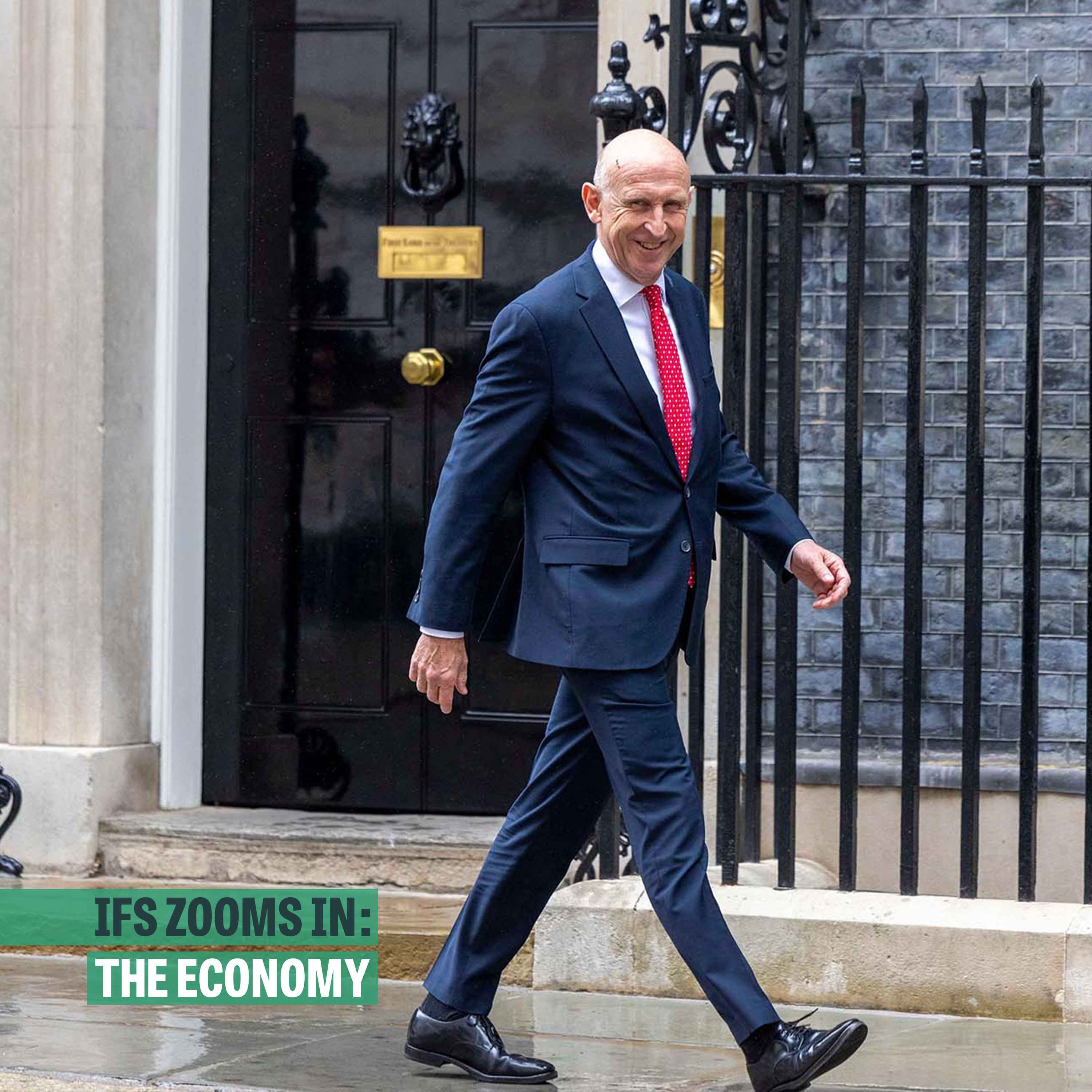
Budget 2026: what should we expect?
What should we expect from the upcoming Budget? With energy prices rising, pressure on public services and government borrowing already high, the Chancellor faces some difficult choices.Recorded live at the British Library as part of the Economic and Social Research Council's (ESRC) Festival of Social Science, Helen Miller is joined by IFS economists Max Warner and Stuart Adam to discuss what
Is the Chancellor’s spending plan credible?
>>> Sign up to our live event: https://ifs.org.uk/events/ifs-zooms-live-look-ahead-budget <<<The economic outlook has worsened since the spring. Inflation is expected to be higher for longer, borrowing costs have risen, and the conflict in the Middle East has added fresh uncertainty for households, businesses and the public finances.In this episode of IFS Zooms In, we examine wha
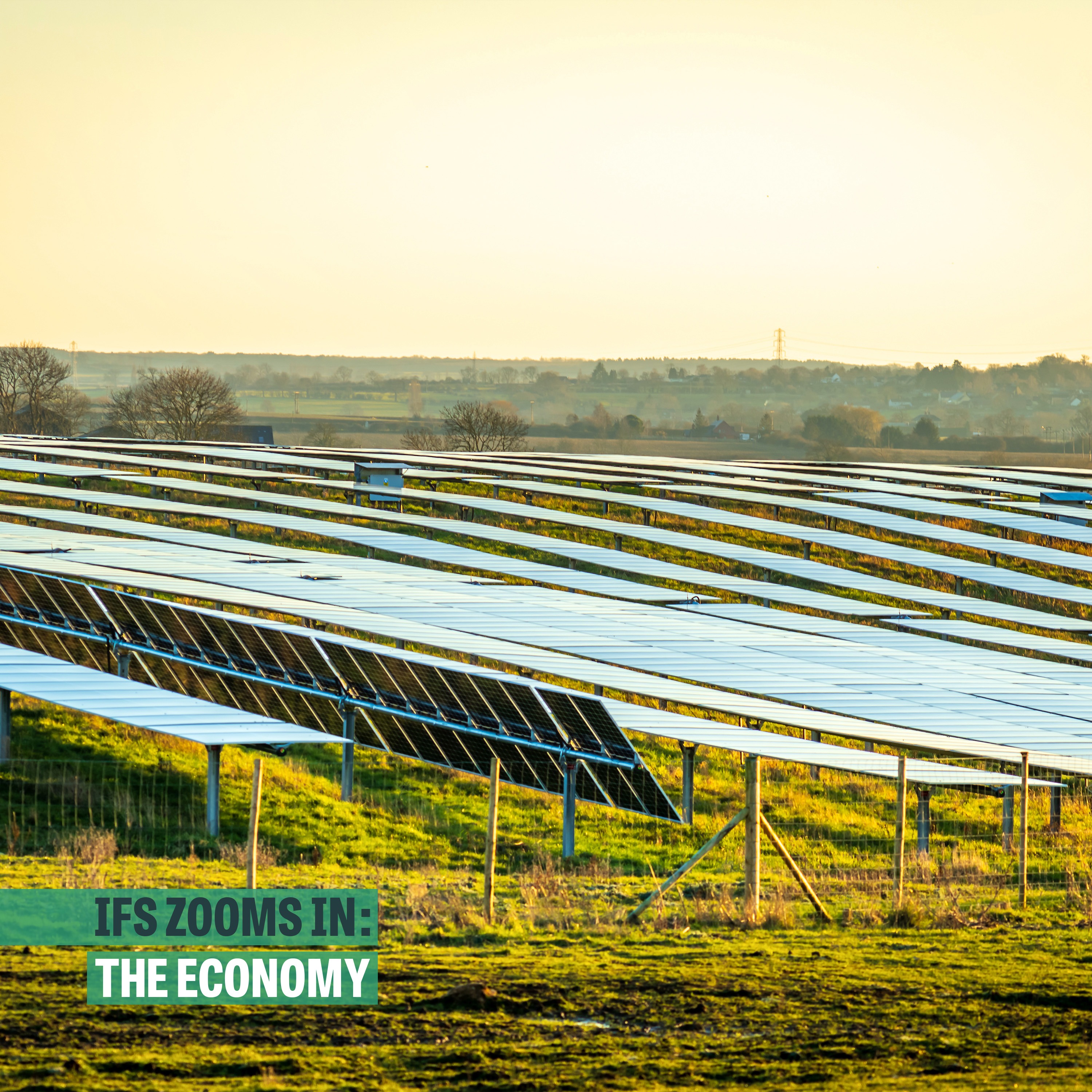
Are renewables making electricity more expensive?
>>> Sign up to our live event: https://ifs.org.uk/events/ifs-zooms-live-look-ahead-budget <<<Renewable energy is at the centre of the debate about Britain's high electricity prices. Some argue that wind and solar power are driving up costs, requiring expensive subsidies, backup generation and upgrades to the electricity grid. Others point to the falling cost of renewable tech
Has the triple lock been fixed?
>>> Sign up to our live event: https://ifs.org.uk/events/ifs-zooms-live-look-ahead-budget <<<The government has announced a major change to the state pension triple lock. The new system will continue to protect pensions against inflation and guarantee increases of at least 2.5%, but changes how increases in earnings feed through into the state pension over time.So how will the ne
Do disability benefits need reform?
>>> Sign up to our live event: https://ifs.org.uk/events/ifs-zooms-live-look-ahead-budget <<<The number of people receiving disability benefits has risen sharply in recent years, pushing up government spending and prompting renewed debate about how the system should work.In this episode, Helen Miller is joined by IFS economists Eduin Latimer and Tom Waters to explain how Personal
What would it take to fix social care?
Social care reform has challenged successive governments for decades. Now, the government wants to create a national care service and has launched a new push to find a long-term solution.But how does social care actually work? Who currently pays for it, and why can some people face such large and unpredictable costs? What pressures does the system place on councils? And what would meaningful refor

How does immigration affect the public finances?
Immigration is one of the most debated issues in British politics. But what impact does it actually have on the economy and the public finances?We speak to Madeleine Sumption, Director of the Migration Observatory at the University of Oxford and Interim Chair of the Migration Advisory Committee, and IFS economist Max Warner about how migration to the UK has changed, and what that means for the gov
Land value tax: the perfect tax?
Land value tax has long been popular with economists. Unlike most taxes, it doesn’t discourage people from working, investing or building - and in theory it can raise money without distorting economic decisions. So why don’t we use it more?In this episode, Helen is joined by Stuart Adam and Ben Zaranko to explain how a land value tax would work, who would gain and lose from introducing one, and wh
Are business rates 'killing the high street'?
Business rates have long been blamed for the decline of Britain’s high streets. Shops and pubs face large bills, while online retailers can operate from cheaper out-of-town warehouses. So surely cutting business rates would help?Not necessarily. Helen Miller is joined by IFS tax expert Stuart Adam and Observer economics editor Ben Zaranko to explain why business rates are widely misunderstood. The
Who really benefits from university?
More young people than ever are going to university, but the financial stakes have also risen. Many graduates begin their careers with around £50,000 of student debt and could make repayments for up to 40 years. While some degrees deliver substantial lifetime earnings gains, others may leave graduates financially worse off than if they had not attended university.Helen Miller is joined by IFS econ

Are people saving enough for retirement?
The government has launched a new Pensions Commission, raising the prospect of significant changes to how people save for retirement.Are people currently saving enough? Should minimum workplace pension contributions rise? And what should the government do about low pension saving among the self-employed?Christine Farquharson is joined by IFS researchers Jonathan Cribb and Heidi Karjalainen to exam
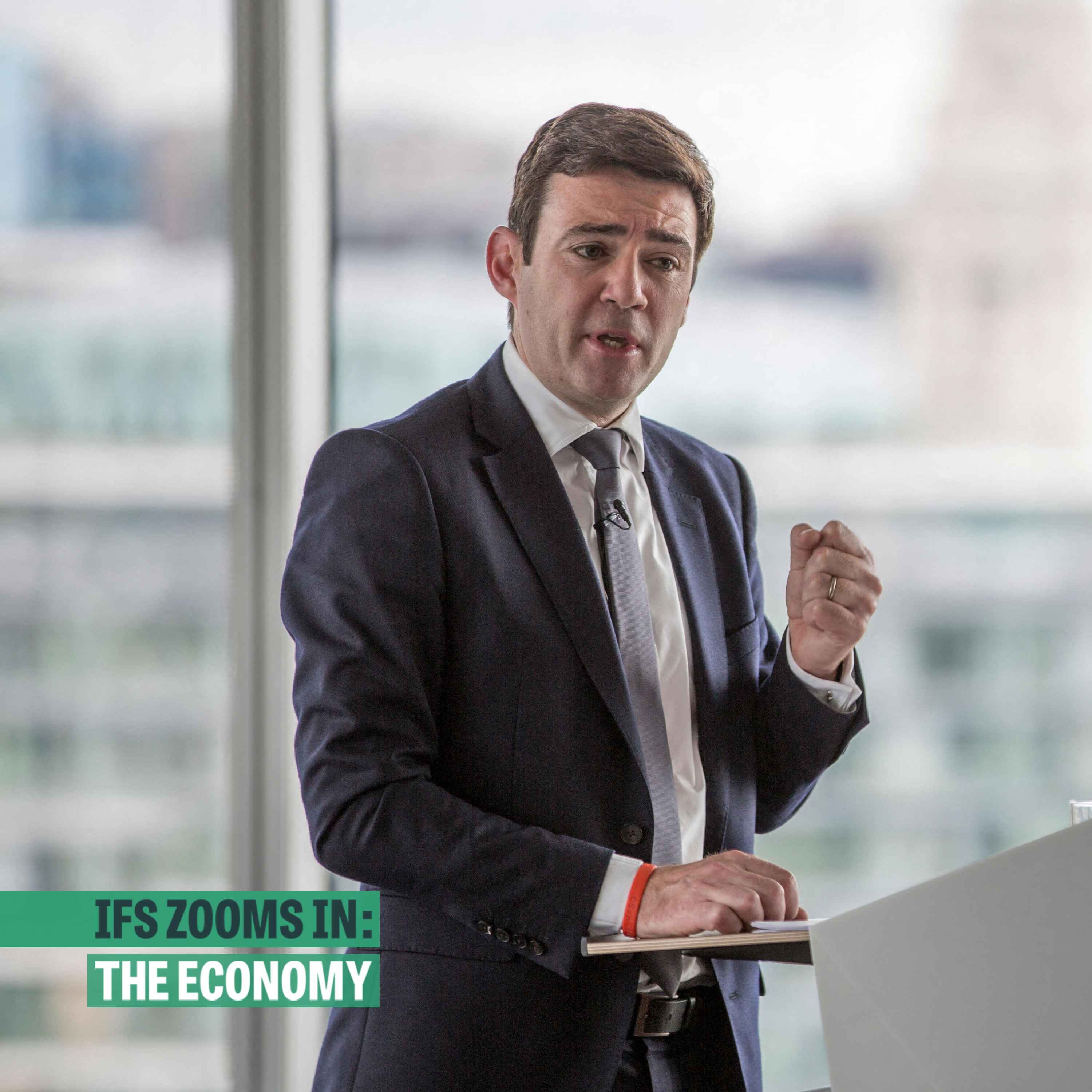
The tax and spending choices facing Andy Burnham
Andy Burnham is preparing to enter Downing Street, but he will inherit a government facing tight fiscal constraints and a series of difficult decisions.The public finances remain under pressure, debt interest spending is high, and commitments not to raise the main rates of income tax, National Insurance or VAT limit some of the most obvious ways of raising revenue. At the same time, the new Prime
Will devolution solve the UK’s economic woes?
Over the past few weeks, devolution has moved back to the centre of British politics. Andy Burnham has made the case for a “rewired Britain”: shifting power away from Westminster and Whitehall, creating a new “No 10 North” in Manchester, and giving local leaders a much bigger role in shaping economic policy.But what does devolution actually mean? Who would power be devolved to? What responsibiliti
The inequality of 'good jobs'
What makes a job “good”? Is it pay, flexibility, progression, security, purpose, autonomy, or the people you work with?Policy debates about inequality often focus on wages and getting people into work. But jobs are about much more than income. The quality of work affects people’s health, wellbeing, productivity, family life and future opportunities.In this episode, Helen Miller is joined by Jonath
Why is the UK so geographically unequal?
The UK is one of the most geographically unequal countries in the developed world. People living in London and the South East tend to have higher incomes, higher levels of education and better health outcomes than people elsewhere in the country.But why did Britain become so regionally unequal? How much of the divide is driven by the shift away from industry and towards services? What role has pub
What does Britain think about inequality?
Around 80% of people think the gap between those on high and low incomes is too big. But only around 40% think the government should redistribute income from the rich to the poor.Why is there such a gap between concern about inequality and support for action to reduce it?In the second episode of our mini-series on inequality, we ask why people care about inequality, whether they distinguish it fro
How unequal is Britain?
In the first episode of our new series, we set out the big picture on inequality in the UK. We look at what has happened to income and wealth inequality and how Britain compares with other countries.But inequality is not just about money. It shapes people’s opportunities, education, health, family life and where they live. Some gaps have narrowed over time, while others remain stubbornly wide - an
The tough fiscal reality facing the UK government
Britain’s public finances are under pressure. Public debt is high, borrowing remains high, and the government is spending far more on debt interest than in the past. Taxes are heading towards historic highs, while public services remain under strain and demand on the state continues to rise. In this episode, we set out the fiscal backdrop that will shape British politics over the coming years. Who
Why is UK electricity so expensive?
Conflict in the Middle East has pushed up energy prices in the UK. Even if the war ends soon, prices may not return to pre-war levels, and government could still face pressure to support households.But the problem runs deeper than the current crisis. Even before the latest shock, the UK had some of the highest electricity prices in the developed world. Why is electricity so expensive here? How muc
What do councils actually do?
Local government affects almost every part of our daily lives: bins, roads, planning, housing, schools, social care, public health, libraries, parks and more. But despite this, local elections are often discussed mainly as a test of national politics - with far less attention paid to what councils actually do, what councillors can change, and why so many councils are under such severe financial pr
The tough choices facing Wales’s next government
In a few weeks, voters in Wales will choose the next Welsh Government in what could be a historic election. With Labour’s long dominance under pressure, this episode examines the fiscal backdrop to the campaign and the difficult choices facing whoever takes power.Helen is joined by Joe Rossiter, Co-Director of the Institute of Welsh Affairs, and IFS economist David Phillips, to discuss how Wales i
Why Scotland’s next government faces tough choices
Scotland receives significantly more funding per person for devolved public services than England, helping to pay for policies like free university tuition and smaller school class sizes. But despite that advantage, performance in parts of health and education remains under pressure, and Scotland’s fiscal outlook is becoming tighter.In this episode, Helen is joined by Mairi Spowage of the Fraser o
Will everyone have to work until they are 67?
The state pension age is rising. It is currently 66, and by 2028 it will reach 67. But what does that actually mean for the people approaching retirement, and does it really mean everyone will have to work longer?In this episode, Helen is joined by Jonathan Cribb and Heidi Karjalainen to examine one of the biggest questions facing the pensions system: how high should the state pension age be? They
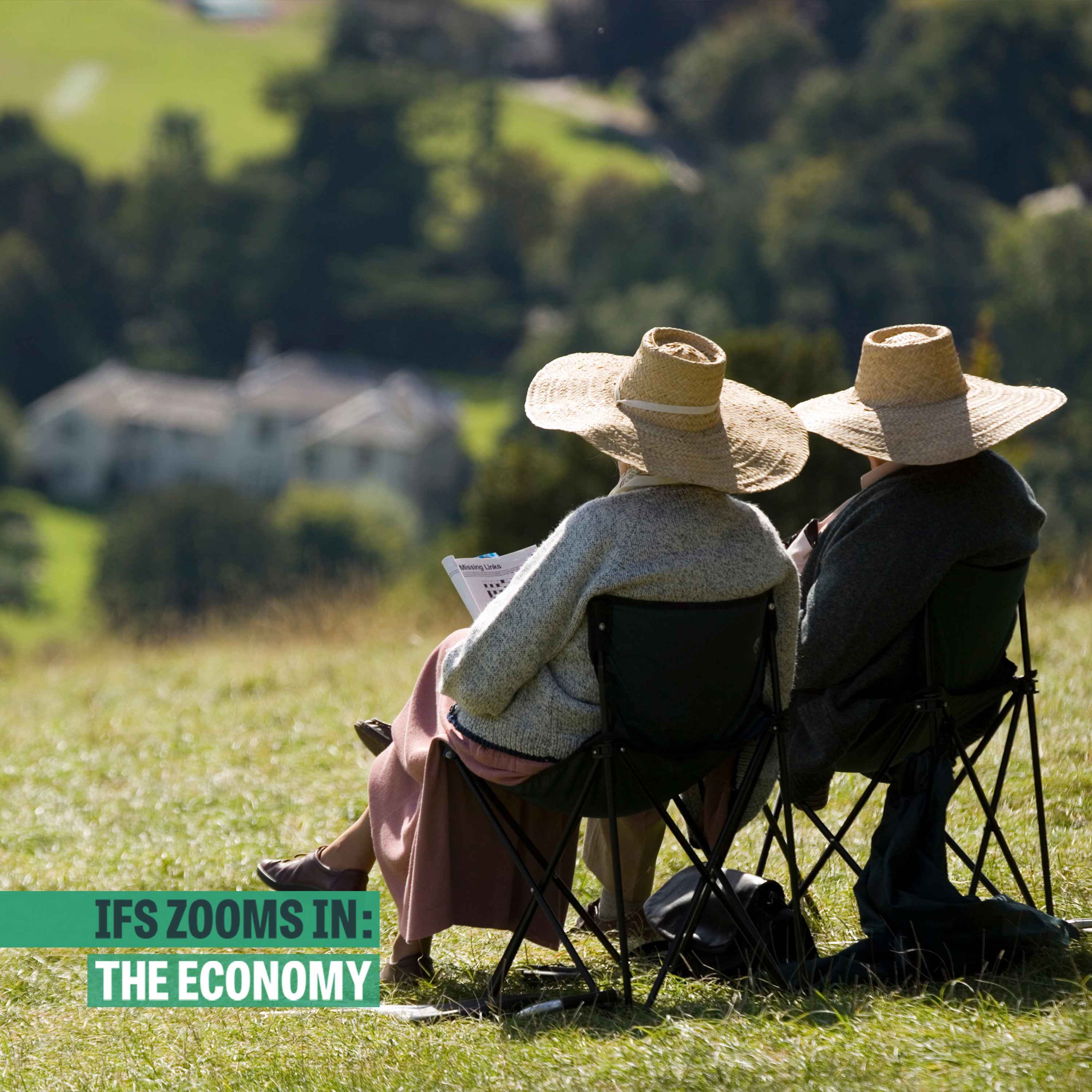
Are pensioners richer than everyone else?
For decades, pensioners were one of the poorest groups in Britain. That is no longer true. Today, the average pensioner is at least as well off as the average working-age person, and in wealth terms many are far better off.In this episode, Helen Miller is joined by Jonathan Cribb and Heidi Karjalainen to examine what the data really say about pensioner incomes, wealth and living standards. Where d
The Spring Forecast explained
Helen Miller is joined by IFS colleagues Ben Zaranko and Bee Boileau to discuss the Spring Forecast. The headline numbers haven’t moved much since the autumn, but that stability may not last. With conflict in the Middle East pushing up oil and gas prices, the UK faces a potential negative shock: higher inflation, pressure on interest rates, and a tougher outlook for households, businesses and the
How to fix the fiscal rules
Fiscal rules can sound technical, but they shape some of the biggest choices in economic policy: what we spend today, what we invest for tomorrow, and how we share costs across generations.In this episode of IFS Zooms In, Helen is joined by Ben Zaranko to unpack why governments use fiscal rules, what the UK’s current rules are designed to do, and why - despite repeated promises - debt has continue
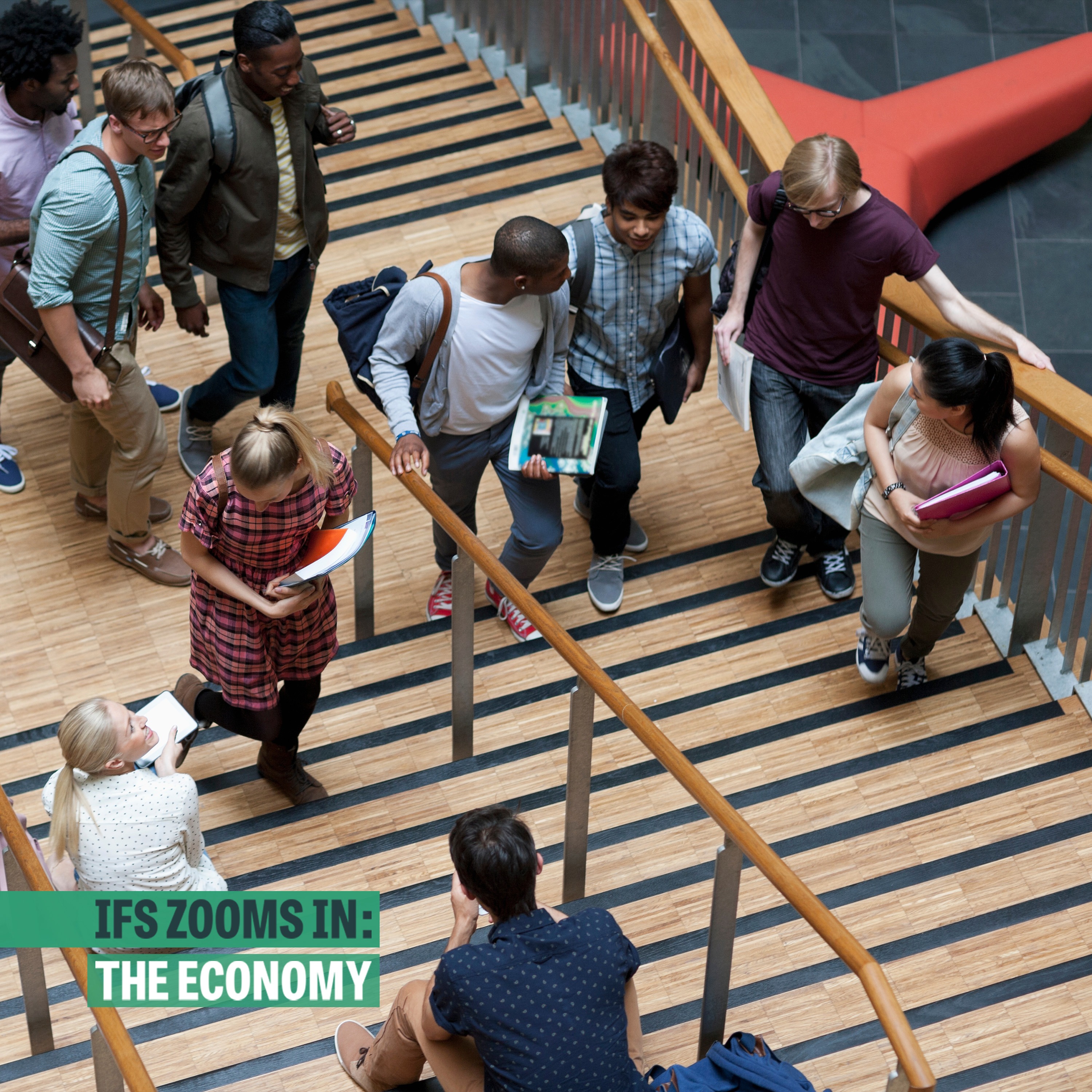
Are Plan 2 student loans 'unfair'?
On average, students now leave university with just over £50,000 in student loan debt. Repayments are income-contingent: many graduates will repay little or nothing, while others repay 9% of their income above a threshold for decades, often watching the outstanding balance rise. That design has led some to argue the system is unfair and to argue that students were mis-sold loans whose terms have s
Did inflation cause the cost of living crisis?
Inflation has fallen a long way from its peak - but many people still feel worse off, and price rises have remained stubbornly above the Bank of England’s 2% target. So what actually caused the big inflation spike, how close are we to “normal”, and what does that mean for households? Helen is joined by David Miles (OBR and former member of the Bank of England’s Monetary Policy Committee) and
Does the minimum wage cost jobs?
The UK minimum wage is one of the biggest economic policy changes of the past few decades. Introduced in 1999 at £3.60 an hour, it’s now over £12 and it shapes pay for a large share of the workforce. But what has it done to jobs? And if firms pay higher wages, where does the money come from - higher prices, lower profits, or higher productivity?In this episode, Helen is joined by Eduin Latimer (IF
Why isn’t the NHS improving faster?
The NHS holds a unique place in British life: a source of national pride, and the single biggest public service in England. This year it’s set to cost over £200 billion, around £3,500 per person, more than we spend on education, defence, justice and transport combined. And yet, despite sustained funding increases and around a quarter of a million more staff than in 2019, concerns about performance

What really matters for the UK economy in 2026
Moving into 2026, the government faces a critical period of delivery. After 18 months in power and several major fiscal events behind them, the focus is shifting from setting policy to seeing it through. However, with unemployment reaching 5.1% and a series of high-stakes reviews underway, the road ahead remains complex.In this episode, we are joined by Christine Farquharson and Tom Waters to exam
Tax changes in the Budget
As ever the big-picture choices in the Budget dominated media coverage - but some of the most interesting changes were buried in the detail. From electric vehicles to tourist tax, how much do these quieter tax shifts really matter?In this episode, we dig into the lesser-noticed policies: why the government is offering upfront EV grants while planning a per-mile tax, how tweaks to salary sacrifice
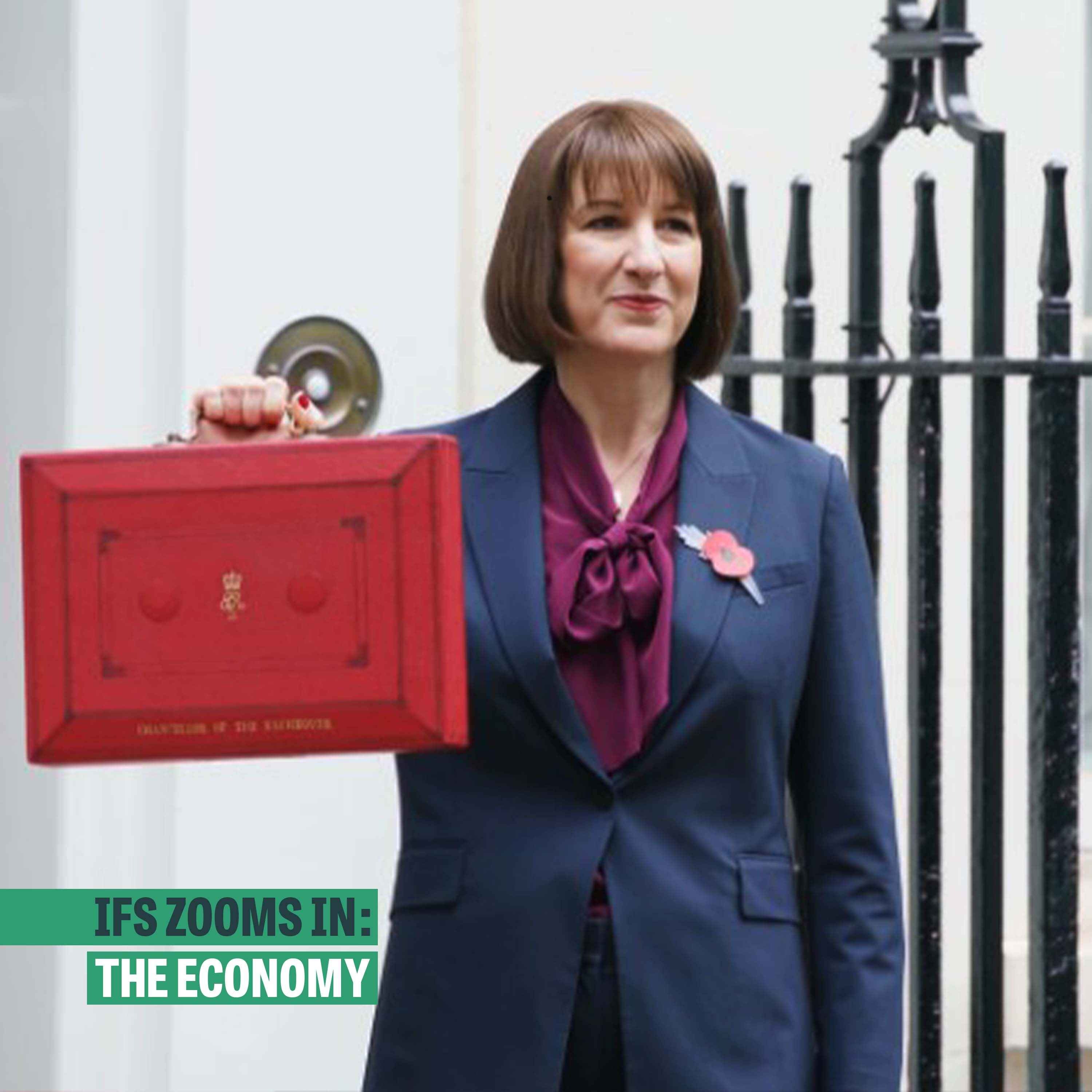
The Autumn Budget explained
This week on IFS Zooms In, host Helen Miller is joined by IFS economists Ben Zaranko and Christine Farquharson to unpack one of the biggest Autumn Budgets in years. With seventy-five policy measures, major tax and spending changes, and a striking shift in the economic forecasts, this was a Budget that surprised almost everyone.Helen, Ben and Christine break down:Why the expected “fiscal repair job
How could the Chancellor cut spending?
As the Chancellor prepares her Budget, attention is turning not just to how she could raise more tax - but how she might cut spending. Where does the government actually spend its money? Why is it so difficult to reduce that spending in practice? And what would it take to genuinely pare back the size of the state?Helen Miller is joined by IFS colleagues Ben Zaranko and Tom Waters to unpack the rea

Is the UK in hock to the bond market?
The bond market plays a crucial role in shaping government spending decisions - but how much power does it really have? With a Budget around the corner, are investors or Rachel Reeves setting the limits on fiscal policy?In this episode, we unpack how the government borrows, why it’s so expensive right now, and what “fiscal credibility” really means. Joining Helen are Jack Meaning, Chief Economist
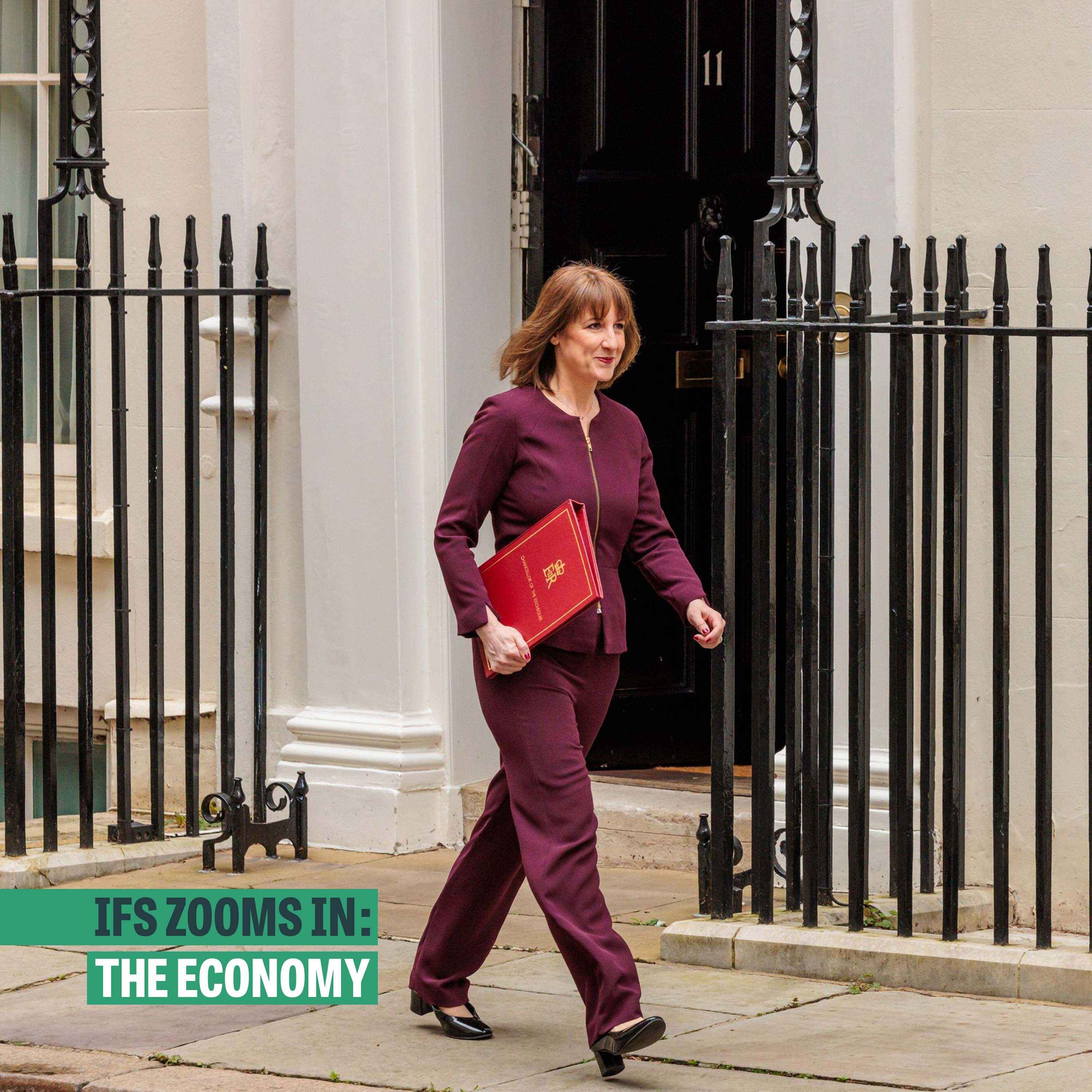
How could the Chancellor raise more tax?
As the Chancellor prepares for her next Budget, attention is turning to how more tax revenue could be raised. What options are on the table - and what would they mean for households, businesses and the wider economy?Helen Miller is joined by IFS colleague Stuart Adam and tax expert Dan Neidle to explore the choices facing the Treasury. They discuss options from income tax and frozen thresholds to
How to fix VAT
Why are chocolate-covered shortbread and plain shortbread taxed differently? The UK’s VAT system is full of bizarre inconsistencies that make it complex, inefficient, and unfair.In this episode, we dive into how VAT works, why economists tend to love it in theory, and why the UK’s version falls short in practice. We explore zero and reduced rates, exemptions, myths about regressivity, and discuss
How to fix property taxes
From council tax and stamp duty to business rates and taxes on landlords, the UK’s system for taxing property is complicated, inconsistent, and long overdue for reform.Homes aren’t just places to live - they’re also assets and a major form of saving - which makes deciding how to tax them especially tricky. In this episode, Helen is joined by Stuart Adam and Ben Zaranko to explore how property is c
How to fix wealth taxes
In the second episode of our mini-series on how to fix the UK’s tax system, Helen is joined by Stuart Adam and Ben Zaranko to explore one of the most contentious areas of taxation - savings and wealth.Why do people who earn through investments often pay lower taxes than those earning a salary? Why do business owners and landlords sometimes end up both undertaxed and overtaxed? And could an annual
How to fix income tax
In the first episode of our new mini-series on how to fix the UK’s tax system, Helen is joined by Stuart Adam and Ben Zaranko to explore income tax - the cornerstone of government revenue, and one of the most confusing parts of our system. Why do we have two separate taxes on earnings? Why do odd kinks and cliff edges exist that distort behaviour? And what would a well-designed income tax actually
The Budget Dilemma: Tax Rises or Spending Cuts?
Rachel Reeves is once again facing tough choices on tax and spending. After promising no further tax rises last autumn, the Chancellor could now see a sizeable downgrade to the borrowing outlook - enough to wipe out the limited ‘headroom’ she built into her fiscal plans last spring. To stick to her ‘iron-clad’ rules, Reeves may now need a sizeable fiscal consolidation through tax rises, spending c
Should Labour scrap the two-child limit?
The two-child limit stops most families on Universal Credit from claiming support for a third or later child — worth about £3,500 a year per child. Introduced in 2017, it’s now at the centre of a political debate, with the Chancellor under pressure to scrap or reform it in the November Budget.Helen talks to IFS economists Tom Waters and Christine Farquharson about why the policy was introduced, ho
Should the middle class get benefits?
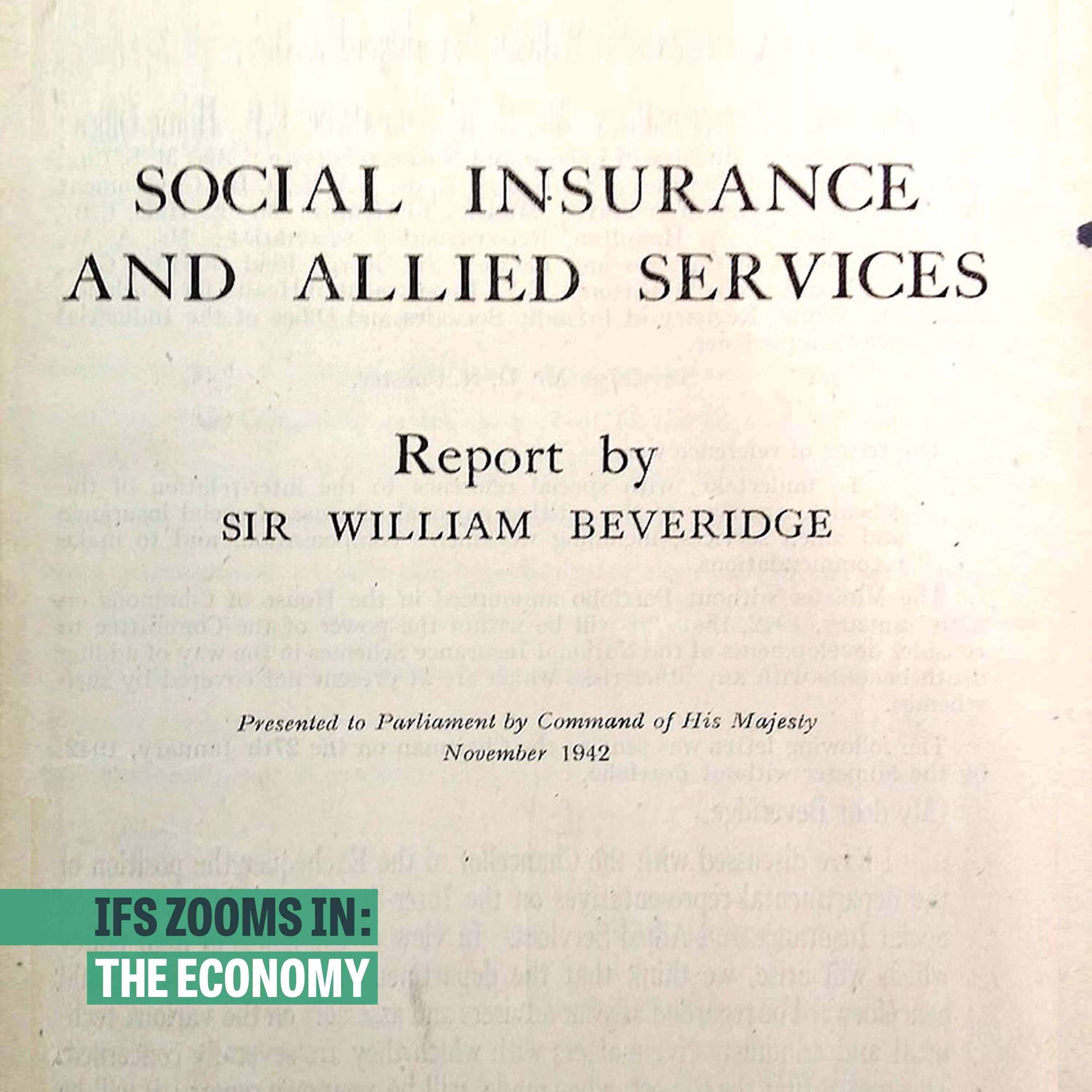
From child benefit to winter fuel payments, debates over who really deserves support run through the history of the UK’s welfare state. In this episode of IFS Zooms In, we ask whether benefits should be universal, means-tested or contributory — and why the UK's benefits system has become one of the most means-tested in the developed world.Helen is joined by Nicholas Timmins (Institute for Gov
Why is defence spending rising?
The UK has promised to raise defence spending to levels not seen since the 1980s. That means tens of billions more pounds each year, with big implications for the armed forces, the economy, and the public finances.In this episode, Helen speaks to Matthew Savill (RUSI) and Max Warner (IFS) about what defence spending actually pays for, how it has changed over time, and what the government’s new com
Children and young people: your questions answered | Are the kids OK? #5
This week, we turn the tables and put your questions to the experts.From childcare and early years, to schools, apprenticeships, and family life — listeners sent in brilliant questions on the challenges facing children and young people today.Helen Miller is joined by Christine Farquharson and guests Carey Oppenheim, Sam Freedman, Philip Augar, and Anne Longfield to discuss:- Should mothers be supp
What’s happening to families in the UK? | Are the kids OK? #4
Nearly a third of children in the UK live in relative poverty, and rising numbers face material deprivation. The government’s Opportunity Mission pledges that every child should grow up in a safe, loving home and that families should be able to afford the essentials — but how close are we to that goal?In this episode of IFS Zooms In, Helen Miller is joined by Christine Farquharson (IFS) and Barone
Is further education treated as second class? | Are the kids OK? #3
What happens after GCSEs, and how well does England’s education system support young people as they move into adulthood?The government’s Opportunity Mission sets out to “build skills for opportunity and growth,” aiming to give every young person a pathway that’s right for them. In practice, that means navigating a system divided between academic routes, like A levels and university, and
Are England's schools working? | Are the kids OK? #2
Are England’s school-aged children thriving – or are too many being left behind?The government’s Opportunity Mission promises to end the link between a child’s background and their future. But with rising absences, a growing mental health crisis, and a SEND system under strain, how close are we to that goal?In this episode of IFS Zooms In, Helen Miller is joined by Christine Farquharson (Associate
Are Britain’s youngest children getting the best start? | Are the kids OK? #1
Are England’s youngest children getting the best possible start? Or are too many beginning school already behind?One of the government’s five ‘missions’ is to break down barriers to opportunity by tackling inequalities in early childhood. Its ‘Best Start in Life’ strategy aims for 75% of children to reach a ‘good level of development’ by age five - but with only 68% meeting that bar today, how amb
What are the big threats to public finances?
Is the UK heading for a fiscal crisis? Or can policymakers still steer the public finances back to a sustainable path?The Office for Budget Responsibility’s latest Fiscal Risks and Sustainability report warns that, without action, UK government debt could climb above 270% of GDP by the 2070s - driven by rising borrowing, an ageing population, and the fiscal impacts of climate change.In this episod
One year of Labour government: Is mission-driven politics really happening?
Has Keir Starmer’s Labour government really brought in a “new way of doing government”? Or are its five missions more rhetoric than reality?To mark the one-year anniversary of Labour’s 2024 general election victory, the Institute for Fiscal Studies and the Institute for Government held a joint event exploring the government’s approach to governing – and whether its decisions, trade-offs and spendi
Paul Johnson’s final episode: big challenges ahead for the UK economy
Today, we’re zooming out to ask: what are the biggest economic challenges facing the UK in the years ahead?As Paul Johnson hosts his final episode before stepping down as IFS director, he’s joined by incoming director Helen Miller to reflect on the country’s fiscal outlook, the importance of economic growth, and the pressures of an ageing population.With rising demands on public services, debates
How to fix UK pensions?
Today, we’re asking whether people in the UK will be able to afford a decent standard of living in retirement.While the foundations of the system—like the state pension and automatic enrolment—are strong, there are growing concerns. Rising state pension ages, the unpredictability of the ‘triple lock’, low private saving rates, and the complexity of managing pension wealth in later life all pose ch
The policy that changed childhood in the UK
Today, we’re looking back at one of the most ambitious policies ever introduced for young children in England – Sure Start. Launched by the Labour government in 1999, Sure Start aimed to give every child the best start in life by bringing together early education, childcare, health services, and parental support under one roof. At its peak, more than 3,000 centres were operating across
What’s gone wrong in the Crown Courts?
Delays in the Crown Court are at record highs, despite more funding and longer court hours. So what’s really causing the growing backlog of serious criminal cases in England and Wales?In this episode, Paul Johnson is joined by Ben Zaranko (IFS) and Cassia Rowland (Institute for Government) to explore why court productivity may have slowed, what the consequences are for victims and defendants, and
Spending Review 2025: What it means and why it matters
In this episode, we unpack the government's 2025 Spending Review with analysis from experts at the IFS. Paul is joined by Helen Miller and Ben Zaranko to discuss what the Chancellor’s plans mean for public services, government investment, and the broader economic outlook. Become a member: https://ifs.org.uk/individual-membershipFind out more: https://ifs.org.uk/podcasts-explainers-and-calculators
Trade Wars: The end of globalisation?
Rising tariffs, deepening tensions between the US and China, and a growing wave of protectionism—are we witnessing the unravelling of globalisation as we know it?In this episode of IFS Zooms In, Paul is joined by Professor Meredith Crowley (University of Cambridge) to explore the shifting landscape of global trade. Together, they unpack why trade barriers are rising, how trade wars are reshaping i
Why is the government reforming health-related benefits?
It's been two months since the government first announced its plans to enact the largest welfare reforms for a generation, aiming 'to help sick and disabled people who can and have the potential to work into jobs’. Since then, there has been considerable debate about the consequences of these reforms. But why does the government want to implement reforms in the first place? How does the current sy
What's the future of corporation tax?
This week, we’re looking at corporation tax, which was introduced 60 years ago. Across the decades there have been no shortage of predictions that corporate tax revenues will decline, and yet the tax is forecast to raise record amounts in the coming years. To pick all of this apart, and to see how Donald Trump and tariffs play into the story, IFS Director Paul Johnson is joined by Amanda Tick
Spring Statement 2025
This week, we look at the Spring Statement. What were the decisions and trade-offs made by Chancellor Reeves? To pick this apart, IFS Director Paul Johnson is joined by IFS Associate Directors Ben Zaranko and Tom Waters.Become a member: https://ifs.org.uk/individual-membershipFind out more: https://ifs.org.uk/podcasts-explainers-and-calculators/podcasts Hosted on Acast. See acast.com/privacy for m
The Schools Bill
This week, we’re looking at The Schools Bill. The bill, which has the full title of The Children’s Wellbeing and Schools Bill 2024-25, covers children’s social care and education. The aim of the bill, as stated on the House of Commons Library website, is to “improve the safeguarding of children and to raise educational standards”. We’re going to be focusing on the schools components.&nb
Family values: inheritance, inequality and social mobility
As baby boomers hold an increasing share of wealth, younger generations are finding it harder to build financial security, often relying on family support for major milestones like homeownership.In her book Inheritocracy, Eliza Filby argues that – because of this – baby boomers have been good parents but not always great citizens.To explore the issue, IFS Director Paul Johnson is joined by Eliza a
How important is the OBR forecast?
As the OBR comes up with its forecast, which will underpin the Chancellor’s decisions at the Spring Forecast, one of the concerns may be that it tells her that she is not meeting her fiscal targets. That will require some action. Helping Paul explore this are Andy King and Gerard Lyons. Andy previously worked at the OBR and is now a Specialist Partner at Flint Global. Gerard has spent ov
Do tariffs work?
This week, President Trump was inaugurated for his second term and announced plans to impose significant tariffs on imports. But what exactly are tariffs, and how do they work? In this episode, we dive into the economic consequences of tariffs, why governments use them, and whether they actually achieve their intended goals.Joining Paul to unpack these questions is Peter Levell, Deputy Research Di
How is tax damaging the housing market?
The UK’s housing market has long been a source of frustration for renters and homeowners alike, with issues of affordability and availability topping the agenda. The new government has identified housing market failures as a major barrier to economic growth—but what role does the tax system play in these challenges?In this episode, we’ll dig into how taxes impact the housing market, from the cost

Why did the French budget fail to pass?
Today, we’re turning our attention to France, where a recent Budget has sparked intense debate and raised major questions about the country’s economic future.France is tackling some big economic challenges: rising public debt, slow growth, and the need for major reforms in areas like pensions and energy. In this episode, we’ll explore what was in the budget, why it caused such a stir, and how it c
How can we make government more productive?
From healthcare to education to local government, the public sector delivers essential services—but how can it stay effective and efficient with tightening budgets and rising demand?In this episode, we examine the UK government’s push to improve public sector productivity. Rachel Reeves is enlisting private sector leaders to tackle inefficiencies in Whitehall, while Wes Streeting has proposed NHS
Inheritance tax rises and the Budget: who's affected?
In the recent budget, the Chancellor, Rachel Reeves, announced a £40 billion tax increase, pushing tax as a share of national income to an all time UK high.Just 6% of that came from an increase in inheritance tax, and just a small fraction of that will come from farmers. And yet it is the tax increase on farmers that has dominated the news headlines. But beyond the change to agricultural reliefs,
How big are the UK's demographic challenges?
At the end of October, the ONS announced that the fertility rate in England and Wales had fallen to 1.44 births per woman in 2023 - the lowest figure since records began in 1938. What will this mean for the population make-up of the country? What other big demographic shifts are occurring? Why is this trend occurring across the developed world? And what will its implications be for the public

What does the Budget mean for the UK?
117 days after Labour took office, Rachel Reeves has finally delivered her Budget.From tax rises and fiscal rules, to public services and investment, we'll take a tour around all of the big announcements. Paul is joined by Helen Miller and Ben Zaranko, colleagues at the IFS.Find out more: https://www.ifs.org.uk/ Hosted on Acast. See acast.com/privacy for more information.

LIVE: How can Rachel Reeves make her first Budget a success?
In our first ever live episode, we're going to look at how Rachel Reeves can make her first Budget a success.It will have been 117 days since Labour took power before we finally hear what is in the Budget - in that time we’ve heard about £22bn 'black holes' and the difficult economic situation the UK faces. We’re going to think a bit about some of the challenges facing the Chancellor, what she can
What options does Rachel Reeves have for the Budget?
Sign up to our live event: https://ifs.org.uk/events/ifs-zooms-live-how-make-your-first-budget-successThe budget coming up in a few weeks will be one of the big moments for Labour to set out their policy agenda. Over the summer, the government set out what it considers a difficult public finance picture - including a supposed £22bn ‘black hole’. The Labour manifesto promised big improvements to pu
Should the Chancellor raise capital gains tax?
Sign up to our live event: https://ifs.org.uk/events/ifs-zooms-live-how-make-your-first-budget-successThere’s been lots of speculation that Chancellor Rachel Reeves is looking to raise Capital Gains tax in her upcoming budget. Capital Gains tax raises around £15 billion a year, which is less than 2% of total tax revenue, and it’s paid by less than 1% of the adult population. But it’s importan

How can government reduce child poverty?
Sign up to our live event: https://ifs.org.uk/events/ifs-zooms-live-how-make-your-first-budget-successCurrently, around 4.3 million children - that’s around 30% of all kids - are living in relative poverty. Since 2010 that figure has risen by over 700,000 and the new government has made tackling child poverty one of its key policy objectives, with a cross-government strategy due to be published i
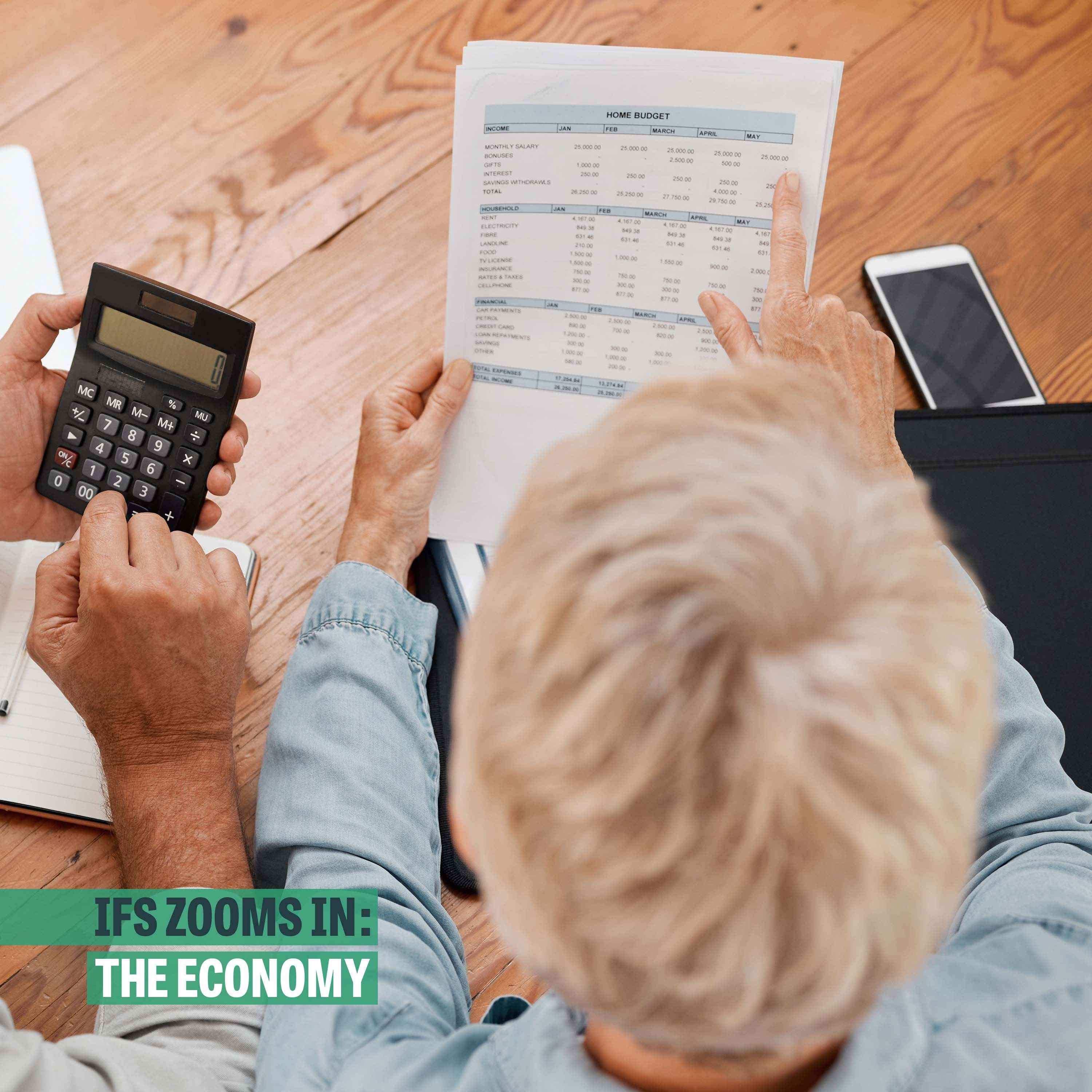
Are people saving enough into their pensions?
Sign up for our live podcast event: https://ifs.org.uk/events/ifs-zooms-live-how-make-your-first-budget-successSince the introduction of auto-enrolment over 10 years ago, more people than ever are saving into a workplace pension than ever before. However, new research from the IFS shows that approximately 30% to 40% of private sector employees (5 to 7 million people) saving in defined contribution
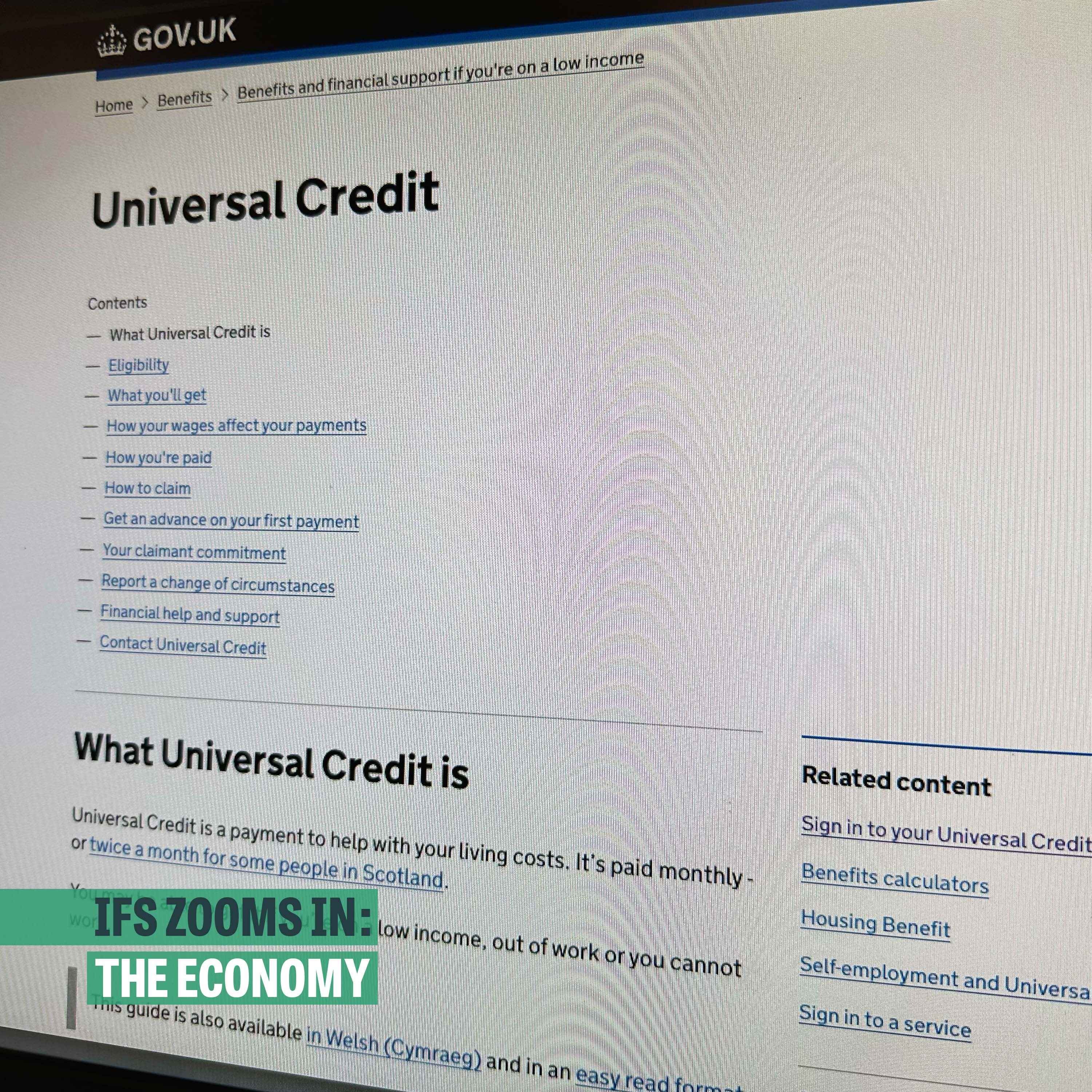
The big challenges facing the benefits system
We’re looking at the benefits system and answering the questions likely being asked by government ministers: how can the rising costs of benefits be managed, and what changes could improve the system?With disability and incapacity benefit caseloads rising and the Universal Credit rollout still ongoing, what options does the government have to address these challenges? How might frozen housing supp
The Chancellor's options for raising taxes
Over the summer we’re bringing you a series of briefings on the key challenges and policy options facing the new set of government ministers. Today we’re turning to the tax system and we’ll answer the questions that the Chancellor has almost certainly been asking Treasury officials in recent weeks: how could more tax revenue be raised and how could tax reform boost growth.Rachel Reeves has ruled o
Why are universities in financial trouble?
Over the coming weeks, we’re bringing you a series of briefings looking at key areas of government and analysing their performance over recent years, the challenges they face and the solutions the new government may look to help them.This week, we’ll be looking at higher and further education. Over recent months, we’ve heard lots of stories about the pressures on university finances, and conc
Can the new government fix the NHS?
Over the next few weeks, we’re bringing you a series of briefings looking at key areas of government and analysing how they have performed over recent years, what challenges they face and which solutions are on the table.This week we'll start with the NHS - the UK's biggest public service. We're joined by Ben Zaranko and Max Warner, IFS experts, to discuss the big challenges facing the NHS, and wh
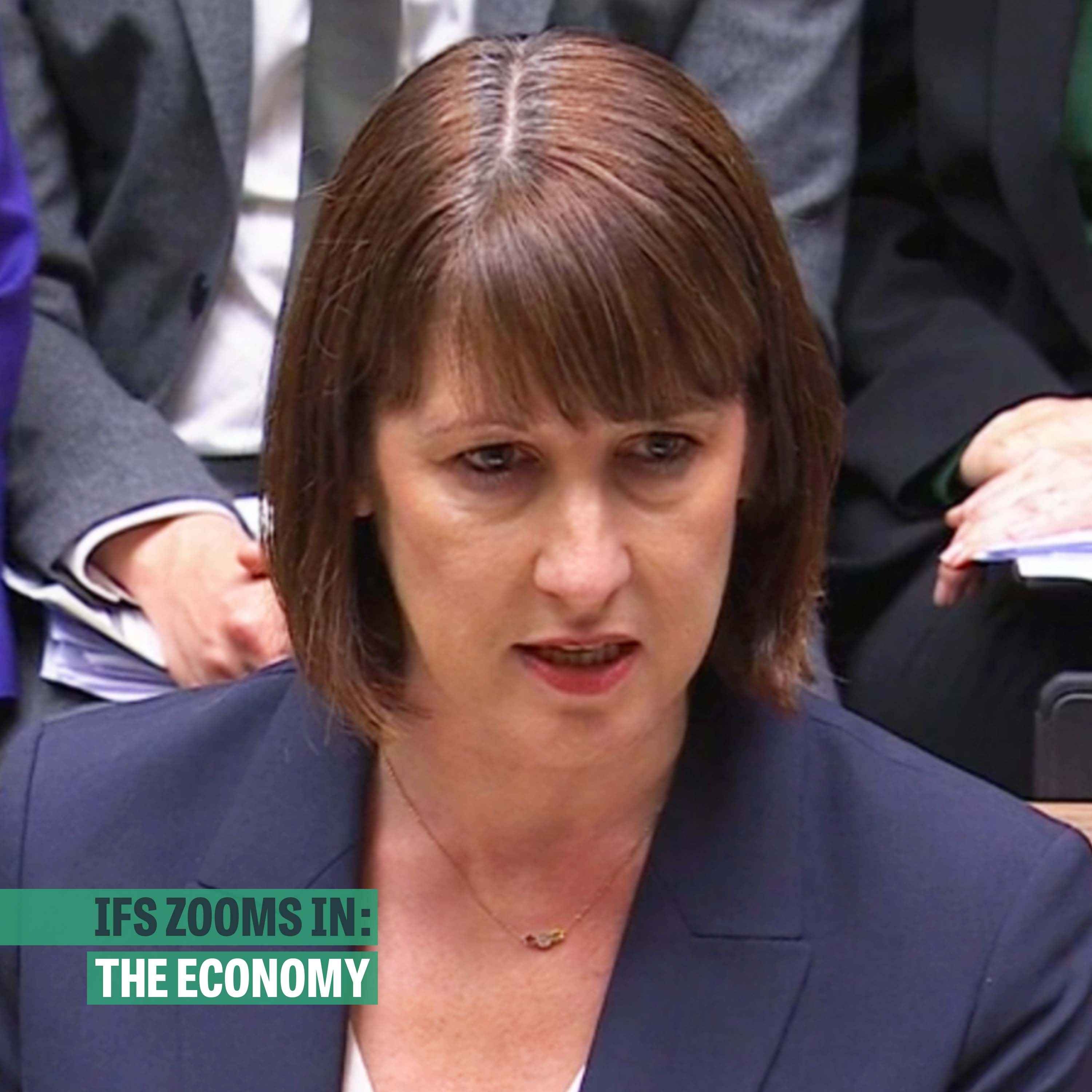
Is Labour's inheritance really worse than expected?
On Monday, the new Chancellor, Rachel Reeves, stood up in front of Parliament and spoke about, what was in her view, the challenging economic inheritance left to Labour by the previous Conservative government. She revealed a series of unfunded commitments by the previous government - a multibillion-pound gap in the public finances covering areas such as spending on asylum seekers and unfunded