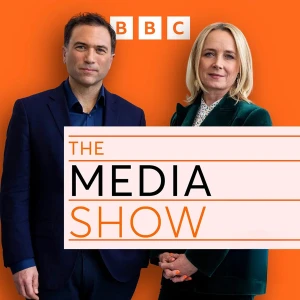
The Media Show is a BBC Radio 4 program that examines the rapidly changing media landscape, covering topics such as social media, breaking news, and fake news. It provides insightful analysis and discussion on how media is evolving and its impact on society.
Episodes
The GTA VI phenomenon, and social media v courtrooms
As Grand Theft Auto VI is released after more than a decade of development and many months of hype, we look at how a Scottish video game became one of the world’s most successful — and most profitable — entertainment franchises. Brian Baglow worked for GTA creators Rockstar Games on the original title and now leads the Scottish Games Network. Cara Ellison also worked for Rockstar Games and is now
A reckoning for the media industry? Russell Brand, David Walliams and Married at First Sight UK
It's been a week of great consequence for the media. On Monday, Russell Brand was sentenced to over ten years in prison for rape and sexual assault. On Tuesday - in a separate story - ITV News and The Guardian named David Walliams as the celebrity who tried to use an injunction to block the publication of sexual misconduct allegations. Also in the last week, Channel 4 announced it is axing Married
Censorship at student papers and the role of social media in Gen-Z protests
Protests across Europe led by youth movements have drawn attention to the role of social media in spreading information and misinformation. Largely led by Gen-Z, these protests have included references to films like The Hunger Games and The Avengers, and featured people in costumes taking part in 'aura battles', while memes of the demonstrations are shared online. Researcher Dr Nayana Prakash cons
Is TV news still fit for purpose? Celebrity media injunction and Blue Planet III returns
In the internet age, is TV news still fit for purpose? We speak to broadcaster Lewis Goodall who argues it needs urgent reform for the digital and social media age and to Krishnan Guru-Murthy, one of the lead presenters of Channel 4 News.
Blue Planet III, narrated by David Attenborough, returns this Sunday. Jack Bootle, the BBC's Head of Specialist Factual Commissioning, told a recent press screen
Taking stock of the BBC cuts
This week the BBC announced more cuts as part of its drive to save £500 million, following on from a series of other budget saving measures over the last few months. Katie and Ros talk to BBC Deputy Director-General Rhodri Talfan-Davies, and take stock of everything announced so far with a panel of experts: ex-BBC executive Roger Mosey, MP for Southport Patrick Hurley and Baroness Morgan, former S
Russell T Davies, and reporting on when the BBC gets it wrong
This week, an extended interview with the screenwriter and producer Russell T Davies. He talks to Katie and Ros about his long career in television, from early days in children's TV, to bringing back Doctor Who, to his more recent successes like the critically acclaimed Tip Toe. He also gives his thoughts on the media landscape today, including the role of AI and the lack of commissioning opportun
Reporting on the Cornell rape investigation; Woman’s Hour at 80; Anneka Rice
What are the challenges of reporting on the Cornell University rape investigation, and how did it emerge in student and social media? We discuss with Kathleen Bartzen Culver, Professor of Journalism Ethics at the University of Wisconsin – Madison; and Dr Robert Topinka, Reader in Digital Culture at Birkbeck University of London.
As Woman’s Hour turns 80, its editor Karen Dalziel joins us to refl
Man City verdict, Dead Internet Theory, The Art of Casting
Manchester City arranged "sham contracts" with a number of commercial partners as part of a scheme to disguise secret funding of more than £830m, the Premier League says. We discuss how the media was involved in reporting the story over many years with BBC Sport's Laura Scott; Der Spiegel journalist Christoph Winterbach; Nick Harris from Sporting Intelligence and Sky’s sports correspondent Rob Har
Trump’s legal battle with White House press, the global media spotlight on the village of Piddington, Diana media narratives
The legal confrontation between Donald Trump and the White House press corps raises questions about press freedom and the limits of presidential control over media access. We talk to Ronnell Anderson Jones, University Distinguished Professor of Law, and Washington Post media reporter Scott Nover.
In Oxfordshire, the village of Piddington has drawn global attention over plans to house more than a t
Is the right of reply under threat in the social media age?
The right of reply has long been a cornerstone of journalism, giving those involved in a story the chance to respond before publication. But with politicians and public figures now using social media to publish their own version first, is this principle being undermined? Guto Harri, former Downing Street Director of Communications, Professor Karen Fowler-Watt from City St George’s, University of L
70 Up the final instalment of 7 Up, Culture Secretary Lisa Nandy on the BBC & how polling informs political media strategy?
What does Channel 4's undercover investigation into Reform UK tell us about the relationship between polling, politics and the press? Katie Razzall and Ros Atkins hear from journalists Jake Kanter International Investigations Editor at Deadline, and James Ball Political Editor at The New World, and the polling experts Professor Sir John Curtice and Stephan Shakespeare CEO of YouGov.
They also he
Reporting the Taliban, AI's "meat proxies" and The Grand Tour returns
Five years after the Taliban retook control of Afghanistan, BBC Chief International Correspondent Lyse Doucet has returned to the country to report on life under the regime, including the secret schools educating girls despite restrictions on female education. Lyse joins us to explain how reporting trips to Afghanistan are organised, what it is like negotiating access with the Taliban and how jour