Witness History: World War Two history
Witness History: World War Two history is a podcast from the BBC World Service that explores key events and personal stories from the Second World War. Episodes cover topics such as D-Day, traitors, and evacuees, offering firsthand accounts and historical insights. The podcast brings history to life through interviews with those who lived through the war.
Episodes
The battle of Mandalay in WW2
In March 1945, the British Fourteenth Army were advancing on the city of Mandalay in central Burma, now known as Myanmar, which was held by the Japanese Army. The army was made up of soldiers from across the British Empire, with units from the United Kingdom, India, East and West Africa all fighting side by side. The BBC’s Douglas Cleverdon accompanied those troops into battle, making what is tho
The Chindits
During World War Two, an unconventional special force was formed. Known as the Chindits, they fought behind enemy lines in Burma, now Myanmar during 1943 and 1944 in the war against Japan.Their leader was the charismatic Orde Wingate, a British Army officer. This programme is made in collaboration with BBC Archives. It contains outdated and offensive language.Produced and presented by Gill Kearsle
Nagasaki bomb
On 9 August 1945, the United States dropped an atomic bomb on Nagasaki, Japan, killing at least 74,000 people. It led to the end of World War Two in Asia, with Japan surrendering to the Allies six days later. The Nagasaki bomb, alongside the Hiroshima bomb on 6 August, remain the only times nuclear weapons have been used in a war.In an interview he gave to the BBC in 1980, British prisoner of war
World War Two’s Rome escape line
Between September 1943 and June 1944 in World War Two, the Italian capital Rome was occupied by German soldiers.Italy had surrendered and thousands of Allied prisoners of war had escaped from internment camps in the country. An Irish priest, Monsignor Hugh O’Flaherty, who was working for the neutral state of Vatican City set in the heart of Rome, did everything he could to help the escaped prison
VE Day celebrations
The end of the Second World War in Europe came on 8 May 1945, after more than five years of conflict.British Prime Minister Winston Churchill announced that people could allow themselves "a brief period of rejoicing". Crowds in their thousands gathered outside Whitehall and Buckingham Palace.BBC correspondents, including Richard Dimbleby, capture the scenes of joy across the city - from the East E
The death of Adolf Hitler
On 30 April 1945 Adolf Hitler killed himself in a bunker in the German capital Berlin as Soviet Red Army soldiers closed in. But first he married his lover Eva Braun, and dictated his will. In 1989, Traudl Junge, one of Hitler’s secretaries who was in the bunker when he died, shared her testimony with Zina Rohan. This episode was first broadcast in 2013.Eye-witness accounts brought to life by arch
Exercise Tiger: Disastrous D-Day rehearsal
In April 1944, the Allies planned Exercise Tiger to practise their landing on France's Normandy beaches ahead of D-Day. During the rehearsal, a German fleet attacked, sinking two allied ships. Around 749 US servicemen died.The Allies’ military leaders ordered troops not to discuss the disaster because they didn’t want to damage morale or give away the D-Day plans. So, Exercise Tiger was largely fo
'I wrote Schindler's List'
In 1980, Australian author Thomas Keneally stumbled across the story of Oskar Schindler while buying a briefcase in Beverly Hills, in the USA.The owner of the shop, a Polish Jew called Leopold Pfefferberg, told Thomas that a Nazi party member had saved him, his wife and many others from the Holocaust, by employing them in his enamel factory.Thomas tells Rachel Naylor why Oskar was such a compellin
The mystery of Raoul Wallenberg
Raoul Wallenberg, a Swedish diplomat, saved thousands of Hungarian Jews from the Nazis during World War Two.Once Soviet troops reached Budapest, Wallenberg reported to Soviet officials on 17 January 1945. But he was never seen in public again. Rumours of his fate have circled ever since: a Soviet government report said he died of a heart attack in prison, while former officials said he was execute
The Purple Heart Warriors
During World War Two, a Japanese American battalion became one of the most decorated army units in US military history.The 442nd Regimental Combat Unit earned more than 4,000 Purple Hearts and seven Presidential Unit Citations for extraordinary heroism in battle.The unit was set up in 1943, just over a year after Japan bombed the US naval base at Pearl Harbor. Following the attack, 120,000 Japanes
The woman who saved 2,500 children from the Warsaw ghetto
Irena Sendler was a Polish social worker who risked her life to save 2,500 Jewish children from the Warsaw ghetto during World War Two. Irena, a Catholic, was able to enter the ghetto because of her job. She was soon smuggling in food, medicine and clothing; and smuggling out children. And, as a member of the Zegota underground resistance movement, she recruited others to help. Some children were
Saving lives on D-Day
Charles Norman Shay was a field medic in the United States Army when he landed on the Normandy beach codenamed Omaha on D-Day.On June 6, 1944, the US 1st Infantry Division faced a bombardment of machine gun fire from the German soldiers on surrounding cliffs. More than 1,700 men died on Omaha alone. Aged just 19, Charles risked his own life to save his comrades from drowning, for which he was awar
The woman whose weather report changed the date of D-Day
In 1944, a young Irishwoman called Maureen Flavin drew up a weather report that helped change the course of World War Two. Maureen was working at a post office in Blacksod on the far west coast of Ireland. Her duties included recording rainfall, wind speeds, temperature and air pressure.On 3 June, she sent one of her hourly reports to Dublin, unaware that the figures were being passed on to the Al
The 'comfort women' of World War Two
Between 1932 and 1945, hundreds of thousands of women and girls across Asia were forced into sexual slavery by the Imperial Japanese Army.Referred to as "comfort women", they were taken from countries including Korea, China, Taiwan, the Philippines and Indonesia to be raped by Japanese soldiers.Today, the issue remains a source of tension between Japan and its neighbours, with continuing campaigns
The last eruption of Mount Vesuvius
The Mount Vesuvius eruption that buried Pompeii in 79AD is well known, but far fewer people know about the last time the volcano erupted in 1944.It was World War Two, and families in southern Italy had already lived through a German invasion, air bombardment, and surrender to the Allies.And then at 16:30 on 18 March, Vesuvius erupted. The sky filled with violent explosions of rock and ash, and bur
French child evacuees of World War Two
In August and September 1939, tens of thousands of children began to be evacuated from Paris.The move, part of France's 'passive defence' tactic, aimed to protect children from the threat of German bombardment.Colette Martel was just nine when she was taken from Paris to Savigny-Poil-Fol, a small town more than 300km from her home.She’s been speaking to her granddaughter, Carolyn Lamboley, about h
The WW2 escape line that fooled the Nazis
In 1940 a daring rescue operation began to help Allied servicemen escape from Nazi-occupied France.French resistance fighter Roland Lepers was among those who guided stranded Allied soldiers and airmen to neutral Spain during World War Two. The 1,000 km route became known as the Pat O’Leary Escape Line - or the Pat Line. It’s estimated 7,000 Allied personnel escaped through this route and similar
Wang Jingwei: China’s traitor or protector?
In 1937, Japan invaded China committing atrocities including the Nanjing Massacre. Wang Jingwei was a Chinese national hero and second-in-command of China’s ruling Nationalist Party. He wanted to negotiate with Japan but his colleagues wouldn’t listen. So he defected, and in 1940 he agreed to lead a Japanese-controlled puppet government in Nanjing. Many Chinese have hated him ever since – his name
Axis Sally: World War II traitor who broadcast for the Nazis
In 1949, Mildred Gillars – otherwise known as Axis Sally – became the first woman in American history to be convicted of treason.The former Broadway showgirl broadcast antisemitic Nazi propaganda on German State Radio during World War Two.Her weekly shows were heard by thousands of American servicemen who gave her the nickname Axis Sally.After her capture, she denied being a traitor, but a jury in
Vidkun Quisling: Norway's traitor
In December 1939, fascist Norwegian politician Vidkun Quisling travelled to Berlin from Oslo for a secret meeting with Adolf Hitler.Quisling suggested to Hitler that the British were planning to move into Norway for their own strategic needs. Norway hadn’t been a concern for the Nazis but the meeting alarmed Hitler and within months Germany started its invasion of Norway.From that moment, Quisling
Japan surrenders in China
In the autumn of 1945, World War II surrender ceremonies took place across the Japanese Empire. The one in China was held at the Forbidden City in Beijing bringing an end to eight years of occupation. Thousands of people watched the incredible moment Japanese generals handed over their swords. The United States, China, Russia and the United Kingdom were all represented. John Stanfield, now 103, is
Lee Miller in Hitler's bath
Vogue's war correspondent Lee Miller found herself in Adolf Hitler's Munich apartment when the news broke that he was dead.Earlier that day, she and fellow photographer David Scherman had witnessed the harrowing scenes at the liberated Dachau concentration camp. Lee Miller's son and biographer, Antony Penrose, explains to Josephine McDermott the significance of the photograph taken in the final da
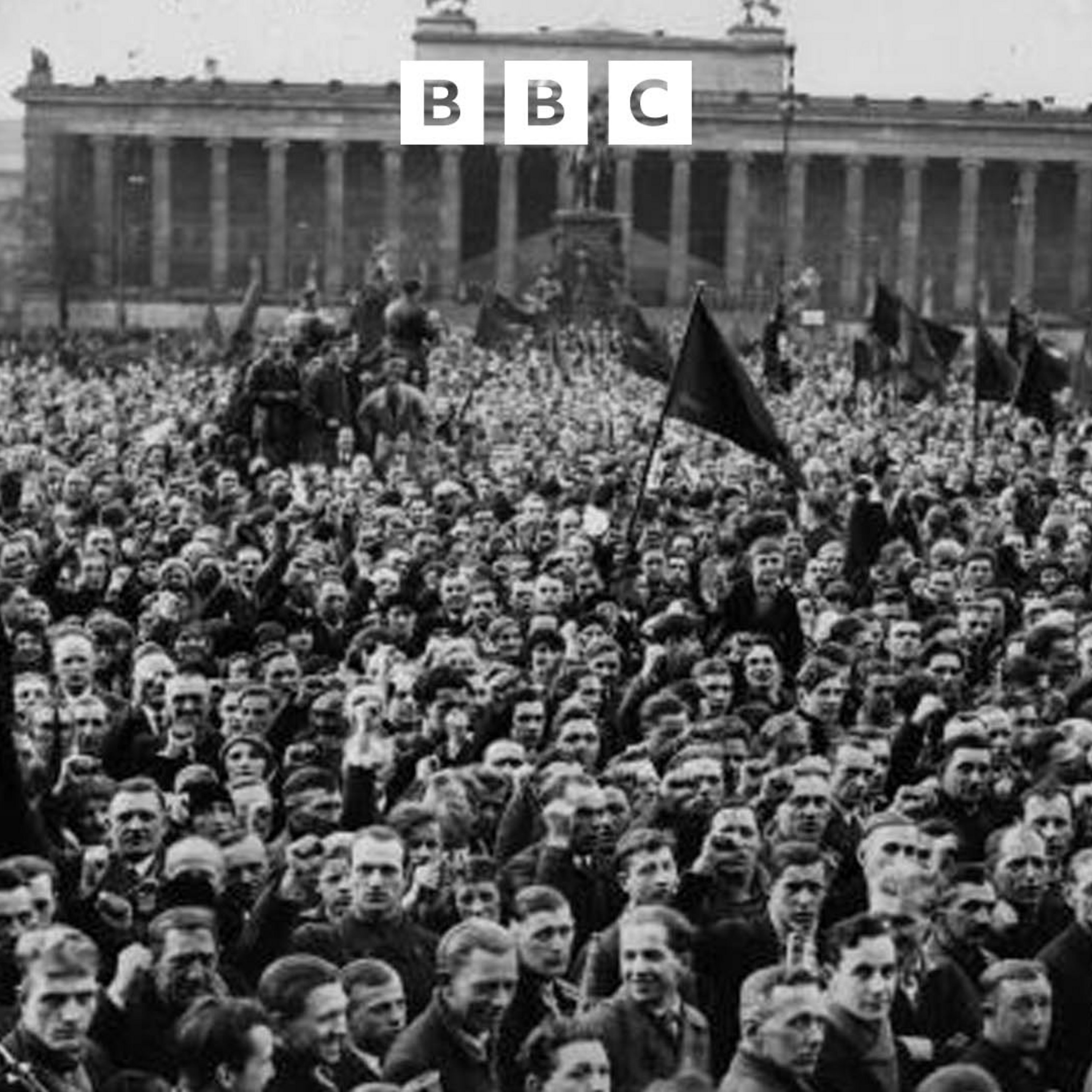
Last communist march before Hitler
On 25 January 1933 the last legal communist march was held in Berlin.Just a few days later Adolf Hitler became Chancellor of Germany.Soon the Communist Party was banned and the Nazi grip on power was complete.Eric Hobsbawm was a schoolboy communist at the time. He spoke to Andrew Whitehead in 2012.(Photo: Communist rally 1932. Credit: Hulton Archive/Getty Images)

The Dambusters
In the early hours of 17 May 1943 a bold World War II attack destroyed two dams in the Ruhr Valley in Germany's industrial heartland, causing 1,600 casualties and catastrophic flooding which hampered the German war effort.The dams were highly protected but 617 Squadron of the Royal Air Force had a new weapon – the bouncing bomb. Invented by Barnes Wallis, the weapon was designed to skip over the d
German child evacuees of World War Two
Beginning in 1940 thousands of German children were evacuated to camps in the countryside to avoid the bombs of World War Two.These camps were seen as safe places where they could continue their education but also where Nazi beliefs could be taught. Alex Collins has listened to archive recordings from "Haus der Geschichte der Bundersrepublik Deutschland" in Bonn one of Germany's national history m
World War II victory in North Africa
Peter Royle, 103, endured a month of solid fighting in the hills outside of Tunis in 1943. Eventually the Allies prevailed and took more than 250,000 German and Italian prisoners of war. They declared victory in Tunisia on 13 May. Peter came close to dying many times. He recalls how he once hummed God Save the King to prevent himself being shot by friendly fire. He was under the command of Field M
Warsaw Ghetto uprising
In May 1943, the uprising in the Jewish Ghetto in Warsaw in Poland came to an end. The Germans had crushed the uprising and deported surviving ghetto residents to concentration camps.Simha "Kazik" Rotem was one of the Jewish fighters who survived to tell his story.He spoke to Louise Hidalgo in 2010.(Photo: Warsaw Ghetto. Credit: HUM Images/Universal Images Group via Getty Images)
Pink Triangles: Gay men in Nazi concentration camps
In 2009, Rudolf Brazda, one of the last known survivors of the Pink Triangles, returned to the former site of Buchenwald concentration camp where he’d been imprisoned during World War Two, for being gay in Nazi Germany. In never previously broadcast recordings, taped by Jean-Luc Schwab, who wrote Rudolf’s biography, we hear Rudolf’s reaction to returning as a 95-year-old man. Jean-Luc Schwab who b
Families interned in WW2 China
Despite facing malnutrition, starvation and disease, Christopher John Huckstep's father set up a school in the Japanese internment camp where his family was sent in 1943.Herbert Huckstep ensured the 350 children of Lunghwa Civilian Assembly Centre were taught a wide range of subjects using brown paper bags to write on. The school was called Lunghwa Academy and it had its own badge, motto and certi
World War Two child evacuees in Britain
The 1 September 1939 was Kitty Baxter’s ninth birthday, it was also the day her life and millions of other people’s changed with the beginning of World War Two. Kitty was among the hundreds of thousands of children taken out of UK cities and into the countryside, away from the risk of German bombs. She’s been speaking to Laura Jones.(Photo: child evacuees leaving a London train station. Credit: Ge
Shanghai at War
In 1937, Japanese forces entered Shanghai - spelling the end of a period when the Chinese city had been a thriving commercial centre governed by international powers and known as the "Paris of the East". During the eight-year Japanese occupation, local people in Shanghai endured starvation and brutal treatment; while foreigners scrambled to escape as their lifestyle of servants and glamourous part
Britain's secret propaganda war
How sex, jazz and 'fake news' were used to undermine the Nazis in World War Two. In 1941, the UK created a top secret propaganda department, the Political Warfare Executive to wage psychological warfare on the German war machine. It was responsible for spreading rumours, generating fake news, leaflet drops and creating fake clandestine German radio stations to spread misinformation and erode enemy
Broadcasting D-Day
Hear how the BBC reported the Allied invasion of Nazi-occupied France on June 6th 1944. The operation was a crucial step in the liberation of western Europe. Using original BBC reports from the time - from Chester Wilmot, Richard Dimbleby, Robin Duff, Ward Smith and Alan Melville - we tell the story of D-Day.
Photo: D-Day Landings: US troops in an LCVP landing craft approach Omaha Beach in Collevi
D-Day
Eyewitness accounts of the Allied landings on the coast of Normandy during World War Two on 6 June 1944. The massive operation was a crucial step in the liberation of western Europe from years of Nazi rule and the defeat of Hitler's Germany. In this episode, we present the accounts of veterans held in the BBC archive. Photo: The photo titled "The Jaws of Death" shows a landing craft disembarking U
China and Japan at War
Japanese troops reached the Chinese city of Nanjing in December 1937. The violence that followed marked one of the darkest moments in a struggle that continued throughout WW2. Rebecca Kesby has been speaking to former General Huang Shih Chung, who survived the slaughter in Nanjing as a boy and then fought in China's war of resistance against the Japanese.Photo: Huang Shih-Chung as a young soldier
Berlin's Rubble Women
At the end of WW2 much of Germany's capital had been destroyed by bombing and artillery. Almost half of all houses and flats had been damaged and a million Berliners were homeless. Caroline Wyatt has been speaking to Helga Cent-Velden, one of the women tasked with helping clear the rubble to make the city habitable again.Photo: Women in post-war Berlin pass pails of rubble to clear bombed areas in
The Arnhem Parachute Drop
Thousands of Allied troops parachuted into the Nazi-occupied Netherlands in September 1944. At that point, it was the most ambitious Allied airborne offensive of World War Two. British, American and Polish troops were dropped behind German lines in an attempt to capture a series of bridges on the Dutch/German border.
Mike Lanchin has spoken to Hetty Bischoff van Heemskerck who, as a young woman, w
The Climbers of Leningrad
Mountaineers risked their lives to camouflage churches and palaces in the great Russian city during World War Two. The city was besieged by the Germans and under bombardment. The climbers used paint and canvas to conceal the landmarks from enemy attack. Mikhail Bobrov was just 18 years old when first got sent up the city's spires. He's been speaking to Monica Whitlock about his wartime experien
The Fake IDs That Saved Jewish Lives
Soon after Hitler ordered the invasion of Hungary in March 1944, the Nazis began rounding up hundreds of thousands of Hungarian Jews. Most were immediately sent to their deaths in the concentration camps at Auschwitz-Birkenau. David Gur was a member of the Jewish Hungarian underground, who helped produce tens of thousands of forged identification documents. These allowed Jews to hide their true id
Saving Italy's Art During WW2
Italy's great works of art were threatened by bombing and looting during World War Two. But a plan known as 'Operation Rescue' was devised to keep the paintings and sculptures safe. Some were hidden in remote spots, others were moved to the Vatican. Pasquale Rotondi was a leading figure in the operation, his daughter Giovanna Rotondi spoke to Alice Gioia about his wartime work.Photo: St George b
Britain's Land Girls
Around 80 thousand women and girls volunteered to join the Women's Land Army during the Second World War. They helped provide vital food supplies to a country under siege. Kirsty Reid has spoken to Mona McLeod who was just 17 years old when she started working 6 days a week on a farm in Scotland. Mona has written a book about her experiences: 'A Land Girl's Tale'.Photo: Land girls carrying bundl
The Frankfurt Auschwitz Trials
Hear from one of the German prosecution lawyers who helped put Nazi war criminals on trial 20 years after World War Two had ended. Gerhard Wiese has been speaking to Lucy Burns about the trial, and about visiting the Auschwitz death camp with other members of the court.Photo: Members of the Frankfurt court and several journalists pass through the Auschwitz camp gate with the words "Arbeit macht f
The Sinking of the Lancastria
On 17 June 1940, a packed British troopship was sunk off the coast of France by German bombers. The ship had just picked up thousands of British military personnel left behind in France after the evacuation of the army at Dunkirk. It's believed around 5,000 people lost their lives. It was one of the worst maritime disasters in British history and news of the sinking was initially supressed in Brit
The Roma Victims of the Holocaust
In 1942, the fascist government of Romania deported 25,000 of its Roma citizens to the former Soviet territory of Transdniestria. Half of them died of hunger and disease. Dina Newman spoke to one Roma Gypsy man who was five years old when he was sent to Transdniestria with his family. Photo: Nomadic Roma in Bucharest, Romania, outside their tent. Circa 1930. (General Photographic Agency/Getty Imag
The Katyn Massacre
Tens of thousands of Polish officers were secretly executed in the USSR during World War 2. The German occupying forces reported the first mass grave, in the village of Katyn in 1943, but Moscow only admitted to the killings in 1990. Dina Newman speaks to the son of one of the murdered officers, Waclaw Gasiorowski. Photo: Gasiorowski family in Warsaw in 1936. Credit: family archive.
The Germans Occupy Prague
On March 15th 1939, the German army occupied Czechoslovakia. Witness hears the story of one young boy who watched the German troops march into Prague and who later escaped on the Kindertransport. These were trains that brought thousands of mostly Jewish children out of Austria, Germany, Poland and Czechoslovakia, without their parents, to safety in Britain. That young boy went on to become a Briti
Sara Ginaite Lithuanian Jewish Partisan
During World War Two, a young Jewish woman, Sara Ginaite, escaped from the Kaunas Ghetto in Lithuania to fight the Nazis, With her husband Misha, she joined a detachment of communist-led partisans in the Rudnicki forest . They took part in the liberation of Vilnius, where she was famously photographed by a Soviet officer. Now in her 90s, Sara speaks to Witness.
Photo: Sara Ginaite, a Jewish Lithua
Soviet Woman Bomber Pilot
Yelena Malyutina was a Soviet female bomber pilot who fought in WW2 and was wounded in action in 1944. She was in one of the three Soviet women's flying regiments which fought on the front line. Before her death in 2014, she was interviewed by Lyuba Vinogradova, author of 'Defending the Motherland: Soviet Women' who fought Hitler's Aces. Dina Newman reports. Photo:Yelena Malyutina and Lyuba Vinogr
Italy's Partisan Fighters
In September 1943, Partisan fighters in Italy began organising in large numbers to help the Allies defeat Nazi Germany and rid their country of the remnants of Benito Mussolini's fascist state. As World War Two drew to a close, there was vicious fighting in many villages between the Partisans and Italians still loyal to the dictator. Alice Gioia speaks to a brother and sister who both took part in
The Fall of Paris
In June 1940, German forces, having swept across Belgium and Holland, and into France, were closing in on Paris. In the face of the German army, millions of French, Dutch and Belgians had taken to the roads in one of the biggest exoduses of people the world had ever seen. Witness talks to Daphne Wall, who lived in Paris in 1940 as a young English girl and whose family joined the exodus south as Pa
The Imaginary War Heroes
During World War Two, Soviet propaganda promoted a heroic feat that never happened. It was the story of a small ill-equipped unit who destroyed over a dozen German tanks, delaying the German advance on Moscow. But it's unlikely that they destroyed a single tank, despite being widely promoted as heroes, during and after the war.Photo: Russian President Dmitry Medvedev walks near World War Two veter
The Death of General Patton
In December 1945, one of America's most famous miltary commanders, General George S Patton, died from injuries sustained in a car crash, just months after the end of the Second World War. Witness talks to his grandson, George Patton Waters, about his memories of this colourful and often unorthodox man.Photo: General George Patton in Paris in August 1945 to celebrate the first anniversary of the c
Surviving Pearl Harbor
On 7 December 1941, Japan launched a surprise attack on the US naval base at Pearl Harbour, Hawaii. Thousands of American servicemen died in a raid which brought their country into World War Two. Former Navy mechanic, Adolph Kuhn, tells Witness how he survived.(Photo: The USS Arizona sinking at Pearl Harbor. Credit: Getty Images)
The Bari Raid 1943
How a devastating air raid on the Italian port of Bari during World War Two led to the deadly release of mustard gas. Winston Churchill ordered the incident to be kept secret for years. We hear from Peter Bickmore BEM, who was injured during the raid.(Photo: Seventeen Allied ships go up in flames in Bari, Italy, after a raid by German bombers on 2 December 1943. Credit: Keystone/Getty Images)
Surviving Ravensbruck
In November 1938, the SS commander Heinrich Himmler ordered the construction in Nazi Germany of the only concentration camp built specifically for women. It would be called Ravensbruck. Selma van der Perre tells Witness about the horrors of life in Ravensbruck, including experiments on women and children, and how she survived.Photograph: women at Ravensbruck concentration camp (Credit: Das Bundesa
The Battle of El Alamein
In October and November 1942, the Allies fought a famous battle against German and Italian troops close to the small Egyptian village of El Alamein.General Bernard Montgomery, the British commander, knew that victory was crucial. But his offensive was in danger of stalling almost as soon as it began. Witness speaks to Len Burritt who was then a 24 year old wireless operator with the British Sevent
The Leningrad Symphony
In an act of defiance during World War Two, starving musicians in the besieged city of Leningrad performed Shostakovich's new Seventh Symphony. The piece was composed especially for the city, which had been cut off and surrounded by invading Nazi troops. During the siege an estimated one million civilians died from starvation, exposure, and the bombardment by German forces. Hear archive recordings
The Auschwitz Cellist
In 1943, the cellist, Anita Lasker-Wallfisch, was sent to the Auschwitz concentration camp. She expected to be killed in the gas chambers, but survived because she was recruited to play in an orchestra set up by the women prisoners. Anita Lasker-Wallfisch talks to Witness about her experience and the power of music in the darkest moments in history.PICTURE: Anita Lasker-Wallfisch in 1938 (Private
The Dieppe Raid
In the early hours of 19th August 1942, a convoy of Allied ships approached the port of Dieppe carrying more than 6,000 troops. The mainly Canadian force was supposed to carry out a hit and run raid that would help the Allies learn and plan for the real invasion of occupied France later in the war. But almost immediately things started to go wrong. Ronald Miles, then aged 20, was a crew member on
Scouts in the Warsaw Uprising
On 1 August 1944, the Warsaw Uprising against the Nazi occupation of Poland began. Hundreds of thousands of people died during the fighting and Poland's capital was almost completely destroyed. Among the underground fighters were children, many of them members of the Scout movement. Andrzej Slawinsky was one of them.(Photo: Insurgents on the streets of Warsaw, 1944. Credit: HO/AFP/Getty Images)
German Re-Armament
In the 1930s Hitler began to rebuild Germany's armed forces. When WW1 ended Germany had been banned from having an air force under the Treaty of Versailles. Hear from Eric 'Winkle' Brown who as a very young man was invited to see the new planes and helicopters that had been developed for the Luftwaffe. He later went on to become a flying ace in Britain's RAF.
Photo: September 1938: Giant bombers
Red Cross Visits Nazi Concentration Camp
In June 1944 the International Red Cross was allowed by the Nazis into the Theresienstadt concentration camp. The Nazis tried to use the visit to project a positive image of their treatment of the Jews. Hear from Ela Weissberger, who was an 11-year-old prisoner in the camp.(Audio archive courtesy of The National Centre for Jewish Film at Brandeis University)(Photo: Children in Theresienstadt, take
The Eichmann Tapes
The Nazi war criminal Adolf Eichmann recorded hours of interview about his involvement in the Holocaust, before his capture in 1960 by Israeli agents. Witness talks to the daughter of the Dutch journalist, Willem Sassen, who recorded the Eichmann interviews in Argentina. Saskia Sassen talks about the tapes, her memories of their secret visitor and the night the Israelis snatched Eichmann off the s
The True Story of "Whisky Galore"
In February 1941, a ship carrying nearly 30,000 cases of whisky was wrecked off the Scottish island of Eriskay in the Outer Hebrides. The islanders began to salvage the bottles from the wreck - and the incident later became the inspiration for the film "Whisky Galore".Photo: An assortment of bottled whisky is displayed at Glenkinchie distillery March 13, 2008 in Edinburgh, Scotland.
The Buildup to World War Two
In 1939 tension was growing in Europe, over Nazi Germany's expansionist plans. One young British camerman headed to Danzig (now Gdansk) to film what happened next. His name was Douglas Slocombe and he is now 101 years old. Hear his story.(Photo: Hitler Youth marching over a bridge in Danzig in 1939. Copyright: Fox Photos/Getty Images)
War Brides
In February 1946 the first 'war brides' ship sailed from the UK to Canada reuniting women with the foreign husbands they'd married while serving in the UK during World War Two. Witness speaks to two women who sailed on the Mauretania.(Photo: Arnie and Grace Shewan's wedding day 1944. Courtesy of Grace Shewan)
Colossus: the World's First Electronic Computer
In February 1944, the world's first electronic computer began attacking encrypted Nazi messages, from the secret British codebreaking centre at Bletchley Park. Hear from one of the engineers tasked with building and maintaining Colossus during World War Two.
WW2, the Holocaust and Rome
In 1943, Rome's Jewish citizens were promised that if they gave gold to the Nazis, they would escape deportation. Despite handing over 50kg of gold - more than 1,500 of the city's Jews were rounded up and sent to the death camps. Alan Johnston reports from Rome.Photo: Survivor Settimia Spizzichino (far right)
The Minnesota Starvation Experiment
During World War Two conscientious objectors could volunteer for medical experiments. Hear the story of one young American who had refused to fight, but was prepared to starve for his country. Marshall Sutton is now 95 - he took part in the Minnesota Starvation Experiment in 1944 in an attempt to help scientists understand how best to look after starving civilians in war-torn Europe.(Photo: Marsh
Lord Haw Haw - Britain's Most Hated WW2 Traitor
On the 3rd of January 1946 Britain's most famous wartime traitor was hanged. His name was William Joyce but he was better known as Lord Haw Haw. Throughout WW2 he broadcast Nazi propaganda from Germany to Britain. At the end of the war he was hated by much of Britain, but we hear from the son of one man who tried to save him from execution.
Prison Camp in WW2 Manila, Philippines
Thousands of foreign civilians were interned in camps when Japanese troops occupied the Philippines in World War II. Many of the inmates suffered from acute malnutrition. We hear the story of one boy, Desmond Malone, who was interned at the Santo Tomas camp in Manila.Photo: American inmates of the Santo Tomas internment camp after liberation by US forces in February 1945 (AP Photo/Pool)
The Tehran Conference of World War Two
In November 1943, Stalin, Roosevelt and Churchill all met together for the first time to discuss the progress of World War Two. The meeting was held in Tehran over four days.(Photo: Joseph Stalin (left), Franklin Roosevelt (centre), Winston Churchill (right). Credit: Keystone/Hulton Archive/Getty Images)
Degenerate Art and the Nazis
In 1937, Hitler and the Nazi party organised a huge exhibition of modern art in Munich. It was designed to ridicule works of art which they disapproved of - they called it Degenerate Art. It went on to be one of the best attended modern art exhibitions of all time.Picture: Two men prepare to hang German Expressionist painter Max Beckmann's triptych 'Temptation' at the 20th Century German Art Exhi
Tokyo Rose - The Most Hated Woman in America
In 1949, Iva Toguri, a Japanese-American woman, was wrongly convicted for making propaganda broadcasts on behalf of Japan during the Second World War. She was accused of being the infamous radio presenter known to American servicemen as "Tokyo Rose". Witness speaks to Ron Yates, a reporter whose investigation helped to clear Iva Toguri's name.PHOTO: Iva Toguri in the 1940s (US National Archives)
Escape from Sobibor Death Camp
Hundreds of Jewish slave labourers in a Nazi death camp staged a revolt and escaped in October 1943. Many were caught and shot. Around 50 made it to the end of the war.Listen to the story of Thomas Blatt, one of the survivors.Photo: Sobibor Death Camp (United States Holocaust Memorial Museum)
Danish Jews Escape the Holocaust
In October 1943, at the height of the Second World War, most of the Jews in Denmark evaded Nazi plans to send them to death camps. They were warned about a planned roundup by a German diplomat. Hear the story of Bent Melchior who was 14 years old when his family made the journey to safety in neutral Sweden.(Photo: Bent, aged 15 and living in Sweden)
African Troops During WWII
During World War II, African soldiers were a vital part of the Allied forces. Many of them were sent to Burma as reinforcements for the British troops there. Hear just some of their memories - recorded by the BBC in the 1990s.Find out more about African troops in Burma in Another Man's War: The Story of a Burma Boy in Britain's Forgotten Army, a book by former BBC correspondent Barnaby Phillips,
Appeasement
On September 30th 1938, Neville Chamberlain returned from negotiations with Hitler promising "peace in our time". He had agreed for Hitler to take over the Sudetenland in western Czechoslovakia, as part of a policy known as appeasement.
Special Operations Executive
In World War II , Britain set up a secret organisation which waged war in Nazi occupied Europe. Noreen Riols, a former member of SOE, who helped train the agents, recounts her experiences in Churchill' s secret army.(Photo: A group of SOE agents during training. BBC copyright)
Scientists Flee Nazi Germany
The early 20th Century was a golden age for physics with pioneers such as Max Born, Robert Oppenheimer and Werner Heisenberg working together at Gottingen University in Germany. But the rise of Hitler forced Born and many other Jewish scientists to flee into exile. Max Born's son, Gustav, tells Louise Hidalgo about his memories of the period and his father's friendship with Albert Einstein.(Photo: