Politics in the Rearview Mirror
This podcast comes from the School of Government and International Affairs (SGIA) at Durham University. It draws on the expertise of academics and students to place current affairs in context. Each episode explores the politics behind the news and examines wider political and international developments.
Episodes

Generative AI's Impact on Work: A Data-based Review of 2022-2026 and its Implications for Higher Education
Are we headed for a total white-collar wipeout, or is generative AI just a "stochastic parrot" prone to producing unreliable slop? Drawing on systematic data from 2022 to 2026—including job postings, software uploads to GitHub and iOS Apps launched, and a dramatic rise in AI-generated legal filings in US courts —this episode explores why the predicted mass unemployment hasn't arrived
The Cost of Conscience: Why Effective Boycotts Must Hurt
In today’s world, our wallets are often our loudest megaphones, but when we choose to boycott a brand or a global event, what are we actually doing? Whether you are passionate about consumer activism or skeptical of "virtue signaling," this episode offers a deep, philosophical look at the challenges and opportunities of boycotts. Joining this episode to navigate the complex moral landsca
Peeking Through the Fog of War: Your Watchlist for the War in Iran
On February 28th, 2026, Israel and the U.S. launched Operation Epic Fury. While the headlines are filled with news of airstrikes on Tehran and the death of Ayatollah Ali Khamenei, the true trajectory of this war will be decided far from the front lines. In this episode, we peek through the "fog of war" to offer a watchlist for the coming weeks. We dive into why the Strait of Hormuz has b
Midnight Hammer, Protests and The Geneva Talks: US-Iranian Diplomacy Under the Shadow of War
**Recorded on Tuesday, 24 February 2026, before the start of the war on 28 February 2026 **Is the Iranian regime facing a point of no return? Following the largest domestic uprising since 1979—which saw five million people take to the streets—and a brutal state crackdown resulting in an estimated 36,500 civilian deaths, the Islamic Republic finds itself in a desperate "survival mode". De
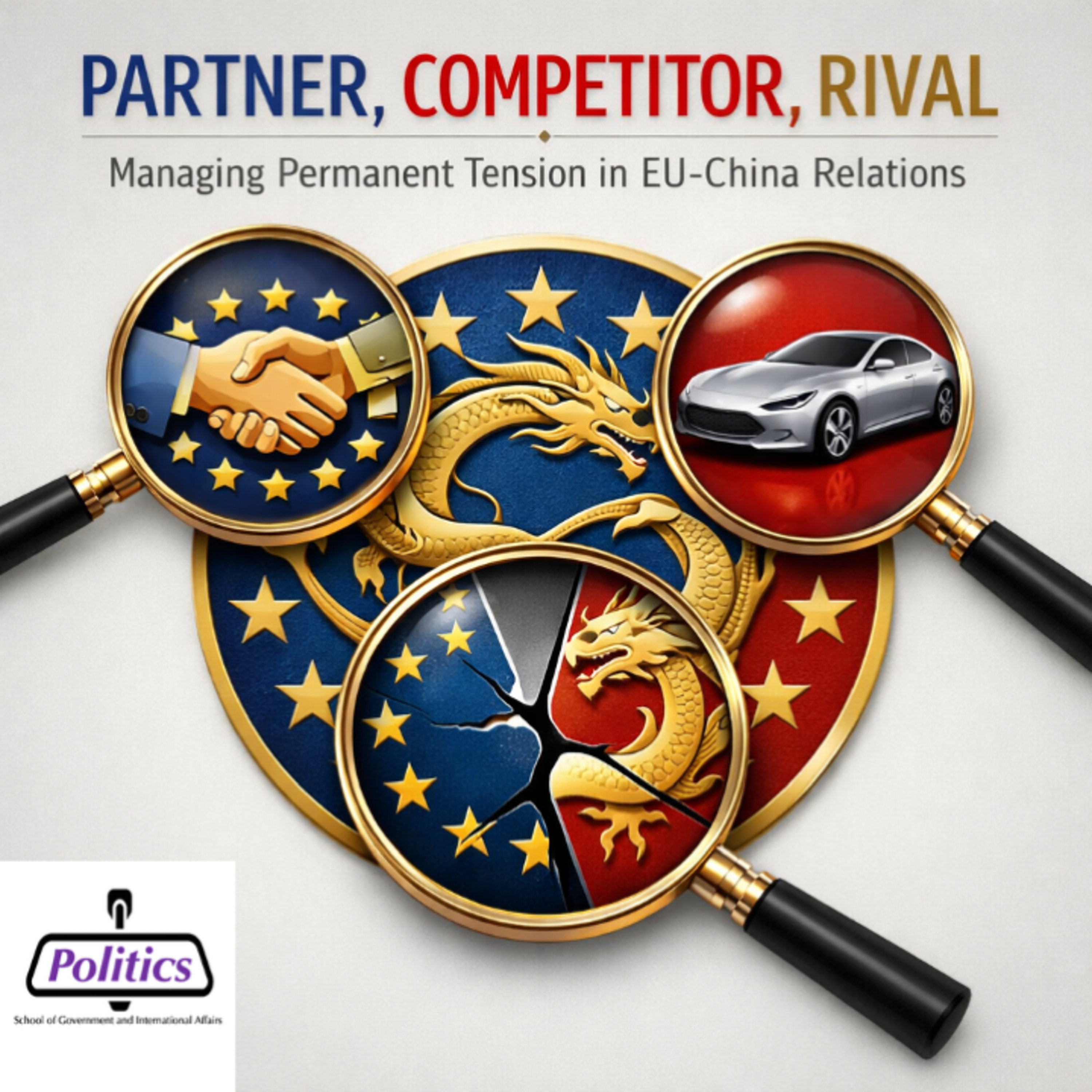
Partner, Competitor, Rival: Managing Permanent Tension in EU-China Relations
In recent years, Europe's China strategy "change through trade" has faced reality: China is simultaneously a partner, an economic competitor, and a systematic rival. As the EU struggles to find its footing between a rising China and an increasingly unreliable US, this episode explores the EU's struggles of "de-risking" its relationship with China and its quest for strat
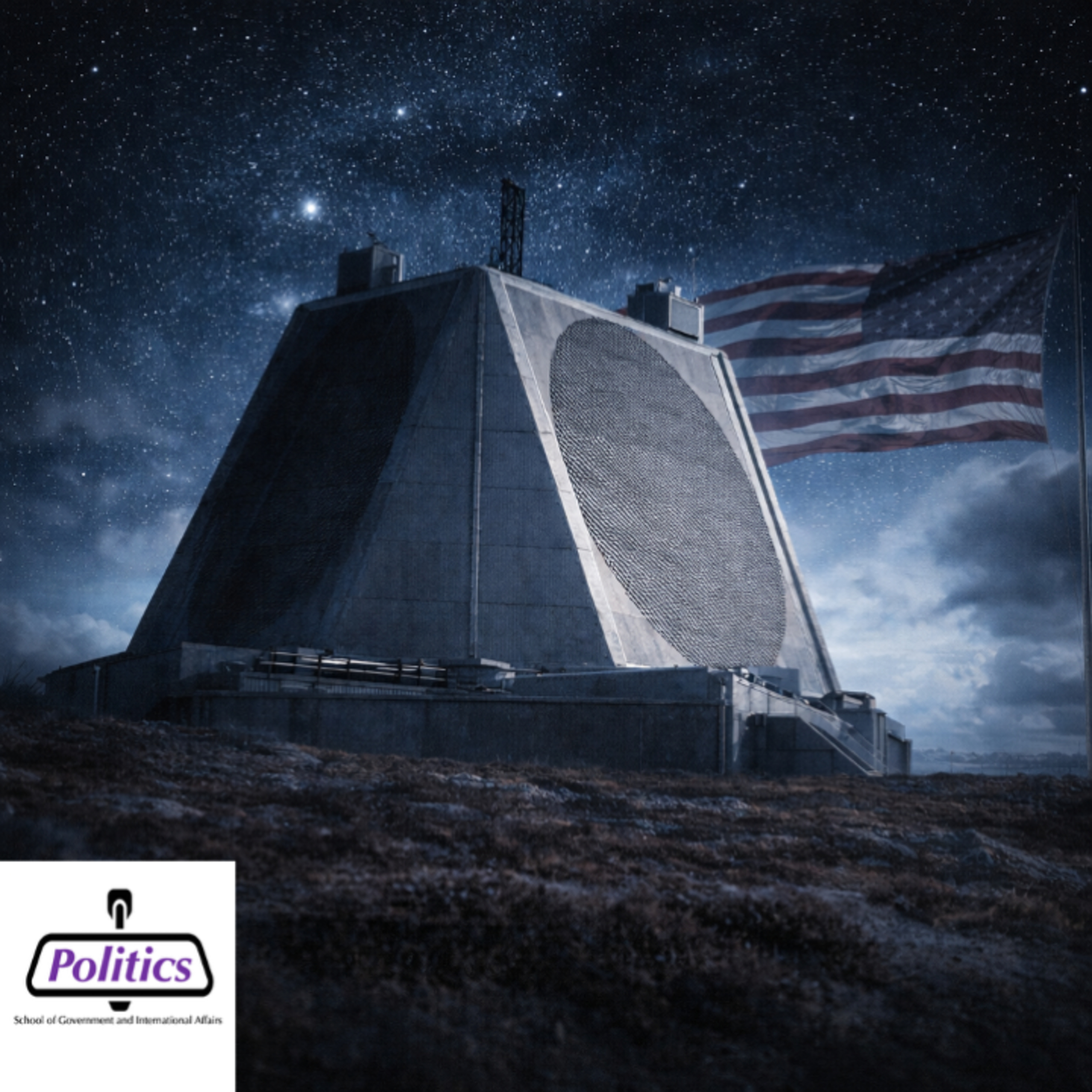
Ground Control: The Secret Geography of US Military Might
In this episode, we peel back the curtain on the "hidden geography" of American global power: the network of concrete and steel ground installations that serve as the eyes and ears of the US military. While aircraft carriers often dominate the headlines, the true foundation of US dominance lies in sites like Pituffik Space Base in Greenland and RAF Menwith Hill in the UK, which act as cr
Sex, Money, and Power: The Anatomy of Political Scandals
Do political scandals contribute to the decay of liberal democracy, are they a sign of democracy working, or both? In this episode, Prof. Patrick M. Kuhn dives into the political science behind the headlines to unpack the dynamics and consequences of political transgressions. From the recent unsealing of the Epstein files to the falls of prime ministers and mass ministerial resignations across Eur
The Constitutional Paradox: Can Democracy Survive Emergency Powers?
Can a democracy use autocratic methods to save itself without losing its soul? In this episode, Prof. Patrick M Kuhn explores the "constitutional paradox"—the idea that liberal democracies may occasionally adopt the very autocratic tools they are built to prevent to survive existential threats. Starting from President Trump's threat to invoke the Insurrection Act of 1807, this episod
The Collapse of the Post-1945 International Order: What’s Next?
This episode explores the rapid disintegration of the post-1945 international order during the second term of the Trump presidency. Following extraordinary recent events, such as the military capture of President Nicolas Maduro and the US’s interest in Greenland, this episode (building on the earlier episode linked below) discusses what might come next. Dr. Dennis Schmidt and Prof. John Williams d
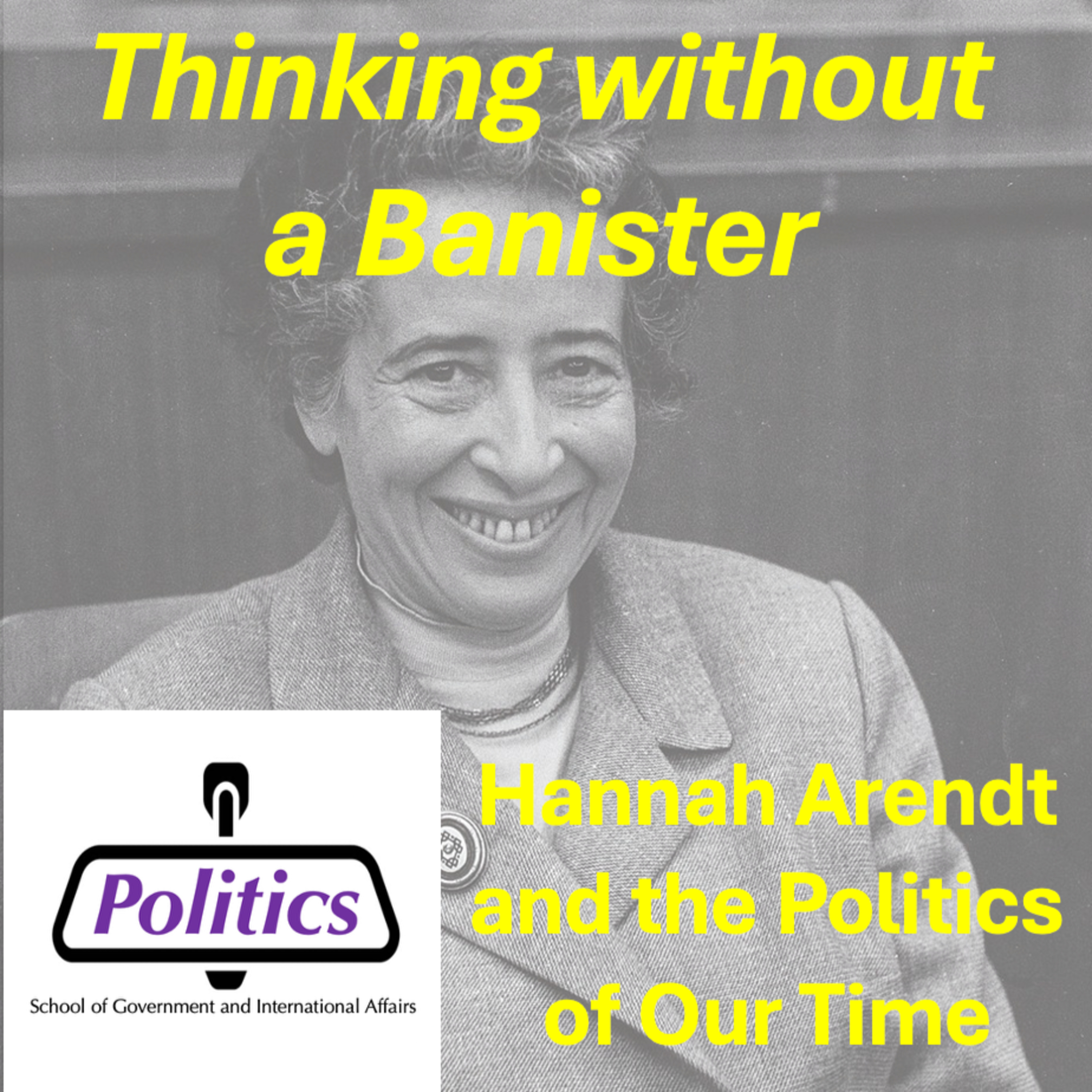
Thinking Without a Banister: Hannah Arendt and the Politics of Our Time
How can Hannah Arendt's work help us make sense of today's politics? In this episode, we bridge the gap between her "dark times" and our "post-truth" era to discover why her scholarship is the ultimate survival guide for modern democracy. Dr Oliver Belcher, Prof. Ilan Baron, Prof. Maria Dimova-Cookson, Prof. Christopher Finlay, and Prof. John Williams illuminate how Are
From the Bazaar to the Barricades: What Makes the Current Protest in Iran Different
This episode covers the ongoing mass protests in Iran, which started in December 2025 and spread to multiple cities in several provinces, involving an unusually wide range of social groups. Dr. Marzieh Kouhi-Esfahani, Assistant Professor in Politics and International Relations of the Middle East at Durham University's School of Government and International Affairs, discusses the causes of the
The White House Handshake: How Al-Sharaa Went from Al-Qaeda Insurgent to Global Diplomat
This episode discusses a significant political event that remained largely outside the media spotlight: the White House visit of Ahmed Al-Sharaa, the former al-Qaeda insurgent and leader of Hayat Tahrir al-Sham (HTS), who ended Syria’s brutal 13-year civil war. How did a man once listed as a US terrorist end up shaking hands with the American President? Joining the show is Dr. William Plowright, a
Bullies, Follies, and Decadent Orders: Nigeria's CPC Designation and the Practice of International Bullying
In November 2025, the Trump government designated Nigeria a 'Country of Particular Concern' (CPC) under the 1998 International Religious Freedom Act, threatening to end aid or even launch a military attack. Is this merely a policy decision, or part of a deeper geopolitical dynamic? This week, we explore the complex intersection of US foreign policy, religious freedom, and international ord
Stealth Taxes & Political Suicide: The Politics Behind the Run-Up to the UK's Budget 2025
The upcoming UK Budget statement is more than an accounting or economic exercise—it’s politics in action. Chancellor Reeves faces a defining challenge of modern governance: how to finance public demands and defence commitments while adhering to strict fiscal rules and Labour’s promise not to raise Income Tax, VAT, or National Insurance rates for working people. This episode explores the politics o
UK Migration Policies 2025: Public Opinion, Politics, and Policy Alternatives
While UK net migration has been declining in 2024, the public's concern about immigration has been increasing, making it the public's main issue. In this episode, Dr. Omar Hammoud-Gallego, an Assistant Professor of Public Policy in the School of Government and International Affairs, who researches migration and refugee policies, discusses public opinion and perceptions of migration, the re
Assassination as Policy: The Militarization of US Law Enforcement
When US President Trump and Defense Secretary Hegseth authorized lethal strikes against alleged Venezuelan drug boats, were they fighting "narco-terrorists" or normalizing uncontrolled executive power? Join us as Prof. Christopher Finlay, Professor in Political Theory and Head of the School of Government and International Affairs (SGIA) at Durham University, draws on his essay "Bewa
Anti-Semitism, Israel, and the Problem of Proxy Representation
In this episode, we take another look at the Israeli-Palestine conflict, which some have described as the “third rail” in British academia. With the ceasefire at the verge of collapse and domestic tensions remaining high in the aftermath of the attack on the Synagogue in Manchester, the urgent need for a public, thoughtful conversation about Jews, Israel, and Palestine is clear. Joining the podcas
The Israel-Gaza Conflict, Palestinian Protests in the UK, and the Use of (Counter-) Terrorism
In this episode, Dr. Alice Finden, an Assistant Professor of International Relations in the School of Government and International Affairs (SGIA) at Durham University, draws on her research to discuss the political implications of deploying the concepts "terrorism" and "counterterrorism" in the context of the Gaza conflict and UK domestic politics. To learn more about our guest
Peaceful by Design? The Return of Political Violence in Democracies
Why is political violence making a comeback in the world’s most established democracies? From the storming of the U.S. Capitol in 2021 to riots in Brazil in 2023 and extremist attacks across Europe, violence is again being used to achieve political goals. In this episode Prof. Patrick M Kuhn digs into the paradox at the heart of democracy: why systems built on peaceful disagreement are seeing risi
The US Shuts Down (Again): The Politics Behind the 2025 Government Shutdown
On the 1st October 2025, the U.S. government has once again ground to a halt — hundreds of thousands furloughed, non-essential federal services frozen, and the world watching a political standoff the Republican president and congressional Democrats unfold. In this episode, Prof. Patrick Kuhn, with inputs from Dr. David Andersen and Dr. Neil Visalvanich, unpacks the mechanics and meaning of the cur
European Security in Crisis: Rearmament Challenges and the New Drone Threat
Russia’s full-scale invasion of Ukraine has reshaped Europe’s security landscape. With Donald Trump back in the White House and questions about U.S. commitment to NATO, European states are rapidly rearming and investing in new defence strategies. At the same time, repeated Russian airspace violations and suspicious drone activity are raising alarms across the continent.In this episode, we speak wi
Make America Elect Trump Again: Unpacking the 2024 Presidential Election
In this final episode of our third series, we will try to make sense of the 2024 US Presidential election. Eight months on, we will discuss what we know about how the Trump Campaign managed to win the US Presidential election and what this means for US electoral politics going forward. Joining me to do so are Drs. David Andersen and Neil Visalvanich, both of whom are Associate Professors of US Pol
Your Questions: US Bombs on Iran and the Gender Gap in Party Support
In this episode, Prof. John Williams, Dr. Dennis Schmidt, and Dr. Tessa Ditonto answer your questions on the legality of the US bombardment of Iranian nuclear sites and the reasons for the gender gap we observe in party support in the US and Western Europe.To learn more about our guests' research, visit their websites:John Williams: https://www.durham.ac.uk/staff/j-c-williams/Dennis Schmidt: h
Israel Strikes Iran: Why Now, What Comes Next, and Consequences
This episode looks at the escalating conflict between Israel and Iran, which started on the night of Friday, 13th June 2025, when Israel bombed over 100 military and nuclear facilities. Since then, the conflict has escalated with Israel and Iran sending drones and firing rockets at each other. In recent days, the US has been moving naval and air force assets into the region, suggesting that it mig
The UK's Military Makeover: Assessing the Strategic Defence Review
In early June 2025, the government published the Strategic Defence Review (SDR), which was commissioned by Prime Minister Kier Starmer shortly after the July 2024 election. The SDR sets out 62 recommendations to transform the UK Armed Forces from hollowed-out forces into “war-fighting ready” capabilities, with a focus on expanding the nuclear deterrent, cyber and electronic warfare, autonomous sys
Drones, Bridges, and Bargains: Ukraine and the International Politics of War
In this episode, we are turning our attention to the war in Ukraine and two recent, bold attacks carried out by Ukraine's Secret Service deep within Russian territory. These aren't just isolated military actions; looking at them through the lens of the bargaining model of war and taking a broader international security perspective suggests that theirthe timing was carefully chosen and thei
Aid as Weapon: Why and How States Obstruct Access to Humanitarian Aid (Reposted)
In light of the devastating humanitarian situation in Gaza we are reposting episode 9 from our first series (published on the 6. December 2024), in which we talk to Dr. William Plowright, an Assistant Professor of International Security at the School of Government and International Affairs at Durham University, about his new book " War on Rescue: The Obstruction of Humanitarian Assistance in
Mad or Method? A Closer Look at the Madman Theory
This episode takes us into the world of foreign policy bluffing, nuclear strategy, and presidential unpredictability. We’re talking about the Madman Theory -- a term associated with colourful US Presidents like Richard Nixon or Donald Trump in combination with words like "unhinged" or "strategic genius". But what is the Madman Theory, really? Does acting crazy help a world lea
Musk's DOGE at Six Months: Achievements, Justifications, and Alternative Approaches
It has been half a year since President Trump announced the creation of DOGE, the Department of Government Efficiency, headed by Elon Musk. In the 8th episode of the first season, we discussed whether government efficiency is important, what efficiency reforms might look like, and what institutional hurdles and constraints DOGE might face. Now that the media focus on DOGE has died down and Musk is
Crushed and Scattered or Polls Apart? What Recent English Local Elections Can and Cannot Tell Us about Shifts in British Politics
A bit more than a week ago, on the 1st May 2025, a series of local and mayoral elections, as well as a Westminster by-election were held in England. The results showed a large swing to Reform UK. The two main parties, Labour and the Conservatives, both lost seats. The Conservatives suffered a particularly devastating loss of over 670 councillors and control of all 16 councils they had previously c
Silencing the Opposition: Jordan’s Islamist Ban in Regional Context
On the 23rd April 2025, Jordanian security forces raided the offices of the Muslim Brotherhood, the largest opposition movement of the kingdom, confiscating assets and property and outlawing all the group’s activities. This is not an isolated event. Rather, Jordan seems to be joining other countries in the MENA region by taking actions to sideline Islamist opposition parties in recent years.Dr. Ro
Why are the UK and US Governments bombing the Houthis in Yemen?
Due to current events, we are starting our third season with a bonus episode. On Wednesday, the UK government announced that it, together with the US, had bombed Houthi targets in Yemen to protect freedom of navigation in the Red Sea. In the bonus episode you are about to hear, I discuss with Dr. Tom Walsh, a former PhD Student and current Tutor at the School of Government and International Affair
Breaking the Cycle? The PKK, Erdoğan, and Öcalan's Call for a Ceasefire
On February 27, 2025, Abdullah Öcalan, the imprisoned leader of the Kurdistan Workers’ Party (PKK), called for the group to disarm and disband, signaling a possible end to the four-decade-long conflict with the Turkish state. A few days later, the PKK declared an immediate ceasefire. This development followed months of preparations and overtures from the Turkish government of Recep Tayyip Erdoğan,
International (Dis)Order: Trump, Ukraine, and the Shift in Global Order
President Trump’s unilateral attempt to end the war in Ukraine raised concerns among Western allies. Both his statements and actions have sparked widespread debates about diplomacy and power in the 21st century, and whether they signify an end to the rules-based international order established in the aftermath of World War II. Joining me online to unpack the concept of “international order”, what
No Citizenship for Refugees? The Politics Behind Labour's Immigration Policy Announcement
Migration remains one of the most contentious political issues, shaping debates on borders, identity, and economies, including in the UK. Earlier in February this year, the Labour government announced that those arriving irregularly to the UK, even if they are legitimate refugees, will be barred from ever becoming British citizens. Joining the show to discuss the politics behind this announcement,
Coal, Myths, and Legacy: The UK's 1984-85 Miner's Strike 40 Years On
40 years ago on Monday, 3rd March 1985, the 1984-1985 UK’s miners’ strike ended. The coal miners' strike aimed to prevent the closure of pits that the conservative government deemed “uneconomic”. Many observers regard the miners’ strike as “the most bitter industrial dispute in British history” and with 26 million person-days of work lost, it was the largest by impact since the 1926 General St
Germany is Heading to the Polls: A Look Back at the Campaign and a Look Ahead at Potential Outcomes
Germany is heading to the polls this coming Sunday (23rd February 2025) after the traffic light coalition between the Social Democrats (red), the Liberal Party (yellow), and the Greens (green) collapsed in November last year. In this episode, Dr. Moritz Osnabrügge outlines the main topics of the election campaign, how the campaign compared to 2021, what the latest polls predict, and what potential
White ‘Victims' & ‘Woke’ Villains: The Real and Imagined Targets of Trump’s South Africa Executive Order
This week we are looking at the politics behind one of the Executive Orders from President Trump. The Executive Order “Addressing Egregious Actions of the Republic of South Africa”, was issued on the 7th of February 2025. As justification for this order, President Trump cited South Africa’s Expropriation Act 13, which allows for land to be expropriated with nil compensation in limited circumstance
Tariffs, Trump, and Trade Wars: How tariffs work, who actually pays them, and how Trump currently uses them
"Tariffs, the most beautiful word in the dictionary!", President Trump exclaimed at one point during the election campaign. In office, he has (so far) announced general import tariffs against Columbia, Mexico, Canada, and the US, only to withdraw them once Columbia, Mexico, and Canada accepted to take back criminal immigrants or strengthen border controls, respectively. In this episode,
Breaching the Firewall: Will the German Christian Democratic Union's Accommodation of the Radical Right's Immigration Plan Payoff Electorally?
On Wednesday, the 29th of January 2025 Friedrich Merz, the leader of the mainstream conservative Christian Democratic Union (CDU), broke a longstanding taboo in German politics, the so-called "Brandschutzmauer" (firewall) by passing a non-binding motion to tighten immigration rules with the backing of the Alternative for Germany (AfD), a radical right party, with established links to Neo
The Undoing of Israel: The Impact of the War in Gaza on Israeli Politics and Society
On the 19th January 2024 a cease fire process between Israel and Hamas started, which will hopefully end the fighting and human suffering, which has been ongoing since the bloody October 7 attacks by Hamas in 2023. In season 1 episode 9 we have talked about the challenges Humanitarian Organizations face in getting aid into Gaza and to other vulnerable people to alleviate human suffering. In this e
The State of Brazilian and US Democracy: A Comparative View of Post-Electoral Riots in January 2021 and 2023
The peaceful transition of power is a hallmark of democracy. In January 2021 and 2023, the US and Brazil, respectively, both experienced post-electoral riots as supporters of the outgoing presidents ransacked government buildings. Four, respectively two years later Prof. Patrick Kuhn, a Professor of Comparative Politics at the School of Government, looks at the actions taken in those countries to
It's a Wrap! We'll Be Back with New Episodes in Mid-January 2025
To tell us what you like and dislike about the podcast please complete this 3min survey: https://forms.office.com/e/bv0tQMczUv.
The survey will remain open until 6th January 2025.
Music: The Good News by SHANTI from https://tunetank.com/track/263-the-good-news/
Aid as Weapon: Why and How States Obstruct Access to Humanitarian Aid
At the end of October 2024, Israel’s parliament voted to ban the UN's Palestinian refugee agency (Unrwa) from operating within Israel and occupied East Jerusalem. While most of Unrwa's projects take place in Gaza and the occupied West Bank, it relies on agreements with Israel to operate. Thus, on a practical level, the ban on interacting with Israeli officials means it is now almost impossible for
DOGE for Dosh: The Opportunities and Challenges of Government Efficiency Reforms
On the 12th of November 2024, President Trump announced that “the Great Elon Musk, working in conjunction with American Patriot Vivek Ramaswamy, will lead the Department of Government Efficiency (DOGE). Together, these wonderful Americans will pave the way for my Administration to dismantle Government Bureaucracy, slash excess regulations, cut wasteful expenditures, and restructure Federal Agencie
COP Out: Why Is Tackling Climate Change so Hard and Is the COP Process Fit for Purpose?
The 2024 United Nations Climate Change Conference or Conference of Parties (COP) at Baku in Azerbaijan closed at the end of November 2024. The COP aims to limit global warming to 1.5 degrees Celsius, emphasising the urgent need for investment in climate action. The COP29 Presidency also stresses the importance of operationalising the Loss and Damage Fund to support vulnerable communities, especial
Behind the Silence: The Human Cost of Sudan’s Ongoing Conflict
This episode looks at a brutal Sudanese civil war, which started in April 2023 and so far has displaced over 8 million people and caused tens of thousands of deaths., but has been happening largely outside the global media spotlight. The conversation with Dr. Will Plowright, an Assistant Professor of International Security in the School of Government and International Affairs, summarizes Sudan’s r
Commonwealth Calls for Reparations: A Philosophical Perspective
Earlier in October CHOGM, the Commonwealth Head of Government Meeting, took place in Samoa, where Caribbean leaders succeeded in including a call for reparatory justice regarding the trans-Atlantic trade in enslaved Africans and chattel enslavement in the Leader
Statement (point 22, page 8) despite the UK government's objection. In this episode Dr. Elizabeth Kahn, an Associate Professor of Politic
Craziest Election Ever or Just Another US Presidential Race? Contextualising the 2024 Race for the White House
After months of primaries, a late change candidacy, blockbuster conventions, two assassination attempts, and hundreds of rallies nationwide, US citizens will finally be heading to the polls this Tuesday. To reflect on the 2024 race to the White House and put it into context by comparing it to presidential elections in the recent past, we assembled SGIA’s US Politics trio Dr. Tessa Ditonto, Associa
The Politics of Obesity: Labour's Jabs for Jobs Announcement
Tackling obesity has been on the UK’s public health agenda for quite some time. Recently weeks received prominence via the government's announcement that it is looking into whether the new weight-loss drugs could be used to reduce unemployment for obesity-related reasons. Joining the show to discuss obesity policy more broadly and Labour's "jabs for job" announcement is Dr. Renu Singh, an Assistan
Disaster Politics: The Impact of Helene and Milton on the US Presidential Election
In less than two weeks, the southeast of the USA was hit by two hurricanes Helene and Milton, forcing hundreds of thousands of residents to flee and causing millions of dollars in private and public property damages. Joining the podcast to discuss the academic literature on the consequences of natural disasters on elections and how Helene and Milton might affect the final weeks of the US President
The Killing of Hassan Nasrallah and the West’s Changing Approach to Assassinations
Following the assassination of Hassan Nasrallah by Israel two weeks ago, this episode discusses with Dr. Emil Archambault how the use and justification of assassinations by Western states and their allies has changed over time, what the reasons for this changing norm are, what their goal is, and whether they achieve it.
Dr. Emil Archambault's website: https://www.durham.ac.uk/staff/emil-d-archamb
Welcome - Trailer
Welcome to the Politics in the Rear View Mirror, the podcast of the School of Government and International Affairs (SGIA) at Durham University. This brief intro gives you an overview if what the podcast will be about. Subscribe to not miss out on the next episode!
Music: The Good News by SHANTI from https://tunetank.com/track/263-the-good-news/