The PDA Society Podcast explores Pathological Demand Avoidance (PDA), a profile of autism characterised by extreme demand avoidance. Episodes aim to make daily life easier for PDAers, their families, and anyone affected by demand avoidance. The show discusses research, practical strategies, and the emotional and social experiences of PDA. It also points listeners to the PDA Society's website for further help and information.
Episodes
Helpful therapies for PDA adults
In this episode, Beth Silcox and Rebecca Homewood (who are both specialists in neurodivergent affirming practice) talk about what genuinely helpful therapy looks like for PDA adults, why traditional approaches don't always work, and the practical things that make a real difference in the therapy room.For information and guidance about your circumstances, you can get in touch with our support servi
Accessibility for PDA pupils with The Access Hub
In this episode we're chatting to Kate Whittlesey and Pat McMahon from the Access Hub about what it really means for a PDA or neurodivergent child to access their education. They cover why a child being physically present in school doesn't always tell the whole story, and what schools can do to make learning genuinely accessible for every child, as well as what The Access Hub is and how it can hel
Parents of PDAers: Mental health & wellbeing
In this episode we're chatting to Emma McDonnell, parent of two autistic children including one with a PDA profile, about the realities of parental mental health and wellbeing. Emma shares how small, practical shifts can make a genuine difference when you're running on empty.For information and guidance about your circumstances, you can get in touch with our support service through our website.Gue
SEND law and your child's education
In this episode we're chatting to Laxmi Patel, specialist SEND lawyer and partner at Boyes Turner, about your rights when it comes to SEND law. She takes us from the very start of the journey through to EHCPs, appeals, and tribunal.For information and guidance about your circumstances, you can get in touch with our support service through our website.Guest links:https://www.boyesturner.com/our-peo
OT assessments and PDA children
In this episode we're chatting to Faith Newton, highly specialist children's occupational therapist and parent of two PDA children, about how to approach OT assessments with PDA children - whether you're a parent preparing for an appointment, or an OT looking to adapt your practice.You can hear us chat more to Faith about Occupational Therapy and PDA on our Training Hub. For information and g
Daily life in a PDA family
In this episode we’re chatting to Jennifer Chilton, neurodiverse informed coach and parent of a PDAer, about the ups and downs of daily life in a PDA family - and how when we adapt our approach and expectations, life can become infinitely more manageable.For information and guidance about your circumstances, you can get in touch with our support service through our website.Guest links:Website: www
Finding support networks as a PDA parent
In this episode we’re chatting with Lindsay and Stacie, from the PDA Devon support group, both of whom are parents of a PDAer. It can be really isolating as a PDA parent, especially when the people around you don’t understand what’s going on or how to offer support. In this episode we explore why it’s so vital to build a likeminded community and support network, and how to connect when awareness a
Declarative language made easy
In this week’s episode we’re chatting to parent Steve Keightley about how declarative language can reduce demands for PDAers and the difference this has made for their family. If you’re not sure how to recognise declarative language, Steve has created the Ask Gentle app which can help you find a softer way to communicate around demands.You can find out more, including our previous episode on Decla
PDA and the Biology of Sleep
In this episode we’re chatting to Nathalie Shek, a paediatric occupational therapist who works with neurodivergent children, young people and families. Sleep hygiene advice such as creating routines can often create extra demands, so we’ll be talking about the biology of sleep what helps to make common sleeping difficulties a little easier.You can find out more on our website or and find more epis
Finding therapeutic support as a PDA parent
In this episode we’re chatting with Christine MacInnis (LMFT) about some of the challenges parents of PDAers face when looking for support. Being a parent of a PDAer can be an isolating experience - from the lack of support, the stress of not being believed, and the pressures to conform to potentially harmful practices. In this episode we look at some of the ways parents can access support, and ho
Animal therapy for children with SEND
In this episode we’re chatting to David Boxall from Elysian, who provide alternative farm-based education, about how animal therapy can support children who have been failed by a mainstream education setting.To find out more about supporting PDA children in school, check out the information on our website or sign up to the PDA Training Hub.Guest links: https://elysianuk.org/
The Hidden harm of School Behaviour Policies
In this episode we’re chatting with Beth from Lily Oaks psychological and Counselling practice about why school behaviour policies often do more harm than good.You can find out more about supporting PDA in school through our website or the PDA Training Hub.
Why Diagnosis Matters for PDA Adults
Welcome back for Season 2 of PDA Life - The PDA Society Podcast. We’re seeing a rise in adults discovering their autistic identities, and yet it’s increasingly difficult to access a diagnosis – which can be used to gatekeep vital support.In this episode we’re chatting to PDA parent, Paula, about why access to a diagnosis is so important for finding your community and understanding your experi
OT solutions for PDA
Welcome to the final episode of season one! We'll be back in May, after a short break, with a whole bunch of new conversations around PDA. When season two rolls around we'll start to archive earlier episodes, but they'll remain available on our training hub. See you soon!In this episode, Sarah Stewart from the PDA Society is joined by Tracy Weiner, a former Occupational Therapist and parent of a P
Learning to Drive
In this episode, Sarah from the PDA Society is joined by Tom Crellin and Jim Sahlsberg to explore the experience of learning to drive as a PDAer.Jim shares his lived experience of learning to drive, including the challenges he faced and the persistence required to complete the process. The conversation explores why learning to drive can feel particularly difficult for PDA individuals, with factors
Parental Blame and PDA
In this episode, Rachel from the PDA Society is joined by Alice Running, an author and writer focusing on autistic lived experience and neurodivergent parenting, to explore the issue of parental blame in the context of PDA.Alice shares both personal and research-informed insight into how parental blame can arise when children struggle within systems that do not fully understand PDA. The conversati
Supporting Self-Care, Learning & Leisure: OT Approaches for PDA Children
In this episode, Rachel from the PDA Society is joined by Bryher Hill, an occupational therapist from Helping Kids Shine, to explore how occupational therapy can support PDA children and their families.Bryher shares insight into how occupational therapy looks different when working with PDA profiles, focusing less on compliance and more on understanding the underlying needs driving behaviour. The
'Connection before correction' The use of NVR for PDA families.
In this episode, Sarah Stewart from the PDA Society is joined by Tracy Weiner, an NVR (Non-Violent Resistance) practitioner and parent of a PDA young person, to explore how NVR can support families experiencing high levels of distress and conflict.Tracy shares both her professional expertise and personal experience as a parent, speaking about the realities of parenting a PDA child into adolescence
Healthcare and PDA: From Avoidance to Access
In this episode, Rachel from the PDA Society is joined by Julia Daunt, a PDA adult and trainer with the PDA Society, to explore the realities of accessing healthcare for PDAers.Julia shares her lived experience of navigating medical environments, highlighting how appointments, procedures and interactions with professionals can often feel overwhelming, unpredictable and highly demanding. The conver
When School Doesn't Fit: The RISE Skool Approach
In this episode, Rachel from the PDA Society is joined by Lyndsey Stokes and Keighly Murphy from Rise Skool, an alternative education provision supporting neurodivergent children and young people who have struggled in mainstream settings.Together, they explore what can happen when education is rebuilt around safety, trust and emotional regulation rather than compliance and rigid expectations. Lynd
Declarative Language with Linda K. Murphy
In this episode, Gemini from the PDA Society is joined by Linda Murphy, author of The Declarative Language Handbook and The Co-Regulation Handbook, to explore how declarative language can support PDA children and young people.Linda explains the difference between declarative and imperative language, and why shifting from telling and directing to wondering and noticing can reduce anxiety and defens
Parenting as a PDAer
In this episode, Rachel from the PDA Society is joined by Riko Ryuki to explore what it is like parenting as a PDAer.Riko shares openly about raising three children, two of whom have PDA profiles, while navigating their own PDA and additional disabilities. Together, Rachel and Riko discuss how parenting can look and feel different when you also experience high demand sensitivity yourself.The conve
Beyond 9–5: How Passive Income Creates Space for Parenting Neurodivergent Kids
In this episode, Sarah from the PDA Society is joined by Shirleyann Haig, bestselling author and Passive Income Coach, to explore how creating alternative income streams can offer greater flexibility when parenting neurodivergent children.Shirleyann shares her personal journey as a mother of two boys, one with ADHD and one autistic with a PDA profile. After a 25-year career in the pharmaceutical i
Making the Loo Less Stressful: Gentle Approaches for PDA and Toileting
In this episode, Rachel from the PDA Society is joined by Tabitha Poole, an occupational therapist from the charity ERIC, to explore a topic that many PDA families describe as a common challenge, toileting.Tabby shares her professional insight into why toileting can be difficult for PDA children and young people, and how these challenges are often linked to anxiety, demand sensitivity, sensory dif
PDA and Sleep Challenges
In this episode, Sarah Stewart from the PDA Society is joined by Laura Hellfeld, an independent nurse, sleep consultant and PDA adult, to explore why sleep difficulties are so common for PDA children and adults, and what can help.Laura brings both professional and lived experience to the conversation. She works extensively with families around daily living skills, including sleep, eating, hygiene
Supporting People with PMDD
Content warningThis episode includes discussion of suicidal thoughts. In particular, there is a brief section between 6:50 and 7:10 that listeners may wish to approach with care. Please listen in a way that feels safe and supportive for you.Premenstrual Dysphoric Disorder, is a severe form of PMS that causes significant emotional and physical symptoms during the 1-2 weeks before menstruation. Symp
PANS and PANDAS explained
In this episode, the PDA Society begins a clear and accessible exploration of PANS and PANDAS, conditions that can cause sudden and significant changes in a child or young person’s behaviour, emotional wellbeing and functioning.Although not linked with PDA, some of the presenting characteristics can be similar, making diagnosis and treatment difficult.The conversation focuses on what PANS and PAND
Distressed Behaviours - a PDAers Perspective
In this episode, Rachel from the PDA Society speaks with Julia Daunt, an adult PDAer, author and trainer, about the experience and meaning of distressed behaviours.Drawing on her personal insight and professional experience, Julia explains what distressed behaviours look and feel like from the inside. She discusses the difference between being in control and feeling overwhelmed, and how anxiety, s
Unlearning Authority: Parenting a PDA Child
In this episode, PDA Society CEO Ed speaks with Suzanne McManus, an editorial leader and creative professional, who joins the podcast to share her personal experience as the parent of a PDA child.Suzanne reflects on the steep learning curve of parenting when traditional approaches don’t fit, and how she had to unlearn familiar ideas about authority, control and compliance. She discusses the shift
Puberty, Periods and PDA
In this episode, Rachel and guest Julia Daunt begin an open and thoughtful conversation about puberty and PDA, exploring how hormonal, physical and emotional changes can intensify anxiety and demand sensitivity during this stage of development.The discussion looks at how puberty can affect PDA profiles in ways that are often misunderstood or overlooked. Listeners are guided through common challeng
Highly Sensitive Nervous Systems
In this episode, host Rachel is joined by Jenni Honeyben, a parenting coach with specialist experience in supporting families of PDA children. Together, they explore the idea of highly sensitive nervous systems - a trait particularly relevant to PDAers.Jenni shares how heightened sensitivity affects children’s ability to cope with everyday demands, why safety and regulation are so important, and w
What Helps When School Feels Impossible for PDA learners
In this episode, PDA Society CEO Ed speaks with Clare Truman, educator, author and PhD researcher, about the experiences of PDA learners for whom school feels overwhelming or impossible.Drawing on her extensive background in mainstream and specialist education, Clare shares compassionate, evidence-informed insights into why traditional school settings can be so challenging for PDA children and you
What support do SENDIASS services offer?
In this ep, CEO Ed Archer sits down with Beth Silcox, a qualified counsellor and specialist in Special Educational Needs and Disability (SEND) advice. With experience spanning therapeutic counselling, education, and family advocacy, Beth brings a powerful mix of professional knowledge and lived experience as a parent of neurodivergent children.Together, Ed and Beth explore the real-world challenge
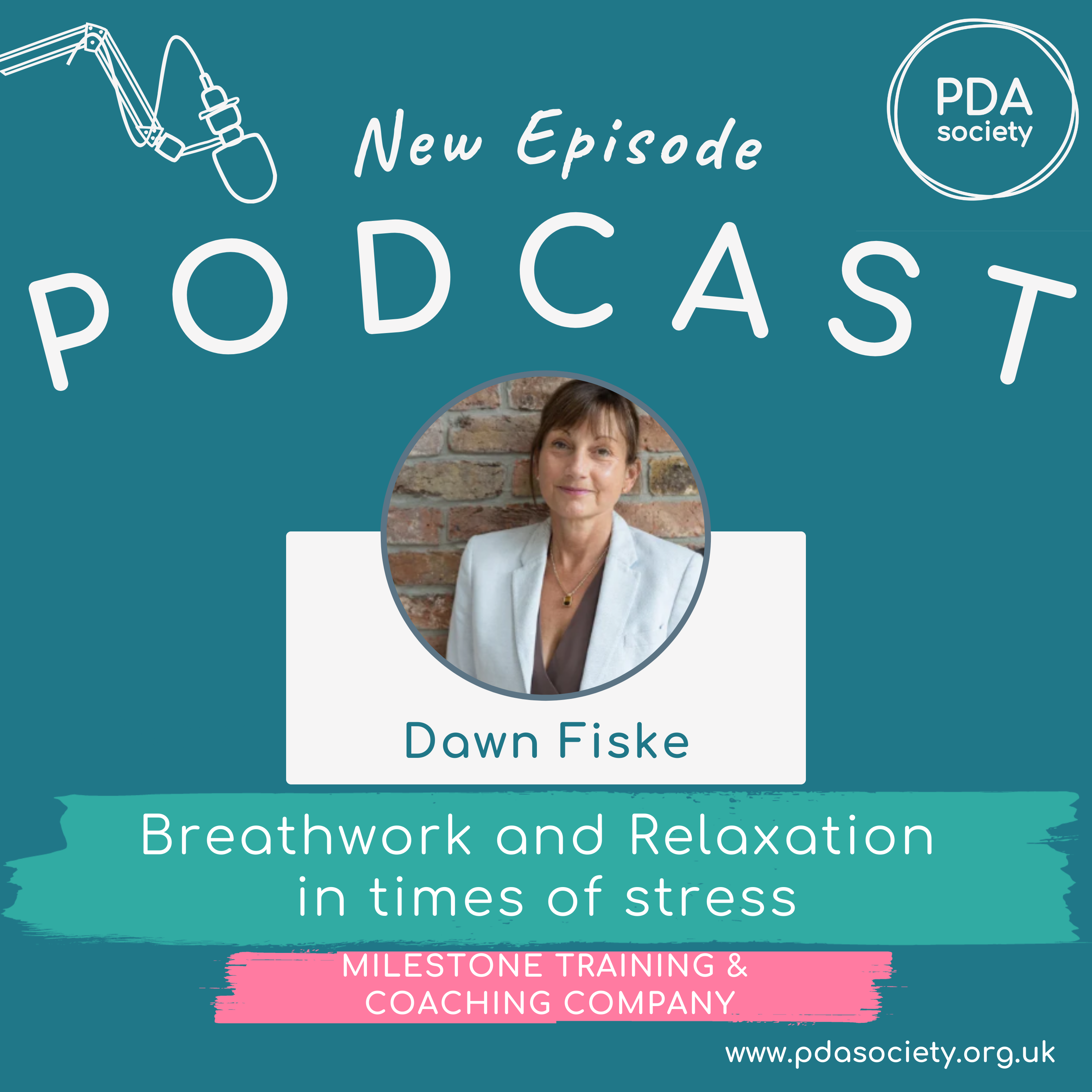
Breathwork and relaxation in times of stress
As a special bonus episode for the festive period, Dawn from Milestone Coaching joins us on the podcast to talk through relaxation and breathwork techniques to help you when times are stressful.We’ll also be releasing a ten-minute body scan meditation session on all our podcast platforms, as well as a Soundbath episode from Forgotten Forest, available for free to subscribers on our website. You ca
10 Minute Body Scan Meditation
As a special bonus episode for the festive period, the PDA Society invites you to join us for 10 minutes to pause, rest and relax with our guided ten-minute meditation.We’ve also be released an episode on Relaxation and Breathwork all our podcast platforms, as well as a Soundbath episode from Forgotten Forest, available for free to subscribers on our website. You can find more details here: PDA Po
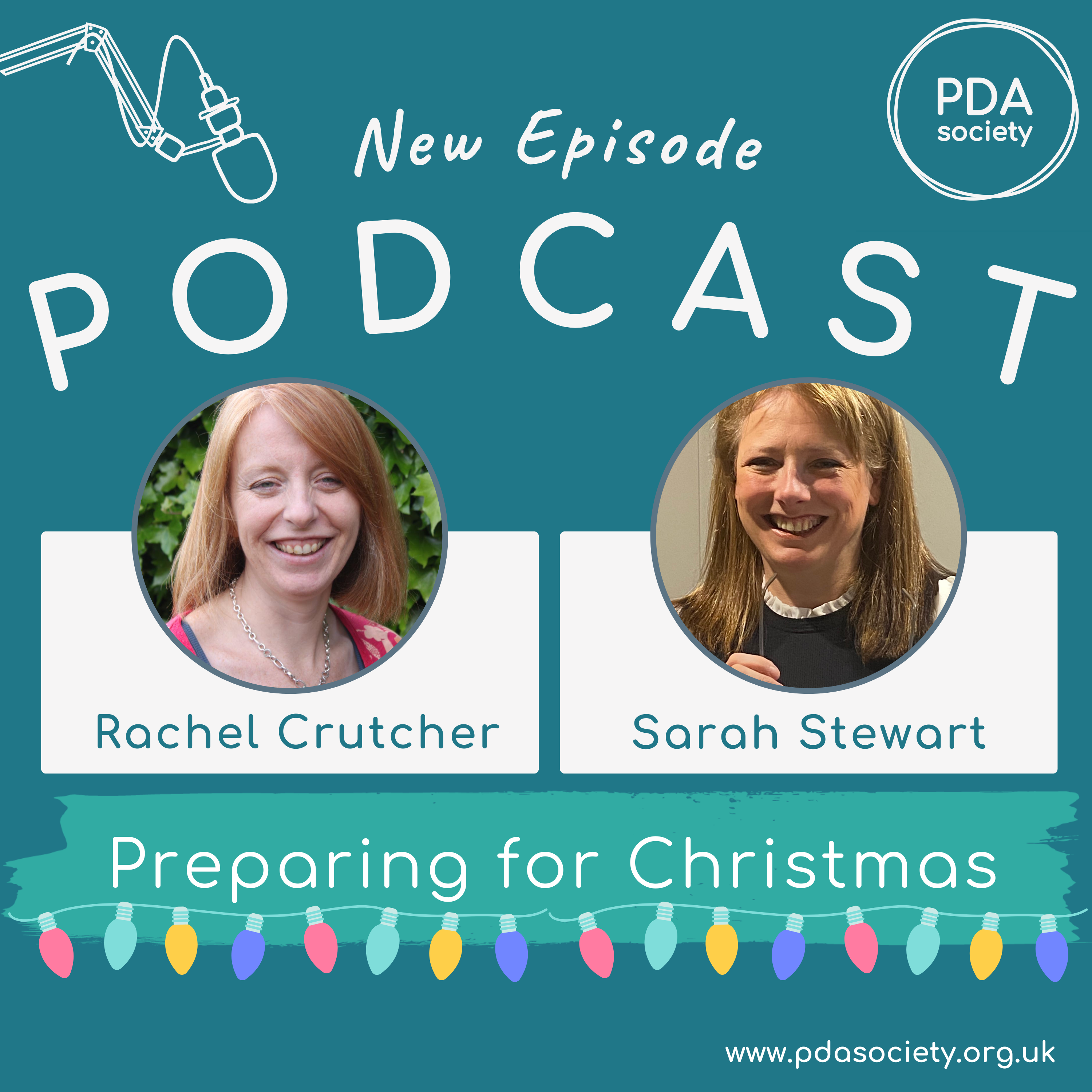
Preparing for Christmas
In this episode, Rachel and Sarah from the PDA Society begins a timely conversation about Christmas, and how the build-up can feel exciting, intense, and sometimes overwhelming for PDA children, young people, and their families.We explore why this season can bring extra demands, changes in routine, sensory overload and social expectations, all of which can increase anxiety for PDAers. We’ll talk t
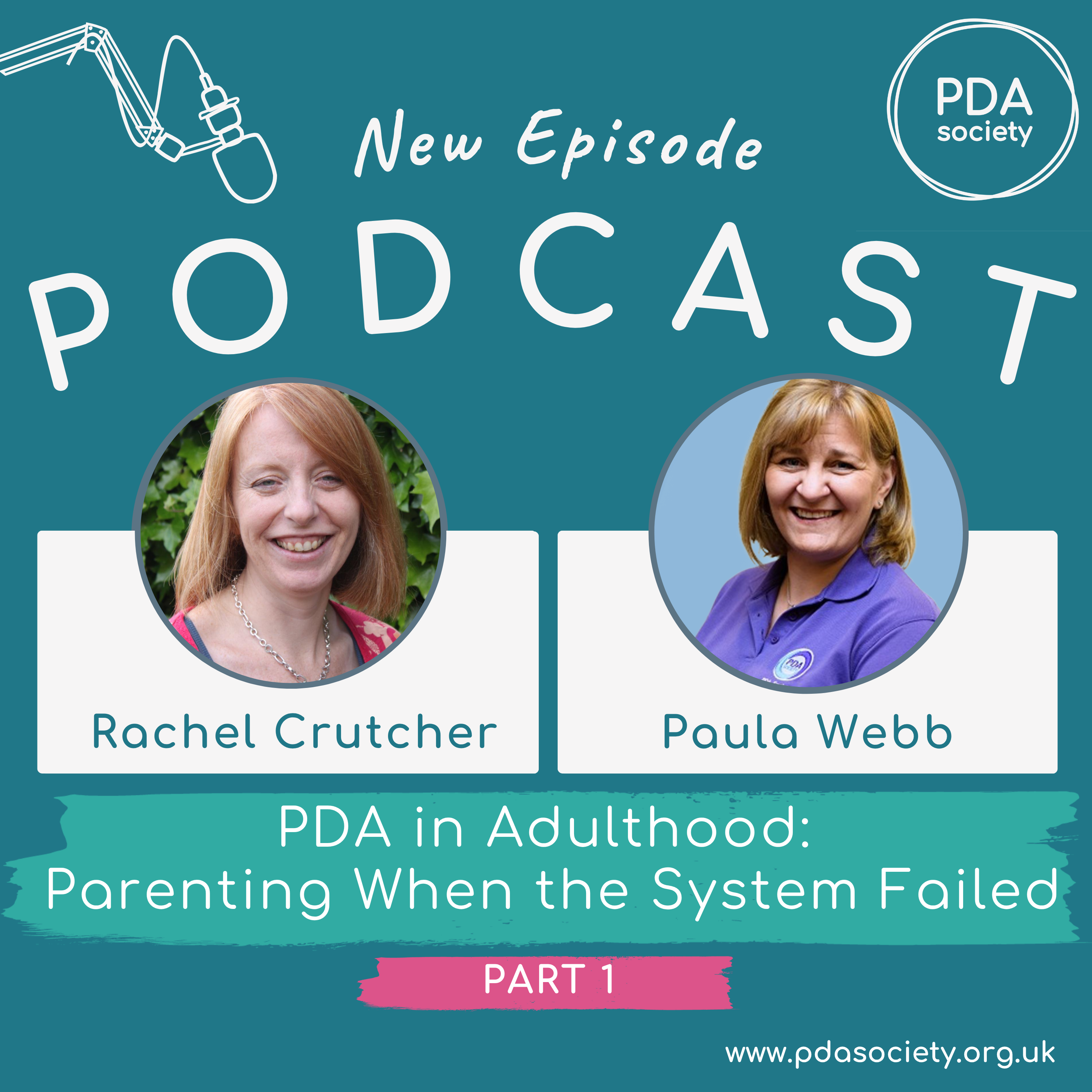
PDA in Adulthood: Parenting When the System Failed
In this episode, PDA Society’s Rachel speaks with Paula Webb, the parent of an adult PDAer, about what happens when PDA goes unrecognised through childhood and beyond. Together they explore how the lack of understanding and support in earlier years can have lasting effects on both the individual and their family. Through honest and heartfelt conversation, Paula shares their family’s journey –
Autistic PDA: Insights for the Criminal Justice System
In this episode, we hear from Dr Rachel Worthington, a forensic psychologist, chartered scientist and senior lecturer at Manchester Metropolitan University. Rachel has spent years working with autistic people in forensic settings and recently led two ground breaking studies into the experiences of autistic people with a PDA profile within the criminal justice system.Rachel shares why she carried o
PDA and Working for the Police
In this episode, our host, Rachel, speaks with Matt, a PDA adult working for the police, about navigating life and work through the lens of Pathological Demand Avoidance. From recognising his PDA traits later in life to finding strategies that make a demanding job sustainable, Matt shares what it’s really like balancing public service with a neurodivergent profile.With honesty, humour and insight,
"How I realised I was PDA" - An interview with H Arlo-Harris
In this episode, PDA Society CEO Ed speaks with H Arlo-Harris – teacher, trainer and PDA adult – about what life is really like when you’re PDA. From discovering PDA through a word cloud on our website, to navigating internal demands, sensory overwhelm and social communication, H takes us beyond labels and into lived experience.With warmth, humour and clarity, H shares how PDA impacts their daily
Managing PDA in a mainstream classroom
Podcast Show Notes – Managing PDA in a mainstream classroomIn this episode, host Rachel talks with guest speaker Kelly Evans about the challenges PDA children face in mainstream education. We explore why schools can be overwhelming, the importance of trust, how strong links between families and schools make a difference, and what adjustments can help PDA learners feel safe and supported.Kelly shar
Personal Resilience When Caring for a PDAer
In this episode, Rachel Crutcher shares her experience of parenting a PDA child and how she has developed resilience along the way. We explore what resilience means, some of the research behind it, and the qualities that help it grow over time.Rachel talks about how she copes during particularly difficult moments, and how she has stayed resilient while navigating her child’s journey through health
PDA Society Podcast - Trailer
Welcome to the PDA Society’s podcast, where we explore all things PDA to help make life easier for PDAers, their families, and everyone affected by demand avoidance. Research suggests PDA (Pathological Demand Avoidance) is a profile of autism, meaning individuals share similar strengths and challenges. A key feature of PDA is extreme demand avoidance -finding it hard or impossible to complete ever