Philosophy For Our Times
Philosophy for our Times is a free philosophy podcast that brings you the latest talks and debates from the world's leading thinkers. It hosts weekly episodes on today's biggest ideas in news, society, culture, politics, science, and arts. The podcast is produced by the Institute of Art and Ideas (IAI), a UK-based organization.
Episodes
Rehumanising science | Carlo Rovelli - Part 1
Are electrons real? What is the connection between physics and Buddhism? Is now the time to rehumanise science?Eastern philosophies have been an integral part of scientific thought and the development of multiple fields for millennia. Individuality and innovation have resulted in breakthrough after breakthrough, pushing the boundaries of the known in an ever-advancing march. However, Carl
Taking down the cultural elite | Catherine Liu
What is managerialism? Why is the meritocracy sliding into technocracy? Does suffering make us seem more pure?We tend to think that today’s progressive politics advances equality through moral awareness and identity. But Catherine Liu argues that it has been captured by the professional managerial class, which replaces material redistribution with virtue signalling and cultural status. In
The chains of freedom | Daniel Markovits, Elizabeth Anderson, Yaron Brook
Is freedom always an absolute good? For freedom to be beneficial and practical, does it need constraining? Are attacks on freedom really the first step to tyranny?From freedom from tyranny and poverty to the right to free speech, we assume freedom is always desirable. But critics argue the consequences of freedom are less obviously desirable than we imagine and frequently unknown. Kafka w
The secret history of cool | Joel Dinerstein
Who was the first person to be cool? What connects the civil rights movement and Albert Camus' 'The Rebel'? How has the coopting of black terminology impacted American society more broadly?From James Dean to Kate Moss, we know cool when we see it. But its history goes back to jazz music and the civil rights movement. Academic Joel Dinerstein reveals the forgotten history of this elusive c
Rebalancing the global order | Kishore Mahbubani
Is it truly the beginning of the end of Western dominance? Where did it all go wrong? And is this more than just an upheaval of the status quo?For centuries, Western powers dominated the global order and mistook that moment for permanence. Join Former President of the UN Security Council. Kishore Mahbubani, who argues the shift now underway is not upheaval but historical rebalancing. Asia
The future of the right | Sohrab Ahmari, Gawain Towler, Rachel Maclean, Mark Littlewood
Is the populist right opposed to liberalism and the free market? Does this mark a change in what it is to be right-wing, or was it a mistake to see populism as far right in the first place? Or is there an unavoidable conflict on the right between maintaining the status quo and being conservative, and enabling change through the free market?At the outset of the use of the term, to be on th
Love is more than magic | Alain de Botton
What do voyeurs want? What can the Greeks teach us about love? Why do we pursue those who we now are going to hurt us?Despite our longing for lasting connection, love often falters on the rocks of misunderstanding and unmet expectations. Philosopher and founder of The School of Life, Alain de Botton, explores how romantic ideals mislead us and why emotional maturity, not chemistry, holds
In the name of reason | Steve Fuller, Miriam Schoenfield, Dan Sperber
Is the future one where we accept tribalism and conflict as inherent in the human condition, where moral and scientific beliefs based on reason are badges, shaped by class, nation, ethnicity and culture? Or is reason more important than ever, not as a route to truth, but as a means to test the effectiveness and consequences of a given outlook? And can we reclaim reason as a method fo
The mind is not a machine | Iain McGilchrist
For most scientists, the mind is little more than a machine. With the rise of AI, some now claim that computers may themselves become conscious. For acclaimed neuroscientist, psychiatrist, and philosopher Iain McGilchrist, this is a profound mistake. The attempt to explain the mind in purely mechanistic terms reflects the flawed assumptions of materialism and reductionism – both symptoms
Anxiety and the soul's itch | Sarah Wilson
Is anxiety something to be embraced, rather than fixed? Why are more and more of us feeling the 'soul's itch'? How we can start living more meaningfully?Anxiety is often understood as a problem to fix. But Sarah Wilson argues that it can be a vital signal - a "soul's itch" calling us to deeper attunement with our moral purpose. In this talk, Sarah describes how technological acceleration,
Truth, beauty and other misconceptions | Lisa Randall
Is beauty a reliable indicator of scientific truth? Or is it merely a distraction?Some of the best scientists throughout history have equated beauty with truth. But is this a mistake? Join pioneering physicist Lisa Randall to discuss the allure and dangers of equating beautiful advances with scientific achievement. Specifically, the talk will cover the subjective nature of beauty, and ins
The world after liberalism | Maurice Glasman & Sohrab Amari
Is this the end of liberalism, or just another temporary crisis? If it is the end, what will follow it? And where did it all go wrong?Since the end of WWII, the Western world has been governed by liberal principles. But as faith in liberalism fades, many are asking: what deeper vision should guide our societies going forward? Join Blue Labour founder Maurice Glasman and author of Tyranny
Why artists shouldn't fear AI | Jaron Lanier
What does originality mean in the age of AI? Why should artists resist the temptation to fear AI? What role will human creativity play in the future we're building?Jaron Lanier, a visionary computer scientist, artist, composer, futurist, and writer, discusses his latest artistic ventures and the importance of originality in art. Lanier shares insights into how technology intersects with c
Copying consciousness: the future of mind uploading | Anders Sandberg
What makes you 'you'? If scientists made a digital replica of your mind, would this new 'you' be conscious? And what does this all mean for what it means to exist?Whole-brain emulation (often called “mind uploading” in science fiction) refers to the possible future ability to scan a human brain in such detail that a digital replica could be created, capable of functioning, and perhaps eve
The return of idealism | James Tartaglia
Is materialism mistaken in its understanding of consciousness? How can dividing experience into the phenomenal and the transcendent provide a new angle from which to view consciousness? Have you ever wondered what philosophical jazz sounds like?The world's greatest minds have struggled over the question of consciousness for centuries. Idealism, the idea that reality is the product of the
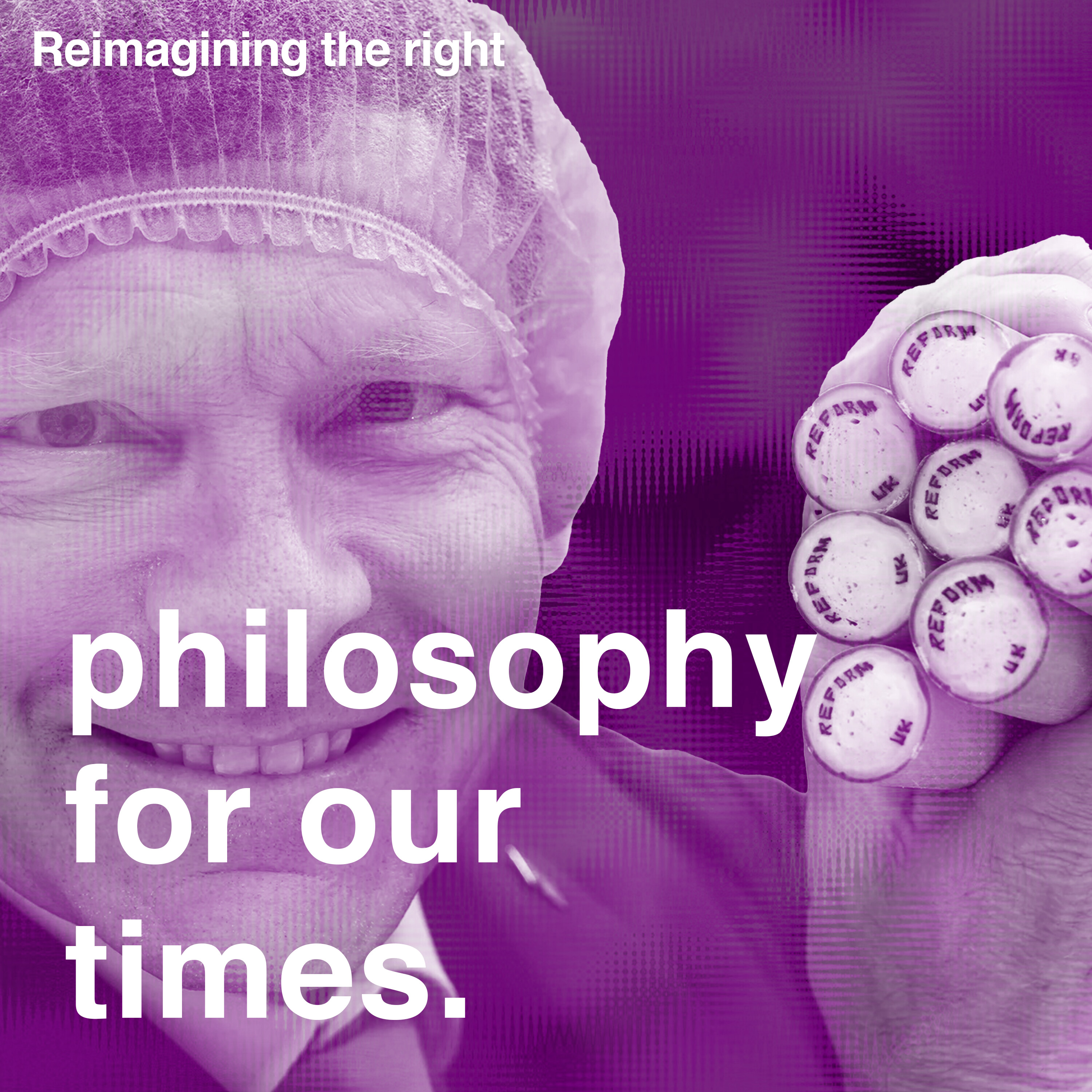
Reimagining the right | Richard Tice
Is this the end of Britain's two-party system? How has Reform brought together seemingly contradictory left- and right-wing ideas? Why do they think that we should get used to climate change instead of trying to fix it?The world has seemingly grown tired of liberal ideas, and the populist right is in the ascendant. They are winning elections, leading polls, and gaining political influence
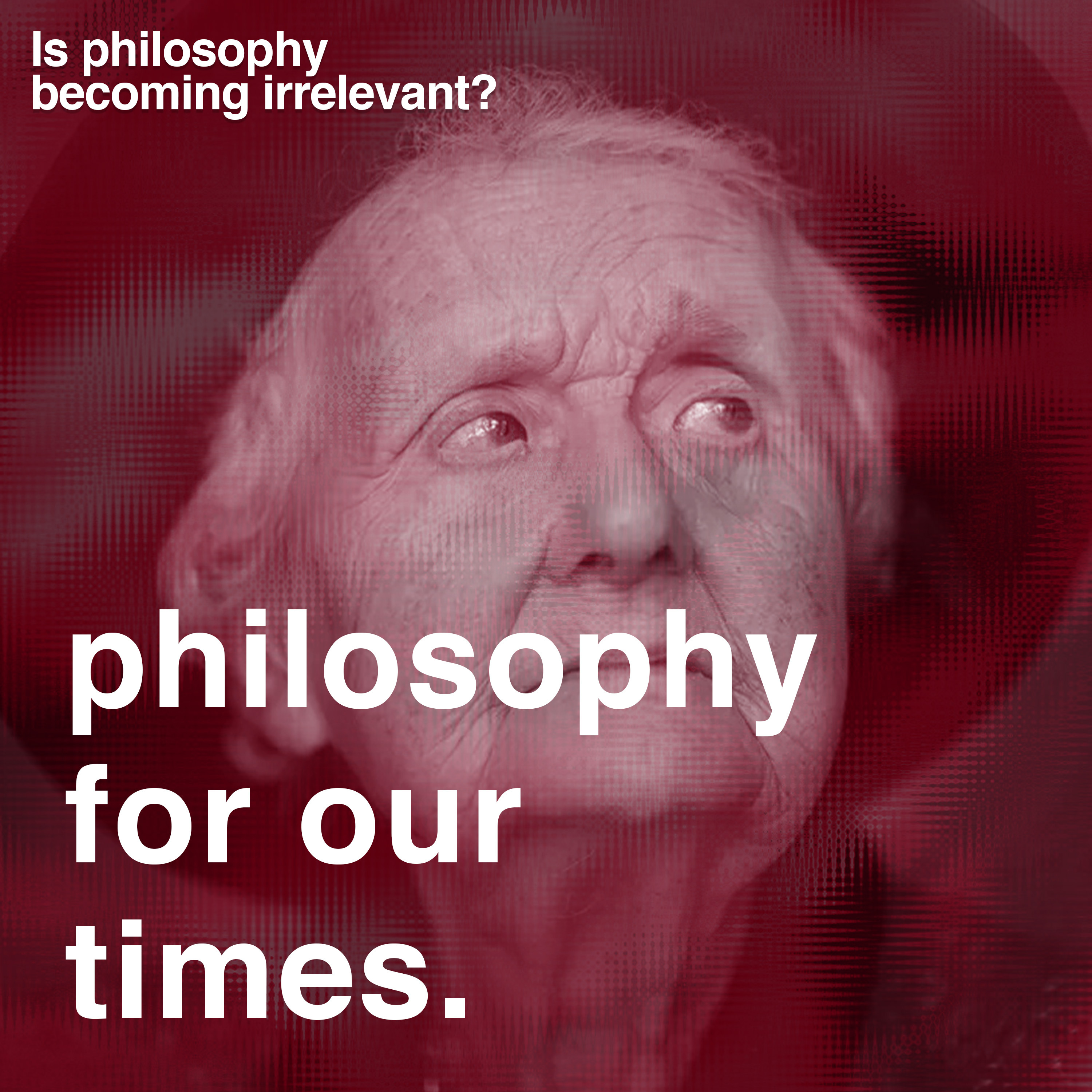
Is philosophy becoming irrelevant? | Mary Midgley
Does philosophy still matter in today's world? If so, why are students less and less interested in studying in it?In a special episode from the IAI archives, Mary Midgley addresses the declining interest in philosophy among young people. Instead of an outdated discipline for old people with too much time on their hands, Midgley argues that philosophy is more important than ever if we wish
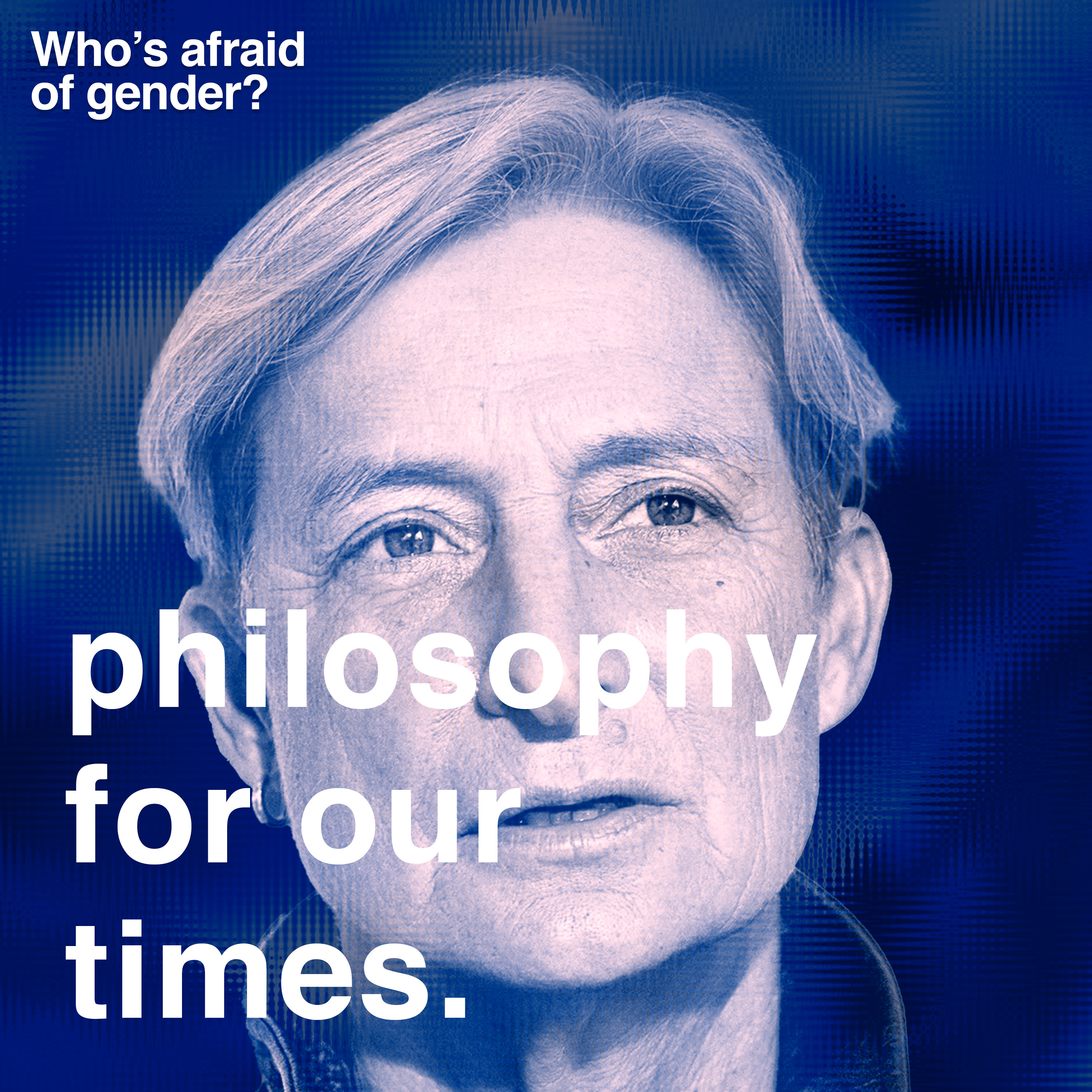
Who's afraid of gender? | Judith Butler
Why has gender identity become such a controversial talking point in modern politics?Judith Butler, pioneering gender theorist whose changed the way we think about gender and sexuality, explores the topic of their most recent book, Who's Afraid of Gender? (March 2024). Butler offers a compelling and powerful diagnosis of the anxieties and fears that make up today's wars over gender. In th
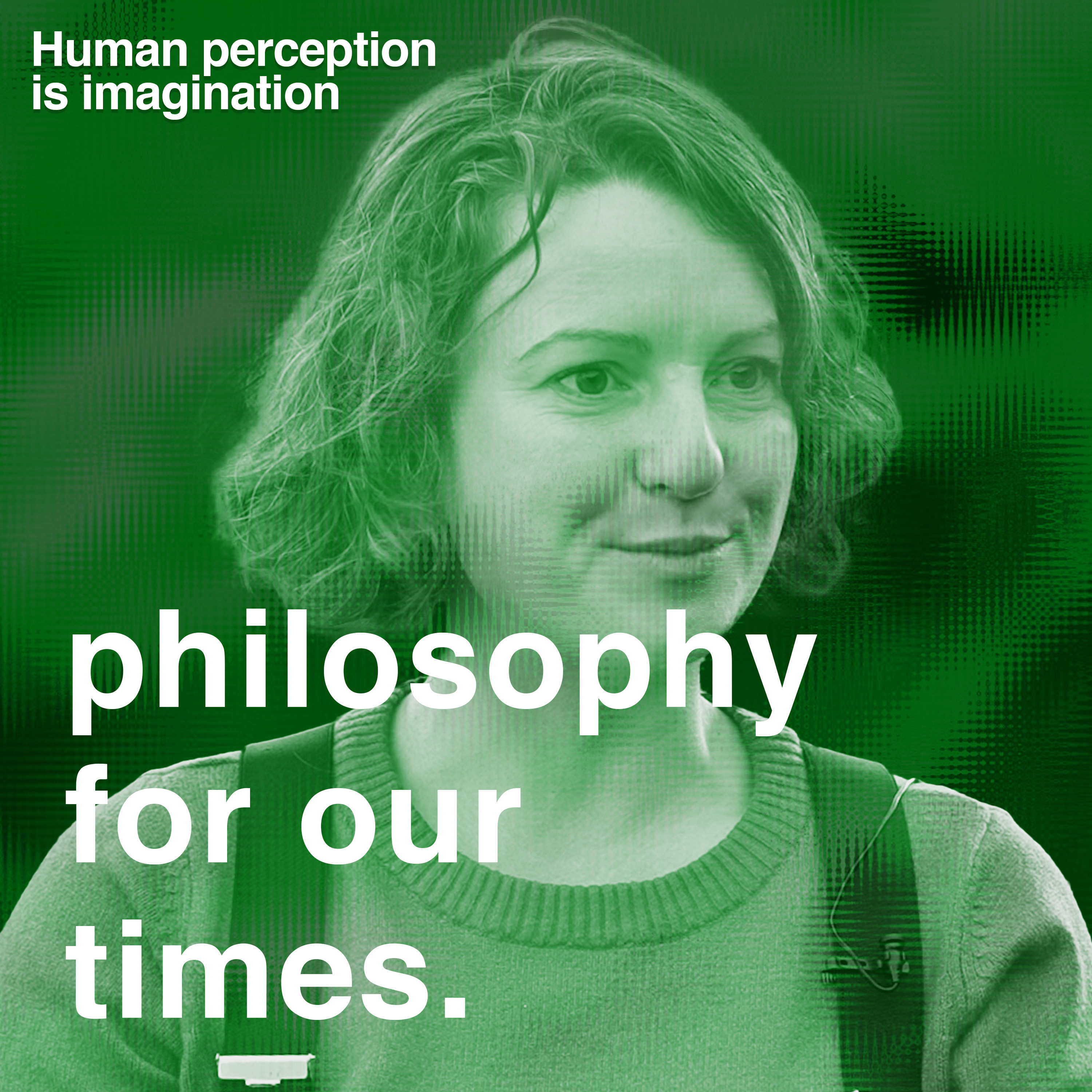
Human perception is imagination | Nadine Dijkstra
Nadine Dijkstra is a Principal Investigator at the Institute of Neurology at UCL. Her research in Imaging Neuroscience explores how the brain generates mental images and differentiates them from actual perception. Utilizing neuroimaging, psychophysics, machine learning, and computational modeling, Dijkstra addresses fundamental questions about the overlap between perception and imagery.Re
The brain filters consciousness | Alex Gomez-Marin
Is the brain actually productive? Or is it instead permissive, simply acting as a filter through which consciousness passes? Can near death experiences help us to get closer to understanding the true nature of the brain?Neuroscientist and theoretical physicist Àlex Gómez-Marín argues that the brain may not produce consciousness, but instead filter or permit it. Tracing a provocative histo
Overcoming evolution | Subrina Smith, Keith Frankish, Simon Baron-Cohen
Is evolutionary psychology merely a way of excusing outdated behaviours? Is it instead culture which really defines how we behave?As with the animal kingdom, we see human behaviour as the product of elemental drives to survive and reproduce. Evolutionary psychology has taken this a stage further - seeing violence, social hierarchy, and sexual promiscuity as a product of evolutionary drive
Slavoj Žižek on quantum history and the end of the past
Does the past even exist anymore?Quantum mechanics has long unsettled our understanding of matter and measurement. But what if its implications reach further — into history, politics, and the very structure of reality itself? If the present can retroactively reshape the past it emerged from, what does that mean for how we act, how we remember, and how we govern?These are not merely theore
How they ruined philosophy | Babette Babich, Genia Schönbaumsfeld, and Christoph Schuringa
Did analytic philosophy ruin the entire discipline?For more than a century there has been a divide in Western philosophy between two distinct approaches, often described as analytic and continental philosophy. Analytic philosophy is predominantly based in the English-speaking world taking its name from Bertrand Russell’s philosophy of logical analysis that overthrew the grand Hegelian met
A new theory of ethics | Martha Nussbaum
Do we need a moral reawakening? Is animal suffering simply a fact of life or can it be avoided? How did the US Navy break whale protection laws? Is there more to animal suffering than just pain?From the cruelty of the factory meat industry to hunting and habitat destruction, animals are in trouble all over the world. Some deem the treatment of animals in farms the worst crime in history,
Crisis in the academy | Yaron Brook, Eric Kaufmann, Catherine Liu
Universities, long celebrated as sanctuaries of free thought and intellectual rigour, have for centuries been regarded as the best way to educate and conduct research. But increasingly, this assumption is being questioned. A recent study found that two-thirds of academics feel their freedom to teach and study is being curtailed. In 2022 alone, over 1,000 instances of content warnings or t
Why the neoclassical philosophy of economics is fundamentally flawed | Abby Innes
What do the Soviet Union and the current British economy have in common? What can studying the philosophy of science reveal about our economic systems? Is the depoliticisation of economics a dangerous pipe dream?Join political economist Abby Innes as she argues that treating society as a closed system that can be controlled and regulated ignores man's unrelenting capacity for new ideas an
On the nature of reality | Rowan Williams and Iain McGilchrist
Who are we? Why are we here? Does life have a meaning beyond itself? Join former Archbishop of Canterbury, Rowan Williams, and groundbreaking psychiatrist, literary scholar and author of 'The Matter with Things', Iain McGilchrist, to explore the nature of meaning, and why we should move beyond the assumptions of a materialist worldview from radically divergent perspectives. Please fe
Neighbours before strangers | Alain de Botton, Seyla Benhabib and Tommy Curry
Should everyone be treated equally?Many see populism with its focus on immigration and nationalism as not only politically dangerous but morally wrong. This reflects the universalist morality of the main Western moral frameworks. But critics argue moral universalism generates a case for favouring strangers over the interests of those close to us and that it is profoundly mistaken. In cont
The strange search for knowledge in the age of post-truth | Steve Fuller
How do we acquire knowledge?We tend to think that knowledge is produced by experts through established institutions, progressing over time towards a single truth. But Steve Fuller challenges this view, arguing that our contemporary "post-truth" order correctly recognises that the pursuit of knowledge is a socially dependent process, shaped by the communities that produce it.Steve Fuller i
The philosophy of performance | Michelle Terry
How can taking on the role of someone else help us to understand ourselves? Does the hermit know himself better than the socialite? And where is the line between our true, authentic selves and the multitude of characters we all play each and every day? Join actress and Creative Director of Shakespeare's Globe, Michelle Terry, as she draws on her experience as a performer to explore how ac
The end of materialism | Àlex Gómez-Marín
Alex Gómez-Marín is a controversial figure in contemporary neuroscience, known for challenging the materialist framework that dominates scientific accounts of consciousness. He argues that Near Death Experiences (NDEs) raise profound questions about the nature of reality and the limits of reductionist explanation. In this interview, Gómez-Marín reflects on the scientific evidence we have
The relationship between mind and matter | Slavoj Žižek, Alenka Zupančič and Carlo Rovelli
The self and the world We tend to think of ourselves as observers of the world and experience as something different from the material stuff that makes up reality. Yet at the same time as human beings, we are at once part of the universe and part of that reality. And this profoundly puzzling relationship, that we are both part of something and yet separate from it, has been at the centre
Freedom and Fate
An individual "is responsible for everything he does," claimed Sartre. And from criminal justice to creative expression, free will and responsibility are central to our culture and our personal lives. Yet neuroscientists and materialist thinkers commonly maintain that freedom is an illusion. And it remains unknown how the core principles of freedom and responsibility can be reconciled wit
The search for higher states of consciousness | Philosopher Jessica Frazier
Are we living in the moment? Are we really free? How can we transcend the constant anxieties of our mind? Throughout history, certain people in the West and the East have claimed that the human mind could reach states of so-called higher consciousness. In the twentieth century, several thinkers like Heidegger and Nietzsche returned to this possibility, trying to find the higher regions of
Should we be transgressive? The limits and potential of transgressiveness | Catherine Liu, Rowan Williams, Josh Cohen
The good, the bad, and the transgressiveIs the transgression of norms and rules what brings history forward and allows for creativity and change? OR is the fetishization of transgression an ever-present danger that breaks down all structures of meaning and becomes totalizing in of itself?The limits and potentials of transgressiveness have been long debated, especially in rule-breaking Mod
Perversity and the limits of rational | Psychologist Paul Bloom
What is rationality? Why is it or is it not important? And where does perversity fit in?Join psychologist Paul Bloom in this interview where he discusses his research on these themes and defends his viewpoints.See Privacy Policy at https://art19.com/privacy and California Privacy Notice at https://art19.com/privacy#do-not-sell-my-info.
Why liberalism has failed | John Gray on civilisation, morality, and the illusion of progress
Why is the world moving away from liberalism and towards conservatism?One of Britain’s most provocative thinkers, John Gray is a political philosopher known for dismantling liberalism and exposing the illusions of human progress. Former Professor of European Thought at the London School of Economics, Gray has challenged orthodoxy across the political spectrum with a body of work that rang
Analytic or Continental philosophy | Christoph Schuringa, Genia Schönbaumsfeld, Babette Babich
The future of European thoughtWhat is analytic philosophy and what is continental philosophy? And, perhaps most importantly, does this distinction make any sense?The division between these two branches has divided Western philosophy for decades now, with the Anglo-Saxon world largely associated with the analytical school, and the European continent with the, well, continental one. In thi
How Words Warp Reality | Nick Enfield
Language shapes how we think, remember, and reason. But does it help us to uncover the fundamental nature of reality? Join the author of Language vs. Reality and linguistic anthropologist, Nick Enfield, as he explores why language excels at persuasion but falters at faithfully representing reality. From media spin to courtroom rhetoric, he reveals how words reframe our world, often withou
Consciousness and psychedelics: In conversation with Rupert Sheldrake
Philosophers cannot stop talking about consciousness - what are its limits? What is it made of? What does it allow us? This podcast is part of that conversation, but from a more experimental perspective. Join biologist and researcher Rupert Sheldrake as he discusses consciousness with philosopher Peter Sjöstedt-Hughes from the lens of psychedelics. Once on the fringes of academic and popu
The philosophy of religion and love with Alain de Botton and Alex O'Connor
Why we worship without knowing itWhat should be included within the remit of philosophy? Religion? Love? Hair? Join well-known public speakers and writers Alain de Botton and Alex O'Connor as they talk through what philosophy can offer us, why we should study love, and what the role of religion is in philosophy and in our lives. See Privacy Policy at https://art19.com/privacy and Californ

Mazes of the mind: The philosophy of neuroscience | Iain McGilchrist, Colin Blakemore, Bryan Appleyard
Over the past decades, neuroscience has blossomed, positioning itself as a kind of master discipline over everything else. For who understands the brain surely understands all of human activity and creation? Or not?Neuroscience's reach has extended past its scientific remit and into the world of philosophy and its major questions. What is a human? What is consciousness? Are we free? And s
In search of nothing | David Deutsch, Amanda Gefter, Lee Smolin
What is nothing? Can it be defined, either philosophically or scientifically? Or will the exploration of nothing bring, ultimately, to nothing?The philosophical exploration of nothingness is an ancient one, from the mysterious number zero through theological understandings of the absence of God right to modern physics and ideas of the void.Join leading theoretical physicists David Deutsch
Halloween SPECIAL | The philosophy of the apocalypse
Why are we fascinated by apocalyptic stories?Join the team at the IAI for a reading of four Halloween-themed articles, written by historian and philosopher Natalie Lawrence, professor of political philosophy Matthew Festenstein, and professor of comparative literature Florian Mussgnug. From the allure of the end times to the symbolic value of monsters, this episode is a spooky journey thr
The importance of giving up | Adam Phillips
Einstein was called “slow” at school, J. K. Rowling collected a dozen rejections, and Walt Disney was once fired for “lacking imagination.” We love stories of perseverance—but what’s the cost of never letting go? In this conversation, psychoanalyst Adam Phillips argues that our obsession with endurance can have hidden, corrosive effects. He invites us to consider giving up not as failure,
Slavoj Žižek on philosophy today | The madness of reality
Slavoj Žižek is back in a new interview where he takes us through his thoughts on the role of philosophy, the future of sex, his fear and love of AI and, as always, so much more. Tune in to hear one of contemporary philosophy's most original and darkly comedic minds expose his thoughts on the present and where we are heading - though that is impossible to know. See Privacy Policy at https
How to fathom timelessness | Peter Sjöstedt-Hughes
What should time mean to us?Peter Sjöstedt-Hughes is a philosopher of mind who specialises in the thought of Alfred North Whitehead, Friedrich Nietzsche, and Benedict de Spinoza, and in fields pertaining to panpsychism and altered states of mind. In this talk, he combines insights from psychedelic experiences with an intriguing view put forward by Spinoza: that the mind can enter a rare s
After postmodernism | Hilary Lawson, Robin van den Akker, Abby Innes, Sophie Scott-Brown
Hugely influential in the latter decades of the 20th century, postmodernism transformed many academic disciplines and culture at large. Associated with an attack on objective truth and the uniqueness of meaning, it called into question the whole edifice of knowledge which Western culture had previously glorified. But it left many lost, and in the wake of a polarising post-truth world, the
The language of the unconscious: Pyschoanalysis and AI | Alenka Zupančič
As ChatGPT and AI increase their presence in our lives, have we interrogated enough what this means for, and about, our collective psyche?In one of the most original critiques of ChatGPT, Slovenian Lacanian philosopher Alenka Zupančič interprets large language models as a form of our collective unconscious that has absorbed all our discourse at the expense of the subject, shutting down em
The Enlightenment is racist (and why) | Kehinde Andrews
The Enlightenment has faced a lot of criticism in recent years - its defenders and detractors often come head to head, scrambling to articulate its ultimate value or lack thereof to contemporary society. This podcast contributes to this wider debate and question facing all those interested in philosophy and politics: Are Enlightenment ideas salvageable? Or are they too intrinsically taint
The struggle for the good life | Massimo Pigliucci on ancient philosophy for the modern era
We all want to live the good life. But how many of us can claim to be truly content? Join philosopher and evolutionary biologist Massimo Pigliucci as he argues that pleasure, character, and a healthy dose of doubt, form the basis of the good life, and that purpose in life is crucial to realising our potential.Massimo Pigliucci is a renowned philosopher and professor at the City College of
Psychedelics and the structure of reality | Julian Baggini, Eileen Hall, and James Rucker
Truth, delusion and psychedelic realityDo psychedelics reveal hidden layers of reality, or are we simply tripping?Psychedelics are back in the cultural zeitgeist, this time as a treatment for mental health issues. However, critics argue that psychedelics only work by replacing mental illness with a distorted view of reality - but, is this an accurate assessment? A study from Imperial Coll
The unconscious mind: Is the unconscious real?
The unconscious has become a well-known feature of our human lived experience since Freud. We often refer to unwanted impulses, suppressed thoughts, unconscious desires, and the like.But what IS the unconscious? Is it just an easy excuse for our behaviour? Or is it a necessary piece of what it means to be human?Join our diverse and rich panel as they discuss, and disagree, over this quest
A landscape of consciousness | Robert Lawrence Kuhn and Hilary Lawson
Will we ever reach a conclusive, agreed-upon theory of consciousness?Over the millennia of recorded history, countless stories, theories, and arguments have emerged to explain the origins of consciousness. And yet, here we are in 2025 - post-Plato, post-Descartes, post-scientific revolution - and still we don't understand the phenomenon of conscious, subjective experience. Which begs the
Will psychedelics revolutionize mental health treatment? | Matthew Johnson, Shayla Love, and Kevin Sabet
The psychedelic revolutionWill LSD, Psilocybin, MDMA, and Ketamine treatments live up to the hype?For decades, psychedelics were derided as dangerous recreational drugs; now many claim they have the potential to revolutionise the treatment of mental health. With hundreds of clinical trials now taking place, the psychedelic therapeutic market is predicted to be over ten billion within the
The illusion of separation | Jessica Frazier on the Monism of Hindu philosophy
Indian philosophy and the search for unityIn our everyday lives we act as though we are all separate individuals, but is this really the case? Jessica Frazer argues that reality is ultimately unified, and that this shift in perspective can change the way we live our lives. It can help you lose your isolated ego and escape feelings of alienation from nature and the universe. You can start
The limits of nothingness | Peter van Inwagen
From philosophy to science, metaphysics to psychology, the idea of 'nothing' is central to the universe, existence and experience as a whole. But the nature of 'nothing' is even more bewildering than we might first imagine. Parmenides argued that non-being is impossible because thinking about nothing is still something. Join philosopher Peter van Inwagen in this talk as he explores t
Is free will an illusion? The chemistry of freedom | Patrick Haggard, George Ellis, Jennifer Hornsby
The question of free will - and whether we have it or not - is age-old across philosophy, religion, and human thought in general. Having free will allows us to have meaning, responsibility, reward and punishment. Yet discoveries in neuroscience have put our ability to choose, outside of a set of neuronal reactions, in question.Do we have free will? Or is it an illusion? And, also, do we n
Has the world gone to Hell? | Slavoj Žižek on fascism, shame, and dirty jokes
Žižek: "Trump did what The Left couldn't"As we look around at the state of the modern world, it's very easy to get disheartened - and that's putting it lightly! From pointless wars and endless suffering to the decline of social bonds and trustworthy institutions, there really is a lot to get you down. Fortunately, maverick philosopher Slavoj Žižek is on the case, arguing that all is not l
Video games and the meaning of life | James Tartaglia
Video games are changing how we think. Many are so realistic that some argue they are becoming reality. In this talk by philosopher James Tartaglia, he uncovers the relationship between games and reality.James Tartaglia is Professor of Metaphysical Philosophy at Keele University. His latest book is Inner Space Philosophy: Why the Next Stage of Human Development Should Be Philosophica
The philosophy of literature SPECIAL | George Orwell, Fyodor Dostoevsky, Aldous Huxley, and more
How literature helps us to understand morality, totalitarian politics, and the life of Jesus Christ.Join the team at the IAI for four articles about great, classic literature, covering world-renowned authors such as George Orwell, Fyodor Dostoevsky, Clarice Lispector, to name but a few.These articles were written by Michael Marder, Emrah Atasoy, John Givens, and Dana Dragunoiu.Michael Mar
How other species challenge our idea of consciousness | Peter Godfrey-Smith
In this IAI Studio interview, philosopher and science writer Peter Godfrey-Smith explores the evolution of consciousness and the enduring mystery of the mind–body problem. Drawing on his work with octopuses and other animals, he argues that consciousness emerged gradually through increasingly complex forms of sensory-motor interaction, rather than as a sudden leap. Using cephalopods as a
Utopia and human nature | Paul Bloom
Human nature and the possibility of utopiaThe idea of utopia - of a perfect society devoid of suffering and inequality - is planted firmly in the human imagination and psyche. From pre-biblical times to Thomas More and communism and beyond, widely disparate groups have attempted to plan or create a utopia.But is it achievable? And if not, why not?Join unconventional psychologist Paul Bloo
More choice means less freedom | Psychologist Barry Schwartz
Why more is lessWe're surrounded by choice - an endless sea of possible paths we might take. However, does the overwhelming range of choices leave us better off or worse? In general, we tend to think that more is better, but Barry Schwartz, author of the ground-breaking book 'The Paradox of Choice', argues that this view is mistaken. More can lead us to be psychologically overloaded, unsa
The limits of logic: Should we embrace the irrational? |Iain McGilchrist, Beatrix Campbell, Simon Blackburn
Our culture prizes logic and rationality, if not above all else, as two of the most fundamental social traits. But are we missing out by overlooking the irrational? Can logic explain everything, or what is it missing? And is it possible to live (and enjoy) a life led by logic?Logic, in philosophy and beyond, seems to always to be self-evidently right. Join our three eminent panellists as
Consciousness begins in the body | Antonio Damasio
We tend to believe consciousness is purely mental. And since Descartes' "I think therefore I am", we've privileged the mind as the centrepiece of thought and consciousness. But such a view is mistaken argues award-winning neuroscientist Antonio Damasio.Feelings, long dismissed as secondary to thinking, are where consciousness begins, and are deeply rooted in the body and its physical proc
The Selfish and The Selfless SPECIAL | JD Vance, Pope Francis, and the 10 Commandments
What can JD Vance's arguments with Pope Francis teach us about selfishness, altruism, and the morality of the modern world?Join the team at the IAI for four articles about egoism, self-sacrifice, and everything in between, analysing a range of subjects, including: Friedrich Nietzsche and his rivalry with former maestro Arthur Schopenhauer; the 10 Commandments and their relationship to jea
Being mindful in a mindless world | Ellen Langer
The mindful body with Ellen LangerCan mindfulness be contagious?Ellen Langer's research certainly seems to suggest that's the case. As Professor of Psychology at Harvard University and the author of 'The Mindful Body', Ellen has racked up decades of experience and numerous awards during her investigations into the impact of mindful living.In this interview, Ellen discusses the transformat
The beautiful in philosophy | Babette Babich, Paul Ernest, Ankhi Mukherjee, Sarah Wilson
The good, the bad, and the beautifulWhat is beauty? Why are we so drawn to it? And should we be - or is it a distraction?The philosophy of aesthetics and beauty has a long and fascinating history. Over the millennia, while we mostly agree on the essential nature of this ephemeral thing, "beauty", we disagree on the reasons why it is important, on its very definition, and sometimes if we s
A world without values | Janne Teller, Dale Turner, Robin van den Akker, Isabel Hilton
Once values such as justice and equality were agreed upon by all. Now they are identified by some as vehicles to entrench or overturn power. On the left, 'justice' as a means to sustain and impose privilege, 'truth' as an attempt to claim enduring authority. On the right, 'diversity' and 'equality' as means to undermine the status quo in favour of a new elite. The danger is apparent to ma
The challenge to optimism | Angus Deaton
The economy is a vital part of the way we understand our lives and our politics more generally. But after years of growth, development, and progress, on the surface everything is rosy. But as Nobel Laureate Angus Deaton argues, behind the big picture many people have been left behind by the modern economy, and this is precisely because of the blindspots of modern economics. Join Deaton as
Searching for the purpose of life |Babette Babich, Frank Tallis, Jonathan Webber, Sandra Laugier
The journey in search of the destinationDoes life have a purpose? Is that what gives life meaning? Or is it the journey that matters the most?Join our four speakers - Nietzschean philosopher Babette Babich, clinical psychologist Frank Tallis, existentialist philosopher Jonathan Webber, and linguist philosopher Sandra Laugier - as they explore the different facets of this question. Setting
Nietzsche, the birth of tragedy, and the technology trap | Babette Babich
Nietzsche, the birth of tragedy, and the technology trap with Babette BabichBabette Babich discusses Nietzsche, the importance of tragedy, and the danger of technology interfering with our judgement. Babette Babich is a world renowned Professor of Philosophy at Fordham University in New York. In this in-depth interview, she looks to Nietzsche's Birth of Tragedy to explain our love of suff
The philosophy of fun | Myriam François, Freya India, James Tartaglia
The essential philosophy of funDo we need to have fun or is it an unnecessary excess? Are we living in an age of fun's decline, what with the moralism and strictures of Gen Z, or is there something else going on?On this panel, our three guests - philosopher James Tartaglia, film-maker Myriam François, and writer Freya India - dive into the idea of fun: its philosophy, from Plato to the mo
Neoliberalism: A Soviet nightmare | Abby Innes
There is an old Soviet joke, ‘Capitalism is the exploitation of man by man. Communism is its exact opposite.’ On the surface, neoliberalism, with its emphasis on free markets, competition and privatisation, is as far removed as possible from the Soviet Union. But behind the policies, could they be guided by the same false utopianism? Abby Innes, professor of Political Economy at the LSE,
The dark side of chasing rewards | Paul Bloom, Nancy Sherman, and Dan Ariely
Something for nothingDo rewards and incentives damage our humanity?In much of our personal and professional lives, we receive rewards for good behaviour and carrying out our responsibilities. But, evidence now suggests there are risks to this approach. Studies show rewards can damage wellbeing, fostering dependence and undermining our own sense of control. And neuroscientists have shown t

Rethinking the Enlightenment | Historian Aviva Chomsky
The spectre of the EnlightenmentWhat the Enlightenment a net positive or a net negative? Or is that the wrong question, and should we look at it simply as a historical period?Join Professor of History Aviva Chomsky as she dissects one of the most important periods in modern history from the lens of a critical historian. The Enlightenment was not just a period that produced thoughts and id
Was Karl Marx misunderstood? | Terry Eagleton on the forgotten ideals of Marxism
Why Marx was rightHaving fallen out of favour around the turn of the century, Marxism is now back in fashion, often playing the role of an alternative to the increasingly right-wing politics of the modern world. Once the guiding ideology of Korean guerillas and Hampstead screenwriters alike, Marxism is back and taking universities and intellectual circles by storm, capturing the minds of
The power and the pitfalls of narrative | Matthew Beaumont, Ruth Padel, and Theodore Dalrymple
Lost in storiesIs life a story or a sequence of events?Our narratives enable us to make sense of the complex, often confusing, world that we live in. And yet there is a risk that rather than helping us to truly understand this world, narratives can hide reality from us, providing delusional states of mind in its place. From witch hunts to cults, from war propaganda to religious honour kil
Reflections on mental health today | Interview | Susie Orbach
The dark side of 'mental health' with Susie OrbachWhy are psychotherapy, psychology, psychoanalysis, therapy so popular today? Do these respond to a new need in our society or are they evolutions of age-old human approaches to resolution and knowing oneself?Join psychotherapist and psychoanalyst (famously Princess Diana's therapist!) Susie Orbach as she delves into her relationship with h