The New Society | culture from the New Statesman
Your weekly review of culture, life and society from the New Statesman, hosted by Tanjil Rashid. Featuring interviews with literary and artistic greats, reviews of the latest cultural moments, and in-depth discussion to help you understand how culture shapes society – and our place in it.
Episodes
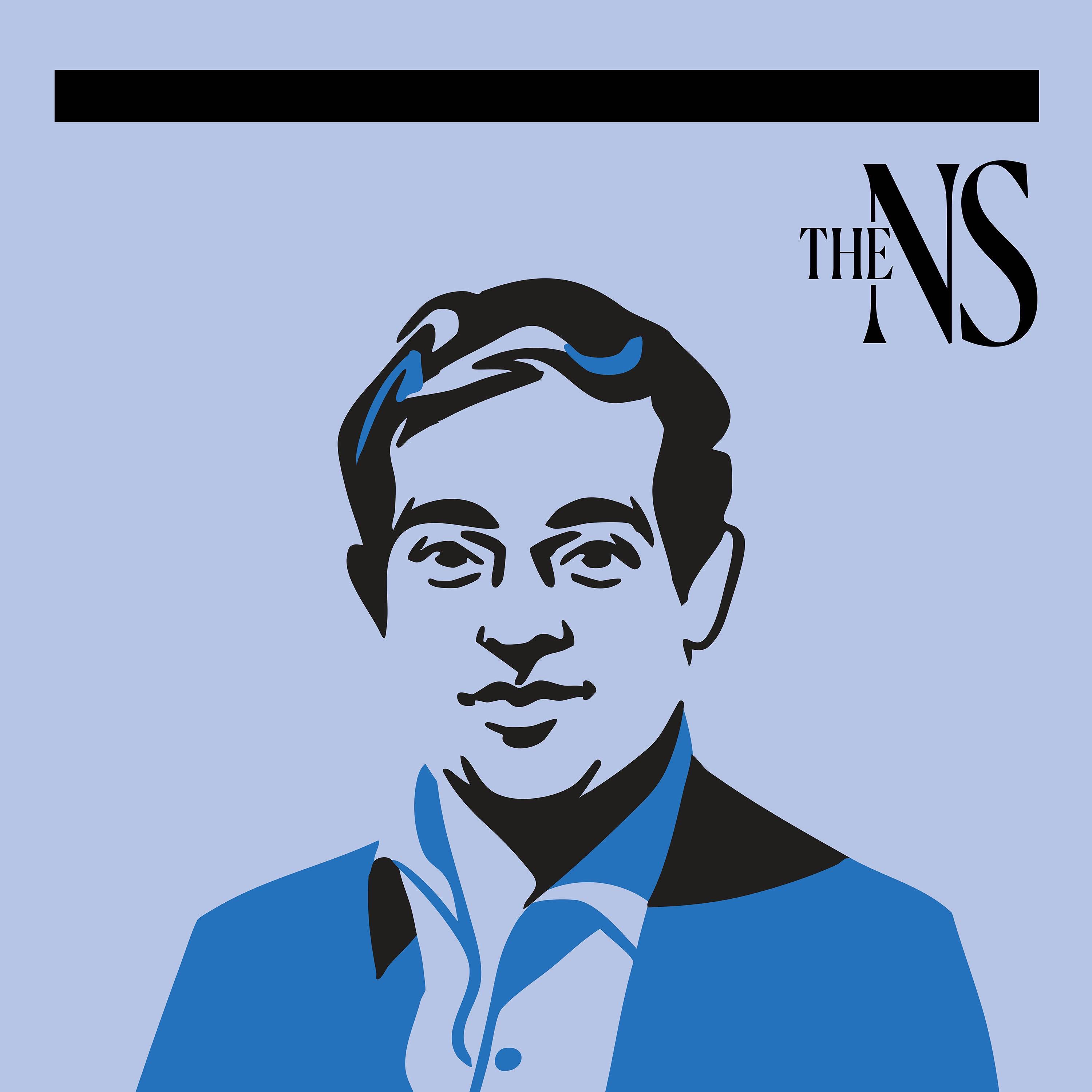
Carlo Rovelli: Can we know how it feels to be someone else?
Carlo Rovelli is a physicist. But he’s also so much more than that. Perennially on lists of the world’s top thinkers, Rovelli likes to think and think hard, about the big questions, where physics meets philosophy and art and literature. Can we ever truly know what it feels like to be someone, or something, else? Is the mind separate from the body? What even is life? Where could it possibly come fr
Steven Pinker: Common knowledge can start revolutions
You know what you know, and I know what I know, but only when we know what the other knows do we have common knowledge.That’s the crux of cognitive psychologist Steven Pinker’s latest work, focusing on the shift from private to public knowledge, and how this can suddenly change behaviours or even start revolutions.Steven Pinker joins Tanjil Rashid to discuss. Hosted on Acast. See acast.com/privacy
How to write when everything’s in flux
Every story, they say, needs a beginning, a middle and an end; every story needs a setting. What if that isn’t true? Can you write when everything is in flux, when you are unmoored from places, and when the time is out of joint?Tanjil Rashid is joined by Amit Chaudhuri, a singer, composer, poet, critic and novelist, to discuss how a story is less important – and less interesting – than the movemen
Katherine Rundell: In today's world, wonder is political
"We live in a world that deserves unicorns," says Katherine Rundell.If you haven't come across Rundell's work yet, you will soon. She's written over a dozen books, including an award-winning biography of John Donne and the children's fantasy series Impossible Creatures - a copy of which every Year 6 child in the country will receive this Christmas. Disney has just signed
James Marriott: what happens when we stop reading?
A third of British adults who used to read for pleasure don't anymore.And according to the OECD, literacy itself, not just the habit of it, is declining or stagnating across most of the developed world.In a new book, The New Dark Ages, James Marriott argues that we're living through a great unwinding: a retreat from the written word and the kind of rational, analytical mind that print culture buil
Salman Rushdie: "I feel a line of connection with 9/11"
Terror has sought Salman Rushdie out time and time again for the past 40 years, ever since the controversial publication of his novel The Satanic Verses and the furious response to it from much of the Muslim world.He believed that his life of extreme measures and isolation was a closed chapter in 1998, after Iran stepped back from the fatwa issued by Ayatollah Khomeini. But four summers ago, in a
RF Kuang is back with her most personal story yet
Historical fantasy, campus satire, industry exposé; five books in, and no one's quite worked out what a "RF Kuang novel" is supposed to look like. That's rather the point.This September she publishes her sixth: Taipei Story, a semi-autobiographical account of a summer spent learning Mandarin in Taiwan - her most personal book yet.She joins Tanjil Rashid in this episode of the podcast. Hosted on A
Simon Sebag Montefiore on Israel, Gaza and a Middle East in crisis
From the fall of the Ottoman Empire to the current escalation of the war between Israel, Palestine and their neighbouring countries, the Middle East has been besieged by almost constant conflict.Is it history? Politics? Resources? Or religion driving these tensions?Tanjil Rashid is joined by historian and author Simon Sebag Montefiore, whose new book The Cauldron tells the story of the making of t
This is how Ukrainian artists are fighting back
Charlotte Higgins has spent most of her career interviewing and critiquing artists, authors and poets as the Guardian's chief culture writer. It was unlikely that her work would ever take her to a warzone. But following Russia's full-scale invasion of Ukraine, she found herself drawn to this country under siege. She wanted to ask, what happens to art under war? And could Ukrainian culture not just
Why we must unite working class communities across racial divides
In the summer of 2024, riots tore through British towns, and since then old questions have continued to resurface about who belongs in the country. Taj Ali has spent years digging into a history that’s rarely told in full: the long tradition of South Asian political activism in Britain. His debut book, Come What May, We’re Here to Stay, traces that tradition and asks what it me
Britain is losing its libraries and its cultural memory
Every year, more libraries across Britain close their doors. As councils have their funding slashed, these are often the first spaces to go. What do we lose when we stop reading and collecting? What is a library to a community, beyond its books? Tanjil Rashid is joined by the University of Oxford's Bodley's Librarian, Richard Ovenden. Hosted on Acast. See acast.com/privacy for more
Why is sex political?
To hear more conversations like this search "The Exchange" wherever you get your podcasts.When Amia Srinivasan published The Right to Sex: Feminism in the Twenty-First Century in 2021, it sparked widespread debate about the politics of desire, consent, and sexual justice.In this episode of The Exchange, the Oxford academic joins Tanjil Rashid to discuss how philosophy can illuminate some of the mo
Can we separate great art from bad artists?
Throughout history, art, and artists, have caused moral outrage.For a long time we had the liberal notion that we could separate great art from bad artists, but we do seem to live in a time of heightened moralisation around works of art and their creators. Why is that?Tanjil Rashid is joined by Daisy Dixon, who has written the book Depraved: The Story of Dangerous Art. Hosted on Acast. See acast.c
Odyssey mania is upon us
Christopher Nolan’s film adaptation of Homer’s epic poem is one of the most anticipated films in recent cinema history.But what is it about this story, first told maybe 3000 years ago, that so fascinates us?Who really wrote it and why does it represent, with Homer’s other great work The Iliad, the foundation of western literature?Tanjil Rashid is joined by The Odyssey’s latest translator, classica
Was the American revolution really American?
Hot dogs, fireworks, old glory, it’s the 4th July. This year marks the 250th anniversary of the USA’s Declaration of Independence. What led up to these crucial events in 1776? Was the revolution truly American? And what does this anniversary represent today? Tanjil Rashid is joined by Sarah Pearsall, historian and author of Freedom Round the Globe: How the World Made the American Re
"I thought Jimmy Carter was black" | Tayari Jones interview
Tayari Jones is one of America's most celebrated novelists, twice chosen by Oprah, shortlisted for prizes on both sides of the Atlantic, and read by presidents.Her newest book was meant to be a tale of gentrification in the American South, she found herself an entirely different story. Kin follows two motherless girls coming of age in 1950s Louisiana, the Jim Crow South.It's a novel about female f
Will Hockney be remembered as one of the greats?
Andrew Marr and the New Statesman's art critic Michael Prodger join Tanjil Rashid to discuss the life and legacy of David Hockney, who passed away last week.A Bradford boy who became one of the most famous artists in the world. A gay man who made desire visible decades before it was safe to do so. A painter who took on the iPhone and the iPad and bent new technology to the oldest of artistic impul
Does travel actually broaden the mind?
“The traveller sees what he sees. The tourist sees what he has come to see.”Andrea Wulf joins us to discuss her new book The Traveller, about George Forster - the forgotten naturalist who sailed with Captain James Cook at seventeen and came back convinced of something radical: that all human beings are equal. We ask why that idea was so scandalous in the Enlightenment, why Forster has been largely
This house believes that Britain’s best days are behind it
There is in Britain today a widespread mood of public despair, a deep premonition of imminent national decline. According to Ipsos, just over half of Britons feel worse off since Keir Starmer was elected. Going further back, 60% feel the country has gone backwards since 2022.Are Britain's best days really behind it?Pratinav Anil, Rachel Clarke, Tanjil Rashid, John Kampfner, Gary Stevenson, and Pol
Can architecture be democratic?
What is the relationship between politics and the built environment? between the spaces inhabited by the public and the policies that govern them? From parliaments to monuments… from open squares to closed off palaces… there clearly is a connection, but how that manifests itself remains deeply contested. Tanjil Rashid is joined by Jan Werner-Muller, a German philosopher and historian, wh
Katja Hoyer: How fascism takes hold of a city
Political instability, democratic decline, the rise of populist movements - politicians and headlines today are quick to diagnose things as modern day Weimar. But what was Weimar actually like, and how did a city associated with culture and intellectual life become bound up with the rise of Nazism?Historian Katja Hoyer joins us to discuss her new book on Weimar, the process of fascism taking hold
Munya Chawawa: Trump's presidency is based on WWE
Donald Trump’s political style has often been compared to reality TV - but what if the better comparison is professional wrestling?Satirist Munya Chawawa joins Luke O’Reilly to discuss his new documentary, Wrestling With Trump, which explores the connections between WWE spectacle and modern American politics.Wrestling with Trump is available to stream now on 4. Hosted on Acast. See acast.com/priva
William Boyd on spy fiction and the British psyche
What makes someone a good spy? And does the fiction writer, in many senses a professional liar, share the traits of a double agent?Novelist and screenwriter William Boyd first explored the theme of espionage in his 2002 novel Any Human Heart and went on to pen a James Bond continuation novel called Solo.His latest trilogy (Gabriel's Moon, The Predicament and Cold Sunset) explores what happens when
James Baldwin would be a leading progressive voice today
For decades, James Baldwin has stood as one of the most piercing moral voices of the 20th century, But Baldwin himself has remained, in his own words, elusive.A new biography by Nicholas Boggs - Baldwin: A Love Story - sets out to change that.Drawing on newly uncovered archives and decades of research, Boggs reframes Baldwin’s life through an intimate and sometimes unsettling lens: love. Luke O'Re
Mark Gatiss: What it's like to play Hitler
The Resistible rise of Arturo Ui, Bertolt Brecht's darkly comic allegory of authoritarianism is a play that straddles past and present. Written in 1941, it was conceived as a warning; a grotesque gangster-inflected retelling of the rise of Adolf Hitler. It holds out the warning that such a rise is not, in fact, inevitable – it can be resisted.In a new production, Mark Gatiss steps into the ro
Are we truly living in 'Orwellian times'?
Or has the term lost its meaning?It’s a label that’s everywhere now: used by political commentators, thrown around on social media, and increasingly a part of everyday conversation.In recent months it's been used to describe matters including Indian cricket, Sainsbury's use of facial recognition, the 'Dubai Dream'.But what did George Orwell actually warn us about, and how closely does our modern w
When it comes to the Moon, we've only scratched the surface
Last night, the Artemis II crew splashed down in the Pacific Ocean after a 10-day mission to space and a lunar flyby. The voyage, which included the first woman and a non-US citizen to take part in a lunar mission, is part of a program to place humans once again on the Moon by 2028, a return after 56 years apart.But why do we bother? Where does this fascination come from?Can the moon teach us some
What was life like before capitalism?
It's almost impossible to separate how we think about modern life from the phenomenon that is capitalism, and to think, what would life look like without it? Tanjil Rashid is joined by Sven Beckert, Professor of History at Harvard University and author of Capitalism: A Global History, to trace the long emergence of capitalism, and to ask what the world looked like before it took hold. Hosted on Ac
What do mushrooms have to do with consciousness? with Michael Pollan
Michael Pollan, a writer best known for his work on the effect of psychedelics, has taken a journey into the inner mind.For much of modern history, we’ve understood the mind in comparison to our most advanced machines. Once it was clockwork, then looms, now computers. Each metaphor promises clarity - the ability to be mapped and modelled - but each, in its own way, falls short.Drawing on philosoph
How Elon Musk redefined power
In 2025, Elon Musk took on an extraordinary role inside Washington, leading something called the Department of Government Efficiency - or Doge.What followed was a radical experiment: an attempt to remake the machinery of the state using the logic of Silicon Valley and the language of memes.To understand that moment, it helps to understand Musk himself. This is a figure shaped by his upbringin
How KPop Demon Hunters became the biggest event of the year
Despite KPop Demon Hunters becoming Netflix’s most-watched film in history and dominating music charts for months, it’s also the kind of cultural phenomenon many people might never have encountered.The animated musical feature has been cleaning up at awards season and this weekend it could pick up two Oscars.In this episode of the New Society, we discuss how the film became a global hit and the ri
Metrics now control our lives
If you’ve ever taken a random walk around the block to push your step count to 10,000… rushed through a lesson on Duolingo to keep your streak alive… or checked a post one more time to see if the likes have ticked up - you’ll know the quiet power of the score.Philosopher C. Thi Nguyen thinks modern life is increasingly organised around scores, rankings, targets, dashboards, and that these numbers
What it’s like to be played by Claire Foy
In 2014, Helen Macdonald published H is for Hawk - a book that arrived, at least on the surface, as a memoir about grief: the death of their father, and Macdonald's decision to train and live with a goshawk in the aftermath.It was nature writing, literary biography, cultural history, and a deeply personal account of what happens when someone steps sideways out of ordinary life and into something m
Does reading make you a better person? with Dominic Sandbrook
For one of the most famous historians in Britain, conquering the past is not enough.This month, alongside co-host Tabitha Syrett, Dominic Sandbrook is launching a new podcast - this time shifting his focus from history to literature.Tanjil Rashid sat down with Sandbrook to talk about this new venture, what he’s reading (he insists it’s a balanced diet) and why reading still matters, not just to us
Wuthering Heights is a disgusting film, but is it a love story?
Wuthering Heights is a story that has been told and retold, adapted and reinterpreted so many times since publication in 1847.Every generation seems to rediscover Emily Brontë’s ever-enduring novel, and every generation seems convinced it finally understands it.Now, it’s British filmmaker Emerald Fennell’s turn. And once again, we’re left asking: is this a love story, a ghost story, a story of obs
Is the climate crisis spiritual? The King thinks so
A new documentary, Finding Harmony: A King’s Vision, offers a rare glimpse into the deeper ideas shaping King Charles’s view of the world. Known for decades as an environmental campaigner, the King has often spoken about the need for “harmony” between humanity, nature and the environment - but what does he really mean by that?Tanjil Rashid is joined by historian Mark Sedgwick. Hosted on Acast. See
Infinite Jest is a novel for 2026
Thirty years ago, David Foster Wallace published Infinite Jest - a novel so sprawling, so formally strange, and so unnervingly prescient that it has never quite stopped happening. Set in a near-future North America obsessed with pleasure, entertainment, and escape, the book asked a question that feels even sharper today than it did in 1996: what happens when a culture confuses happiness with anae
People around the world are falling in love with AI
Over 100 million people around the world have downloaded AI companion apps. Friends, therapists, lovers ... mediums - for some, their closest connection in this life is a chatbot.How did we get here?Catharine Hughes is joined by James Muldoon, sociologist and author of Love Machines: How Artificial Intelligence is Transforming Our Relationships. Hosted on Acast. See acast.com/privacy for more info
Why are we so obsessed with Japan?
A professional sumo tournament in London in October 2025 offered more than sporting spectacle. It became a lens through which to view Japan’s growing cultural pull in the West, a society where ancient ritual, hierarchy and Shinto belief coexist with hyper-modern life. Tanjil Rashid is joined by historian Christopher Harding to explore how Japan balances tradition and modernity, and why that balanc
Salman Rushdie is in "the 9th or 10th hour"
Born into a Muslim family in Bombay, India, in 1947, two months before the country’s partition, educated in the UK and now resident in New York, Salman Rushdie is a writer of multiple, interconnected worlds. At the heart of his work – ever since he won the 1982 Booker Prize with Midnight’s Children – has been some kind of history: the world’s, his own, or both at once. The latest chapter in t
After two decades of silence, Kiran Desai returns
The youngest winner of the Booker Prize fell silent for nearly 20 years. Now she's back with a new novel.--With only her second novel The Inheritance of Loss, Kiran Desai won the 2006 Booker Prize, the leading literary prize in the global Anglosphere, becoming - at the time - the youngest person ever to do so. She was thirty-five. Then: silence. 19 years of it, before another novel emerged - this
Author Nicola Barker: "we are all weirdos"
The experimental novelist on finding God, being "a misfit" and her return to writing.--Nicola Barker is "has broken the mould so many times it's almost beyond repair".She's a post-punk literary anarchist who writes from the peripheries of the UK.Her experiments with narrative form have won her many plaudits, including the Goldsmith's Prize for literary fiction, which the New Statesman partners wit
Whit Stillman: renaissance of a cult film icon
Cinephiles are revisiting Whit Stillman's 90's movies. Tanjil Rashid meets Stillman to find out why.--Whit Stillman is something of a cult film director. He rose to prominence in 1990 with his debut film Metropolitan, which became the first in the so-called “Doomed. Bourgeois. In love” trilogy: Barcelona came out in 1994 and The Last Days of Disco in 1998. Set among America’s so-called “Preppy” cl