Ri Science Podcast
Explore a new area of science every month from the world's sharpest minds. 'From the Theatre' episodes every second Wednesday of the month bring you talks from the Ri's world-renowned Theatre. Ri Science Podcast original episodes every last Wednesday of the month lift the lid on the science all around us.
Episodes
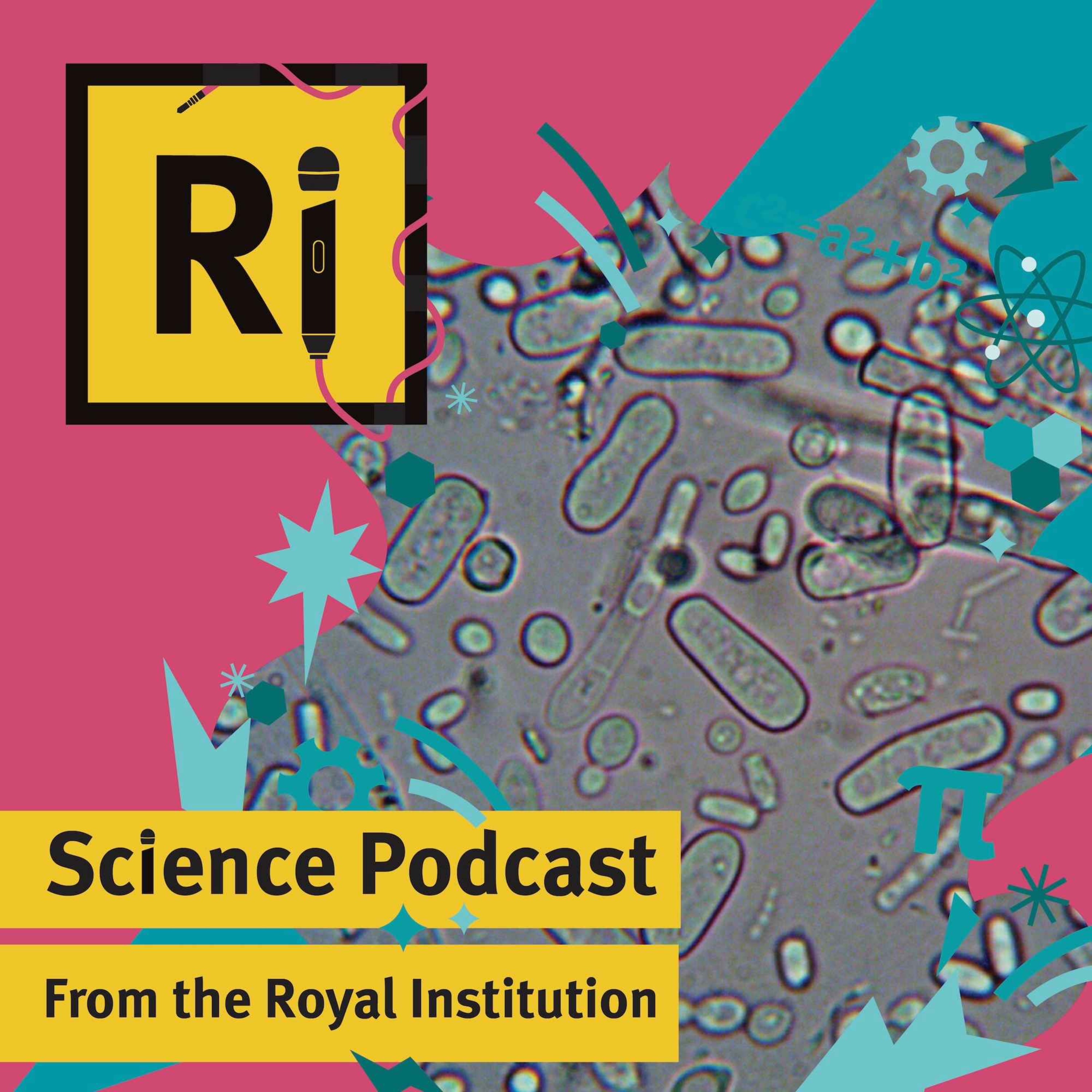
From the PhD Lab: How do biofilms help keep bacteria alive? - with Josh Horton
Microorganisms are constantly adapting to evade human-made interventions such as antibiotics and sanitisers. One of these adaptations is to use their strength in numbers and form a biofilm. One bacteria in particular forms biofilms that we encounter in many situations in our everyday life - salmonella. But what do we know about how salmonella forms this biofilm, so that we know how to eliminate it
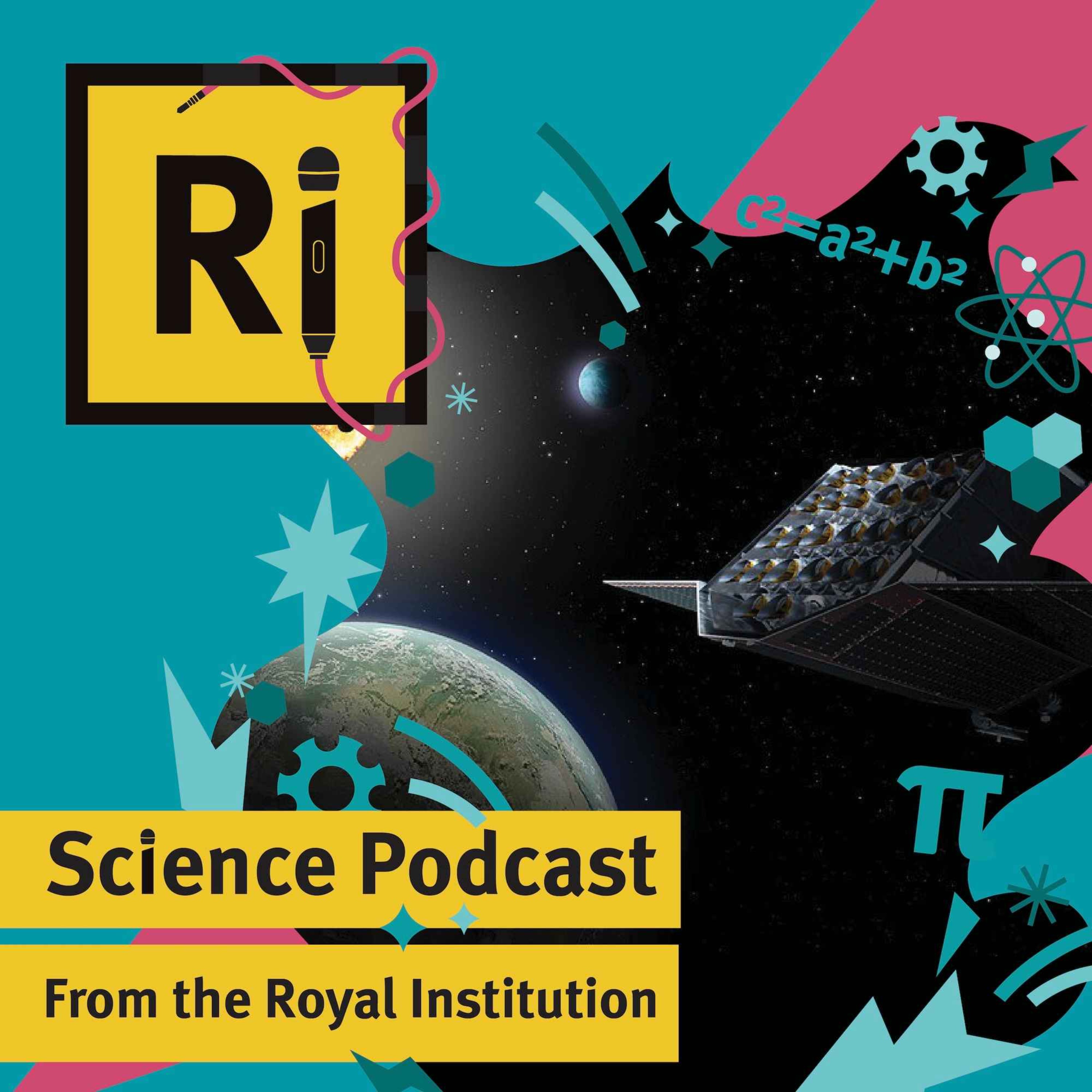
The PLATO mission: Discovering other planets fit for life - with Ana Heras and Alistair Winton
The PLATO mission from the European Space Agency is set to launch next year, and is hoping to identify thousands of exoplanets in our galaxy which could have the right conditions to support life. Lead project scientist for the mission Ana Heras, and engineer Alistair Winton, join the podcast this month to explain the scientific aims of this mission. Discover the different methods that are used by
From the Theatre: How AI is redesigning the battery - with the Faraday Institution
For this month's From the Theatre episode, we explore how AI could actually be a force for good in the world of batteries. In collaboration with the Faraday Institution, we hear from three experts to understand how artificial intelligence could optimise the performance of batteries at every scale.Aaron Walsh (CuspAI / Imperial College London) explains how AI acts as a "digital alchemist" — simulat
The science of heatwaves, health, and wildfires: Why was the summer of 2026 so hot? - with Clair Barnes, Gary Konstantinoudis and Alisha Fuller-Armah
Why have so many people died during the heatwaves spread across Europe this summer, and is it a direct result of climate change? And what technology is being developed to help us prevent damage from wildfires as they become more prevalent?Statisticians Clair Barnes and Gary Konstantinoudis, and entrepreneur Alisha Fuller-Armah feature on this month's episode to explore the science behind heatwaves
From the Theatre: What is a solar eclipse? - with Frank Close
What is a solar eclipse? How is it safe to watch? And what other types of eclipses are there?This month, we revisit Frank Close's talk from the theatre where he explored what causes solar eclipses, and ahead of the first total solar eclipse visible from the UK since 1999.Frank Close a particle physicist, author and speaker. He is Professor of Physics at the University of Oxford. He was formerly vi
Quantum field theory, AI, and the future of theoretical physics - with Ross Jenkinson
Quantum physics has gone through two major revolutions over the past century, which has transformed how we understand and practise theoretical physics. But what has still been left unanswered through these revolutions?Theoretical physicist Ross Jenkinson joins us this month to explain the impact of both of these revolutions on quantum science, and specifically how quantum field theory and quantum
From the Theatre: How biomechanics is optimising human movement - with Eline van der Kruk
Eline van der Kruk takes us on a journey to the world of biomechanics, a place where computer simulations and smart sensors are being developed to push the boundaries of human movement. The Karl Luyben Lecture is dedicated to rector magnificus emeritus Karel Luyben and is held once a year somewhere in the world outside of Delft, The Netherlands, and once a year in Delft. This talk was recorde
Cell signalling, heart disease, and the hidden physics of light - with Izzy Jayasinghe and Alfredo Carpineti
This pride month, we hear from two exceptional queer scientists about their research and journeys in STEM. Izzy Jayasinghe is the Head of Molecular Medicine at UNSW in Sydney, and her research investigates how cell signalling mechanisms impact cardiac health, and the microscopy methods used to observe these mechanisms. Alfredo Carpineti is an astrophysicist, science journalist, and founder of Prid
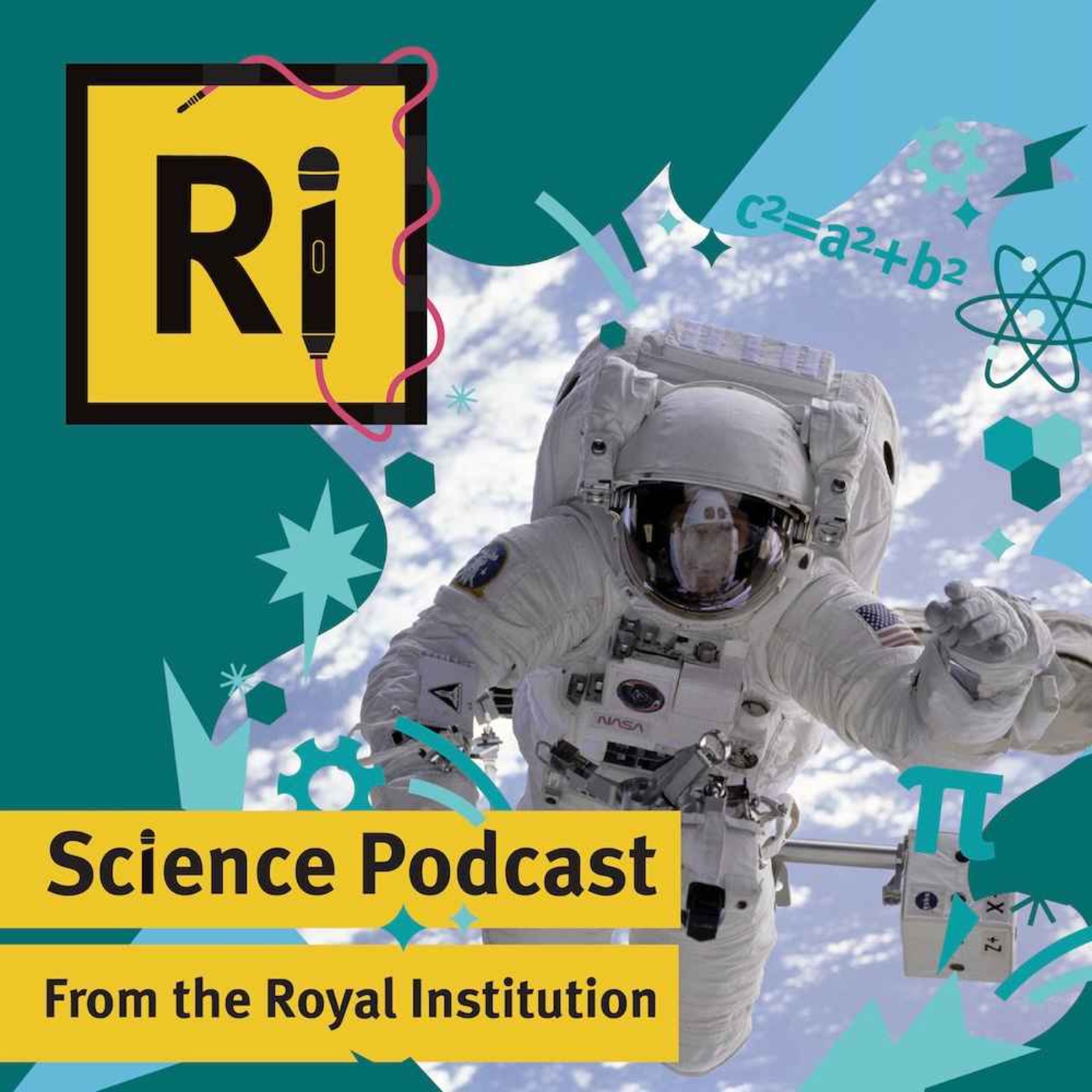
From the Theatre: The past, present, and future of space exploration - with Anu Ojha
This month we're bringing you an exploration of space science From the Theatre. In his talk back in 2024, Anu Ojha OBE from the UK Space Agency explores the discoveries made through applications of space science, climate change and engineering and how they have changed humanity's perspectives of our position in the universe, and ask what difference space, science and technology have made to our ev
Unveiling the ghost particle: Neutrinos and their impact on particle physics - with Kirsty Duffy
Neutrinos are the most important particle you were never taught about. They are created in radioactive decays in the sun, the centre of the Earth, supernovae, and even beer. Particle physicist Kirsty Duffy joins us this month to discuss the origins and properties of neutrinos, as well as her work on a research project that may hold the key to answering some of the most fundamental questions in phy
From the Lab: Treating cancer with light through photodynamic therapy - with Stephen Bown
Photodynamic Therapy (PDT) is offering a revolutionary new treatment option for a range of diseases, particularly cancers. By combining the skills of physicists and physicians, PDT uses light to kill living cells without damaging the structural integrity of the surrounding tissue.Stephen Bown is the founder of the National Medical Laser Centre, and has decades of experience both developing and imp
How does epigenetics impact the placenta? - with Jennifer Frost
How are segments of DNA preserved from ancient viruses impacting the functioning of the placenta? And how does this lead to pregnancy complications? Jennifer Frost leads a team of researchers at Kings College London, investigating the role of transposons in the placenta which leads to pregnancy complications. She joins us this month to explore what transposons are, why the placenta is so susceptib
From the Lab: Nanoparticles and their applications - with Ivan Parkin
From thin film coatings to drug delivery and even antimicrobial resistance, nanoparticles have a huge range of applications. In this month's From The Lab episode, chemist Ivan Parkin explores some of these applications pursued by his research group at UCL ahead of his Discourse in April. About 'From the Lab':This is the third of our new 'From the Lab' series, taking the place of our 'From the Thea
The science of consciousness: Could a conscious AI exist? - with Anil Seth
The science of consciousness is a complex and constantly evolving field of research. Neuroscientists are still understanding how it originates in humans, but the question now arises of whether Artificial Intelligence could ever become conscious. Cognitive and computational neuroscientist Anil Seth discusses the current theories for consciousness, and the probability of AI ever becoming conscious,
From the Lab: The future of sound wave engineering - with Sriram Subramanian
In this month's From the Lab episode, we discover the power of sound waves and how they can manipulate small objects with engineer Sriram Subramanian, ahead of his Discourse at the end of March. Sriram explains the science behind acoustic holography and levitation, and how we could see these concepts in practice in industries ranging from gaming to medicine.About 'From the Lab':This is the third o
What can ancient DNA reveal about the past? - with Pooja Swali
How can ancient DNA help us understand how diseases spread? This month, geneticist and pathogen genomics expert Pooja Swali explains how samples of DNA from the past can reveal how diseases have spread across the world over time. We explore the what, where, how, and why of ancient DNA research, and what doors these questions have opened for the future of the field. Pooja has worked extensively on
From the Lab: Investigating exoplanets - with Jonathan Tennyson
Planets outside of our solar system can unlock an abundance of secrets about our Universe. But how do we study them? Astrophysicist Jonathan Tennyson discusses his own research into exoplanets, and how researchers can use the stars to learn more about planets.About 'From the Lab':This is the second of our new 'From the Lab' series, taking the place of our 'From the Theatre' episodes. UCL are celeb
The role of inflammation in Alzheimer's Disease - with Tomi Akingbade
Alzheimer’s Disease is a neurodegenerative disease caused by the excessive build-up of proteins in the brain. Neuroscientist Tomi Akingbade joins us this month to explain how inflammation could be playing a role in the progression of Alzheimer’s, and what this could mean for future research. Tomi is also the founder of the Black Women in Science (BWiS) network, and discusses th
From the Lab: How mathematics is powering medical innovation – with Becky Shipley
Medical research is continuously evolving with new technologies, but another key player in spurring this evolution is mathematics. Mathematician and healthcare engineering expert Becky Shipley joins us to discuss the role mathematics is playing in medical research, and some of the fascinating and innovative technologies she's been a part of developing. About 'From the Lab':This is the
Best of 2025: Science wrapped
From the scientific mechanisms underlying ACL injuries, the application of computational fluid dynamics in the COVID-19 pandemic, and even the latest space mission on the way to Mercury, we've covered an enormous range of science on the Ri Science Podcast throughout 2025. In this year's Science Wrapped episode, we take a look back over our favourite moments from the past year to give you a
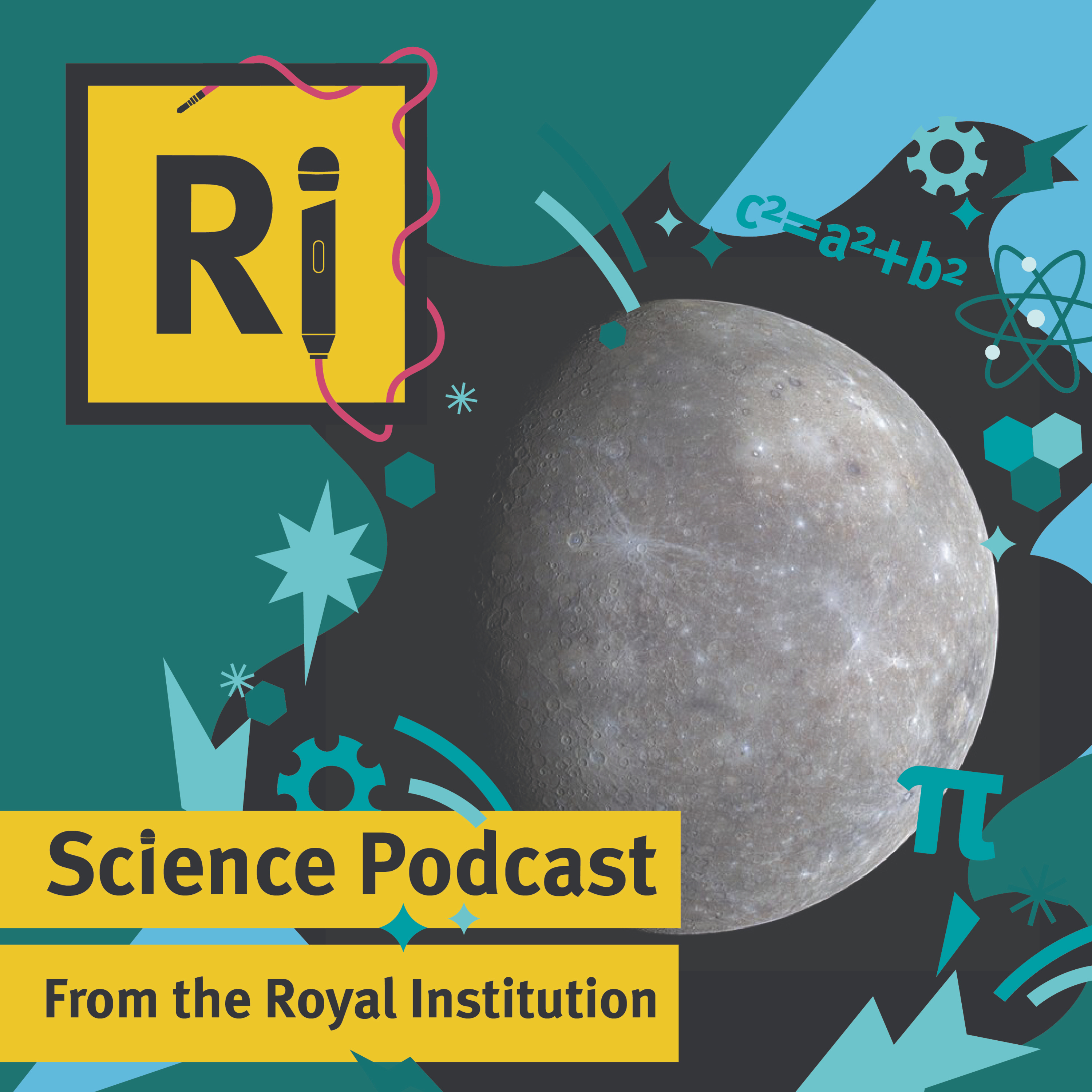
From the Space Park: What will BepiColombo teach us about Mercury? - with Suzie Imber
We’re bringing you this month’s From the Theatre episode from the Space Park in Leicester, joined by Professor of Space Physics Suzie Imber. Suzie is a Co-Investigator on the Mercury Imaging X-Ray Spectrometer (MIXS) instrument onboard BepiColombo, the joint mission between ESA and JAXA currently on its way to Mercury. We explore the history of Mercury investigations, why it has been studied so mu
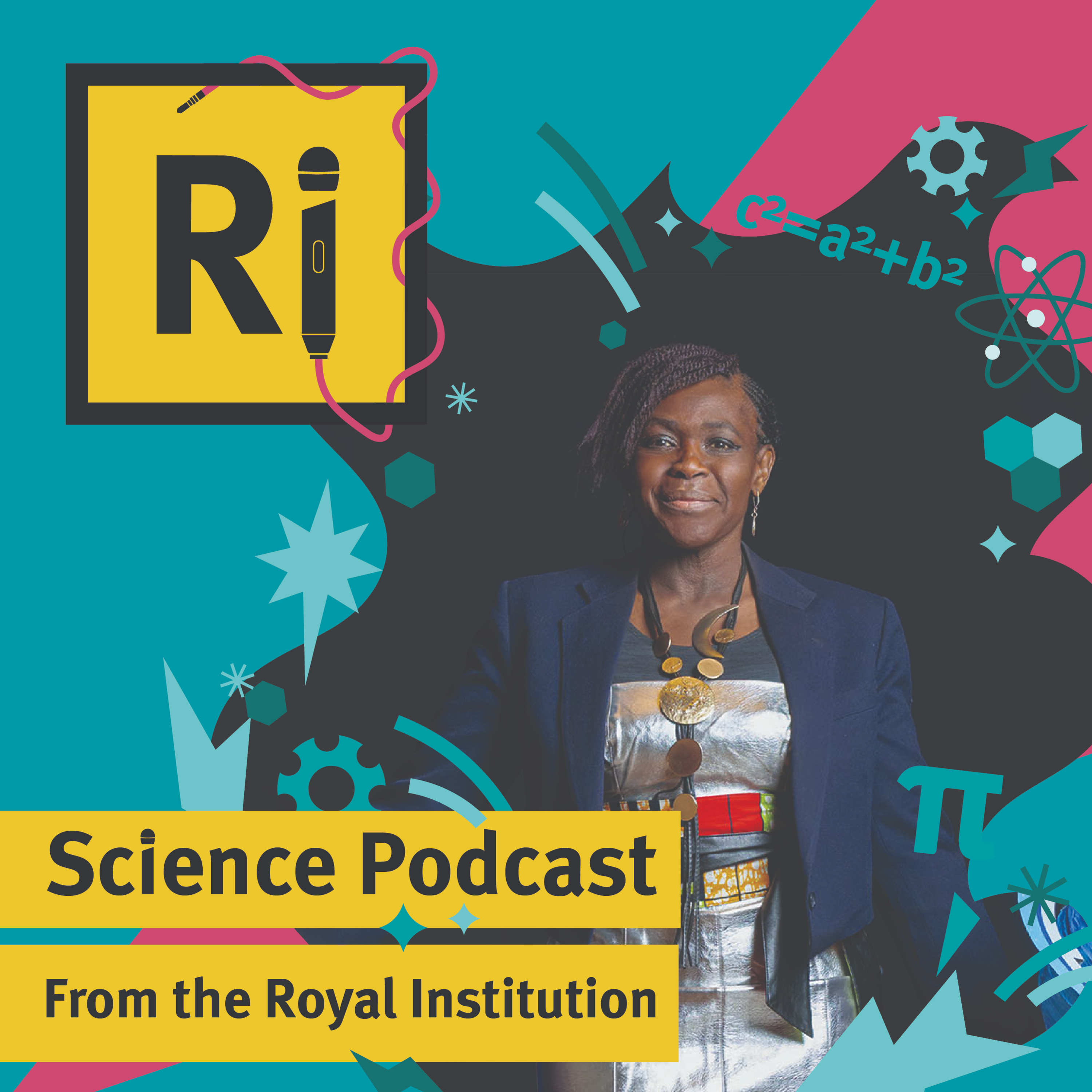
Tripping the light fantastic: Space science and 200 years of the CHRISTMAS LECTURES - with Dame Dr Maggie Aderin-Pocock
This December, space scientist and renowned science communicator Dame Dr Maggie Aderin-Pocock will be presenting the CHRISTMAS LECTURES in their 200th year titled ‘Is there life beyond earth?’. Maggie joins us on the podcast this month to explore the history of space imaging and the huge number of projects she has worked on throughout her career, as well as her experiences navigating the scientifi
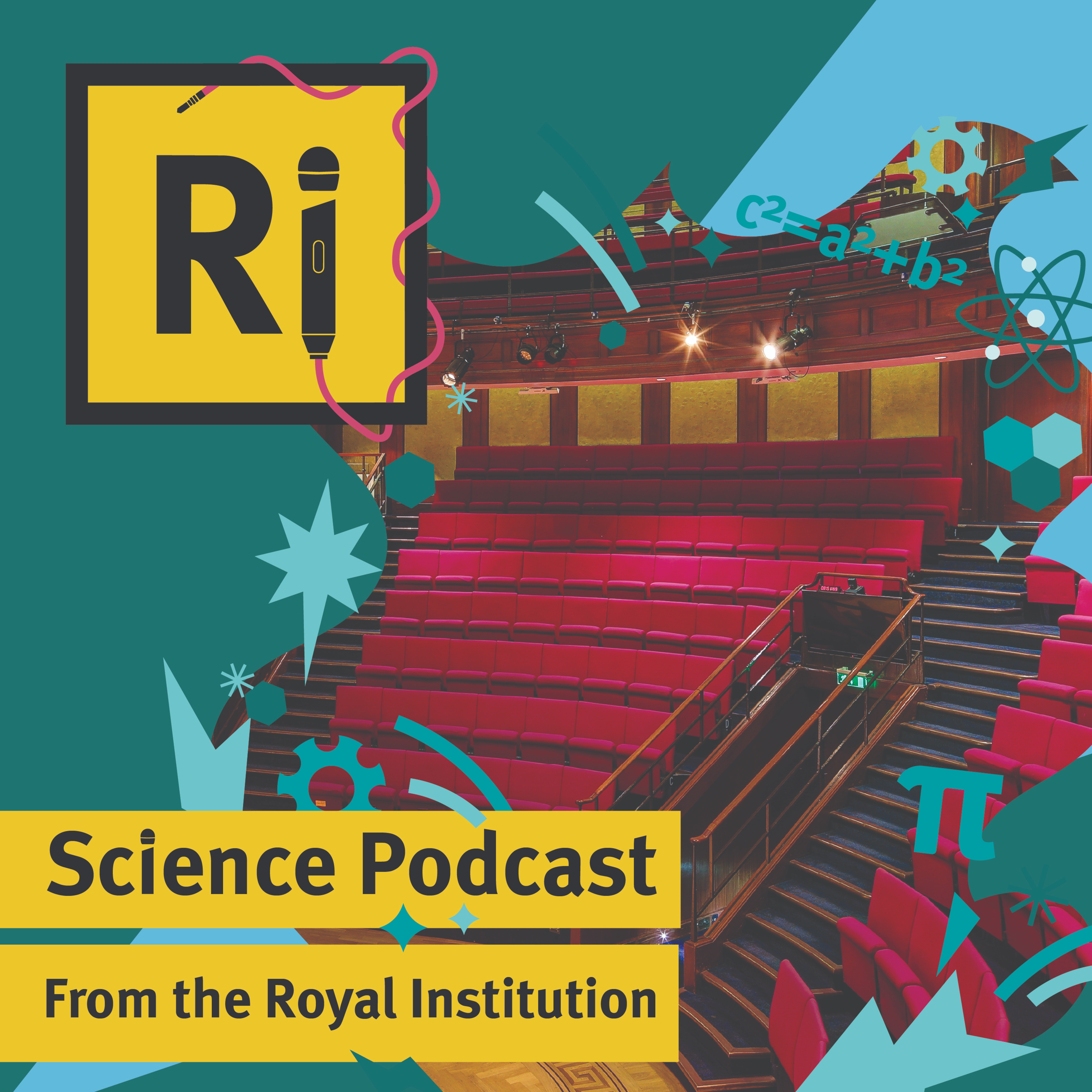
From the Excel: Upcoming science in 2026 from New Scientist Live
In this month's 'From the Theatre' episode, we visited New Scientist Live at the Excel to explore what scientists are most excited about for 2026. From insects performing amputations to the latest developments at the Large Hadron Collider, discover what innovations are happening across a range of scientific disciplines. This episode was recorded on Sunday 19 October 2025.Presented and
How mechanical engineering is changing the world - with Shini Somara
Mechanical engineer and broadcaster Shini Somara joins us this month to uncover some of the fascinating and often under-appreciated innovations in the world of engineering, ahead of her double bill of talks at the Ri on Saturday 1 November. Shini discusses how computational fluid dynamics (CFD) transformed our understanding and management of Covid-19, and how the field has changed dramatically wi
From the Theatre: Should computers run the world? - with Hannah Fry
In this month's From the Theatre episode, we revisit past Christmas Lecturer Hannah Fry's talk on the power of algorithms to continue celebrating our Discover200 campaign.Hannah Fry takes us on a tour of the good, the bad and the downright ugly of the algorithms that surround us. She lifts the lid on their inner workings, to demonstrate their power, expose their limitations, and examine whether th
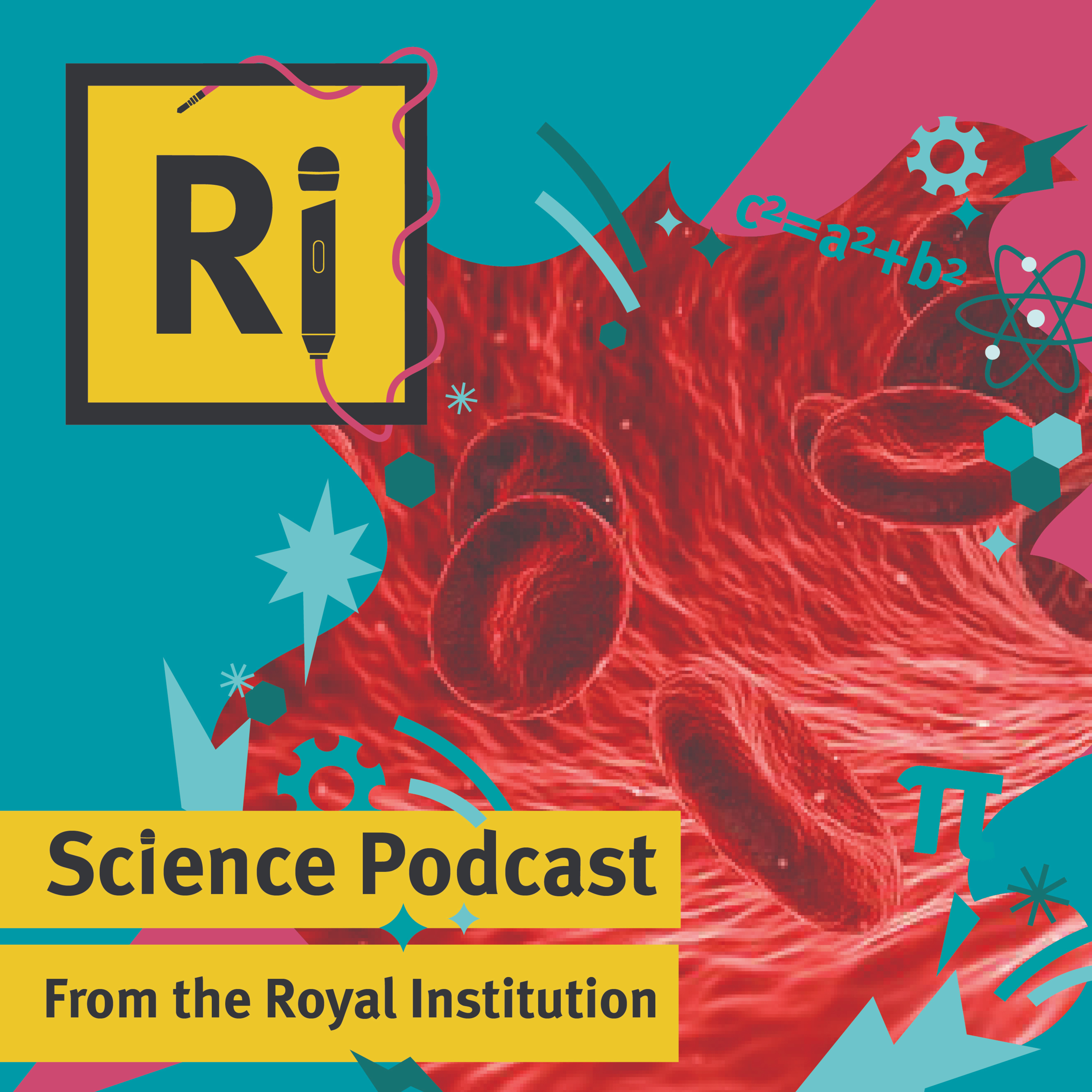
The science behind sickle cell disease - with Sara El Hoss and Stephanie George
Sickle cell disorder is an inherited blood disorder that affects the shape of red blood cells, and can have an extreme impact on all different areas of the body. September marks Sickle Cell Awareness Month, so we wanted to draw attention to the science underlying this often-misunderstood disease. We are joined by researcher Sara El Hoss and sickle cell patient and advocate Stephanie George to disc
From the Theatre: The science of mental health - with Camilla Nord
We're bringing you even more Spotify content, by sharing one of our world-famous lectures on every second Wednesday of the month through 'From the Theatre' episodes. Don't worry, Ri Science Podcast episodes are still coming every last Wednesday, but these will help to tide you over in the meantime. How does the body affect our brain, and vice versa? Can exercise, psychedelics, or the gut biome imp
Is data failing us? - with Grace Huckins
Everywhere you look across the scientific landscape, AI and big data play a vital role. But is that role good or bad? This year’s Nine Dots Prize question looked to tackle just that, and award-winning science journalist and neuroscientist Grace Huckins’ entry was deemed the most innovative. Grace joins us this month to discuss how AI could be changing the way science operates, and how data has tra
What can dogs teach us about the microbiome? - with Bushra Schuitemaker
How similar is your microbiome to your dog’s? How do volcanoes influence the microbiome of the earth? And what links the microbiome to epilepsy? It’s not just the gut that has a microbiome – everything from your phone screen to the soles of your shoes has a community of microorganisms residing together that forms a microbiome. But the microbiome in the gut specifically has a huge impact on our bod
The science behind ACL injuries in women's football - with Blake Rivers and Grace Vella
The Women's Euros kick off next Wednesday, once again bringing attention to the epidemic of anterior cruciate ligament (ACL) injuries in women’s football. But why is it that women are six times more likely to suffer from these injuries, and what research is being done to understand it further? This month we’re looking at the science behind the ACL, and what factors researchers are investigatin
De-westernizing the history of science - with Gianamar Giovannetti-Singh
When we think of the biggest historical figures in science, names like Isaac Newton and Michael Faraday tend to come to mind. But the discoveries made by these individuals could never have happened without the contributions of countless others around the world, whose names and stories are often left out of the picture. Former Royal Institution Freer Fellow Gianamar Giovannetti-Singh spoke at the
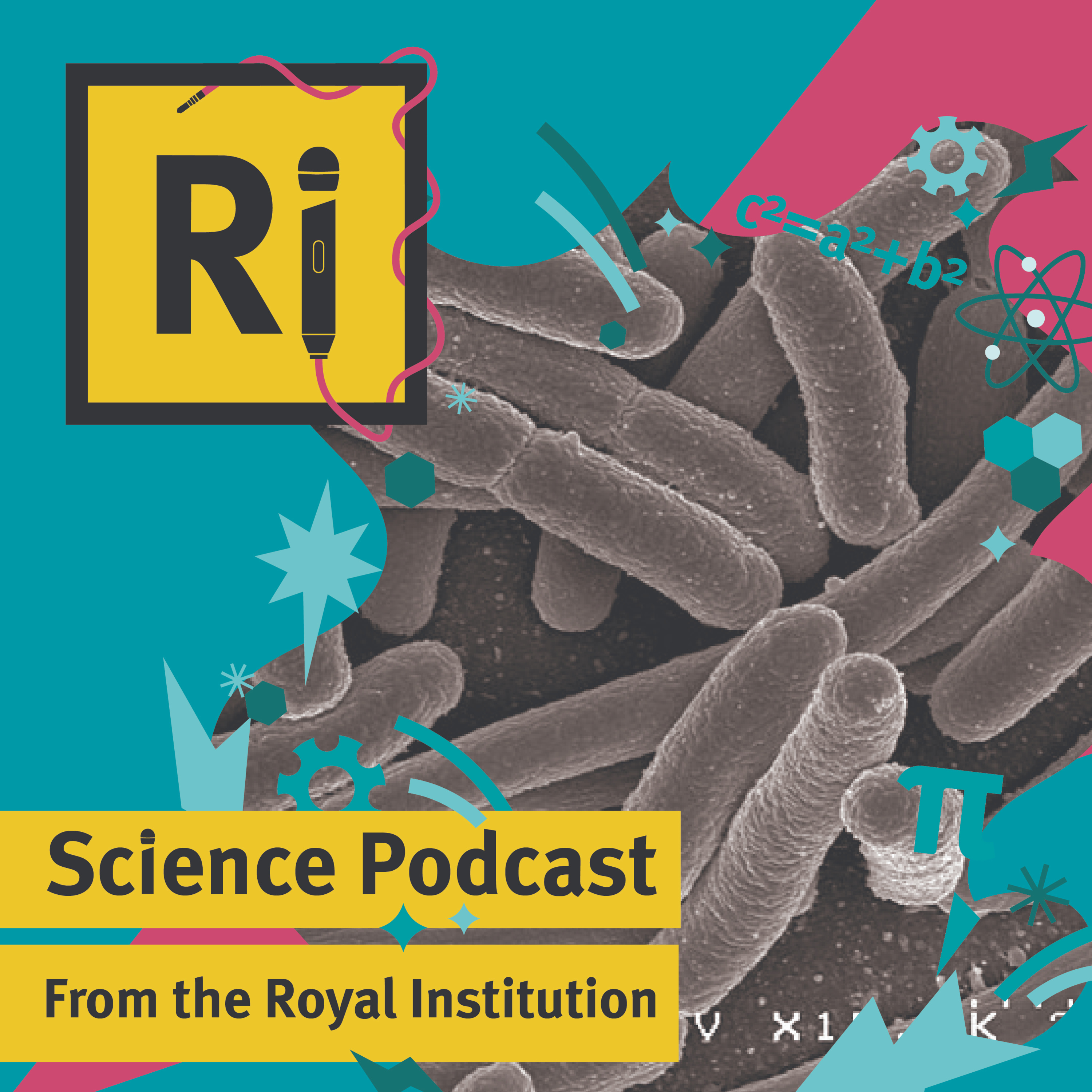
Understanding antimicrobial resistance - with Gabriel Astorga
How do microbes including bacteria become resistant to treatment? What can we do to prevent it? And why do we have tuberculosis to thank for the creation of cowboy hats? This month, PhD student and award-winning science communicator Gabriel Astorga joins us to answer all these questions and more, as we look under the hood of antimicrobial resistance. Ri Science Podcast episodes are released on t
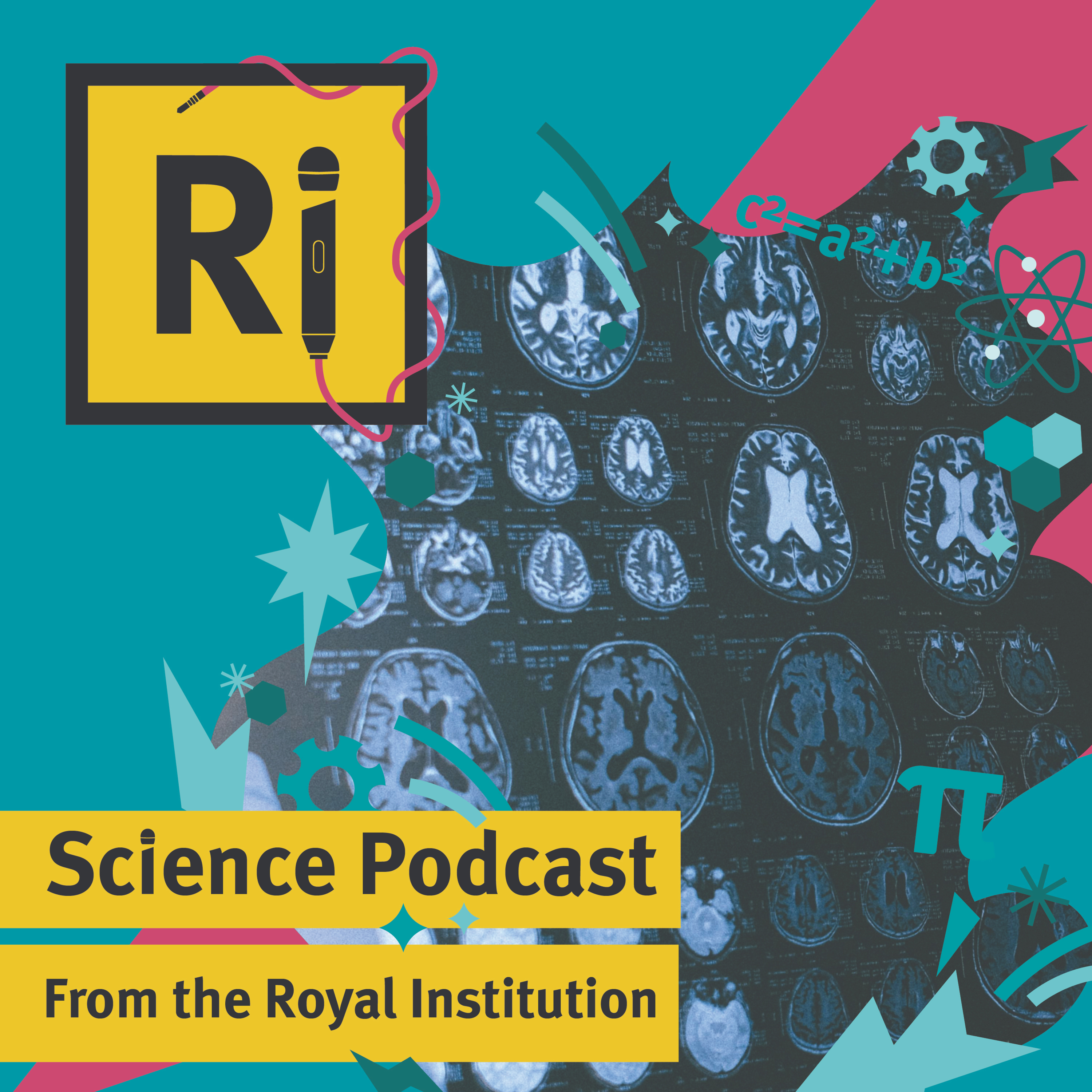
How climate change affects the brain - with Clayton Aldern and Sanjay Sisodiya
John Tyndall first announced his discovery of greenhouse gases in a Royal Institution Discourse back in 1862. Since then, our understanding of the science of climate change has come on leaps and bounds in some areas, but in others we are only just scratching the surface. This month, we hear from neuroscientist-turned-journalist Clayton Aldern and Professor of Neurology Sanjay Sisodiya about how cl
Statistical uncertainty in the modern world - with David Spiegelhalter
Sir David Spiegelhalter is a national treasure in the world of statistics, achieving everything from a knighthood to appearing on Total Wipeout. In light of giving the first Discourse in their bicentennial year, David explores how risk and uncertainty have affected his own life, and how to understand the statistics we see every day. Ri Science Podcast episodes are released on the last Wednesday
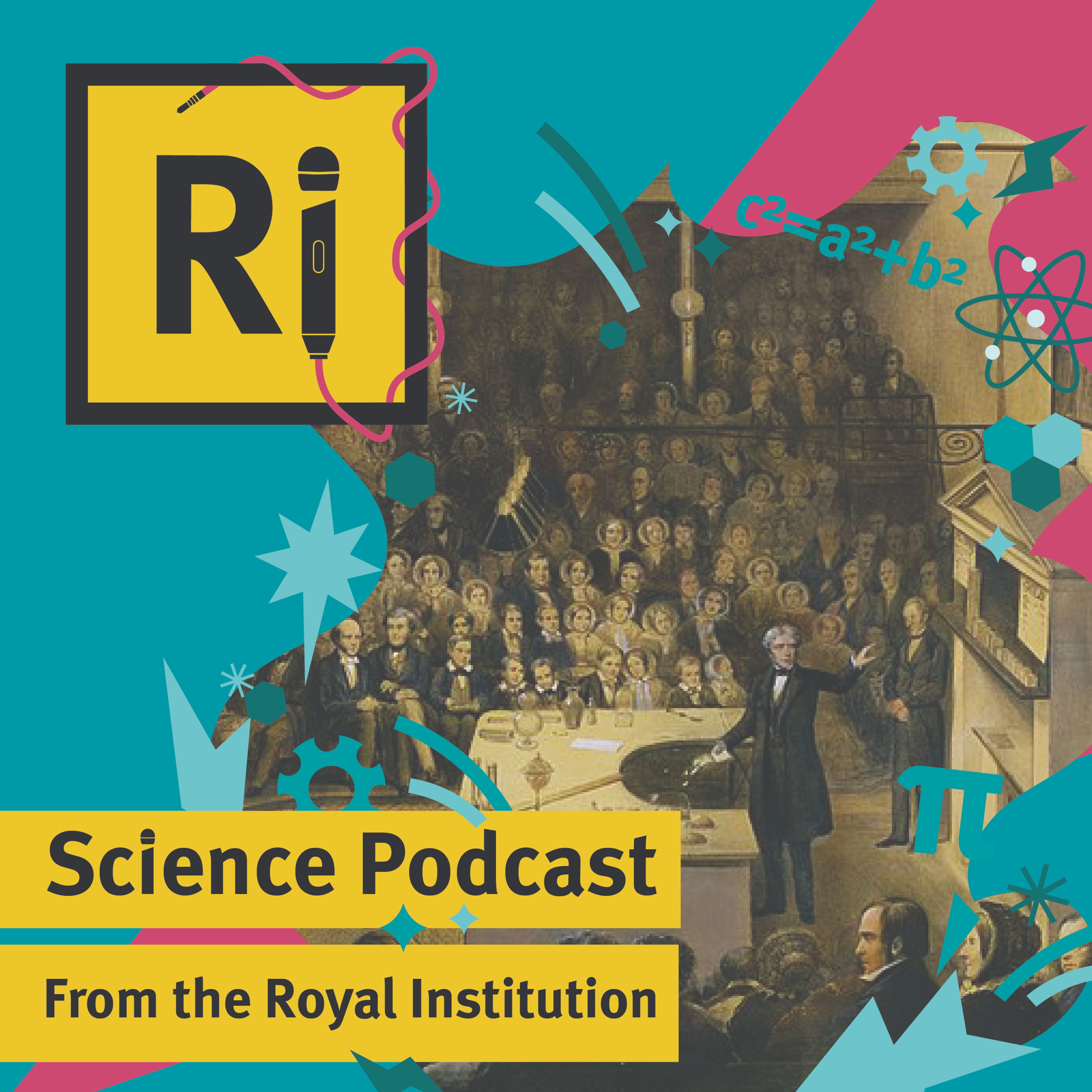
Scientists on Scientists: Being the Christmas Lecturer - with Chris van Tulleken and Monica Grady
2025 marks the 200 year anniversary of the CHRISTMAS LECTURES from the Royal Institution, as well as Discourses and Michael Faraday’s discovery of Benzene. We’re celebrating throughout the year to mark the occasion, kicking off with a conversation between two previous Christmas Lecturers Chris van Tulleken and Monica Grady. They discuss their experiences giving the lectures, the importance of scie
Best of 2024: Science wrapped
2024 has been a remarkable year for science, so we're taking a look back over the past year at our most memorable moments here on the Ri Science Podcast. From eggs to AI, sustainable plastics to protein folding, we've discussed a fascinating range of topics with even more fascinating guests including Jess Wade and Charan Ranganath. We can't wait to see what's in store in science fo
Quantum physics and gender equity - with Jess Wade
2025 is the International Year of Quantum Science and Technology, as marked by the UN, to celebrate 100 years since the birth of quantum mechanics. But quantum science is one of the least diverse areas of science in terms of gender and other protected characteristics. Jess Wade, a physicist and lecturer in functional materials at Imperial College London, has been fighting the inequality in quantum
Sustainable materials: Trick or treat? - with Mike Shaver
Halloween means lots of sweets, which in turn means lots of packaging. We’re starting to see more of the packaging on our shelves labelled as sustainable in some way, but are they really? Mike Shaver is a Professor of Polymer Science and Director of the Sustainable Materials Innovation Hub at the University of Manchester, and joins us this month to unpick the current landscape of sustainable mater
The search for Earth 2.0 - with Elizabeth Tasker
What makes a planet habitable? What are we looking for to find Earth 2.0? And how do you get a chunk of an asteroid through airport security? This month, astrophysicist Elizabeth Tasker discusses the latest missions at the Japan Aerospace Exploration Agency (JAXA) and explores how our knowledge has progressed since she last spoke at the Ri back in 2018. Ri Science Podcast episodes are released on
The brain on exercise - with Dr Flaminia Ronca
Today marks the beginning of the Paralympic Games, and nearly 3 weeks since the end of the Olympic Games in Paris. But what actually happens to your brain when you exercise? What’s the science behind ‘runner’s high’? And why isn’t there enough research on women in sport? This month, we’re joined by exercise neuroscientist Flaminia Ronca, from UCL and the Institute of Sport Exercise and Health. She
How women drove evolution - with Cat Bohannon
Why is there less medical research on women? How did humanity reach 8 billion despite the dangers of childbirth? In this episode, Cat Bohannon explores these questions and reveals insights from her book, Eve: How Women Drove 200 Million Years of Evolution, to highlight women’s pivotal role in our species’ history. This talk was recorded at the Royal Institution on 8 June 2024. Ri Science Podcast e
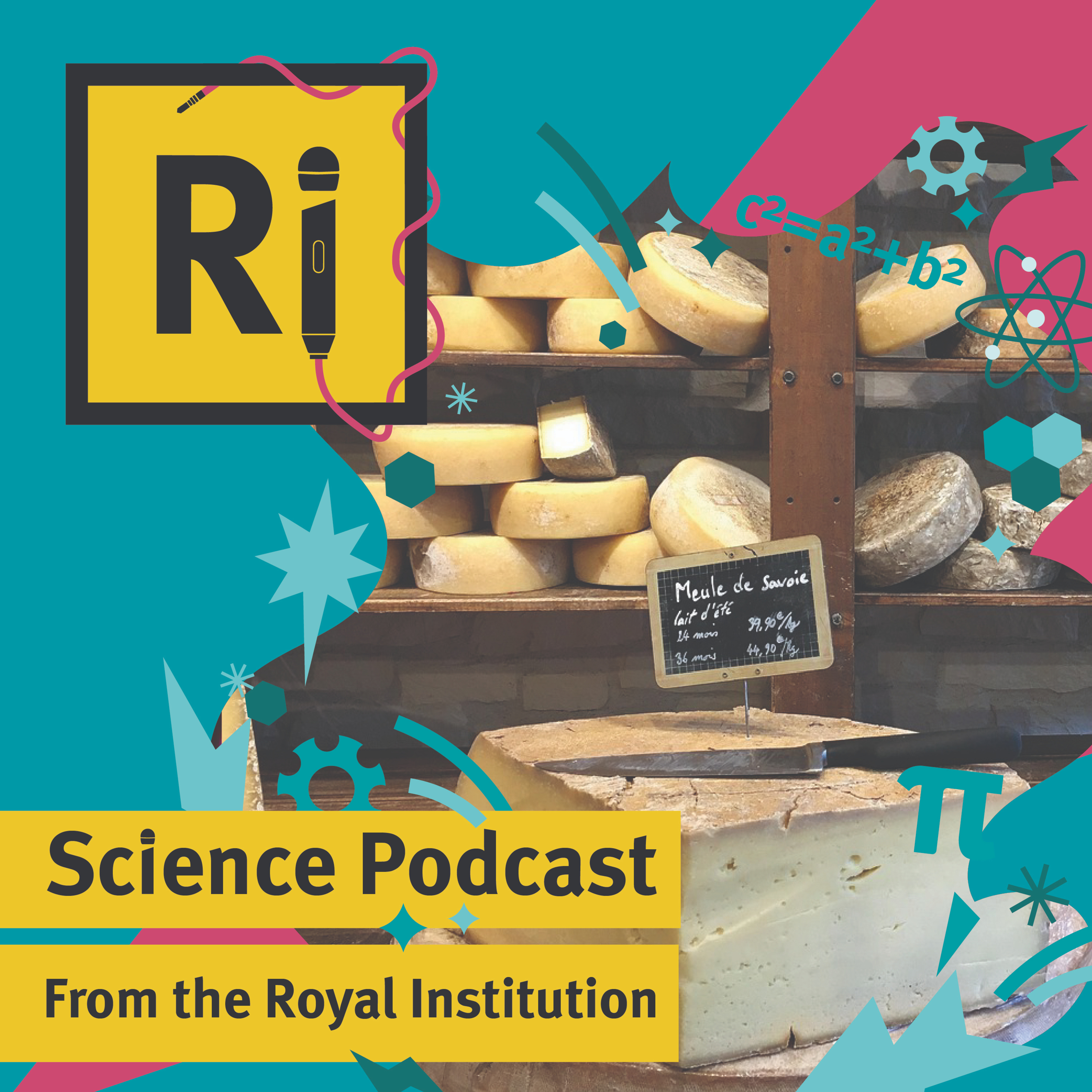
The science of cheese - with Bronwen Percival
To celebrate National Cheese Day earlier this month, we sat down with biochemist and cheese expert Bronwen Percival to look under the barrel at the science of one of the nation’s favourite foods. From the basics of cheese production to the biochemistry underlying its notorious smell, and even some cheese tastings, this episode guarantees to open your eyes to the captivating world of cheese. Ri Sc
Eggs, Evolution, and life on Earth - with Jules Howard
What came first, the chicken, the egg, or...the jellyfish? Zoologist and author Jules Howard joins us this month to explore evolution through a new lens - the egg. Eggs play a fundamental role in the reproduction and development of most species, yet they have been relatively overlooked in the narrative of evolution and the progression of life on Earth. Jules takes us on a journey back through the
The neuroscience of memory - with Charan Ranganath
Why is it that we can vividly remember a particular smell from years ago, but can’t remember where we put our keys a mere few hours prior? This month, we’re joined by renowned neuroscientist and author Dr Charan Ranganath to discuss how and why we remember. Charan is a Professor of Neuroscience and Psychology, and Director of the Dynamic Memory Lab at UC Davis, and has recently released his first
Ri on AI: The healthcare revolution – with Dr James Kinross
In the second episode of this miniseries, we’re exploring how AI is impacting different areas of scientific research, and in this episode we discuss the applications of AI in healthcare. Lisa Derry is joined by Dr James Kinross, a colorectal surgeon and medical researcher at Imperial College London, to discuss everything from the impact of AI on medical publishing to robotic surgery. Ri on AI epis
Geometry in Everyday Life - with the London Institute of Mathematical Sciences (LIMS)
Following on from his Discourse, Yang-Hui He is joined by LIMS science writer Madeleine Hall to discuss the past, present and future of Geometry. From Euclid’s postulates to how flower petals are arranged, explore how our modern understanding of geometry has come to be. LIMS is based here at the Ri, and you can find out more about their research by following the link below. New Ri Science Podcas
Ri on AI: Understanding AlphaFold with Dame Janet Thornton
We’re exploring how AI is impacting different areas of scientific research, and in this episode we discuss AlphaFold, the machine learning programme from DeepMind that can determine a protein structure from its amino acids alone. Lisa Derry is joined by Dame Janet Thornton, an oracle of bioinformatics and former Director of the European Bioinformatics Institute, to discuss how AlphaFold has revolu
Tales from my PhD: Algorithms for energy efficiency – with Karan Mukhi
How can we improve the use of renewable energy in the power grid? In the final episode of the series 'Tales from my PhD', Charlotte Collingwood talks to Karan Mukhi about his work in computer science, creating algorithms to improve the efficiency of the national grid.Follow Charlotte on Twitter: @NeuroCharlotteRi Science Podcast episodes are released on the last Wednesday of every month, a
Tales from my PhD: Fighting rice blast fungus – with Camilla Molinari
How do you fight a fungus? In this episode of ‘Tales from my PhD’, Charlotte Collingwood talks to Camilla Molinari about her work in plant pathology, studying the mechanisms and genetics of the rice blast fungus in order to limit its impact on food crops.Follow Camilla on Twitter: @CamilaMolinari3Follow Charlotte on Twitter: @NeuroCharlotteRi Science Podcast episodes are released on the last We
Tales from my PhD: Researching anxiety and depression through computational models – with Sophie Shang
How can maths and computational models help us treat anxiety and depression? In this episode of 'Tales from my PhD', Charlotte Collingwood talks to Sophie Shang about her research in the field of computational psychiatry. A hallmark symptom of anxiety and depression is an intolerance of uncertainty. Sophie's work involves designing studies to test people's response to changes in th
Tales from my PhD: Saving manta rays – with Jessica Savage
There are an estimated 5 trillion plastic particles in the oceans, spelling trouble for marine ecosystems. Manta rays are one group of species at risk – how can we protect these animals? In this episode of 'Tales from my PhD', Charlotte Collingwood talks to Jessica Savage about her work analysing the species distribution of manta rays and global plastic pollution maps to aid marine science
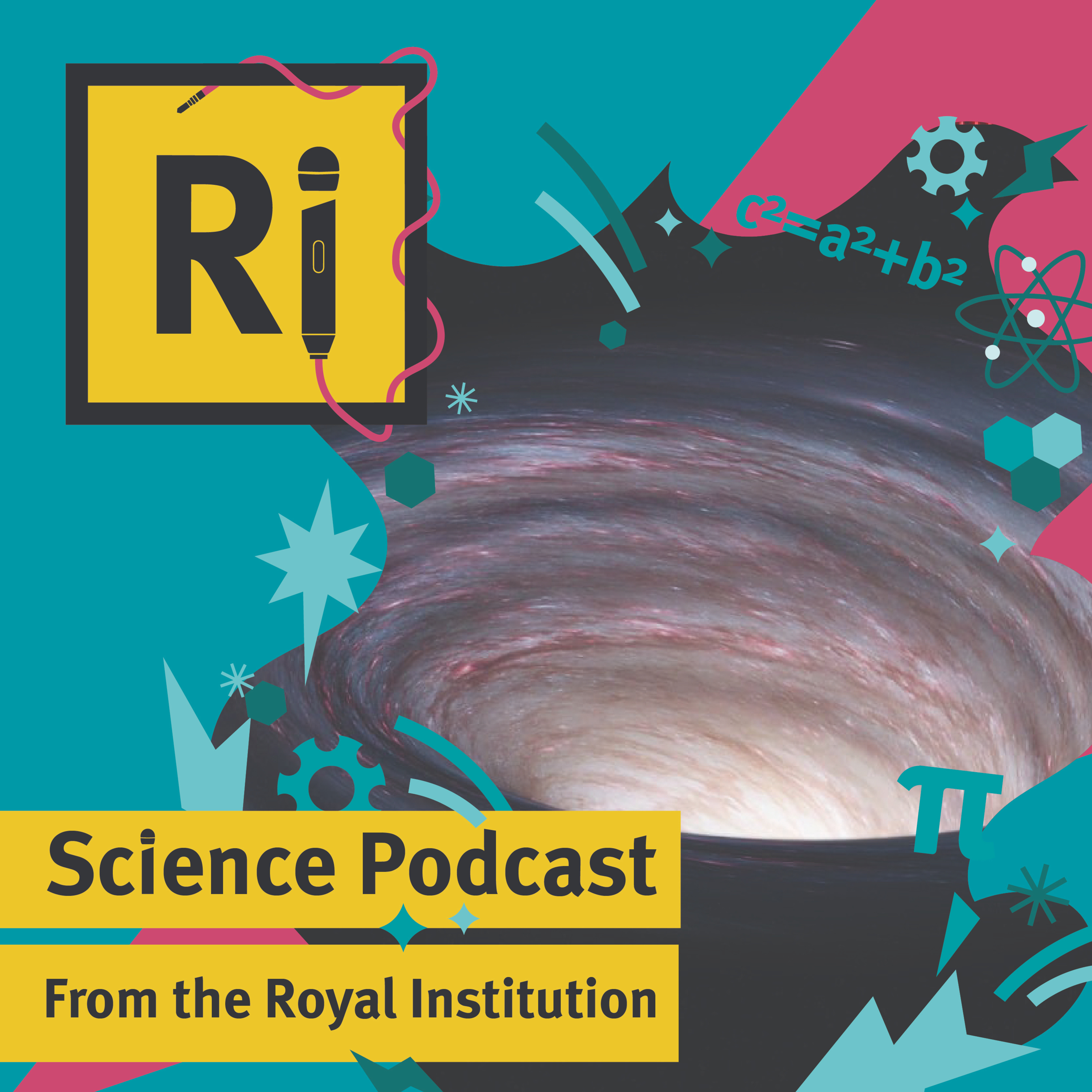
How to hear gravitational waves – with Tessa Baker
How can we detect massive objects in space when we can't see them by light?On 14 September 2015, scientists opened a new window to observing the Universe when, for the first time, they directly detected gravitational waves, rippled out through spacetime from the merger of two black holes. In this episode, astronomer Tessa Baker explores how Einstein’s theory of gravity predicted the existence
Tales from my PhD: What is galaxy evolution? – with Rohan Varadaraj
Astrophysicists grapple with the Universe's big questions, but what does their day-to-day research actually entail? In the first of our new mini-series, 'Tales from my PhD', Charlotte Collingwood sits down with Rohan Varadaraj to discuss his work discovering new galaxies billions of light years away.Ri Science Podcast episodes are released on the last Wednesday of every month, and our
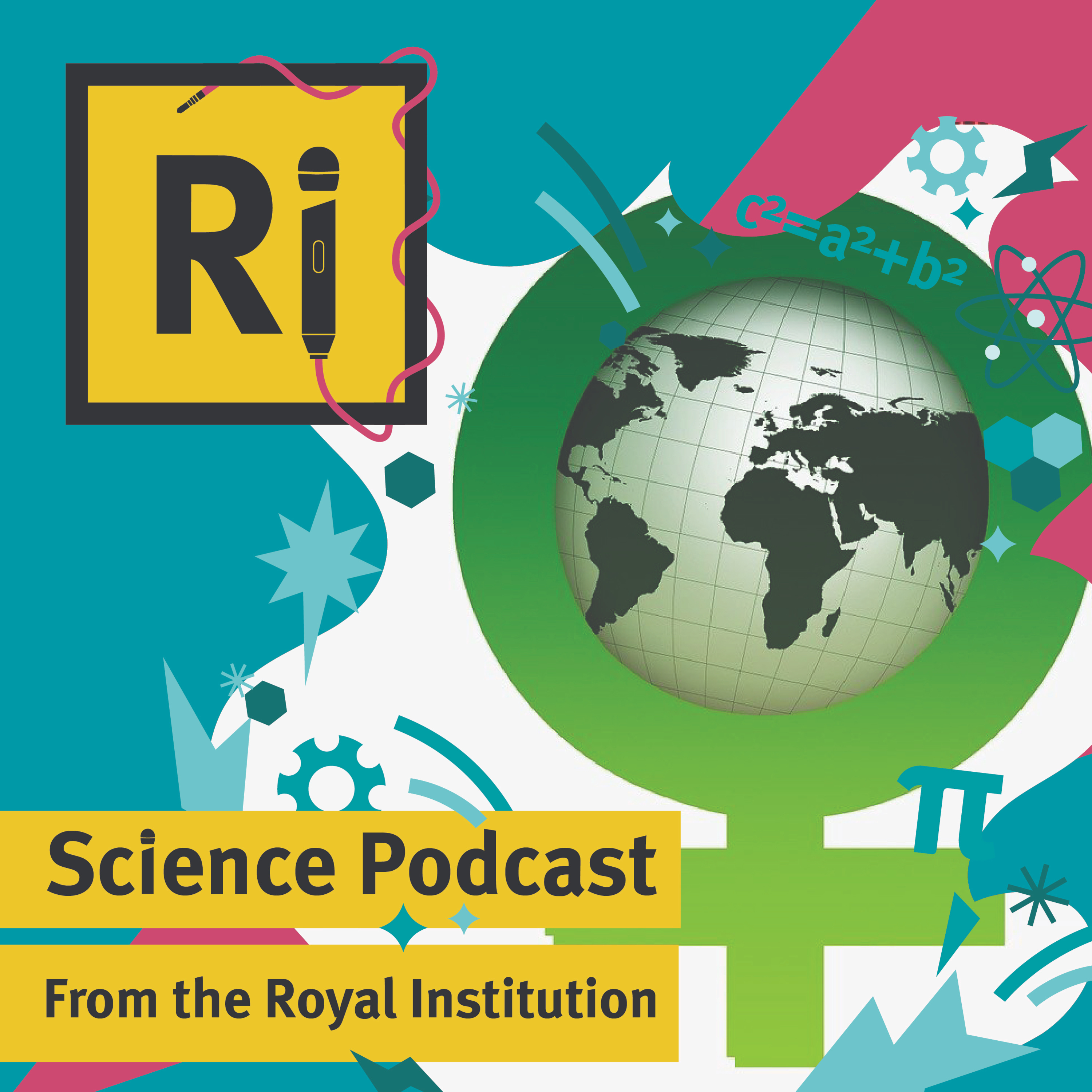
How did patriarchy develop across the world? – with Angela Saini and Julia Gillard
How did societies develop across the globe and how did gender become so enmeshed in them? In this episode we join award-winning science journalist, Angela Saini, in conversation with former Australian prime-minister, Julia Gillard, as they go in search of the roots of gendered oppression. By looking at cultures throughout human history and in the modern day, they overturn simplistic universal theo
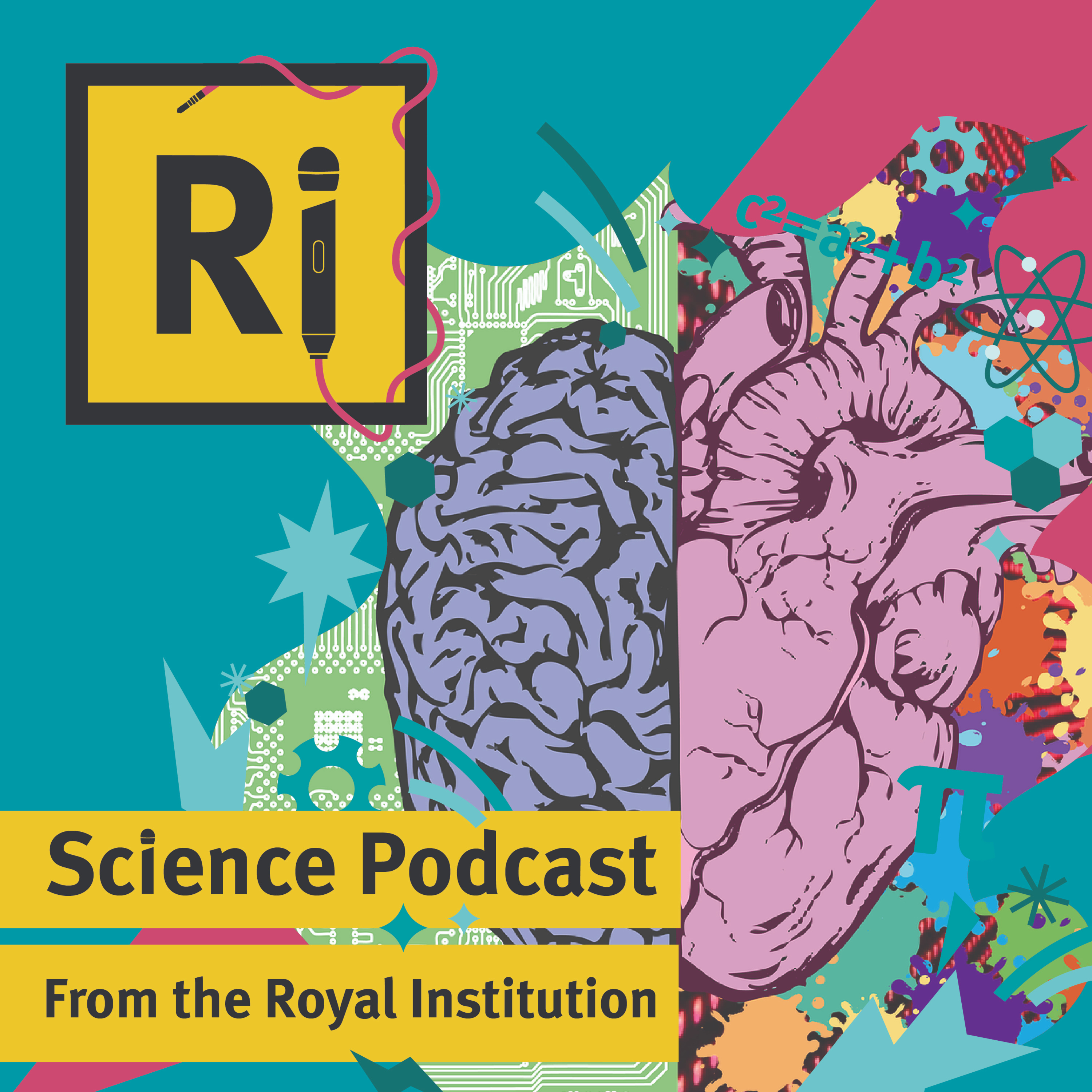
Can science explain emotions? – with Dean Burnett
Did you know that there is no widely agreed upon definition of what emotions actually are? After losing his dad to Covid-19 in the early days of the pandemic lockdown, neuroscientist Dean Burnett found himself wondering what life would be like without emotions. In today’s episode, Dean combines his personal story with expert analysis, humour and powerful insights into the grieving process, to unco
Tackling climate change with innovation – with Alyssa Gilbert and Katherine Mathieson
How could we use shower wastewater to clean our clothes? To celebrate Earth Day and its specific focus on investing in the planet, we wanted to introduce you to ‘Undaunted’ - our partnership with Imperial College London that supports climate-positive startups tackling the climate crisis head on. We hear from Alyssa Gilbert, Director of Undaunted, and Katherine Mathieson, Director of the Ri, about
Existential physics: Exploring life's big questions – with Sabine Hossenfelder
Are particles conscious? Can information be destroyed? Do we live in a computer simulation? Are we part of a multiverse? In this episode, theoretical physicist Sabine Hossenfelder draws on research in quantum mechanics, black holes and particle physics to explore what modern physics can tell us about life's big, existential questions.Watch the video version of this episode: youtu.be/fl9oDJzfg
Bad statistics: How not to be misled – with Jennifer Rogers
You might have heard that vending machines are more likely to kill you than a shark, but they aren’t the only deadly object out there. You’re also more likely to be killed by falling coconuts, lightning strikes, bathtubs and your own bed. Swimming in shark-infested waters might actually be safer than hiding in your own house.In this episode, statistician Jennifer Rogers delves into the numbers to
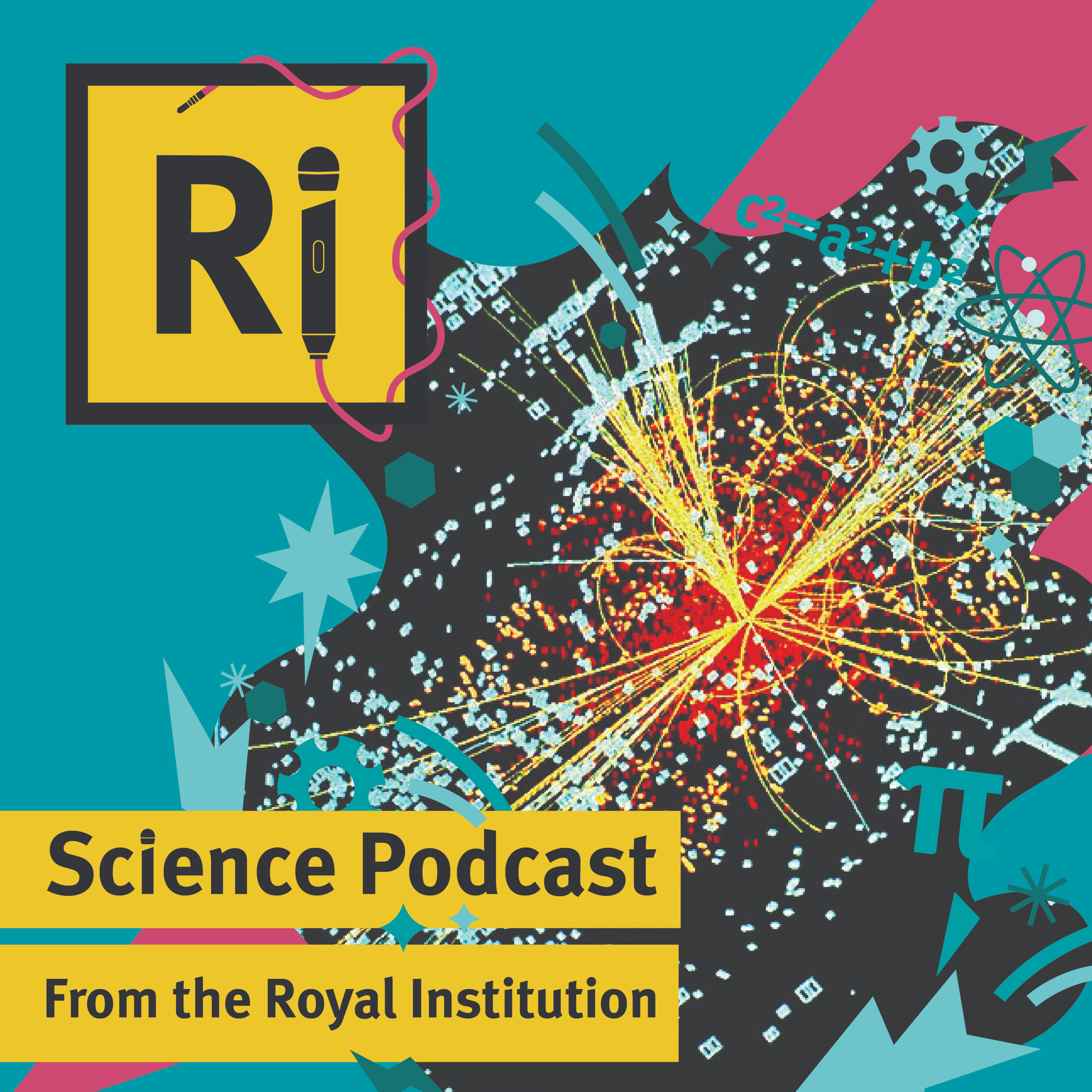
How Peter Higgs proposed the Higgs boson – with Frank Close
On 4 July 2012, one of the longest-running mysteries in physics was finally clarified. The ATLAS and CMS collaborations at CERN’s Large Hadron Collider announced that they had produced and observed the elusive Higgs boson. This unstable elementary particle was theorised back in 1964 by 6 scientists – one of them was the particle’s namesake, Peter Higgs.In this episode, physicist and former Ri Chri
How to handle heart disease – with Samer Nashef
Do Diet Coke and salt cause heart disease? How do you transport a heart to be transplanted? How can you learn to live with angina? In this month's talk, we hear from world-renowned cardiac surgeon Samer Nashef. Samer discusses his book, ‘The Angina Monologues: Stories of Surgery for Broken Hearts’, with journalist Sathnam Sanghera.Together they explore a collection of Samer’s stories that are
CHRISTMAS LECTURES special: Inside forensic science – with Dame Sue Black & Katherine Mathieson
In this Christmas-special we go behind-the-scenes of our 2022 CHRISTMAS LECTURES, presented by Professor Dame Sue Black. Katherine Mathieson, Director of the Ri, managed to steal Sue away from rehearsals for a quick chat about her CHRISTMAS LECTURES memories, science communication and what we can expect to learn about forensic science.Ri Science Podcast episodes are released on the last Wednesday
How does proton beam therapy treat cancer? – with Simon Jolly
An advanced form of radiotherapy, proton beam therapy enables tumours to be targeted with greater precision, reducing the collateral damage to surrounding healthy tissue. Physicist Simon Jolly sheds light on this leading-edge technique and the technology needed to deliver it.This talk was recorded from our theatre at the Royal Institution on 12 October 2018. Watch the video version on YouTube: htt
How did females evolve? – with Lucy Cooke
Did you know that zoologists have only found 5 species of mammals that go through the menopause? That's 4 species of toothed whale, plus us humans. The animal kingdom reveals a lot about female evolution and this month, Lucy Cooke explores evolutionary biology through an array of animal examples and research stemming from Darwin's time.Get Lucy Cooke's book 'Bitch: A Revolutionary
Is the multiverse possible? – with Sean M Carroll
If you're a fan of multiverse movies, this episode is for you. The many-worlds interpretation of quantum mechanics says that an infinite number of universes exist in parallel to eachother, each having branched off in a moment of divergence before following its own unique timeline.Theoretical physicist Sean M Carroll guides us through the strange and sometimes daunting topic of quantum mechanic
How we got to the climate crisis – with Alice Bell
Our exploration of the Earth’s fluctuating environment is an extraordinary story of human perception and scientific endeavour, which began much earlier than you might think.This month we hear from Alice Bell as she explores climate change science’s earliest steps in the 18th and 19th centuries, through the point when concern started to rise in the 1950s, right up to the modern day. You can learn m
How to design a rollercoaster – with Brendan Walker
Do you consider yourself a ‘thrill-seeker’? If so, you may have a variation in the DRD4 dopamine receptor gene which makes you less able to process dopamine, a neurotransmitter that's responsible for how we feel pleasure.This month we hear from thrill-engineer Brendan Walker as he explains how he designs rollercoasters to induce thrill, priming our bodies’ innate responses through sounds, visual c
What is love? – with Laura Mucha & Kate Devlin
Does love at first sight exist? How does your attachment style influence how you love? This month we hear from lawyer-turned-poet and author, Laura Mucha, and artificial intelligence expert, Kate Devlin, about love and relationships. They share real love stories, explore what companies learn about you through online dating and discover what the future holds for sexual companion robots.This talk wa
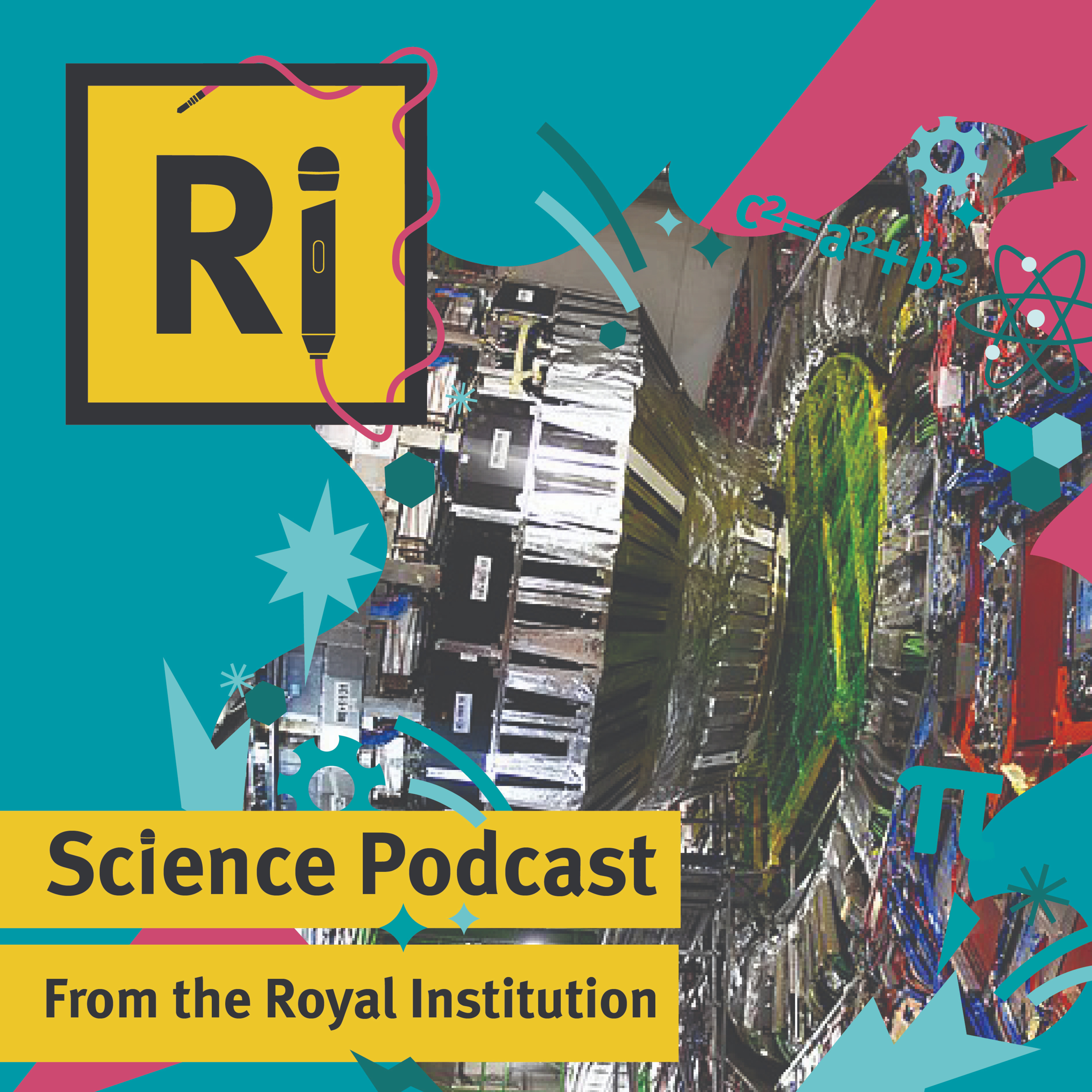
How to make a universe – with Harry Cliff
Physicist Harry Cliff explains how the Universe is made, drawing on experimental data from the Large Hadron Collider and labs around the world. We hear how the basic building blocks of matter and four fundamental forces of nature make up The Standard Model of particle physics.This talk was recorded from our theatre at the Royal Institution on the 10 August 2021. Watch the video version on YouTube:
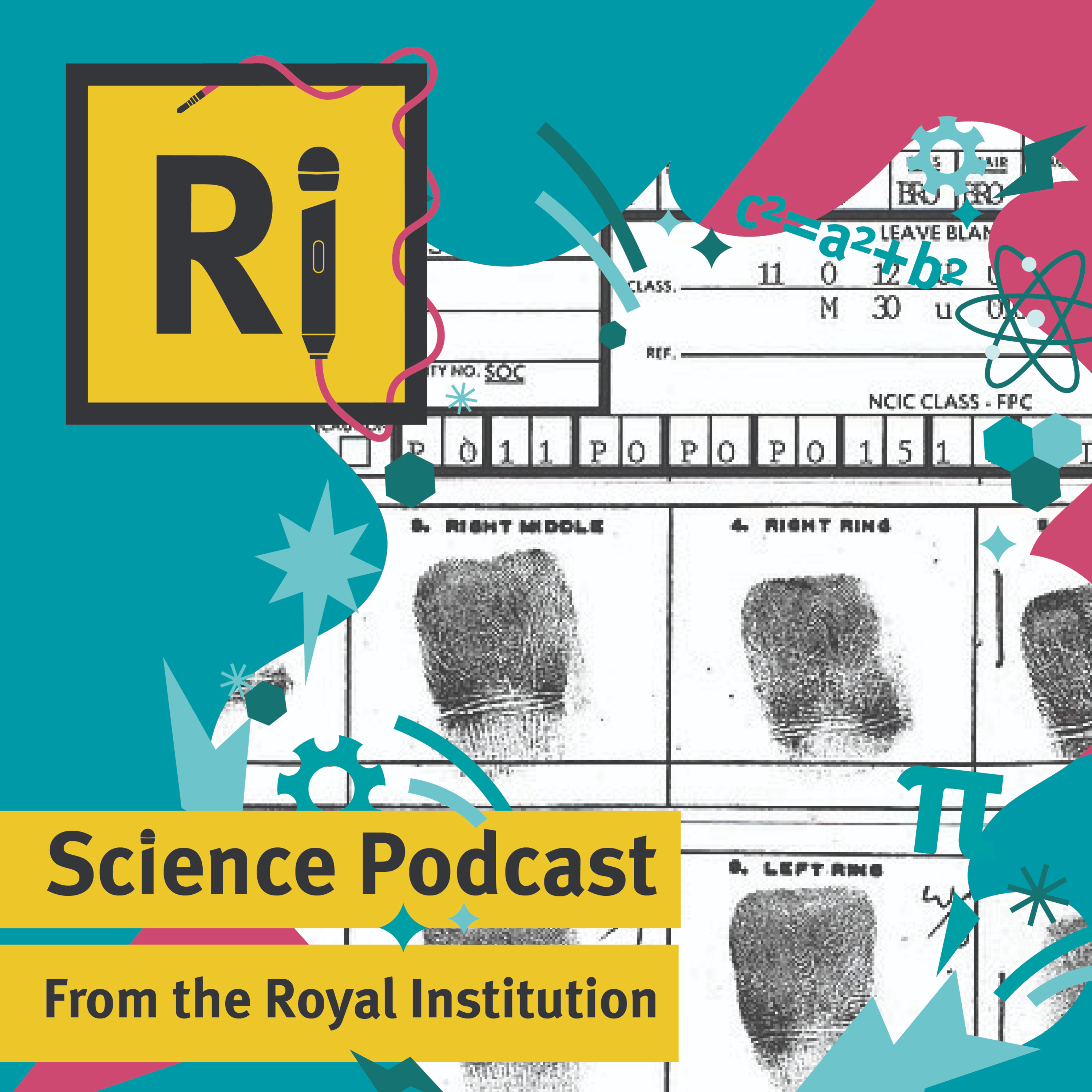
Solving crimes with forensic anthropology – with Sue Black
This episode is about forensic anthropology. Please be aware that due to the nature of the topic, this talk includes discussions of violence, child sexual abuse, death by suicide and mass-fatality events, which some listeners may find disturbing.This month, we hear from Sue Black, a forensic anthropologist who has led teams across the world to identify the victims and perpetrators of various confl
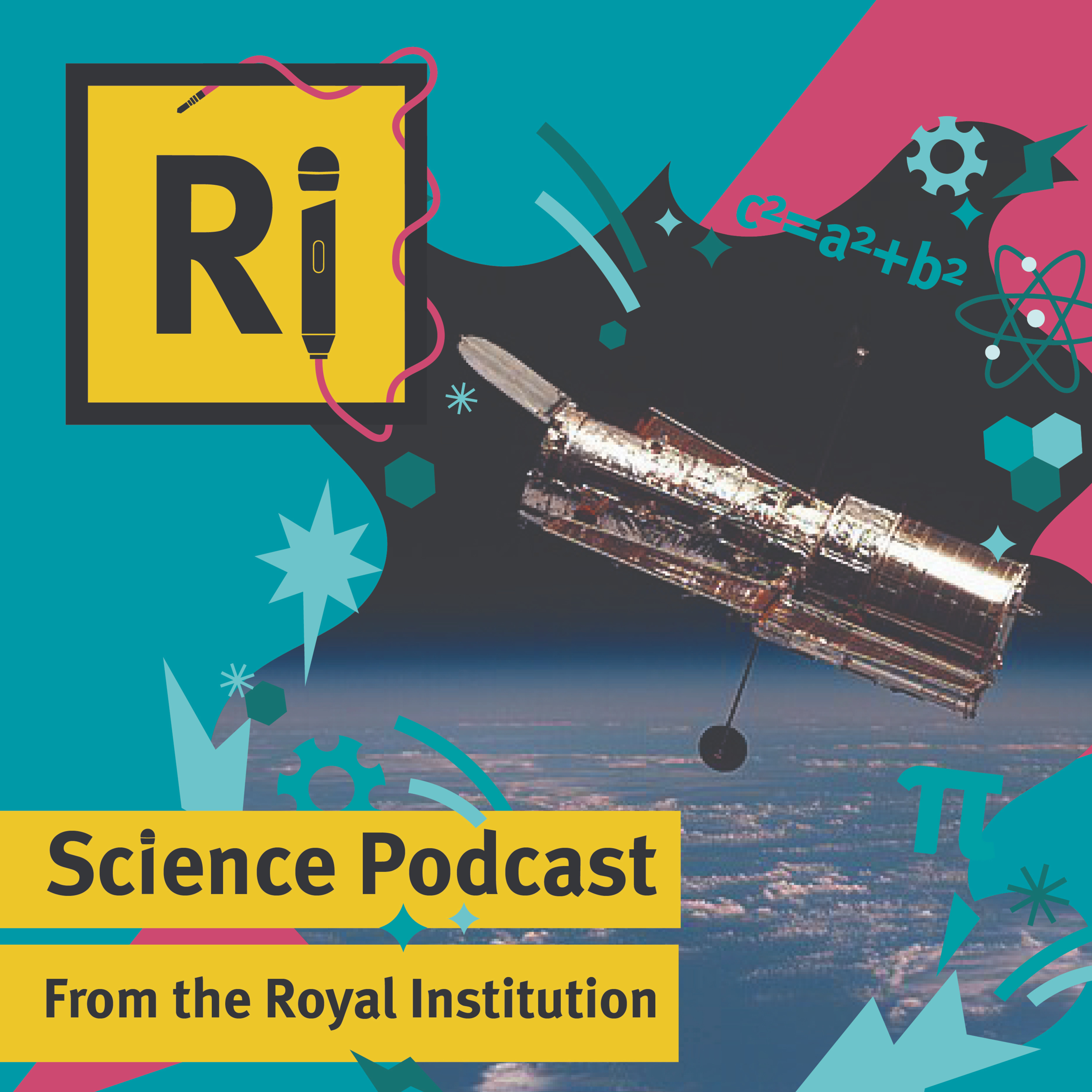
Handprints on Hubble – with Kathryn D Sullivan
The Hubble Telescope has revolutionised our understanding of the Universe. It has, among many other achievements, revealed thousands of galaxies in what seemed to be empty patches of sky and measured precisely how fast the universe is expanding.In this talk, the first American woman to walk in space, Kathryn D Sullivan, recounts how the team of astronauts, engineers and flight controllers helped l
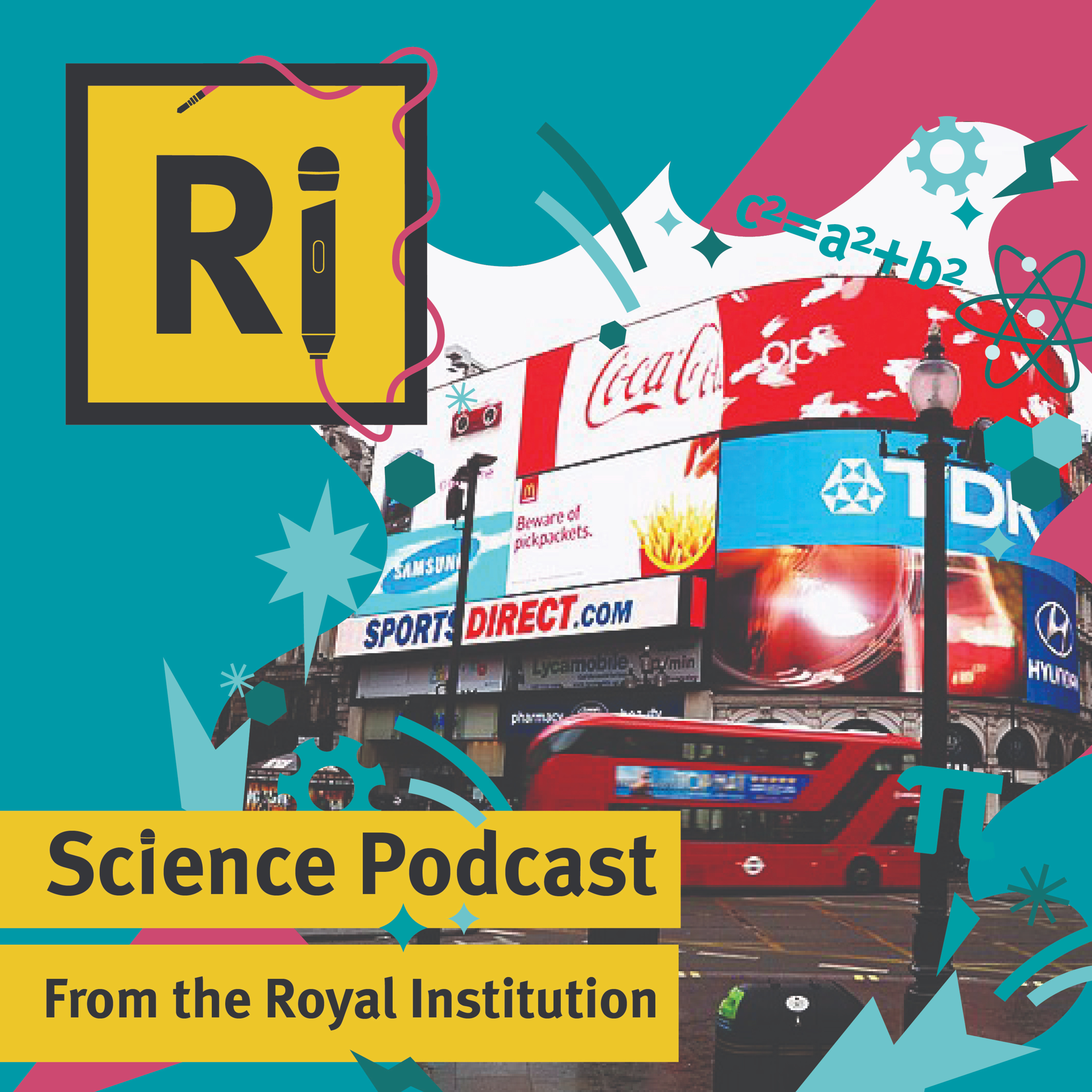
How advertising works – with Rory Sutherland
How does advertising influence us? This month, we hear from advertiser and behaviour expert Rory Sutherland, as he uses case studies from the world’s biggest brands to show how advertising makes us act against reason.This talk was recorded from our theatre at the Royal Institution on 10 May 2019.Ri Science Podcast episodes are released on the last Wednesday of every month, and our new ‘From the Th
Medical cannabis – with Mike Barnes, Hannah Deacon, Peter Carroll and Susie Mesure
What makes up a cannabis medicinal product? How do the active ingredients work in our bodies? What conditions can it treat, and how can doctors prescribe it? We’re joined by neurologist and medical cannabis expert Mike Barnes, and ‘End our Pain’ campaigners, Peter Carroll and Hannah Deacon. Hannah fought to obtain cannabis oil to treat her son Alfie’s epileptic seizures, and the campaign succeeded
Einstein on the run – with Andrew Robinson
In autumn 1933, Albert Einstein found himself living alone in an isolated holiday hut in rural England. There, he toiled peacefully at mathematics while occasionally stepping out to chat with the locals and play his violin. But how had Einstein come to abandon his Berlin home and go ‘"on the run"?Andrew Robinson tells the story of how Britain became the a refuge for Einstein from rumoure
Conspiracy theories – with Miriam Frankel, Türkay Salim Nefes, Aleksandra Cichocka and Harry T Dyer
This month a panel of psychologists and sociologists discuss why conspiracy theories arise, how they can affect people’s political beliefs, and how we might better communicate with the people who believe in conspiracies. Conspiracy theories have been around for a long time, but in recent years they appear more frequently in public discourse. From increasing attention to anti-vaccine misinformation
Can we trust maths? – with Kit Yates
If you see a newspaper headline with a big, bold statistic, how do you know that you can trust it? How often do false positive and false negative test results occur in medical screenings? And how do you safely bet whether or not 2 people in any room will share a birthday?This month we hear from Kit Yates about the maths of medicine, crime and the media, exploring real-world data from his book, ‘Th
Life in a mars simulation – with Kate Greene
This month, writer and former laser-physicist Kate Greenesat down for a chat with our Public Programme Producer, Lisa Derry. They talk about Kate’s experience living as second-in-command on NASA’s first simulated Mars mission, ‘HI-SEAS’. Living in an isolated geodesic dome for 4 months with her crew-mates,Kate gained incredible insight into human behaviour in tight quarters. Lisa and Kate cover fo
The art of rest – with Claudia Hammond
What is the difference between sleep and rest? What activities to people actually find restful? Why is rest important?Award-winning broadcaster, author and psychology lecturer, Claudia Hammond, joins us to talk about her book 'The Art of Rest'. Drawing on results from 'The Rest Test' – the largest global study ever undertaken on the subject – Claudia explores how we can all learn t
Recipe for a Skyscraper – with Roma Agrawal
How high can we build? What are the new technologies that might see our skyscrapers go beyond anything we ever imagined? What creativity and drive is needed to push engineering forward? Structural engineer Roma Agrawal delves into the history of the materials that enable immense construction and the developments that have made our structures what they are today. All while noting the accomplishment
Endometriosis: Myths, Symptoms and Future Treatments - with PhD researcher Magda Mareckova, Dr Krina Zondervan and Dr Christian Becker
Endometriosis is as common as diabetes, yet the disease is poorly understood and not many people have heard about it before. It affects around 10% of women in their reproductive years, and can cause great pain.In this special extra podcast, Ri Digital Intern and PhD student, Madga Mareckova, sits down with her PhD supervisors, Krina Zondervan & Christian Becker.They dispel myths and discuss th
A Generalist AI - with Expert Panel
How far are we from creating Artificial General Intelligence? Can we build a machine to perform all of the intellectual tasks that a human being can?Reports of the ever-increasing power of AI systems have never been far from the headlines, from AlphaGo to self-driving cars. However, these are examples of ‘weak’ or ‘narrow’ AI; that is, systems that excel at one particular task, be it playing a gam
Recommended

A Good Read

Easy English: Learn English with everyday conversations
SAS: The Shadow War

Esme's Country Life
Miles From Ordinary Podcast

Off The Telly

Murder of a Famous Bastard
Learn UK English By Podcast

My IELTS Classroom Podcast
People Fixing the World
The History Hour

The Healing Childhood Trauma Podcast
