HistoryExtra podcast
The HistoryExtra podcast features gripping stories from the past and fascinating historical conversations with leading experts. It covers global history from ancient times to the modern day, including deep dives into famous figures like Cleopatra and Winston Churchill, and events such as the Salem witch trials and D-Day. Episodes are released six times a week, offering fresh takes on history and the latest research.
Episodes
How Ghosts makes history funny – without getting it wrong
How do you make history hilarious without mangling the facts? As Ghosts: The Possession of Button House arrives on the big screen, co-creator, writer and actor Laurence Rickard (AKA Robin and Sir Humphrey Bone) reveals how the team brought the much-loved sitcom characters back to life for the feature film. Talking to Elinor Evans, he shares the team’s approach to historical accuracy, discusses why
America's anti-Chinese laws: a forgotten history
From the middle of the 19th century, Chinese people in the United States found themselves increasingly policed, as legislation was introduced that contained and controlled their economic and cultural lives. Historian Beth Lew-Williams tells Elinor Evans about her work uncovering this wide-reaching set of laws for her book John Doe Chinaman, and reveals how Chinese people resisted and avoided discr
An African king in the Roman empire
He was barely a toddler when he was paraded as a captive in a Roman triumph in 46 BC, but young North African prince Juba went on to marry a daughter of Antony and Cleopatra, and rule an African kingdom. Andrew Kenrick, author of Rex Juba: 15 Glimpses of an African King, unravels his amazing life, in conversation with David Musgrove.
-----
GO BEYOND THE PODCAST
For more on Rome's history with A
Everyday life in a slave trading town
In 1665 the Portuguese Inquisition arrested Crispina Peres, a powerful slave trader in the west African port of Cacheu. The records of her case provide a remarkable window into everyday life in 17th-century west Africa, and form the basis of Toby Green's latest book, The Heretic of Cacheu. In this episode he is joined by Rob Attar to explore the story of Crispina and the lost world she inhabited.
From plague 'searchers' to strawberry birthmarks: a history of women's bodies
What was 'nidgeting'? How did women know they were pregnant before modern tests? And what did people in the past believe a mother’s imagination could do to her unborn child? In this episode, Lauren Good speaks to historian Erin Maglaque about her book Presence, which explores the history of the female body – and society's longstanding beliefs about it.
–––––
GO BEYOND THE PODCAST
To find out mo
The country house at war
It might be assumed that the owners of Britain's country houses weren't hugely affected by the Second World War, and that they continued to live in luxury in their vast estates. However, as Judith S Lewis explains to Lauren Good, that wasn't the case. From the conscription of upper-class women to stories of great loss, she charts the roles that country houses and their occupants really played in t
The pioneering surgeon who stood up to Rasputin
She pioneered lifesaving battlefield surgery, challenged the medical establishment, stood up to Rasputin, and became the world's first female professor of surgery – yet today, few people have heard of Vera Gedroits. In today's episode, acclaimed biographer Miranda Seymour tells Elinor Evans about Vera's remarkable life and accomplishments – and why her story was erased.
Go to https://surfshark
The stolen Native Americans who shaped US history
Between 1492 and 1880, as many as 600,000 Native Americas were enslaved in the area that would become the United States. That’s the figure estimated by historian Linford D Fisher in his book Stealing America: The Hidden Story of Indigenous Slavery in US History – one of the books shortlisted for the 2026 Cundill History Prize. In today’s episode, he speaks to Matt Elton about the extent of this sl
Being disabled in the medieval era
Prosthetic legs, wheelbarrow wheelchairs and guide… children? Those were just some of the assistive technologies and body augmentations available to our medieval and early modern ancestors. In this episode, Rae Gillibrand highlights how bodily difference was understood in this pre-modern era, and explores the medical marketplace and community support that was available. Speaking to Emily Briffett,
Vanilla: a far from ordinary history
It's now often used as an adjective for anything standard, plain, and borderline boring – but the history of vanilla is anything but. Eric T Jennings – whose book Vanilla: The History of an Extraordinary Bean is among the titles shortlisted for the 2026 Cundill History Prize – tells Matt Elton about the ways in which piracy, espionage and cut-throat capitalism have shaped its story.
------
GO BE
Ancient explosives and the philosopher's stone: a history of alchemy
Think of alchemy, and you likely imagine bubbling vials of strange potions and molten metals. But how close is this popular perception to the truth? That’s the question behind historian and adventurer Kit Chapman’s latest book, The Age of Alchemy, which was recently announced as winner of the 2026 Royal Society Trivedi Science Book Prize.
In this episode, Kit guides Emily Briffett through a rema
North Korea's religious dictators
More than three decades after the end of the Cold War and the fall of the USSR, the North Korean regime remains steadfastly in place, defiantly ploughing its own path some eight decades after its founding. What might explain this remarkable longevity?
In Jonathan Cheng’s new book, Korean Messiah, the Wall Street Journal correspondent argues that it owes much to the enduring cult of personality ar
Inside Venice’s Jewish ghetto
In the early 16th century, Venice confined its Jewish population to a restricted quarter on an island in the city. It was the first settlement to bear the name 'ghetto' – a word that would go on to shape the history of Jewish persecution and segregation.
Alexander Lee explores this history in his book The First Ghetto, which is a finalist for the 2026 Cundill History Prize, and in this episode he
WW2's bloody battle for Arakan
In 1944, the Allies unleashed an offensive in Burma – a brutal campaign spearheaded by 3 Commando Brigade alongside the Indian and West African troops of XV Corps. Against a ruthless enemy and in one of the world’s most unforgiving environments, these men launched daring amphibious assaults deep into Japanese-held territory, turning the tide of the Burma campaign and delivering a devastating blow
The Bayeux Tapestry: secrets of the stitchers
Mia Hansson has spent 10 years making an exact replica of the Bayeux Tapestry. In conversation with Dave Musgrove, she explains what her modern remake experience can teach us about the women who made the original artefact in the 11th century, and the secrets she has spotted in her decade of close attention to the embroidery
Learn more about your ad choices. Visit podcastchoices.com/adchoices
How Henry VII seized – and kept – the crown
Henry VII is often remembered as a cold, calculating and penny-pinching monarch whose relentless pursuit of an ever-tightening grip on the throne overshadowed his achievements. But how fair is that reputation? And what can the real history behind this popular perception tell us about the challenges, anxieties and realities of Henry's kingship? Speaking to Emily Briffett, Sean Cunningham reassesses
The Soviet spy who couldn't love
In 1981, a Soviet spy walked into MI6 HQ in Tehran and offered to defect to Britain – if, in return, Britain could help him improve his performance in bed.
In this episode, Ben Macintyre introduces Spencer Mizen to an extraordinary agent with a sexual secret – a secret that changed the course of Iranian history and may, just may, have averted nuclear war.
-----
GO BEYOND THE PODCAST
If you’d
The slave ship that changed history
In 1781, more than 130 enslaved Africans were deliberately thrown from a ship called the Zorg into the Atlantic. The horrifying story of this slave ship – long mistakenly known as the Zong – was to have consequences far beyond its murderous voyage. In this episode, historian and author Siddharth Kara speaks to Elinor Evans about the brutal economics of the Atlantic slave trade, the extraordinary c
Have we overlooked England’s local histories?
What happens to English history when you view it through a local lens, rather than a national one? Did people even notice when the Romans left Britain? Was 1066 really that important outside of London? And did the Black Death affect the English population equally? In this episode, Ian Mortimer guides Charlotte Vosper through the past 1,500 years of English history, viewed from the perspective of h
The making of the modern Middle East
The Middle East has, for decades, been riven by violent conflict. But what are the roots and ongoing causes of this violence? In this episode, Simon Sebag Montefiore discusses The Cauldron, his new book exploring the forces and figures that forged the region. Speaking to Charlotte Vosper, Simon takes us from the creation of the Kingdom of Saudi Arabia, through the decline of the imperial powers an

Joan of Arc: inspirational leader or flawed failure?
Joan of Arc's story is one of the most remarkable chapters in medieval history: that of a rebellious teenage peasant girl rising to become a military leader, before suffering an equally precipitous fall from favour.
But what leadership qualities contributed to her success? In today's episode, which originally featured in our History's Greatest Leaders series, entrepreneur and author of Next-Gen C
The forgotten slave traders who shaped Britain
Who were the people who financed Britain’s transatlantic slave trade – and how did their money transform the nation? Elinor Evans speaks to historian William A Pettigrew, who has led a landmark project identifying some 13,000 investors connected to the trafficking of 3.2 million enslaved African people.
William reveals how profits and networks associated with the trade influenced Britain’s politi
What is ‘Europe’, anyway?
What defines Europe – is it geography, politics, a shared culture, or perhaps a mix of all three? In this episode, historian Roderick Beaton tells Emily Briffett about the ways in which it has been defined, and redefined, as an idea by its people over the centuries.
-----
GO BEYOND THE PODCAST
National icons aren’t born – they’re engineered. But how were historical figures such as Joan of Arc a
Christianity, conflict and catastrophe: the life of CS Lewis
He's well-known for creating children's classic The Lion, the Witch and the Wardrobe, but what else can history teach us about CS Lewis? Michael Ward explores the life of the author with Isabel King – from a tragic childhood to his turbulent relationship with faith.
-----
GO BEYOND THE PODCAST
If CS Lewis's experience of combat has piqued your interest and you'd like to learn more about the Fir
Was Napoleon III the world's first populist leader?
Napoleon III's family was, in the words of historian Edward Shawcross, “the most cutthroat mafioso soap opera in the world”. Exiled to Switzerland as a boy and disowned by his own father, he spent years as a laughing stock of French politics, twice arrested trying to seize power. Here, in conversation with Danny Bird, Edward traces Louis-Napoleon's strange path from mocked pretender in exile to Em
The Bayeux Tapestry blockbuster at the British Museum
The Bayeux Tapestry exhibition at the British Museum is set to be the biggest historical event in decades. In conversation with David Musgrove, its curator Michael Lewis gives the lowdown on what the exhibition is all about, and how you should make the most of your trip if you do get a ticket to the show.
-----
GO BEYOND THE PODCAST
Check out David Musgrove's 6-part Academy series on the Bayeux
The secrets of our DNA
What can DNA tell us about who we are and where we came from?
Professor Turi King – who previously appeared on the podcast to discuss her research into Adolf Hitler’s DNA – returns to explore modern genetics and its role in solving some of history’s biggest mysteries.
Speaking to Jon Bauckham, Turi discusses the surprising origins of DNA fingerprinting, common misconceptions surrounding testing
What's it like to live in a royal palace?
Did Lucy Worsley have 'the best job in history'? And what did she do when she worked in it? In this episode, Lucy reflects on her career so far, her time as Chief Curator at Historic Royal Palaces and how the job has changed her perspective on some of our favourite monarchs from royal history...
-----
GO BEYOND THE PODCAST
To find out more about Lucy Worsley's role in changing our understanding
Roman kings: myth, memory and the making of power
Before Rome's republic and the age of emperors, there were kings… or so the story goes. Beginning with Romulus, and ending with Lucius Tarquinius Superbus, these rulers loomed large in the Roman imagination – but is their narrative fact or fiction? In this episode, Emily Briffett is joined by ancient historian Christopher Smith, as they sift myth from memory, and uncover how seven legendary figure
Philip Augustus: the Plantagenets’ greatest rival
King Philip Augustus of France was the Plantagenets’ ultimate enemy. A ruler with an iron fist and sharp political instincts, he consistently exploited the squabbles of the English dynasty, all while transforming France into a dominant power in Western Europe. Speaking to Emily Briffett, historian and author Catherine Hanley reveals the cunning and ruthless tactics he employed against the English
Laura Ingalls Wilder: life of the week
Laura Ingalls Wilder’s 'Little House' books have captivated generations with tales of family, hardship and survival on the American frontier. But how closely did Wilder’s fiction reflect her real childhood – and what should we make of its more controversial portrayals?
In this episode, Elinor Evans speaks to author and biographer Pamela Smith Hill about the tragedies that Wilder omitted from her
How bullies shaped 19th-century America
America's Gilded Age is often remembered for rapid expansion and opportunity, but beneath the surface lay a brutal society in which it paid to be a bully.
In this episode, Elinor Evans speaks to historian Andrew Wender Cohen about his new book Gangster of New York: A Violent Life in Nineteenth-Century America. Following the remarkable career of Louis Bieral – a boxer, gambler, political enforcer
Is there a royal sex scandal hidden in plain sight in the Bayeux tapestry?
The Bayeux Tapestry is making headlines as it is loaned to the British Museum to be shown in England for the first time in almost a thousand years. It holds many mysteries, including the famous Aelfgyva scene, where an enigmatic woman is portrayed alongside a curious priest. David Musgrove is joined by Michael Lewis and Emily Winkler to investigate.
Learn more about your ad choices. Visit podcastc
Did Britain really 'keep calm and carry on' in WW2?
'Keep calm and carry on' has long been held up as the defining spirit of wartime Britain. But was the nation really as united, stoic and unquestioning as popular memory suggests? In this episode, Steven Casey takes Isabel King through the often surprising reality of Britain's wartime morale.
-----
GO BEYOND THE PODCAST
To find out more about the experience of evacuees during the Second World Wa
Did the Catholic Church support Hitler?
How did the politically neutral Catholic church come to have dealings with the fascist regimes of Mussolini and Hitler? In this episode, Ambrogio Caiani tells Charlotte Vosper why the Curia was enticed by authoritarianism, and what these deals with dictators meant for ordinary Catholics and non-Catholics alike.
Learn more about your ad choices. Visit podcastchoices.com/adchoices
Frida Kahlo: life of the week
The arresting gaze, the stark monobrow, the intricate ribbons woven through the dark hair – Frida Kahlo's unmistakable image is recognised around the world today. Yet the woman behind the vivid self-portraits was far more complex than the icon she became. In conversation with Danny Bird, historian Patience Schell explores how trauma, politics and extraordinary artistic vision transformed Kahlo int
How the Americas transformed Tudor England
What did Tudor England really gain from its early encounters with the Americas? In this episode, Elinor Evans speaks to historian Dr Lauren Working about her new book A Golden World, exploring the overlooked exchange of ideas, materials and knowledge between Indigenous peoples and Renaissance England. From brilliant red dyes made from insects, to tobacco, pearls and exotic animals, Working reveals

Preview: Master the medieval art of knowing yourself
How can the past help us live better, happier, healthier and more productive lives today? That's the question at the heart of our series Life Lessons from History, which is back for a new run – and today on the HistoryExtra podcast, we're bringing you a taste of what's on offer. In this episode, historian Peter Jones tells David Musgrove about why the seven deadly sins were more a guide to practic
Have we got ancient women's sexuality all wrong?
You might assume that women were prevented from pursuing sexual pleasure in the classical world. However, as Dr Jean Menzies discusses with Lauren Good, this is not the case. They explore how women were active in pursuing and expressing sexual fulfilment, from erotic magic to some particularly graphic graffiti in Pompeii.
Please note that this episode features discussion of some adult topics.
--
Adultery, assassination and Agatha Christie: the dark side of the hotel
Hotels, have perhaps surprisingly, played a large role in our history. They have found themselves in divorce papers, inspired a new genre of fiction – and even facilitated murder. Speaking to Lauren Good, Professor Eloise Moss explores some of the complex stories that have played out in the world’s lodges and guesthouses.
Learn more about your ad choices. Visit podcastchoices.com/adchoices
Hedy Lamarr: life of the week
Hedy Lamarr starred in dozens of movies, but her life may have been more dramatic than any of them. She was the teenage actor who portrayed the first character to have an on-screen orgasm. The Austrian Jew whose husband sold arms to the fascists. The refugee from Nazism who became a Hollywood megastar. And the pioneering inventor whose work anticipated Wi-Fi and Bluetooth. In today's episode Profe
How WW2 transformed Asia
For decades, the history of the Second World War has been told through predominately western eyes. That, writes historian Hans van de Ven, simply has to change. Hans's new book, Blood Dawn, sets out to reset the focus, exploring the conflict's story from an Asian perspective. In this episode, Hans tells Spencer Mizen how WW2 supercharged the fight for independence from European domination across I
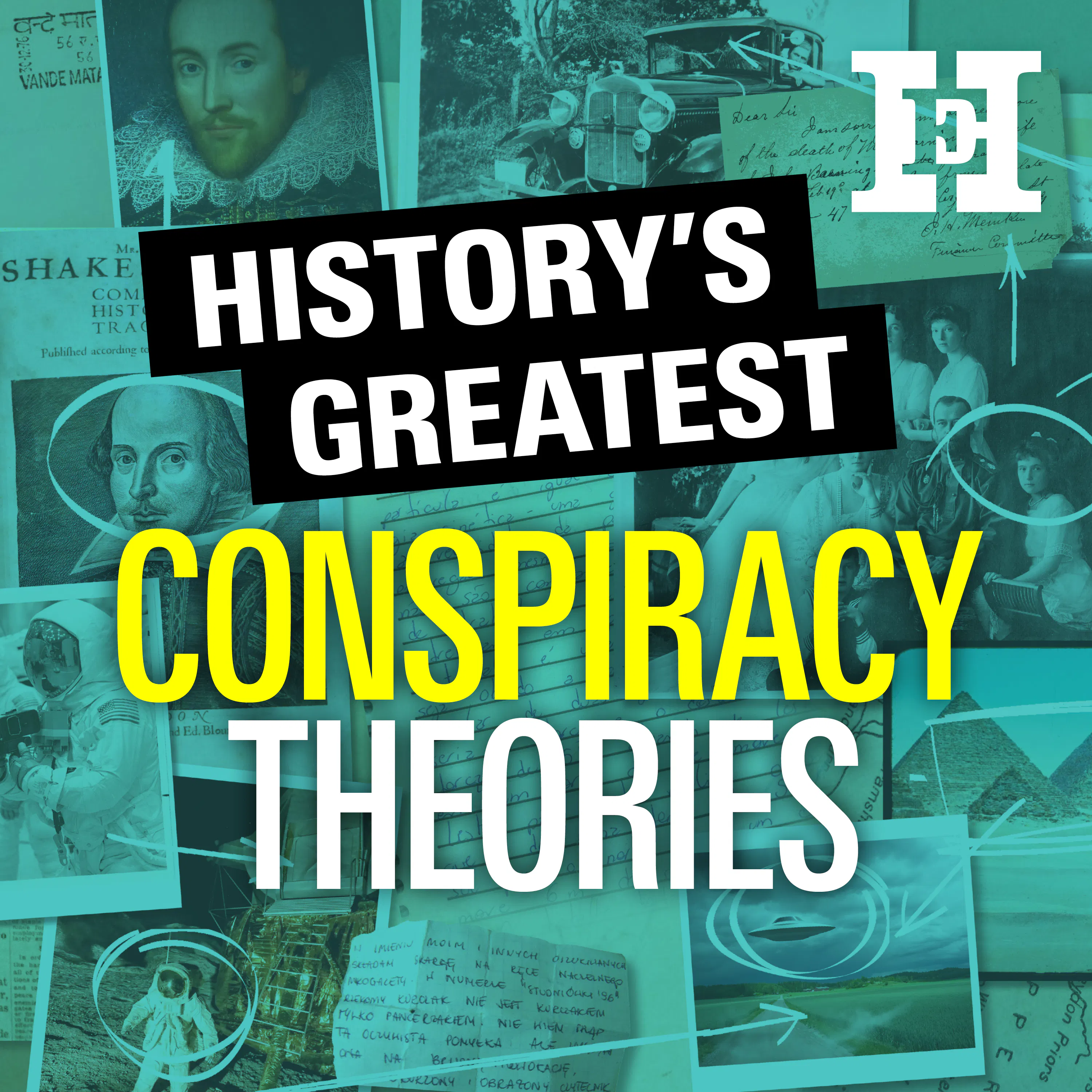
Preview: Was Jack the Ripper Queen Victoria's grandson?
As recent years attest, royal scandals have a habit of coming to light. But what if the mother of all royal scandals is still waiting to be revealed? Could it be that an heir to the British throne, Prince Albert Victor, lived a double life as a serial killer? Today on the HistoryExtra podcast, we’re bringing you a taste of the first episode of our new series, History’s Greatest Conspiracy Theories
How opium became a powerful global commodity
Opium has been a painkiller, a vice and the fuel for at least two wars. But what makes it such a powerful global commodity? Benjamin Robert Siegel takes Isabel King through this complex history, exploring how opium shaped capitalism, medicine and global power from ancient poppy fields to the modern opioid crisis.
-----
GO BEYOND THE PODCAST
Want to know why Britain went to war with China in the
A wild history of partying
For hundreds of years, people have gathered after dark to drink, dance and escape the pressures of everyday life. But how did 'going out' become a habit across the world? Jon Bauckham chats to Imogen Willetts about the hedonistic history of partying, journeying from 17th-century Japan to Weimar Germany, Cold War Las Vegas and beyond.
-----
GO BEYOND THE PODCAST
To learn more Berlin, including i
Yuri Gagarin: life of the week
Yuri Gagarin’s journey from a Nazi-occupied Soviet village into outer space make him one of the most famous people on Earth. In this episode, historian Asif Siddiqi tells Danny Bird about the life behind the legend, revealing how Gagarin came to embody the USSR’s postwar ambitions and why his winning smile still evokes the optimism of humanity’s first steps into the cosmos.
-----
GO BEYOND THE P
How Christianity conquered the Roman empire
The Roman empire was home to a multitude of religious cults in the first century AD. However, only one – Christianity – rose to global domination. But why? That's a question that Tim Whitmarsh sets out to answer in his latest book, Rome's Age of Revolution. In this episode, Tim talks Spencer Mizen through a story that encompasses Christian entrepreneurs, Greek intellectuals and the surprising para

The Odyssey’s forgotten epilogue
Why did Alexander the Great sleep with a copy of the Odyssey under his pillow? In this final episode of HistoryExtra's four-part series, Kev Lochun and classicist Daisy Dunn explore the astonishing cultural legacy of a poem that has been shaping how we think about home, heroism and hospitality for nearly 3,000 years. Plus, they consider what its portrayal of women reveals about power in the ancien
Why did witches confess?
Who were the people that were accused of witchcraft in the 1640s British witch trials? And why did they confess to being in league with the devil? In this episode, Marion Gibson breaks down the trial and interrogation records left behind by the witch hunters, to reveal the real stories of the individuals who were accused.
Speaking to Charlotte Vosper, Marion explains why so many of these seeming
Inside the Maya storyworld
The Maya have a rich and varied storyworld shaped by diverse traditions and communities. In this episode, Mallory E Matsumoto tells Emily Briffett about her recent book, The Maya Myths, which explores tales of destruction and rebirth, people made of maize dough, and journeys into the underworld – revealing a living tradition that blurs the line between history and storytelling.
-----
GO BEYOND T
Zheng Yi Sao: life of the week
Few pirates in history wielded as much power as Zheng Yi Sao, the woman who rose from obscurity to command one of the largest pirate fleets the world has ever seen, challenging the Qing empire's control of the South China Sea. Yet despite her extraordinary achievements, surprisingly little is known for certain about her life, and many of the stories told about her blur the line between history and
The Fifth Crusade: triumph, disaster and the battle for Egypt
In 1217, crusaders launched an ambitious campaign to conquer Egypt, believing it held the key to reclaiming Jerusalem and securing the Holy Land. Historian and author Thomas Smith tells Emily Briffett why the crusaders targeted Egypt, charts the dramatic naval assault that preceded the siege of Damietta, and explores how a promising campaign turned into one of the greatest missed opportunities in

Is the Odyssey myth or memory?
The Odyssey is a tale of impossible monsters, angsty gods and the unquiet dead – but does that mean it holds no truth? In this third episode of HistoryExtra's four-part series, Kev Lochun and classicist Daisy Dunn turn archaeologist, tracing the real Bronze Age world of feasting kings and heroic warriors that inspired Homer's epic poem. What secrets can we glean from the layers of ancient Troy? Wh
Renaissance Italy's firearm revolution
Long before the modern debates over gun control, Renaissance Italy was grappling with many of the same questions. As firearms became smaller and easier to conceal, guns spread rapidly through society: moving from battlefields to appearances at court, and the streets of the Italian city states. Speaking to Emily Briffett, historian Catherine Fletcher reveals how they were weapons of war, tools of p
How blood banks saved Britain in WW2
How did the sign of the Red Vampire help British surgeons during the Second World War? Roderick Bailey, author of 'The Life Savers', explains to David Musgrove how Britain led the way in blood banks during the war, and how such prowess saved lives, strengthened the war effort, and boosted morale.
Learn more about your ad choices. Visit podcastchoices.com/adchoices
Pericles: life of the week
Ancient Athenian statesman Pericles was a remarkable figure, renowned for promoting democracy, championing the arts, and shaping the fate of the Athenian empire. Yet his legacy of military mistakes and eccentricity has landed him with a somewhat mixed reputation. Historian Paul Cartledge has written a new book on Pericles – subtitled Pericles: Statesman, Demagogue, Eccentric – and here, speaking t
Did Churchill save the monarchy?
Winston Churchill was a passionate defender of Britain’s monarchy – but that didn’t mean he always saw eye to eye with the royals themselves. Jon Bauckham talks to Ted Powell about Churchill’s complex relationship with the Crown – from his clashes with George V and controversial support for Edward VIII, to his role in guiding the young Elizabeth II through the early years of her reign.
-----
GO

Gods and monsters: the hidden stories of the Odyssey
Twenty years away from home: 10 of them spent fighting a war, and 10 more spent battling monsters, gods and his own worst instincts. In the second episode of HistoryExtra's four-part series on the Odyssey, Kev Lochun and classicist Daisy Dunn explore Odysseus's greatest adventures – from encounters with the one-eyed Cyclops to brushes with the so-called witch Circe – and consider what they say abo

Preview: Was Elizabeth I one of history’s greatest leaders?
From her defeat of the Spanish Armada to her iconic portraiture and status as the ‘Virgin Queen’, Elizabeth I is one of the past’s most famous figures – but what made her such an effective leader? Today on the HistoryExtra podcast, we’re bringing you a taste of our new series, History’s Greatest Leaders, as author and historian Tracy Borman tells entrepreneur Mike Soutar about why Elizabeth I’s in
The Bayeux Tapestry's secret code of tyranny and injustice
The Bayeux Tapestry is coming home to England for an exhibition at the British Museum. In discussion with Dave Musgrove, Gale Owen-Crocker explains how the Tapestry was made, and why she thinks it contains a hidden story of injustice and tyranny – subverting the obvious celebratory narrative of victory for Duke William's Norman Conquest.
-----
GO BEYOND THE PODCAST
Don't miss our six-episode Hi
How to survive a day in the 14th century
What threats might you have faced on a daily basis in England in the 1300s? In this episode, Ian Mortimer guides Charlotte Vosper through a day in the 14th century and argues that it would have been surprisingly difficult to stay alive... From struggling to put food on the table to breathing in the scent of your neighbour's cesspit, Ian discusses the perils that came with everyday medieval life.
Bess of Hardwick: life of the week
Bess of Hardwick fell out spectacularly with Mary, Queen of Scots and was dumped in the Tower of London by Elizabeth I. Yet nothing could get in the way of this extraordinary social climber. In this episode, Tracy Borman tells Spencer Mizen about a woman who accrued vast wealth, repeatedly rattled the Tudor court and ultimately earned the grudging respect of the Virgin Queen.
-----
GO BEYOND THE
Alliance and acrimony: a history of Jewish-Muslim relations
From Islam’s emergence in the early medieval period, Muslims have been deeply connected with the followers of another faith: Judaism. In conversation with James Osborne, historian Marc David Baer examines the long relationship between these two religions and their communities, tracing episodes of both conflict and coexistence.
-----
GO BEYOND THE PODCAST
Check out this podcast episode with Barr

Who wrote the Odyssey?
The Odyssey is one of the most celebrated stories ever told, recounting the tale of Greek hero Odysseus’s 10-year journey home from the Trojan War. It is one of just two ancient Greek epic poems said to be the work of ‘Homer’. But who was Homer? And why, today, do we ask ourselves: ‘Did Homer even exist?’ In this first episode of HistoryExtra's four-part series on the Odyssey, Kev Lochun sits down
1966: The World Cup that changed a nation
The England men’s football team has missed out on the opportunity to replicate the nation’s much-heralded victory back in the 1966 World Cup, still one of the most celebrated moments in its sporting history. But what did the football tournament reveal about the state of the country that staged it back in the 1960s? Jon Bauckham talks to Michael Calvin about the forgotten stories of that remarkable
How Rome really conquered Britain
What if the Roman invasion and occupation of Britain was more complicated than we might think? Ferdinand Addis reveals how it really happened. Speaking to Charlotte Vosper, Ferdinand guides us through the complex process of conquest – from Caesar's arrival in 55 BC and the construction of Hadrian's Wall in 122 AD, to the decline of Roman occupation by 410 AD.
Learn more about your ad choices. Visi
Edward Colston: life of the week
Edward Colston was a philanthropist and slave trader in the 17th and 18th centuries. He is infamous today for the fact that a statue of him was pulled down by a crowd of protestors in central Bristol in 2020 and dumped in the river. Richard Stone explores his life, in conversation with David Musgrove, and considers how we should understand his complex legacy today.
-----
GO BEYOND THE PODCAST
I
Was Elizabeth Báthory really a serial killer?
Elizabeth Báthory is history's most prolific female serial killer and took pleasure in bathing in the blood of virgins... or so the story goes. In this episode, Shelley Puhak challenges that idea. Speaking to Isabel King, Shelley describes the complex campaign of disinformation that Elizabeth faced, and reveals the truth behind the legend.
-----
GO BEYOND THE PODCAST
To find out more about accu

What did the American Revolution really achieve?
How revolutionary was the American Revolution, and how far do 18th-century arguments about liberty and property still shape US politics today? In the final episode of HistoryExtra’s four-part series, Elinor Evans is joined by Adam IP Smith to explore the end of the American Revolutionary War and the complicated legacy that followed. Beginning with Cornwallis’s surrender at Yorktown, they discuss B
The captain's wife who took command
In the middle of the 19th century, the world's fastest ships raced across oceans carrying cargo, and the fortunes of ambitious young sea captains. In this episode, author Tilar J Mazzeo explores one voyage that produced an unlikely maritime legend. Speaking to Elinor Evans, Mazzeo shares the remarkable life of Mary Ann Patten, who found herself commanding a clipper ship after her husband fell grav
What could you eat in Georgian London?
Much of what was eaten by inhabitants of Georgian London is, perhaps surprisingly, familiar to us today. In this episode, Peter Ross takes Lauren Good on a culinary journey through the city – from people pocketing baked potatoes on their way home in the small hours to explaining why jelly was considered an aphrodisiac.
-----
GO BEYOND THE PODCAST
To find out more about what was eaten in the Geo
Pablo Picasso: life of the week
From his birth in 1881 to his death in 1973, Pablo Picasso lived a life as revolutionary as his art. A child prodigy who transformed modern art, his story is one of genius, reinvention, scandal and relentless creativity. In this episode, Danny Bird speaks to Sue Roe about the passions and upheavals that shaped the pioneer behind Cubism and masterpieces such as Guernica. They explore Picasso’s rise
When football became a weapon of the Cold War
The Cold War cast a shadow over all aspects of life – including the world's favourite sport. All sides of the ideological divide used football to score political goals. Tony Shaw and Alan McDougall talk Spencer Mizen through some of the most explosive Cold War footballing clashes in a story that takes in Pele, Eusebio, North Korean upsets and a galloping major.
-----
GO BEYOND THE PODCAST
To li

How Britain lost America
After declaring independence, the United States still had to survive a brutal conflict. In the third episode of HistoryExtra's four-part series on the American Revolutionary War, Elinor Evans and Adam IP Smith explore the military realities of the American Revolution: George Washington’s leadership, the importance of France, and the turning points that changed the conflict.
–––––
GO BEYOND T
A history of the US in 100 unexpected objects
As the United States marks the 250th anniversary of the Declaration of Independence, Americans are taking a fresh look at their nation's past. But what if the story of the US isn't best told through presidents, wars and famous speeches? In this episode, Roman Mars – host of new series The History of the United States in 100 Objects – tells Emily Briffett about what some of those items tell us abou
An A-Z history of the English alphabet
Which letter of the English alphabet did Benjamin Franklin think we'd be better off without? Why must the letter U (almost) always follow the letter Q? And what is the point of silent letters? From the first scratches carved into stone to the maddening mysteries of modern English spelling, the alphabet has had a long and extraordinary journey. In this episode, Emily Briffett is joined by linguist,
Abigail Adams: life of the week
As the wife of a founding figure in early American history, Abigail Adams was able to push beyond the restrictions of many of her sex in the 18th century, influencing policy and advocating for those in society who often didn't have a voice. These actions have sometimes seen her remembered as a proto-feminist in the story of the US. But how true is this reputation? And what other strides was she ab
The astonishing laws of medieval Wales
From divorce settlements and cattle disputes to surprisingly modern ideas about gender and compensation, the laws of Hywel Dda shed unique light on how society functioned, in a turbulent age of rival princes and conquest. Speaking to Elinor Evans, legal historian Sara Elin Roberts explains the laws often attributed to a tenth-century king, and what they tell us about Wales in the Middle Ages.
---

Inside the Declaration of Independence
It’s 250 years since the Declaration of Independence brought a new nation into formal existence. But what did it actually say – and who did it leave out? In the second episode of HistoryExtra’s series on the American Revolutionary War, Elinor Evans and Professor Adam IP Smith explore the drafting of the Declaration, the grievances against George III, and the document’s immediate and long-term impa
Cannibalism, heartbreak and Madame Guillotine: George Forster's extraordinary life
He sailed to Antarctica with Captain Cook, rubbed shoulders with Benjamin Franklin and helped found a revolutionary republic. It’s little wonder, then, that Andrea Wulf describes George Forster – the 18th-century traveller, botanist and champion of human rights – as “one of the most fascinating figures you've never heard of”. In conversation with Spencer Mizen, Andrea explores a life that reads li