The Early Habsburgs
A narrative history podcast exploring the rise and fall of the Habsburg dynasty, from Rudolf of Habsburg's election in 1273 to the election of Charles V in 1519. It looks beyond Maximilian I to the family's earlier struggles, including the murder of King Albert and the dynasty's difficult recovery. The show is part of the broader History of the Germans podcast, which traces German history from the Early Middle Ages to reunification in 1991.
Episodes
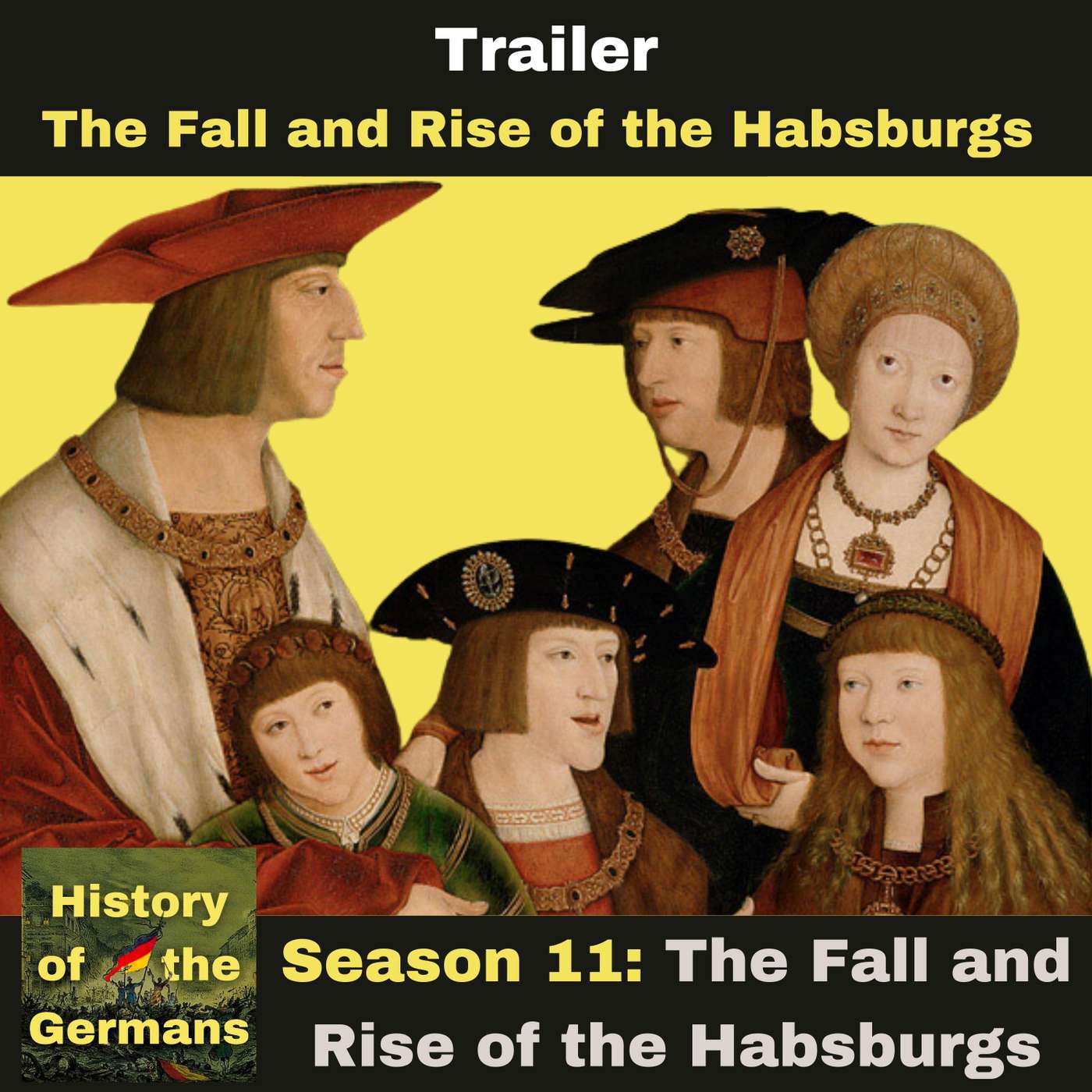
The Fall and Rise of the House of Habsburg - Trailer
"Let others wage war: you, happy Austria, marry’. Is that really it? Did this family acquire an empire where the sun never sets through just luck and longevity?That is what we will try to find out in this season where we follow the family from the murder of king Abrecht I in 1308 to the election of emperor Charles V in 1519.For most of that period the Habsburgs had been languishing in the
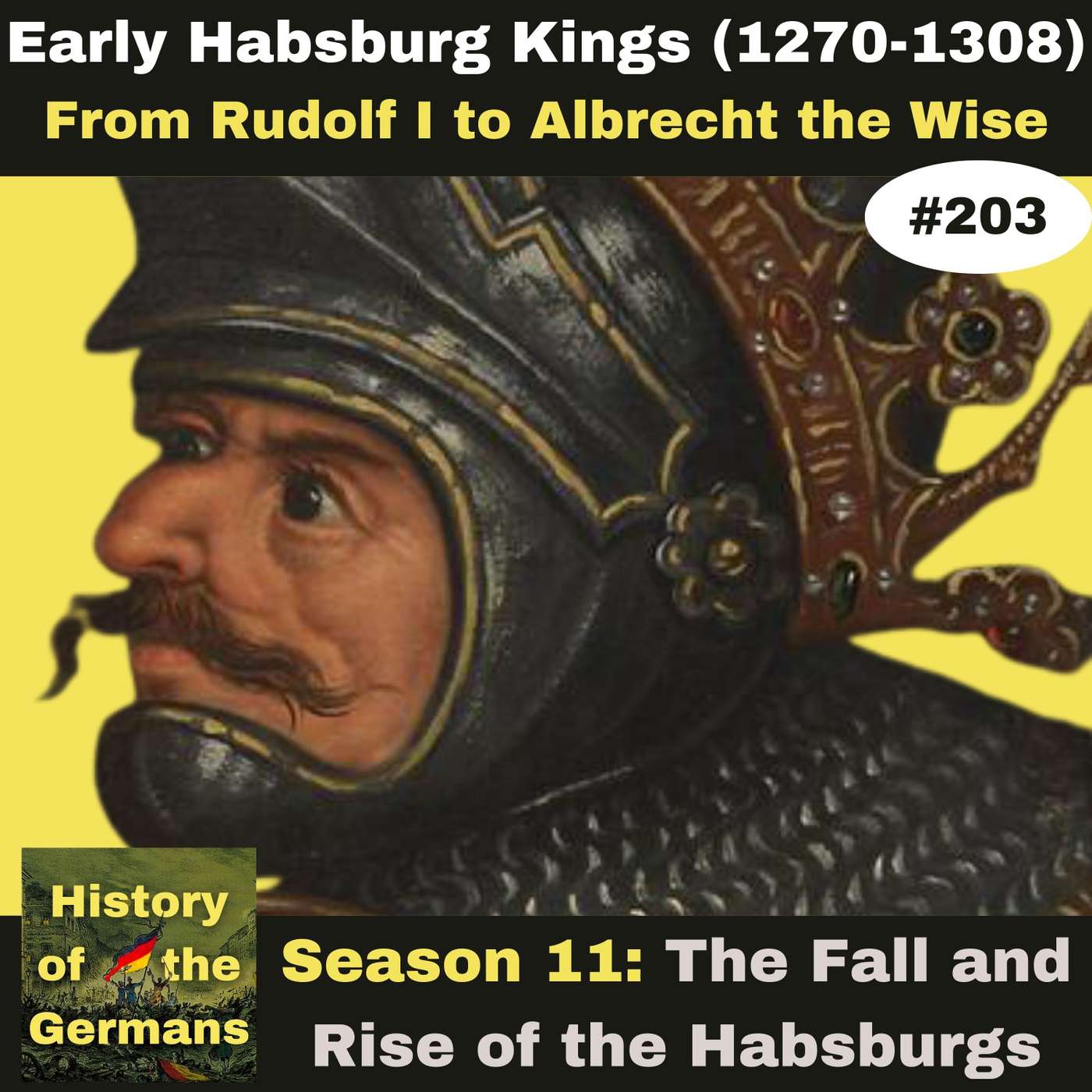
Ep. 203: Early Habsburgs – From Rudolf I to Albrecht the Wise
The Habsburg dynasty, originating from Radobot’s castle in 11th-century Switzerland, rose from obscurity to European prominence. In 1273 Rudolf of Habsburg was elected King of the Romans. Far from the later myth of a poor, humble count, Rudolf was wealthy, shrewd, and ruthless. He expanded his family’s holdings through inheritance, war, and diplomacy, eventually securing Austria and Styri
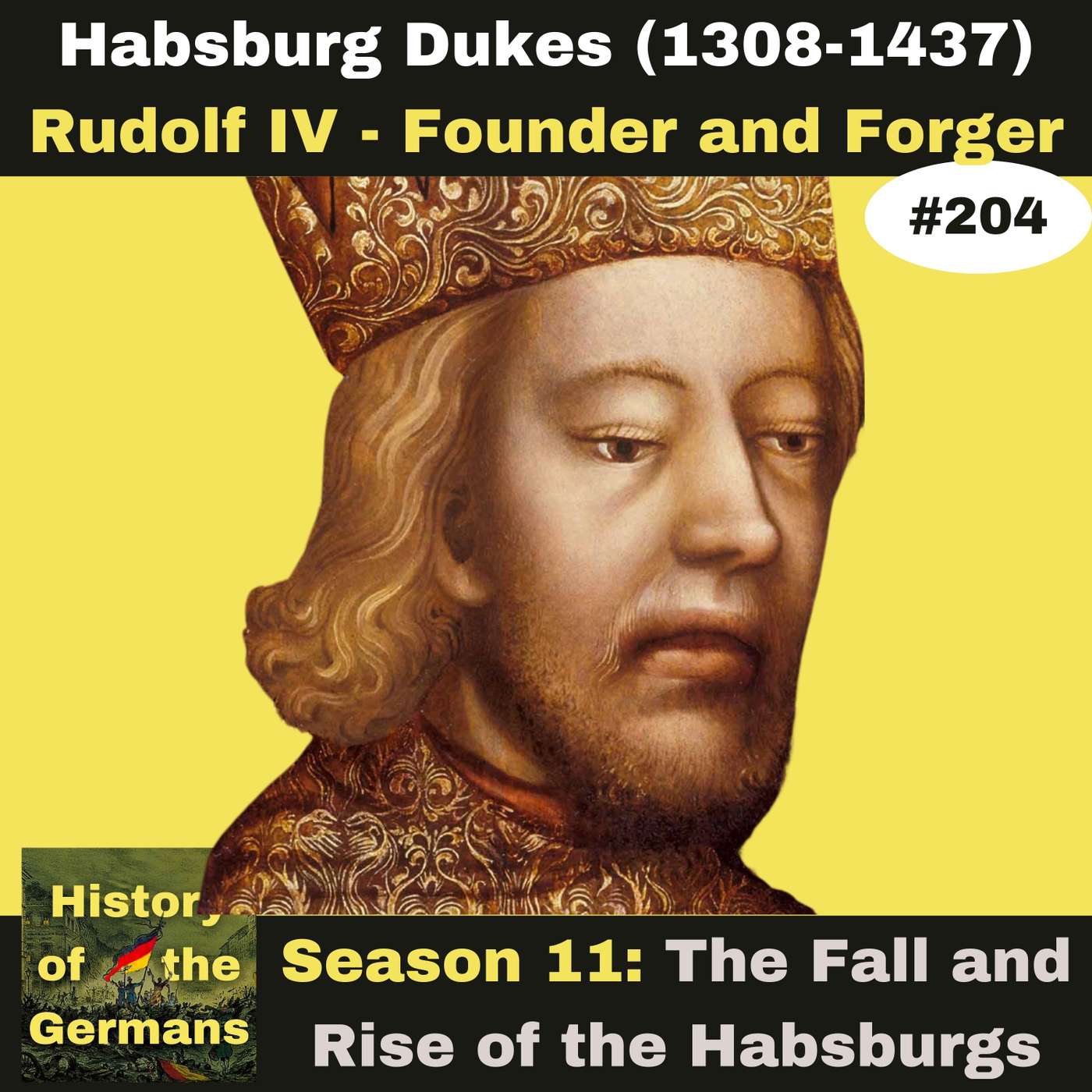
Ep. 204: Habsburg Dukes (1308-1437) – Rudolf IV, Founder and Forger
Rudolf IV of Habsburg (1339–1365), son of Albrecht “the Wise,” reigned as Duke of Austria for just seven years but left a lasting mark. Born when the dynasty seemed close to extinction, Rudolf secured Austria’s survival and prestige. Politically, he sought to elevate Vienna by founding the University of Vienna (1365) and beginning construction of St. Stephen’s Cathedral. Though he fulfill
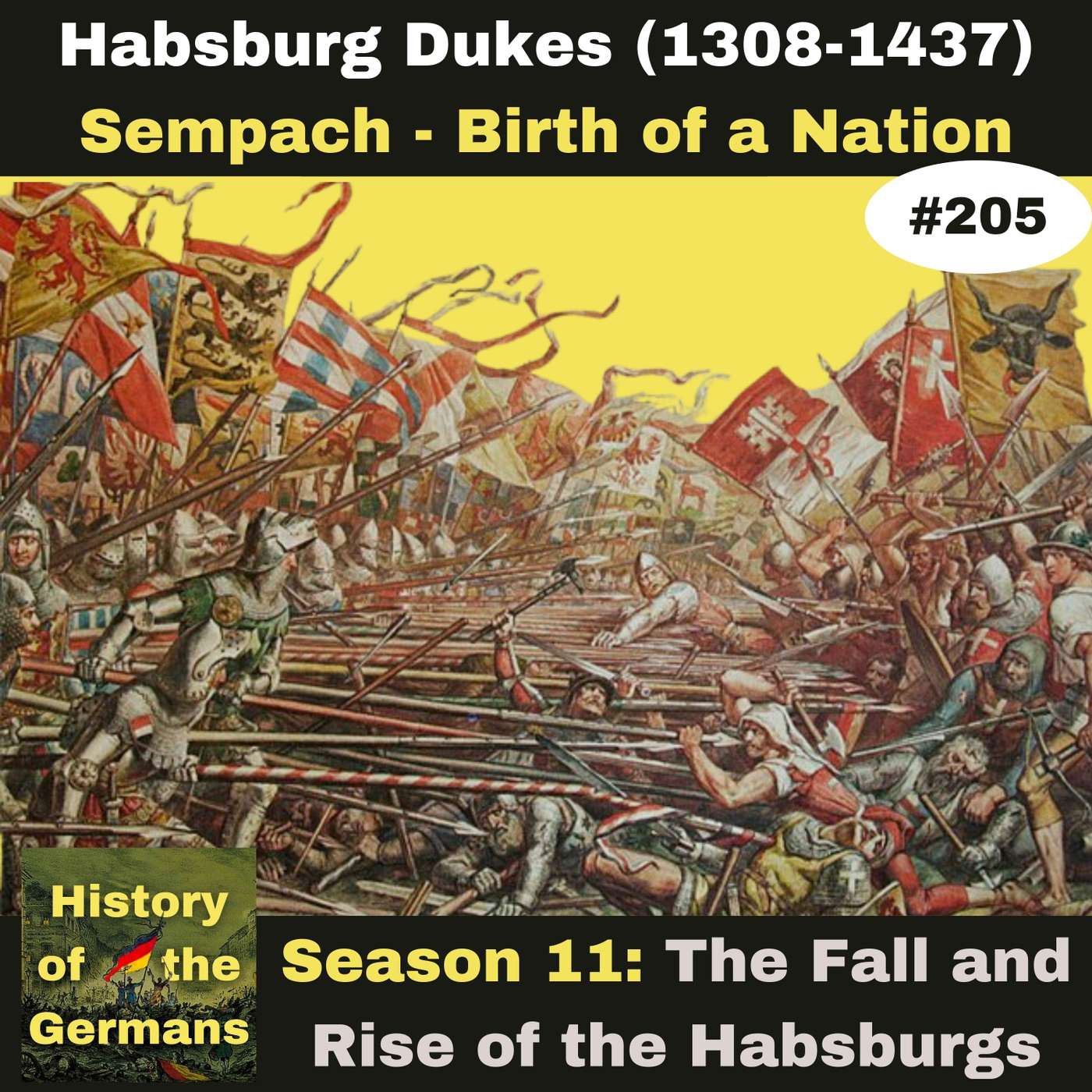
Ep. 205: Habsburg Dukes (1308-1437) – Sempach, Birth of a Nation
On July 9th, 1386 in a field near the Sempach lake., the armies of archduke Leopold of Austria line up against the forces of the city of Lucerne and the men of Uri, Schwyz and NidwaldenMuch of what hads been told about this batte, the backstory of the Swiss Confederation and the objectives of the Habsburgs have been drenched in myth. Myths that are in the main debunked. That being said, t
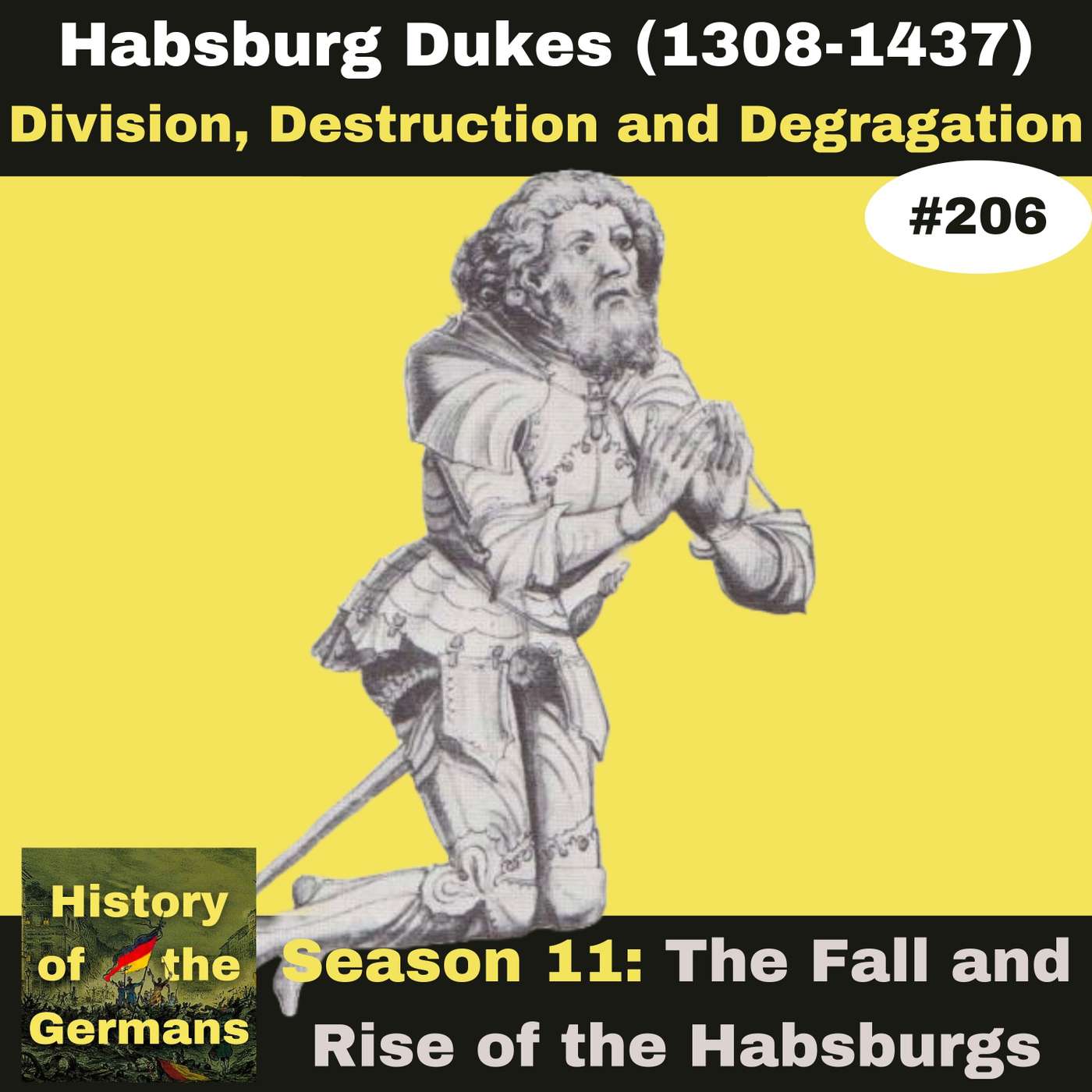
Ep. 206: Habsburg Dukes (1308-1437)– Division, Destruction and Degradation
Success for a princely family in the Late Middle Ages has a lot to do with reproductive luck. Not having any offspring, in particular no male offspring is a bit of a knockout. But having too many sons that could be a major issue too.And in 1386 the Habsburgs struggled with exactly that problem. Their territory was already divided between an Albertine and a Leopoldine line. But then Leopol
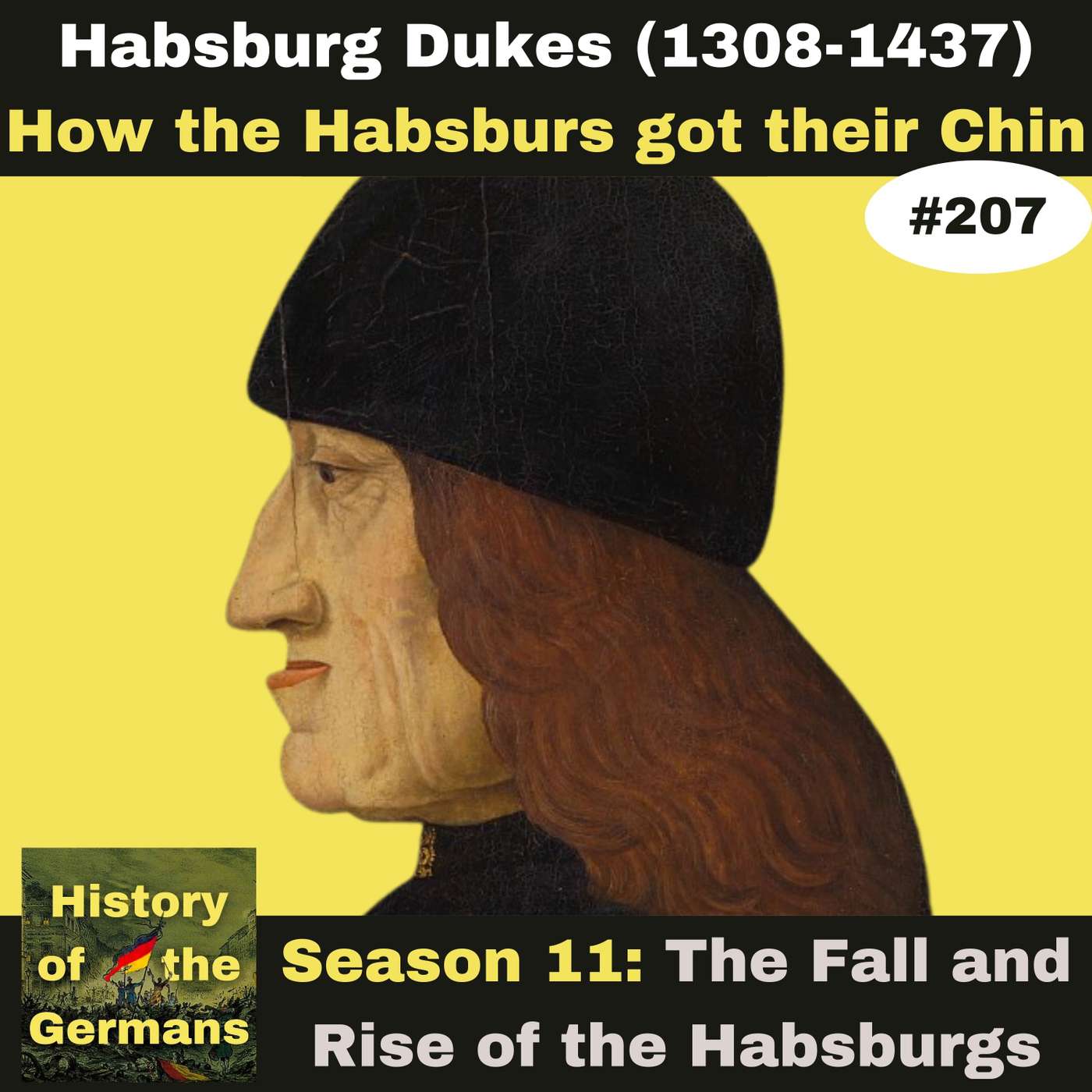
Ep.207: Habsburg Dukes (1308-1437) - How the Habsburgs got their Chin
“The Habsburgs ruled half of Europe with a chin that entered the room five minutes before they did,” is one of those witticisms that made the 19th century so amusing. But by then the Habsburg jaw had long receded.It had its heyday in the 16th and 17th century when people in Spain called out to the future emperor Charles V: “Your majesty, shut your mouth! The flies of this country are very
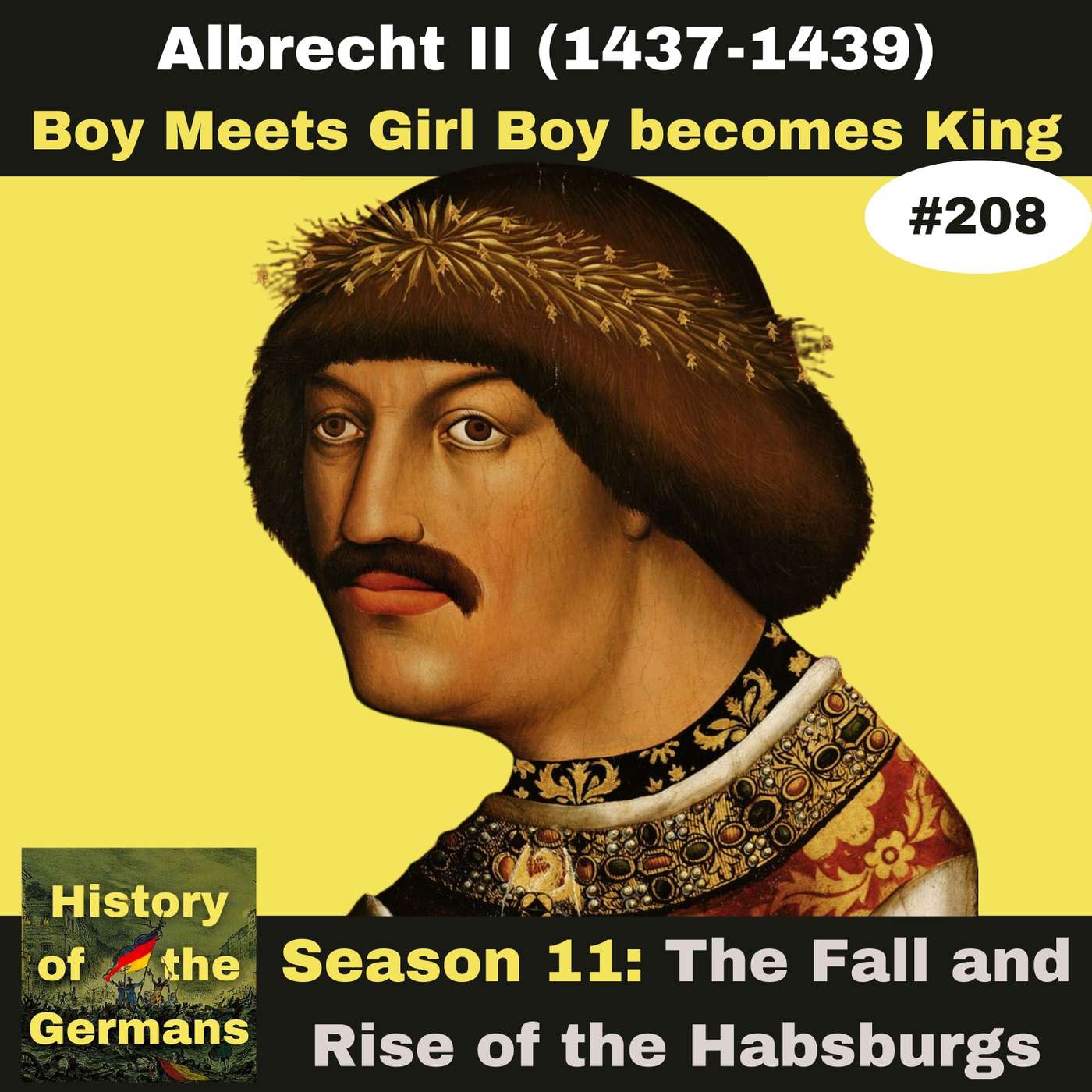
Ep. 208: Albrecht II (1438-1439) - Boy Meets Princess, Boy Becomes King
Last week we saw the family slowly climbing out of the hole that Friedrich IV of the Tyrol had dug them. But despite all these consolidation efforts, the family was still in the second league of European princely families.Then, just 25 years after Ernst the Iron married down into minor Polish royalty, his first cousin once removed, Albrecht V became King of Hungary, King of the Romans and
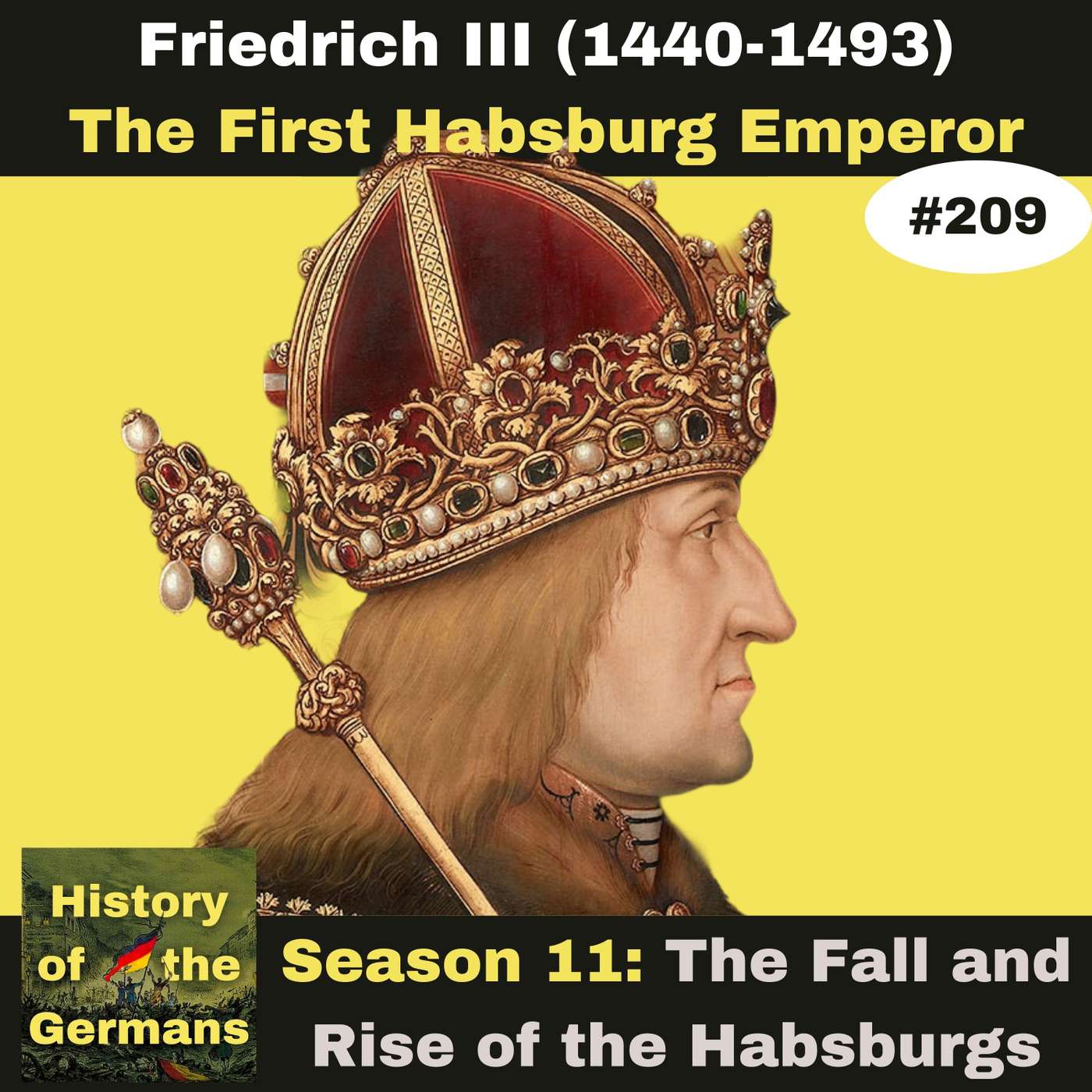
Ep. 209: Friedrich III (1440-1493) - The First Habsburg Emperor
Today we – and the Habsburgs – stride back on to the grand stage of European politics. Not with a titan of history or monarch whose long and fruitful reign resonates across the centuries, but with Friedrich III, better known as the Reichserzschlafmütze - the imperial arch sleepy head, Or perhaps more fittingly the imperial arch dawdler.He ruled from 1440 to 1493, a total of 53 years - the
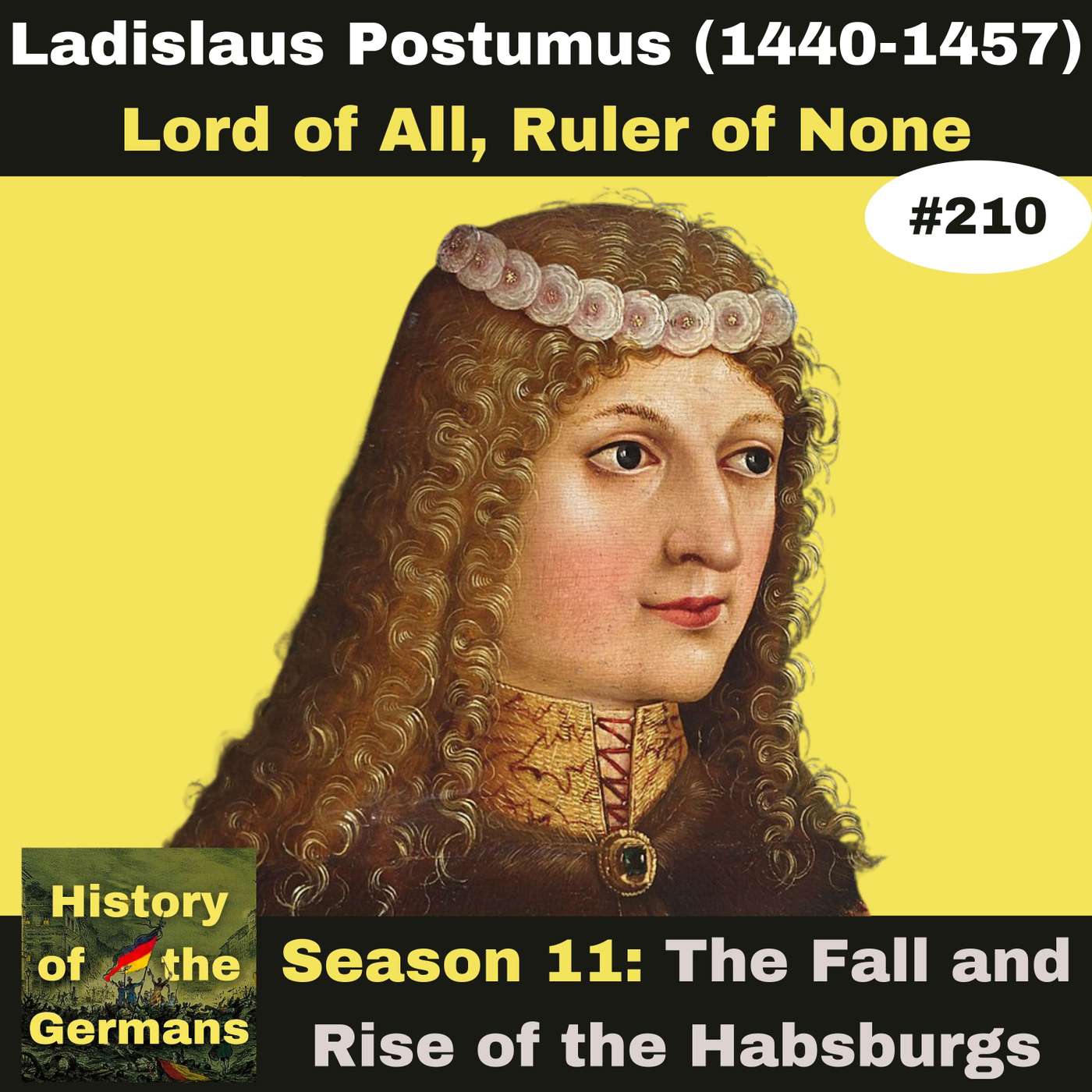
Ep. 210: Ladislaus Postumus (1440-1457) - Lord of all, Ruler of No One
Our journey today will take us away from the emperor Friedrich III who will spend most of the episode holed up in his castle at Wiener Neustadt, fretting and gardening.Instead we look at the dramatic life of his younger cousin, Ladislaus Postumus, king of Hungary, king of Bohemia and Archduke of Austria. This will take us back to Prague and its complex religious politics, to Vienna where
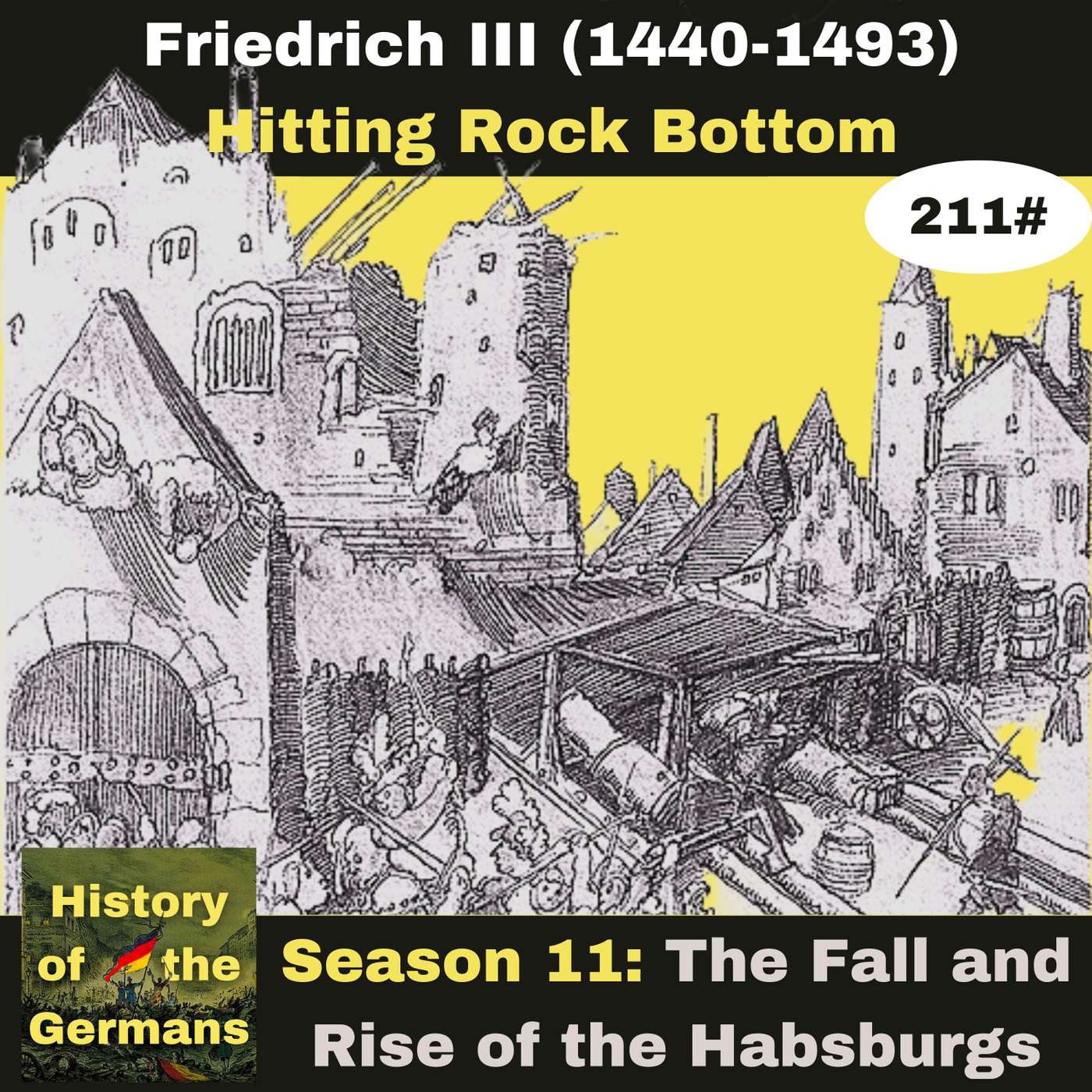
Ep. 211: Friedrich III (1440-1493) – Hitting Rock Bottom
It is November 1462 and the emperor Friedrich III and his young family are huddling together in the cellars of the Hofburg. The citizens of Vienna are shooting cannonballs into the 13th century castle, the walls are crumbling and any moment now the angry crowds may break in. Outside, supporting the insurrection stood his own brother, calling on him to give up.Two crowns he has already los
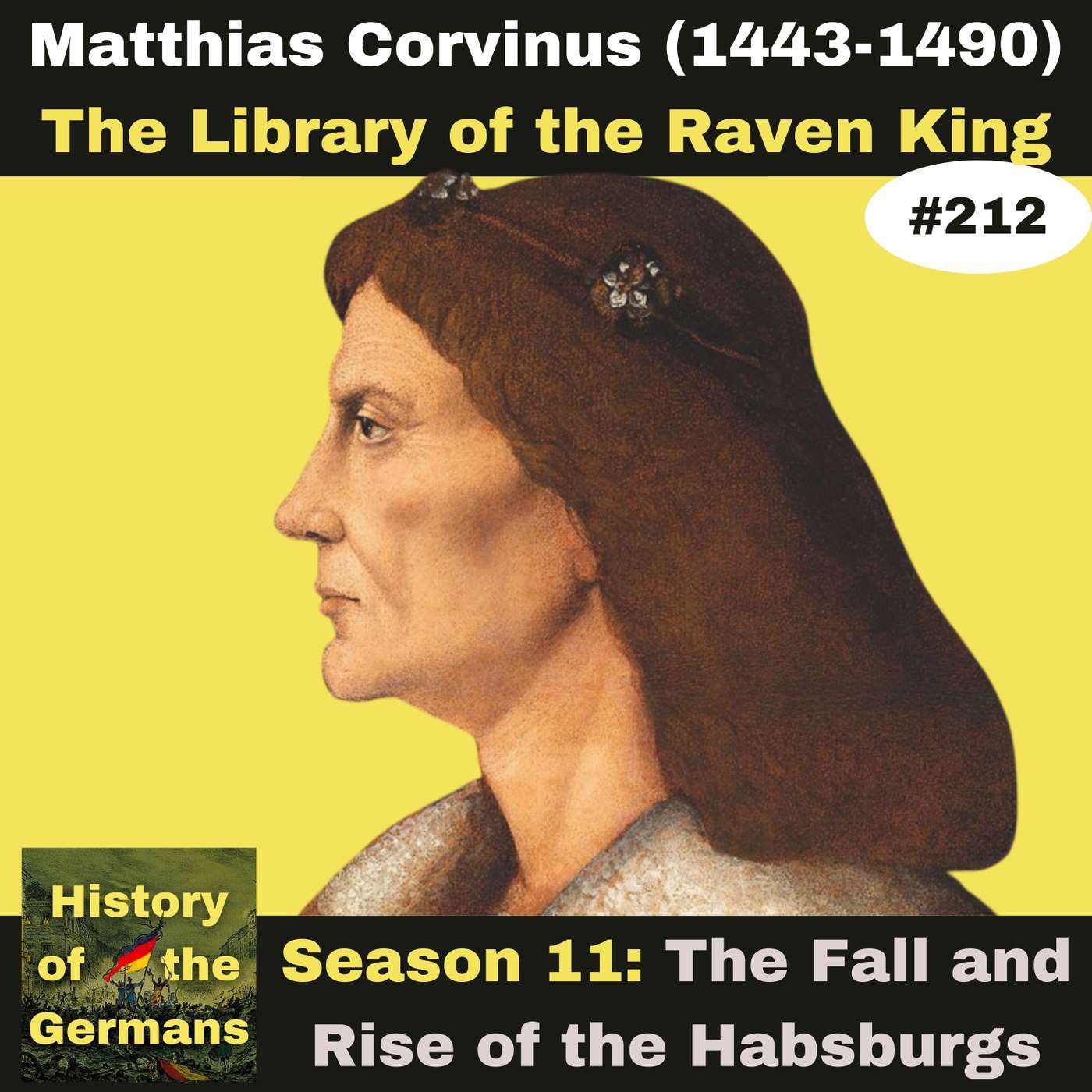
Ep. 212: Matthias Corvinus (1443-1490) – The Library of the Raven King
Today we will talk a lot about Matthias Corvinus, the legendary renaissance king of Hungary whose library outshone that of the Medici in Florence and whose standing army was one of the greatest – and most expensive - military forces in 15th century Europe.Why are we talking about a Hungarian ruler in a series about the Habsburgs? Trust me, there is a good reason beyond it being a fascinat
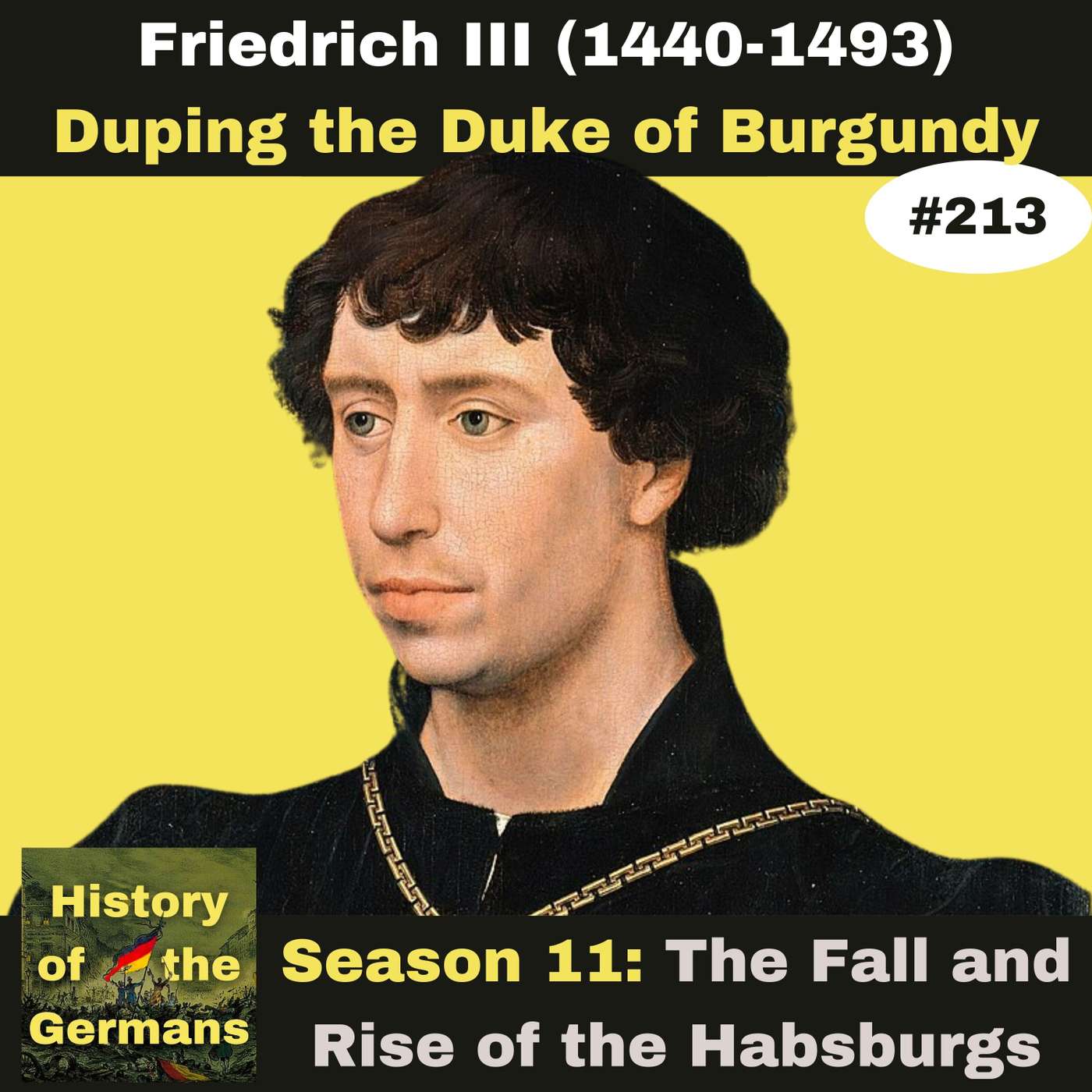
Ep. 213: Friedrich III (1440-1493) – Duping the Duke of Burgundy
How long can an emperor not be an emperor. The official record stands at 25 years, that is how long Friedrich III had stayed out of the core areas of the Holy Roman Empire. That meant 25 ears of Imperial Diets without the presence of an Emperor, 25 years of stasis on the challenges of the time, the reform of the empire and the defense against the Ottoman expansion.But sometime in the late
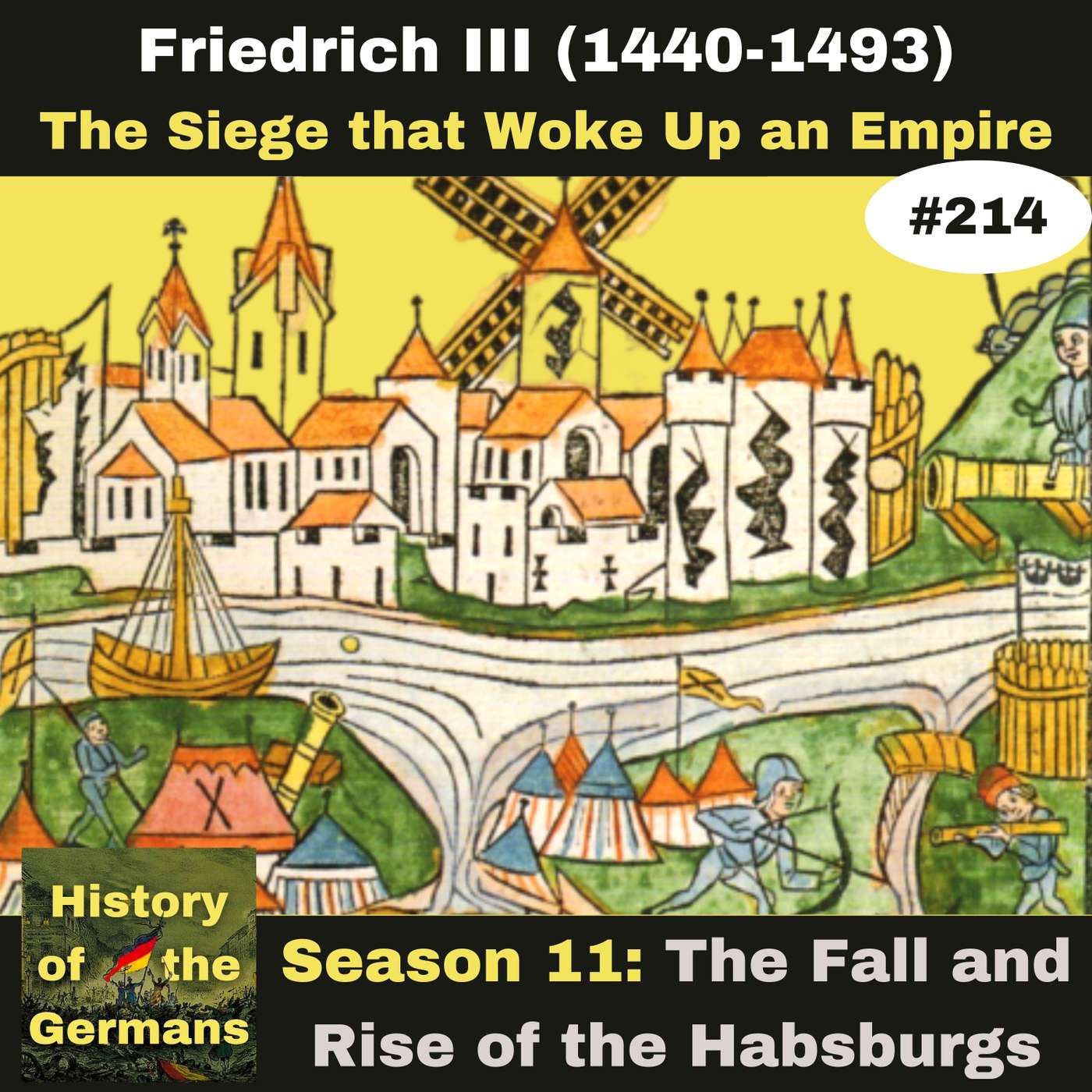
Ep. 214: Friedrich III (1440-1493) - The Siege that Woke up an Empire
The venerable city of Neuss between Cologne and Düsseldorf was founded in 16 BC as a Roman army camp, making it one of the oldest in Germany. Its history is marked by the usual mix of feuds with its archepiscopal overlord and the establishment of a trading and pilgrimage hub.Despite its Roman remains, the impressive church of St. Quirinius, and proximity to where I grew up, Neuss may neve
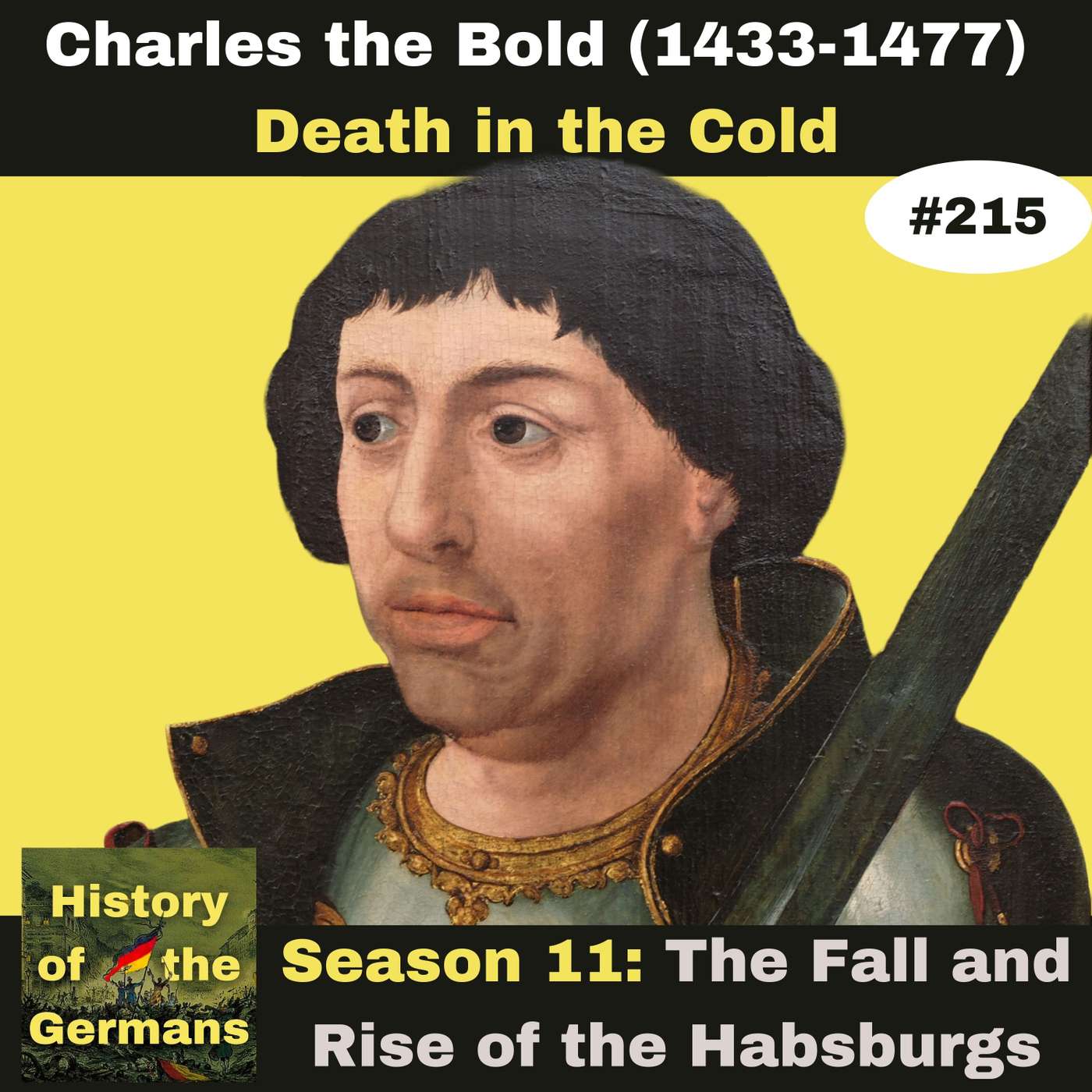
Ep. 215: Charles the Bold (1433-1477) - Death in the Cold
The rise of the Habsburgs to world domination pivots on one crucial moment, the marriage of Maximilian of Habsburg to Mary of Burgundy, the daughter of Charles the Bold, last of the Grand Dukes of the West.The usual story is that young Maximilian one day walked down the aisle of some splendid cathedral and was handed the richest principality in Europe on an jewel-encrusted golden platter
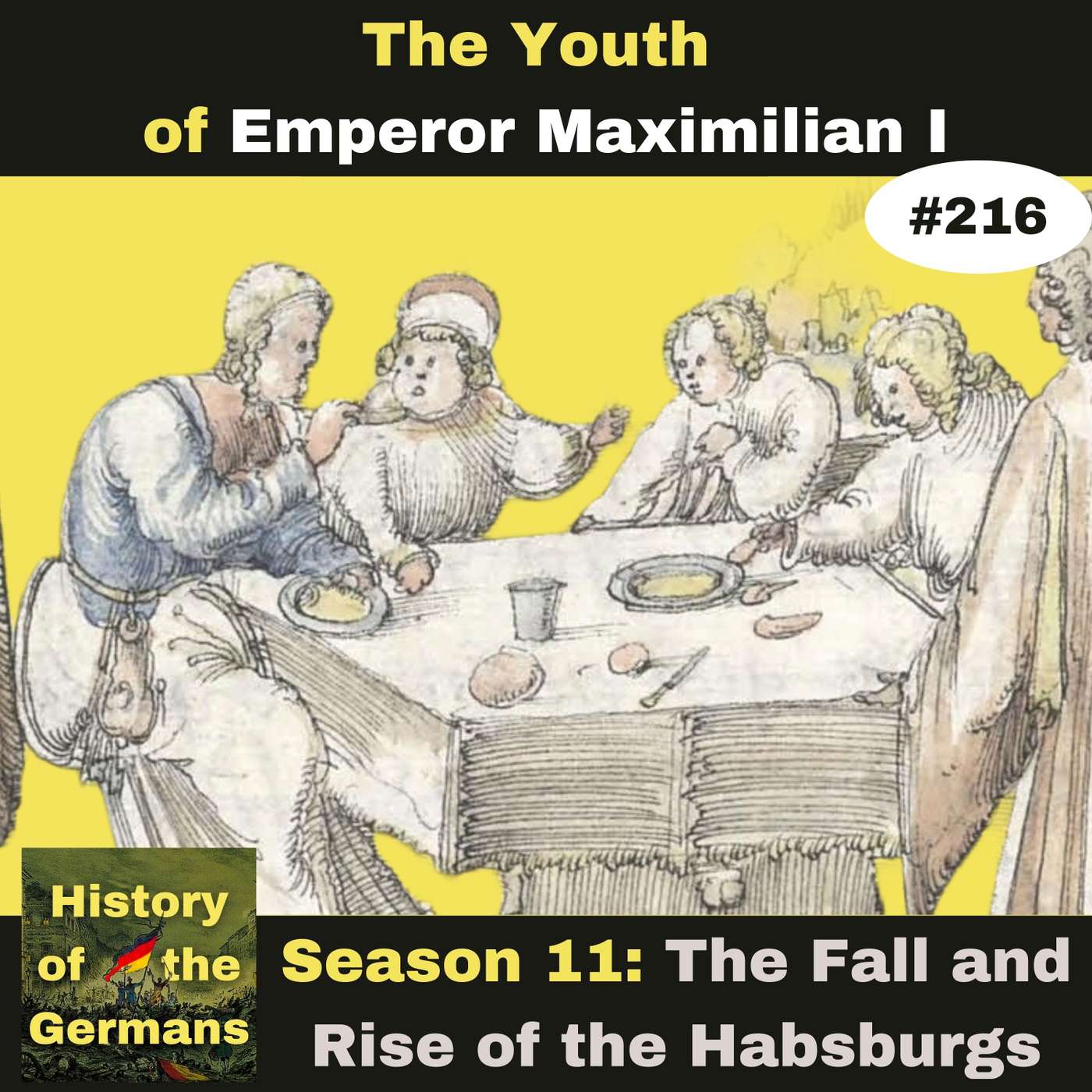
Ep. 216: Maximilian I (1493-1519) - The Youth of an Emperor
What is it like to grow up the son of the emperor? For most of the rulers of the Holy Roman Empire we have covered so far, no idea. There are scarce reports about the way the princes grew up, safe for tales like the emperor Ludwig the Bavarian being kidnapped by his pet monkey. But now, as the Late Middle Ages make way for the Renaissance, we can see the boy who would be king at play, bei
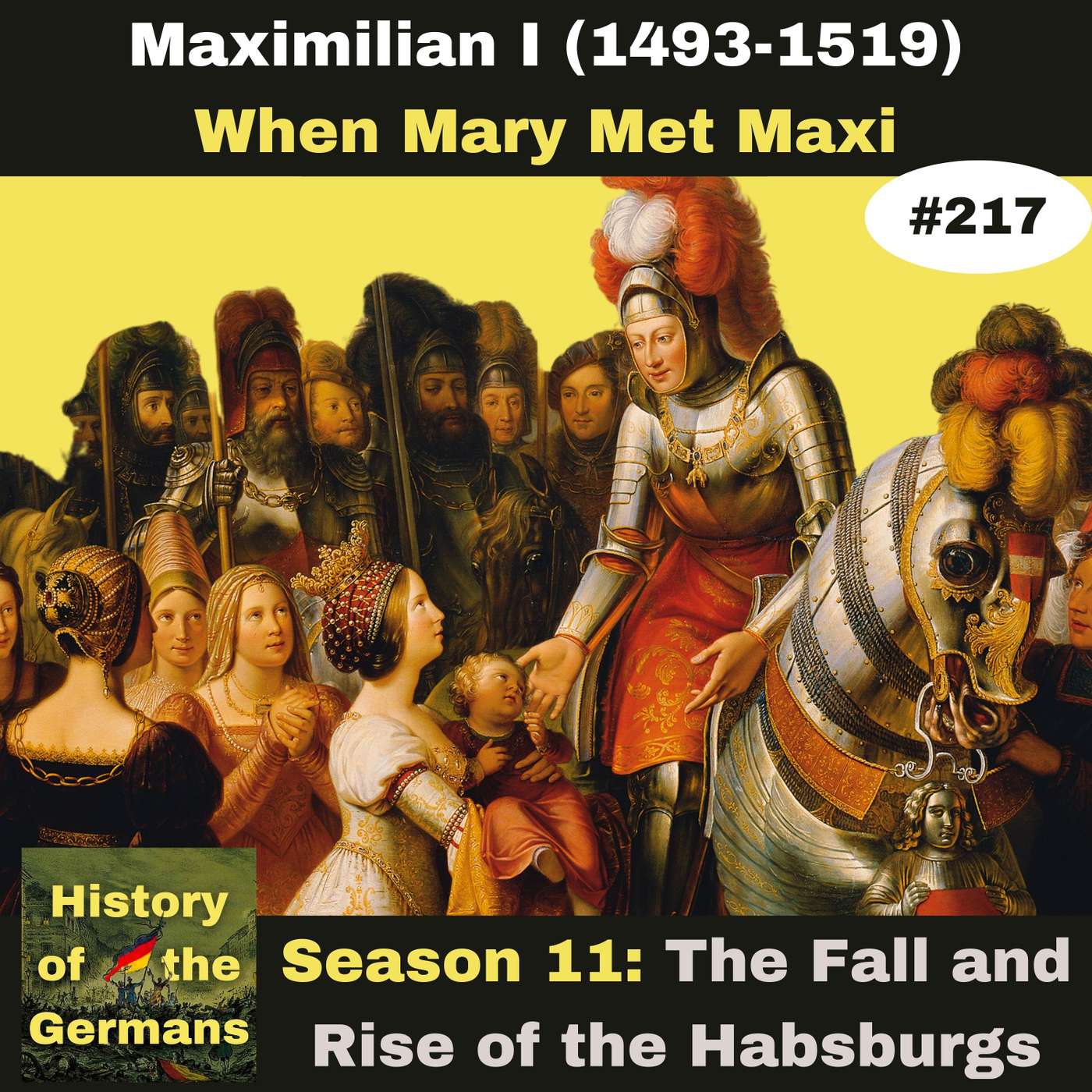
Ep. 217: Maximilian I (1493-1519) – When Mary Met Maxi
How often have you heard this phrase “Let others wage war; you, happy Austria, marry". It goes back to a whole string of marriages, first Maximilian of Habsburg married the heiress of the duchy of Burgundy, then his son married the heiress of Spain and finally his grandson married the heiress of Hungary and Bohemia. And bish bash bosh, an empire is created in the horizontal.That is nice a
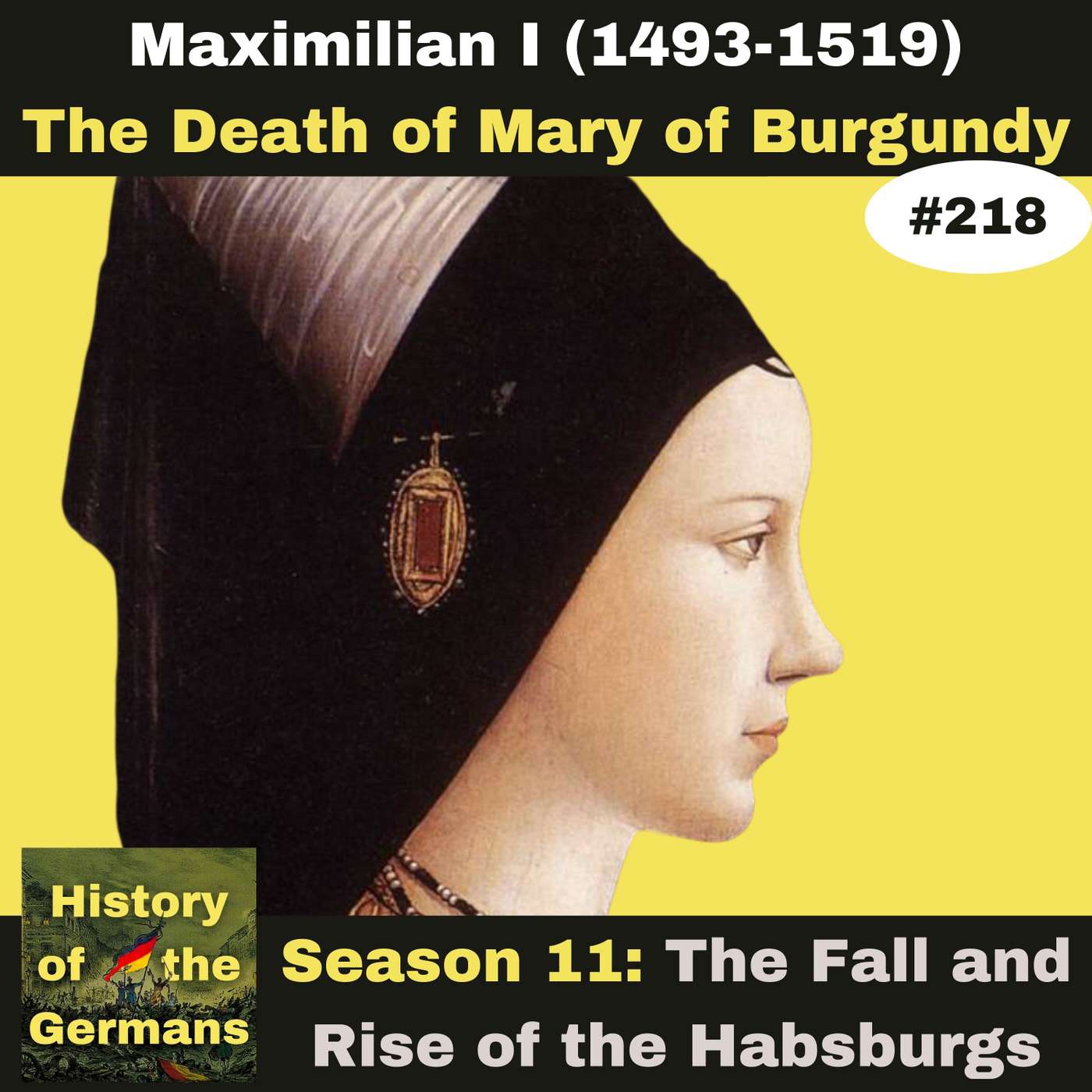
Ep. 218: Maximilian I (1493-1519) – The Death of Mary of Burgundy
By 1477 the rules of war that had been enshrined in the laws of chivalry are gone. The contest between the French and the Habsburgs over the inheritance of the Grand Dukes of the West gives us a foretaste of the things to come.This war isn’t just fought between the opposing armies lining up for the decisive battle, but include wholesale starving out of the population, funding local uprisi
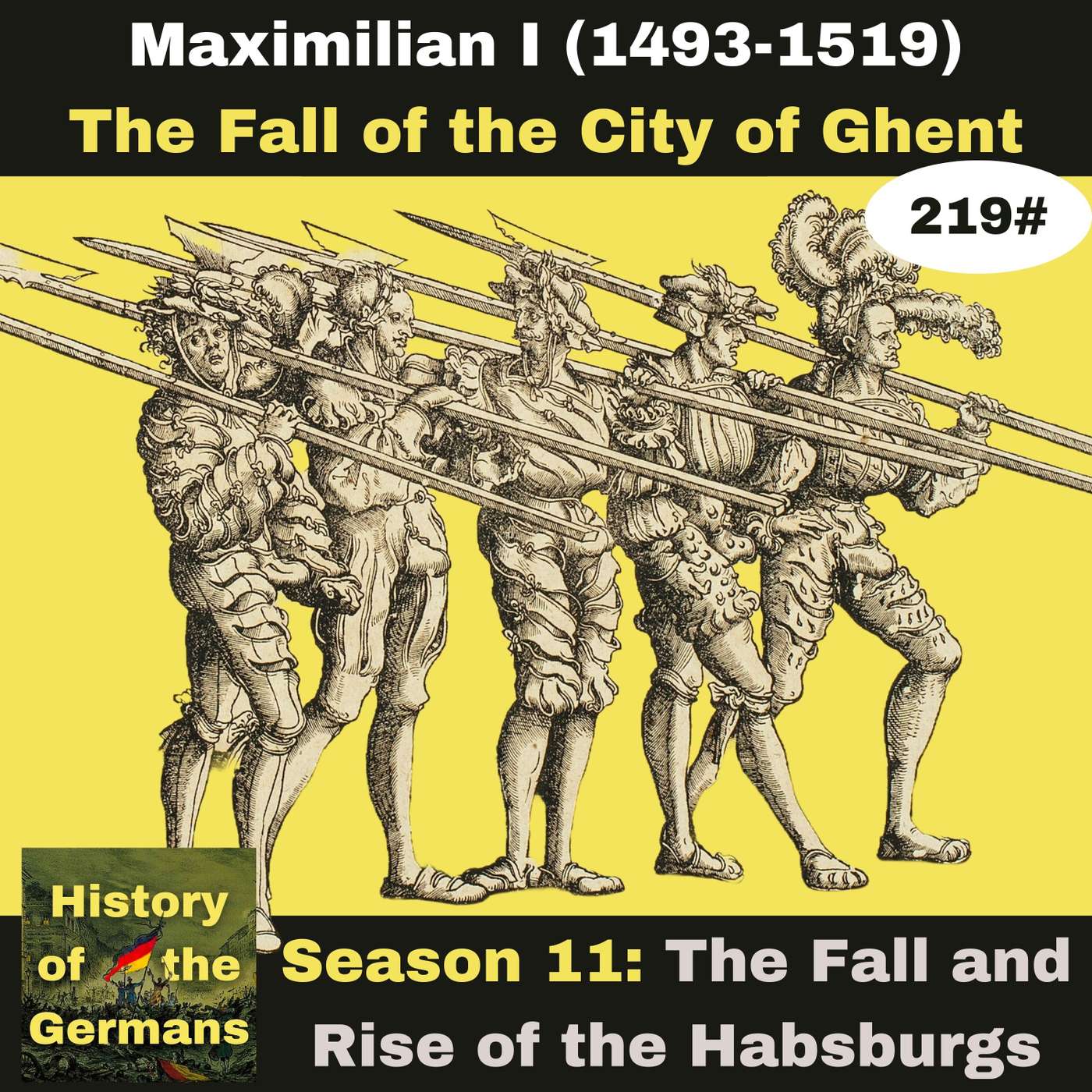
Ep.219: Maximilian I (1493-1519) – The Fall of Ghent
The words High and Late Middle Ages conjures up images of fog rising up over a field where knights in shining armor are trading blows with double handed swords, mighty bishops overseeing the construction of monumental cathedrals and peasants toiling on the land as serfs.The reason we see it that way goes back to the chivalric literature that celebrated the aristocratic lifestyle where tou
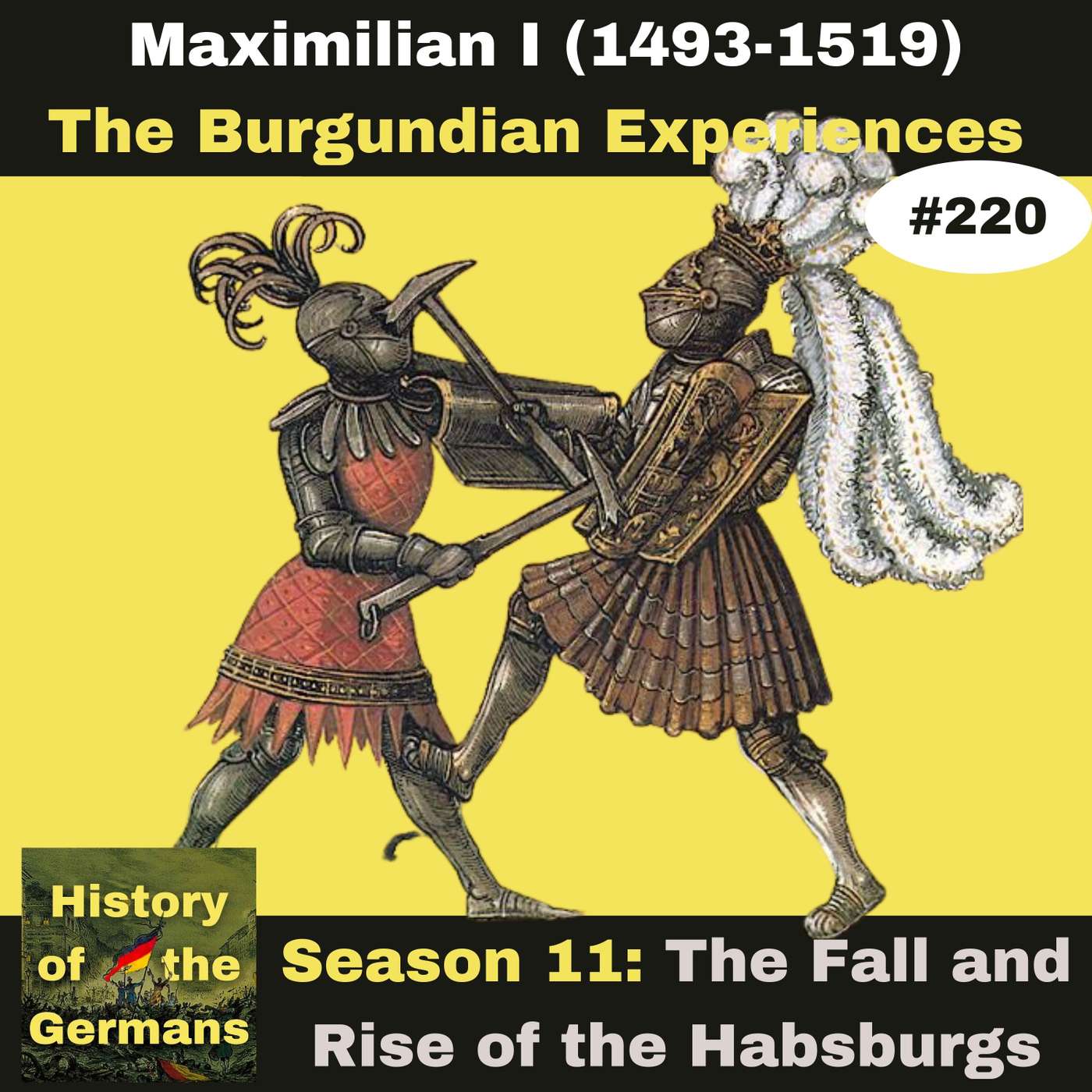
Ep. 220: Maximilian I (1493-1519) - The Burgundian Experience(s)
In this episode the 15-year long war over the Burgundian succession will come to its end. You may have thought it was done last time, but no. The revolutionary spirit of the Flemish cities is not yet broken and their most audacious move is still to come. And this time they are not going up against an archduke and regent, but against a newly elected king of the Romans.Maximilian of Habsbur
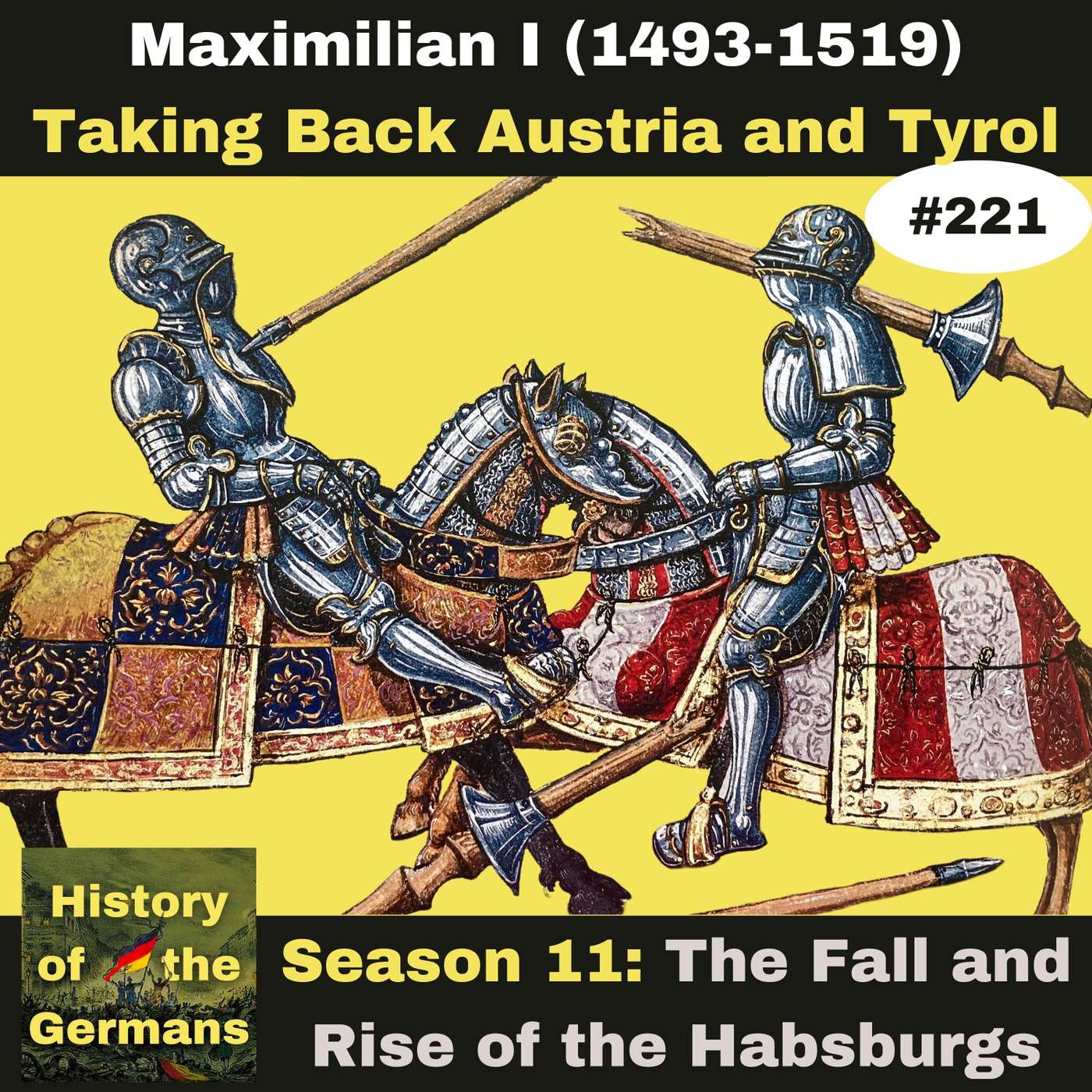
Ep. 221: Maximilian I (1493-1519) – Taking Back Austria and Tyrol
After 13 years of fighting in the Low Countries, Maximilian, the newly elected king of the Roman, returns home to a rammed full inbox. There is his cousin, the dissolute count Sigismund of Tyrol who is about to sell out the family fortune to the dukes of Bavaria. The king of Hungary is still occupying Vienna – and there is a new heiress out on the market, Anne of Brittanny.Some of the iss
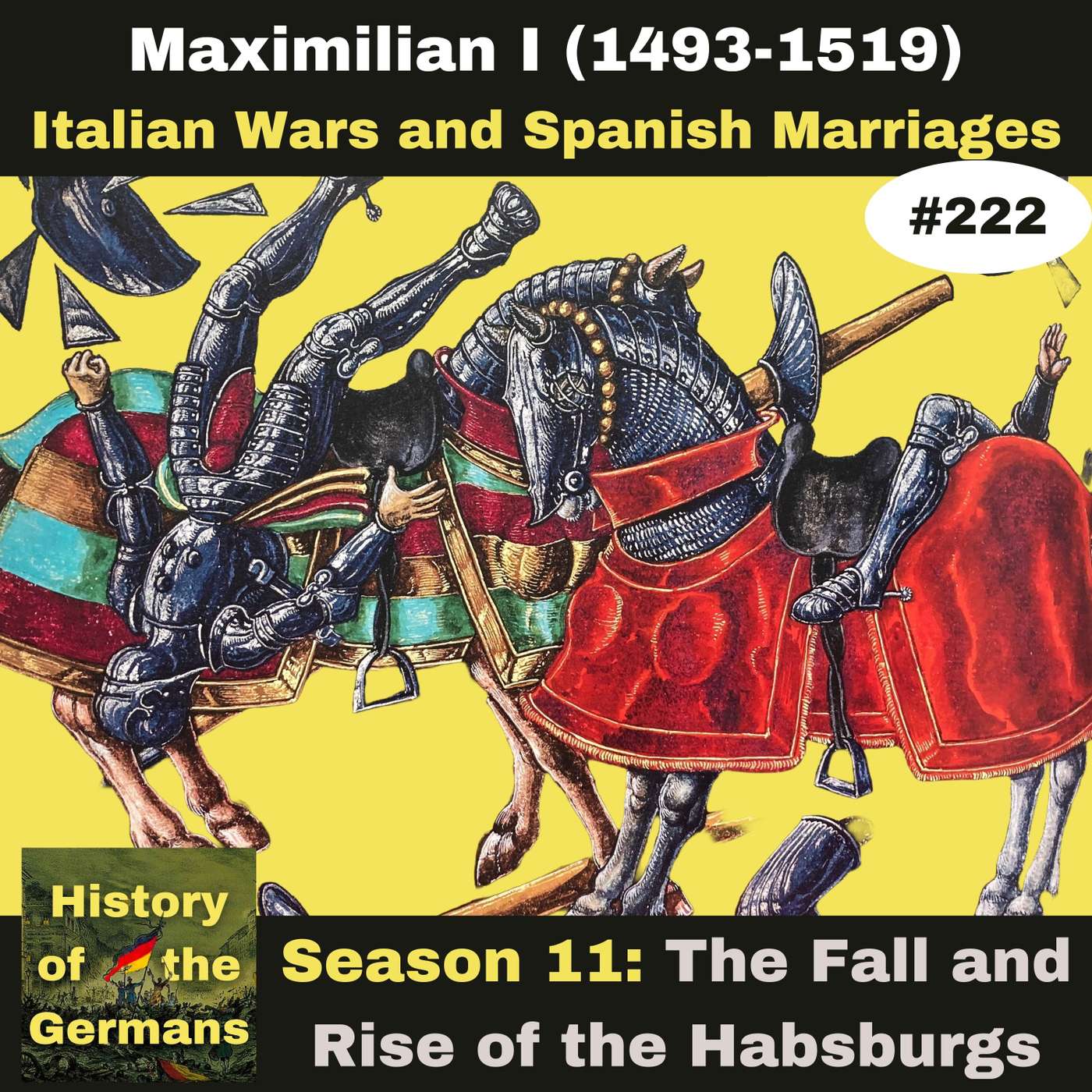
Ep. 222: Maximilian I (1493-1519) – Italian Wars and Spanish Marriages
The world is a-changing. Maximilian I may still dream of the medieval universal empire where he will lead Christendom in an epic crusade to expel the Turks from the European mainland, even reconquering Jerusalem. Meanwhile his main adversary, king Charles VIII of France unleashed the fury of war in Italy, kicking off a struggle that would last for 50 years and replaced the medieval world
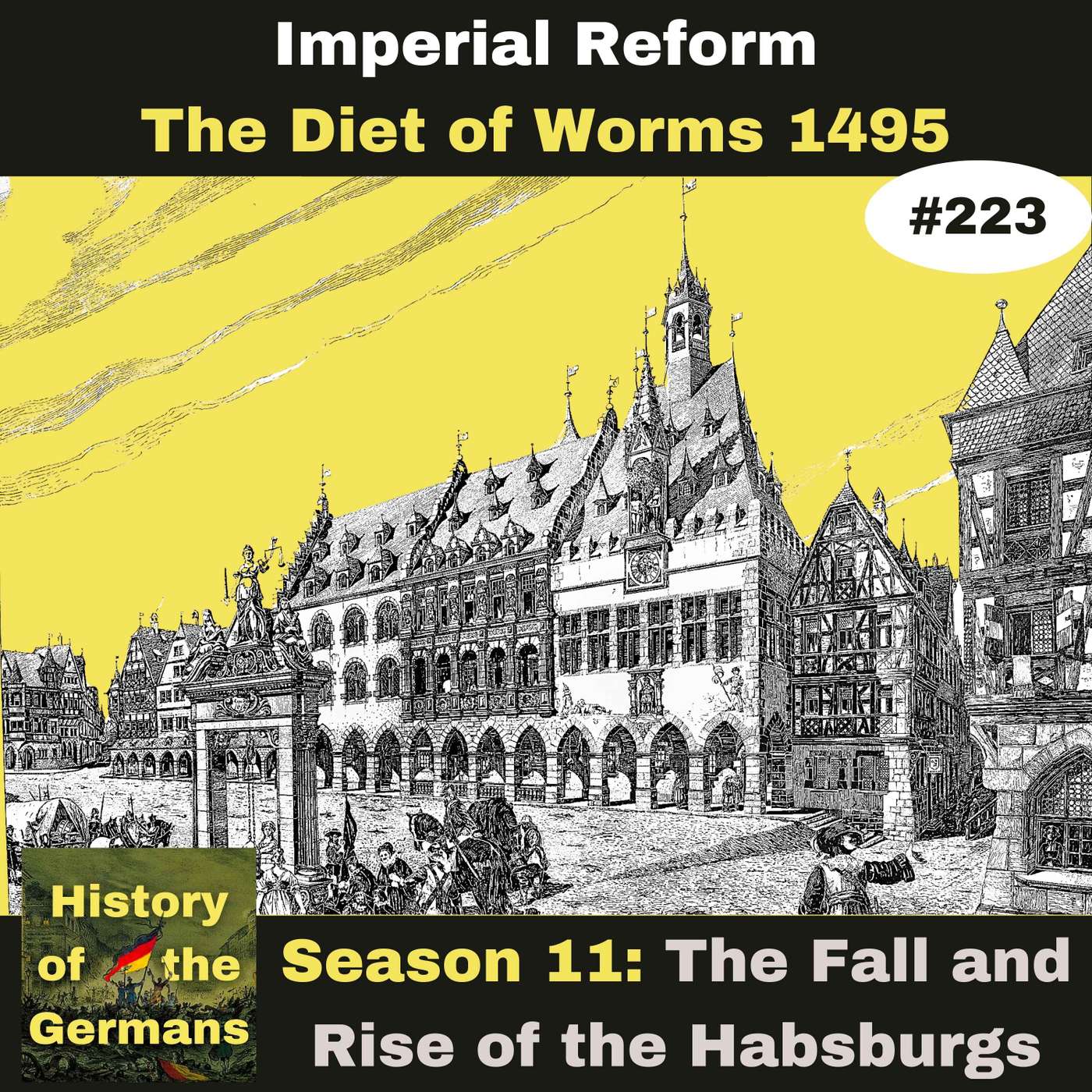
Ep. 223: Imperial Reform 1495 – The Diet of Worms
We are now 7 episodes into the action-packed life of emperor Maximilian and he is only 35 years old. We still have another 24 years to go and they will be again full of wars, outlandish schemes, including one where he wants to make himself pope and of course marriages that create an empire. But if you look into German history schoolbooks, the thing that Maximilian is most famous for is wh
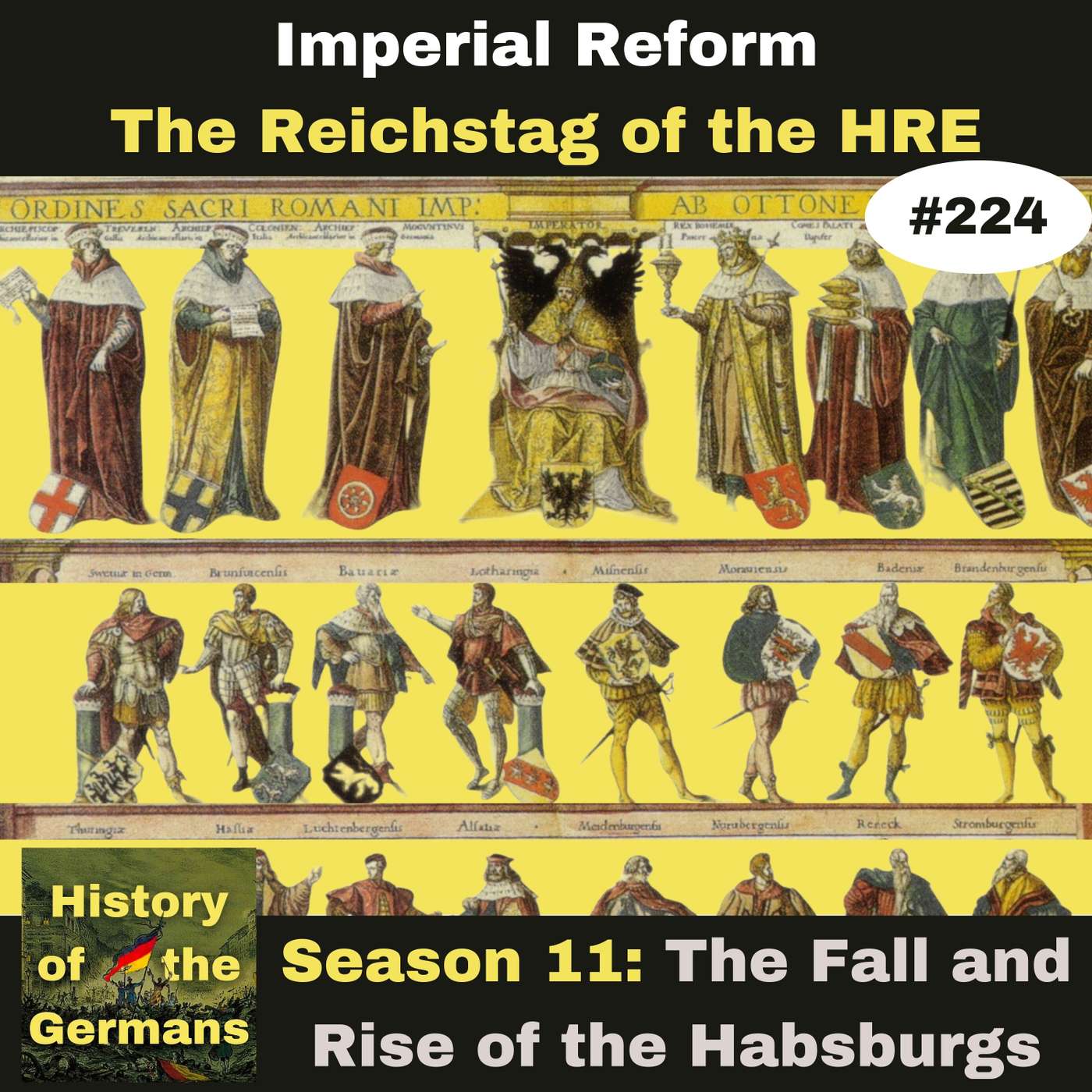
Ep. 224: Imperial Reform 1495 – The Reichstag of the Holy Roman Empire
I am afraid today’s episode is not your usual swordplay and skullduggery. What we are looking at today is the Reichstag as it operated throughout the Holy Roman Empire from 1495 to 1803. Sounds a bit like dour constitutional law, but bear with me.We will look at a couple of classic tropes, like, whether the empire consisted of more than 300 sovereign states who could do whatever they want
Ep. 225: Imperial Reform 1495 - The Ewige Landfrieden (Public Peace) of 1495
Let me start today’s episode with some outrageous national stereotypes. If an Englishman is disappointed with the way the affairs of state are conducted, he writes a letter to his member of Parliament. A Frenchman in that same situation rents a tractor and dumps manure outside the Palais d’Elysee. A German threatens to file a lawsuit with the constitutional court, the Bundesverfassungsger
The Imperial Reform of 1495 with Prof. Duncan Hardy
Prof Duncan Hardy is one of the leading experts in the history of the Holy Roman Empire and one of his main topics is the Imperial reform of 1495, making him the ideal guest for our show.In his first book, Associative Political Culture in the Holy Roman Empire he tries to define what the Holy Roman Empire was a question we will almost certainly spend quite some time discussing today.His f
Ep. 226: Maximilian I (1493-1519) - A Grand Plan for a Great War
Europe's political landscape is shifting fundamentally. No longer are wars fought between kings and their vassals, and emperors against popes - it is all about the balance of power. and this balaance is firmly out of whack. The largest, richest and most populous part of Europe, the empire that still formally included Italy, the Low Countries, the Swiss Confederation, Bohemia and Burgundy,
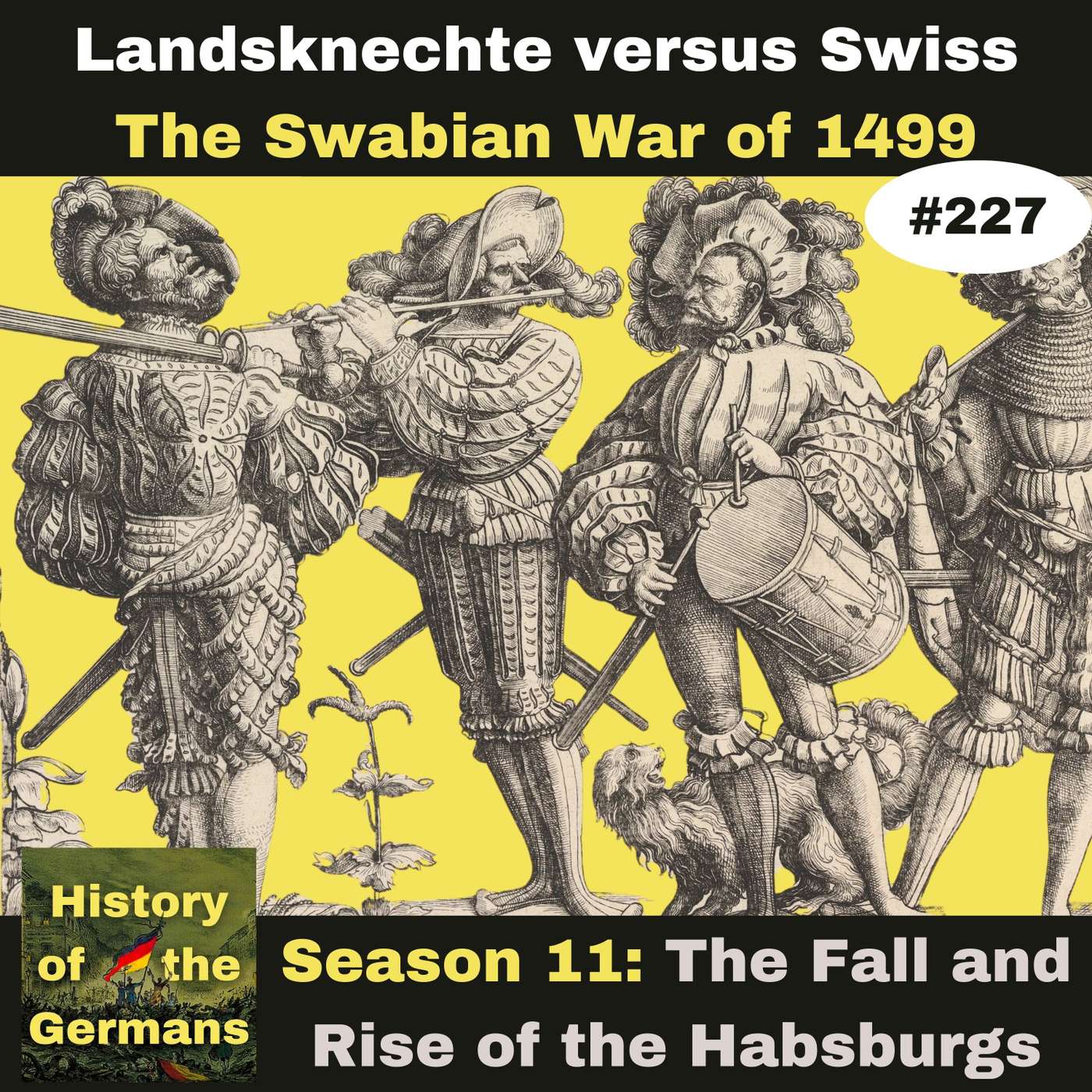
Ep. 227: Landsknechte vs. Swiss Mercenaries – The Swabian (Swiss) War of 1499
Why are the Swiss called the Swiss? After all, Schwyz in only of 26 cantons, and not one of the largest ones. How did the proud and prosperous citizens of Zurich or Berne, mighty city states in their own right, decide they wanted to be named after a mountainous region largely inhabited by peasants tending to their gorgeous brown cattle, the Braunvieh. They even called their national airli
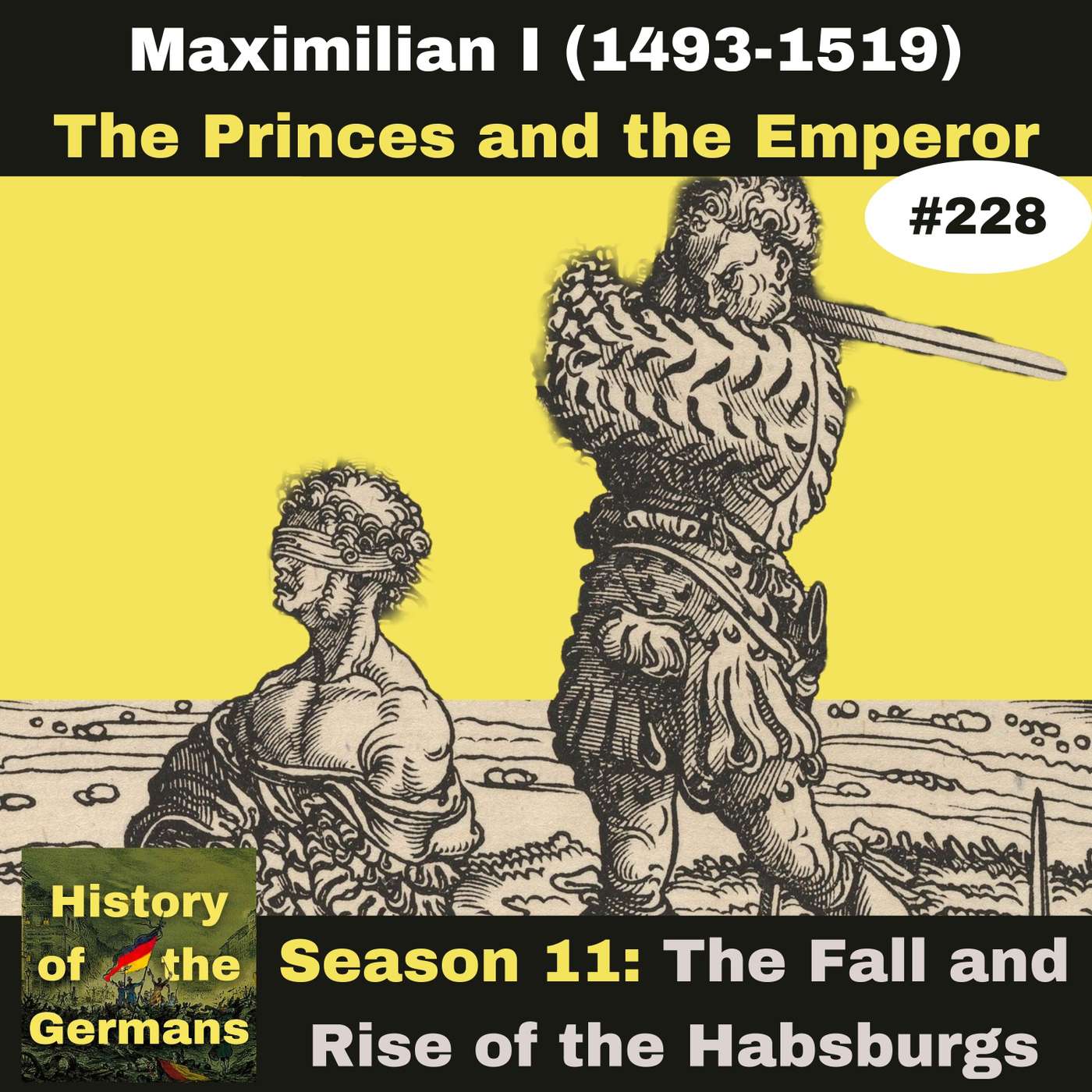
Ep. 228: Maximilian I (1493-1519) - The Princes and the Emperor.
If there was one group that consistently thwarted Maximilian’s grand plans for world domination, it was the princes of the Holy Roman Empire. He had given in to their demands for Imperial Reform, had granted the Reichstag far reaching powers, had established the Reichskammergericht as a law court independent of imperial authority and had announced the much longed for ban on feuding. But d
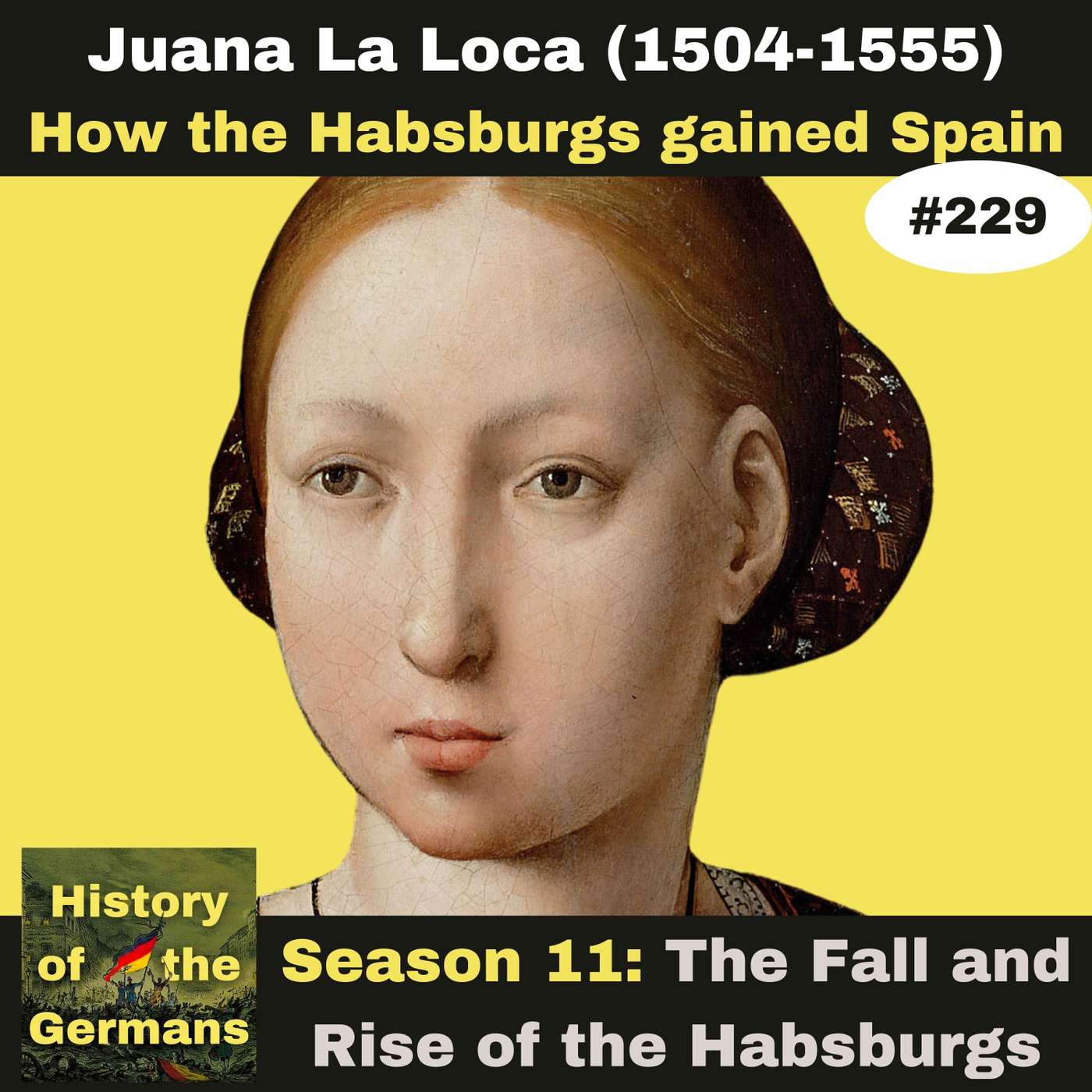
Ep. 229: Joanna the (not?) Mad (1504-1555) - How the Habsburgs gained Spain
“Bella gerant alii, tu felix Austria nube" – ‘Let others wage war; thou, happy Austria, marry’ is one of the few terms that almost anyone with a cursory interest in European history knows, only rivalled by the Voltaire quote thou shall not utter in my presence ever. It evokes the image of a handsome alpine boy full of charm and apple strudel wooing some princess into peacefully handing ov
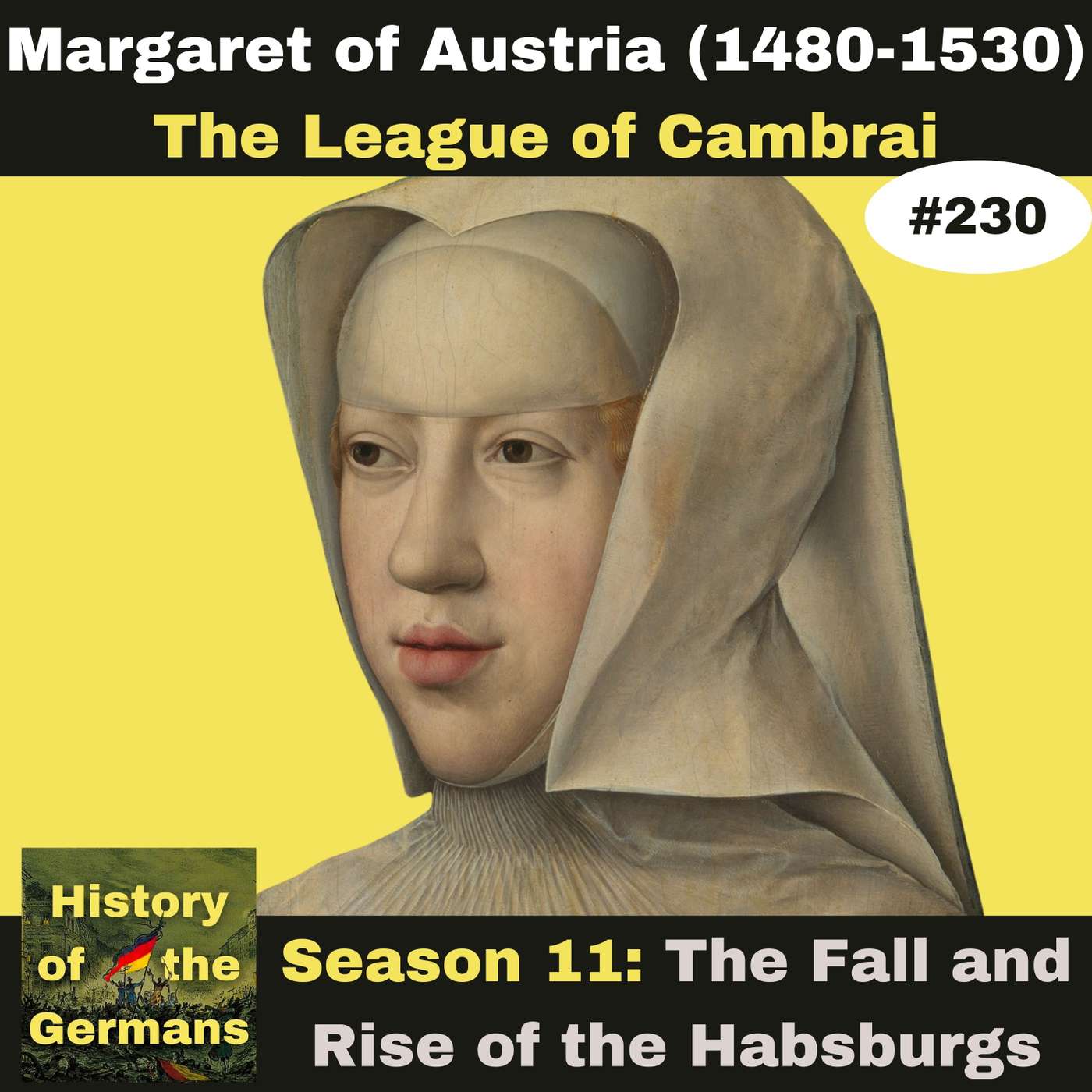
Ep.230: Margaret of Austria (1480-1530) - The League of Cambrai
Another Thursday and another episode dealing with another epic fail of our hero, Maximilian I. But despite a military campaign that once again failed for all the usual reasons, no money, no strategy, no luck, this time he is rescued not by a marriage or imperial princes suddenly inflicted with an unlikely case of backbone, but by his daughter, Margaret, archduchess of Austria, dowager duc
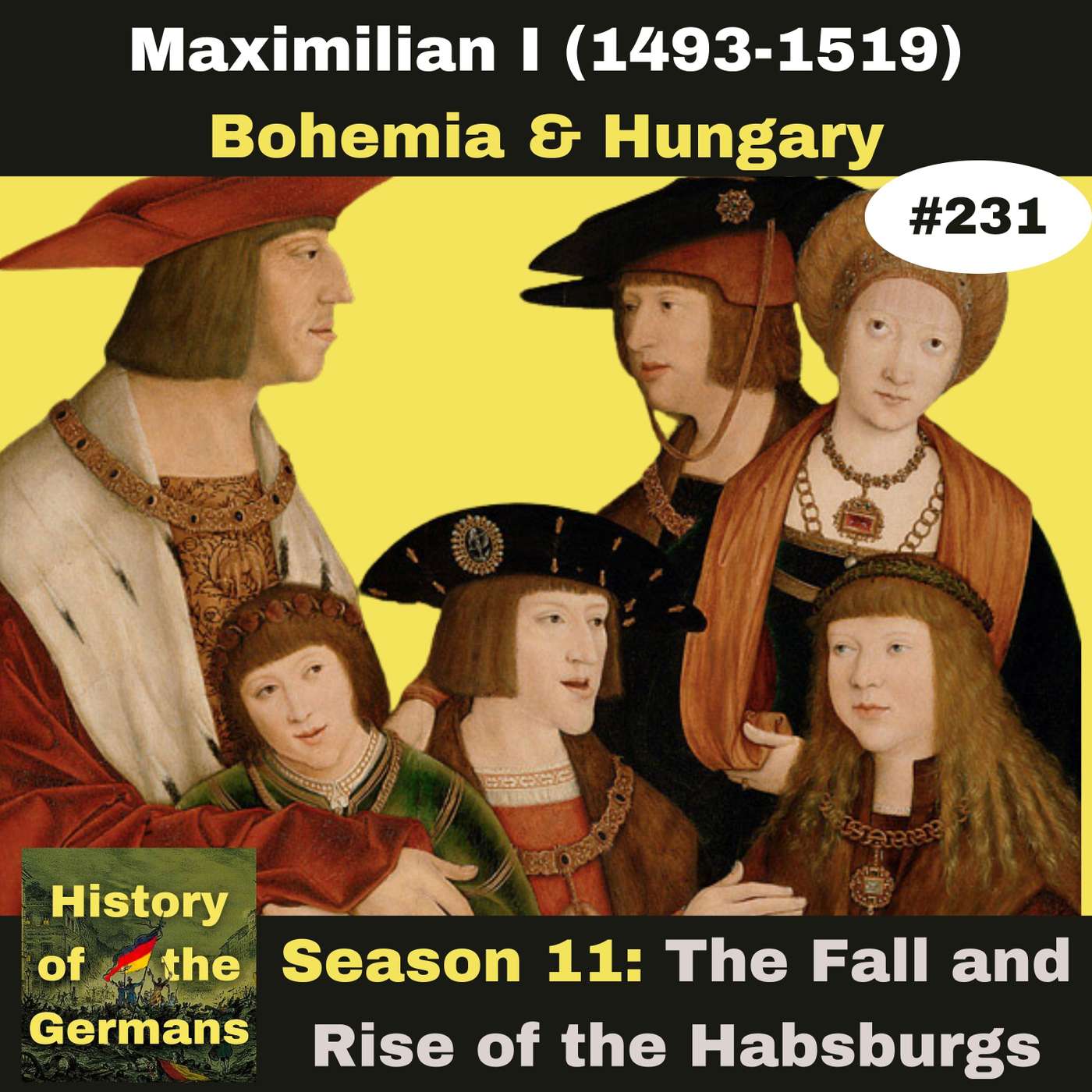
Ep. 231: Maximilian I (1493-1519) - Marrying Bohemia and Hungary
You have almost certainly seen the image in today’s episode artwork before. It is a family portrait showing Maximilian, his first wife Marie of Burgundy, his son, Philip the Handsome and three children. When Bernhard Strigel painted this image in around the year 1516, Philip the Handsome was already dead for 10 years and Marie of Burgundy had gone more than 30 years before. Then there are
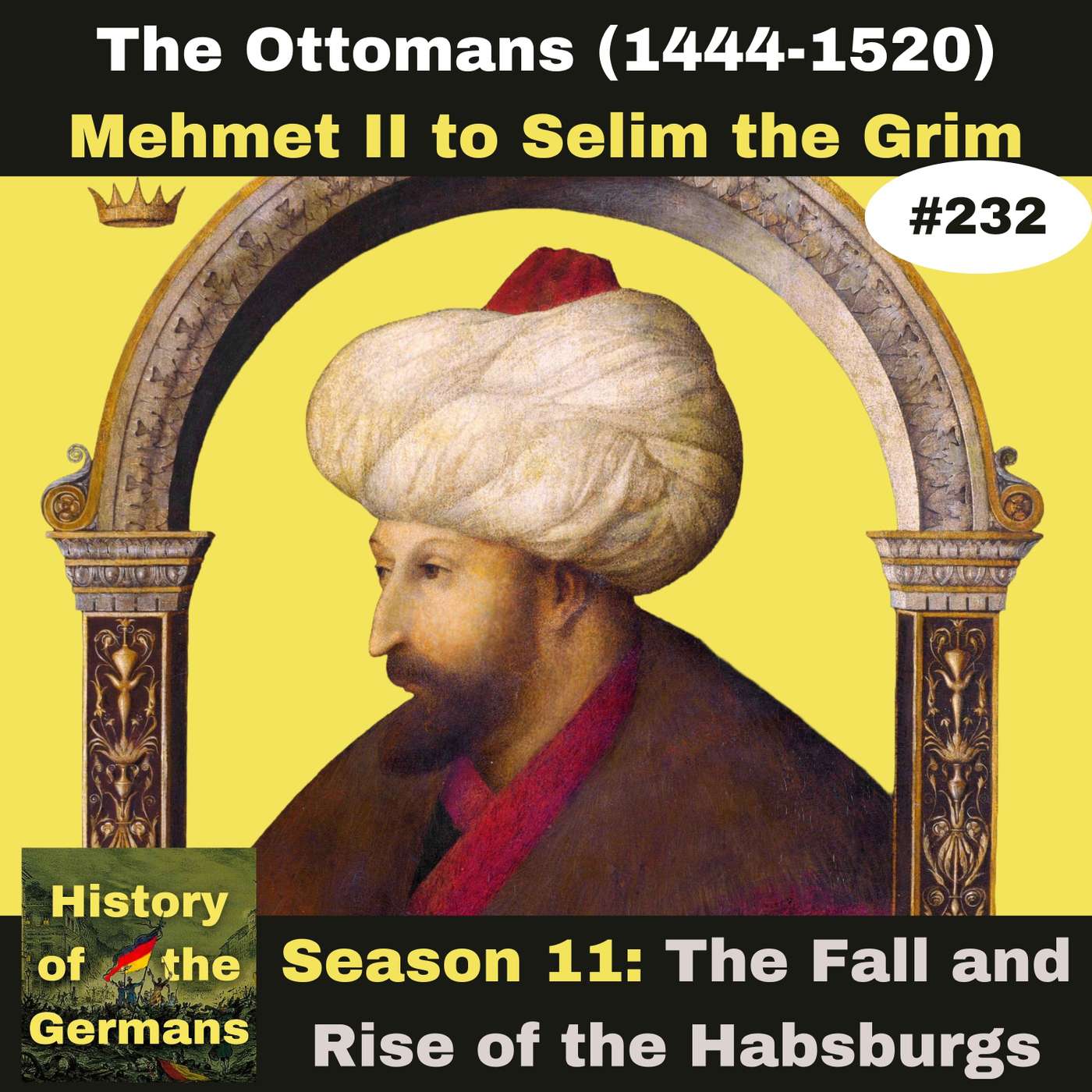
Ep. 232: The Ottomans – From Mehmet the Conqueror to Selim the Grim (1444-1520)
These last dozen or so episodes we have examined the genesis of two of the three major strategic preoccupations of the Habsburg empire, the rivalry with the French kings and the relationship with the imperial princes. Today we will look at the build-up of the third major strategic challenge to the rulers of the Holy Roman Empire, the Ottomans. One can argue, and many have, that the threat
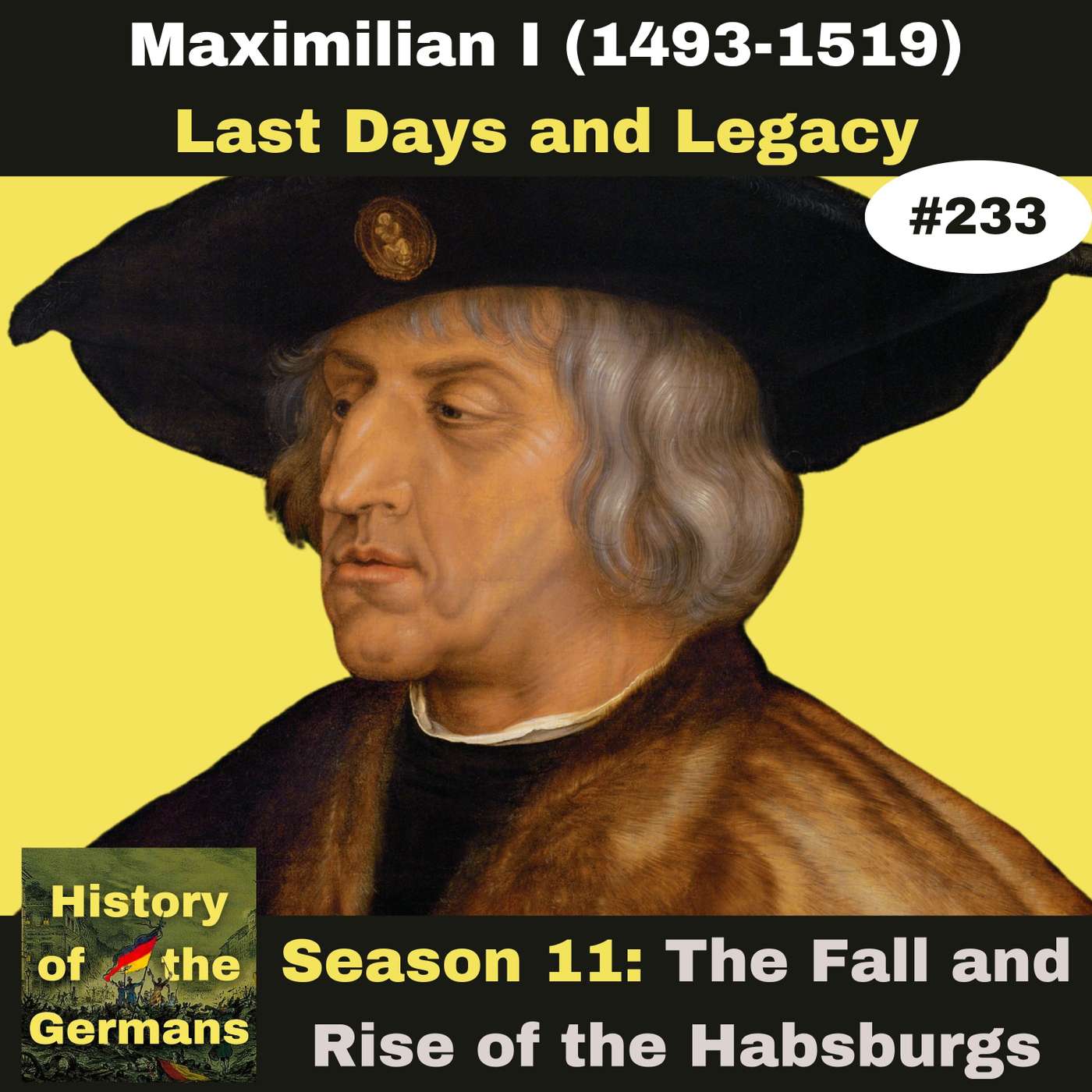
Ep. 233: Maximilian I (1493-1519) - Last Days and Legacy
The last decade of emperor Maximilian’s reign was overshadowed by all three challenges to the emerging Habsburg empire gaining strength. The Ottoman empire was piling on resources by taking over Syria, Lebanon and Egypt. A vigorous new king of France, Francois I was turning the tide in the incessant Italian wars into his favor. And finally the greatest of threats to the dynasty emerged as
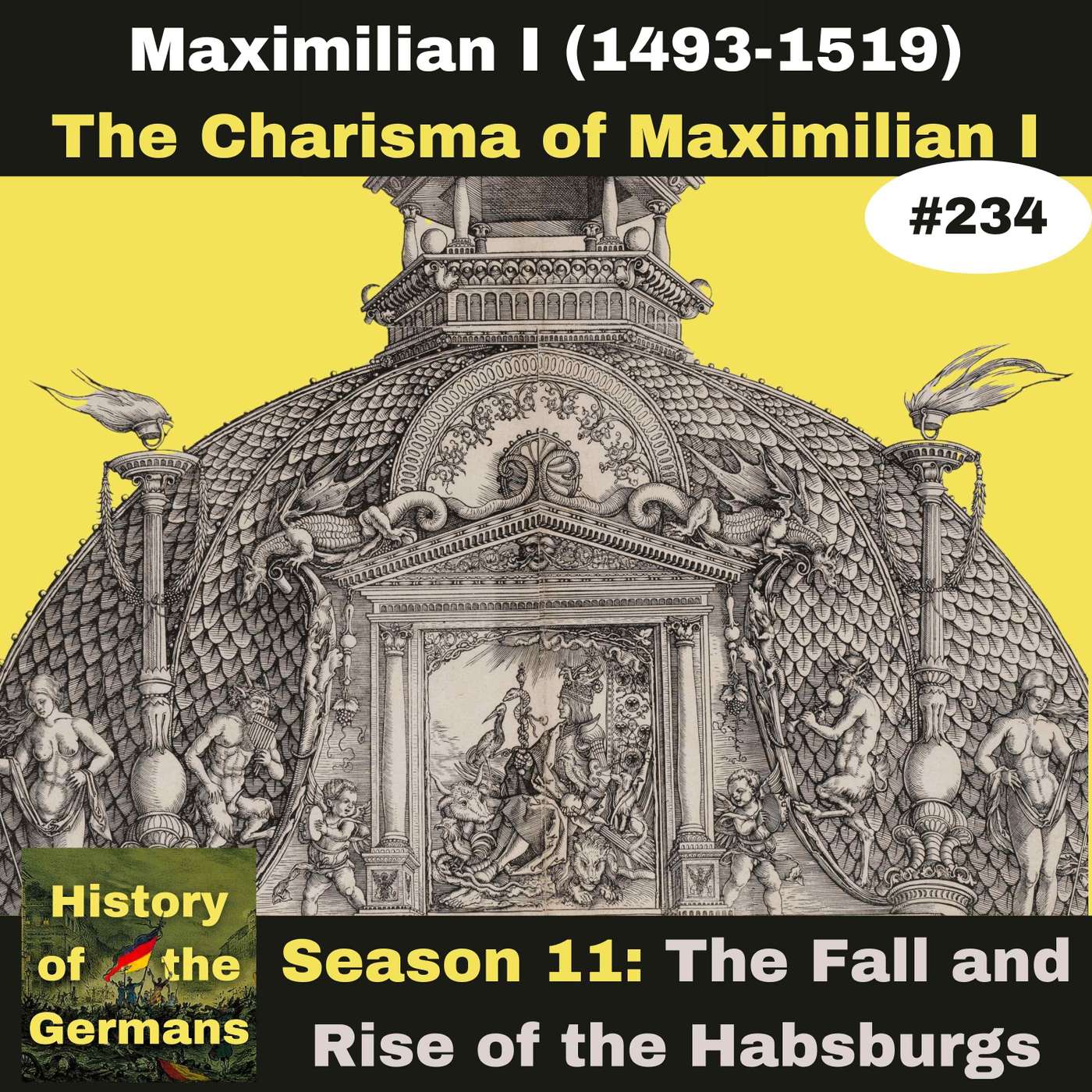
Ep. 234: The Charisma of Emperor Maximilian (1493-1519)
Maximilian I died on January 12th, 1519. But his likeness is everywhere. None of his predecessors left behind as many depictions of their life, from being fed by his nurse as a toddler to the Totenbild, the picture of the emperor in death, stripped of all his paraphernalia, even his teeth broken out.If you search in google for the most reproduced image of a Holy Roman Emperor, two come up
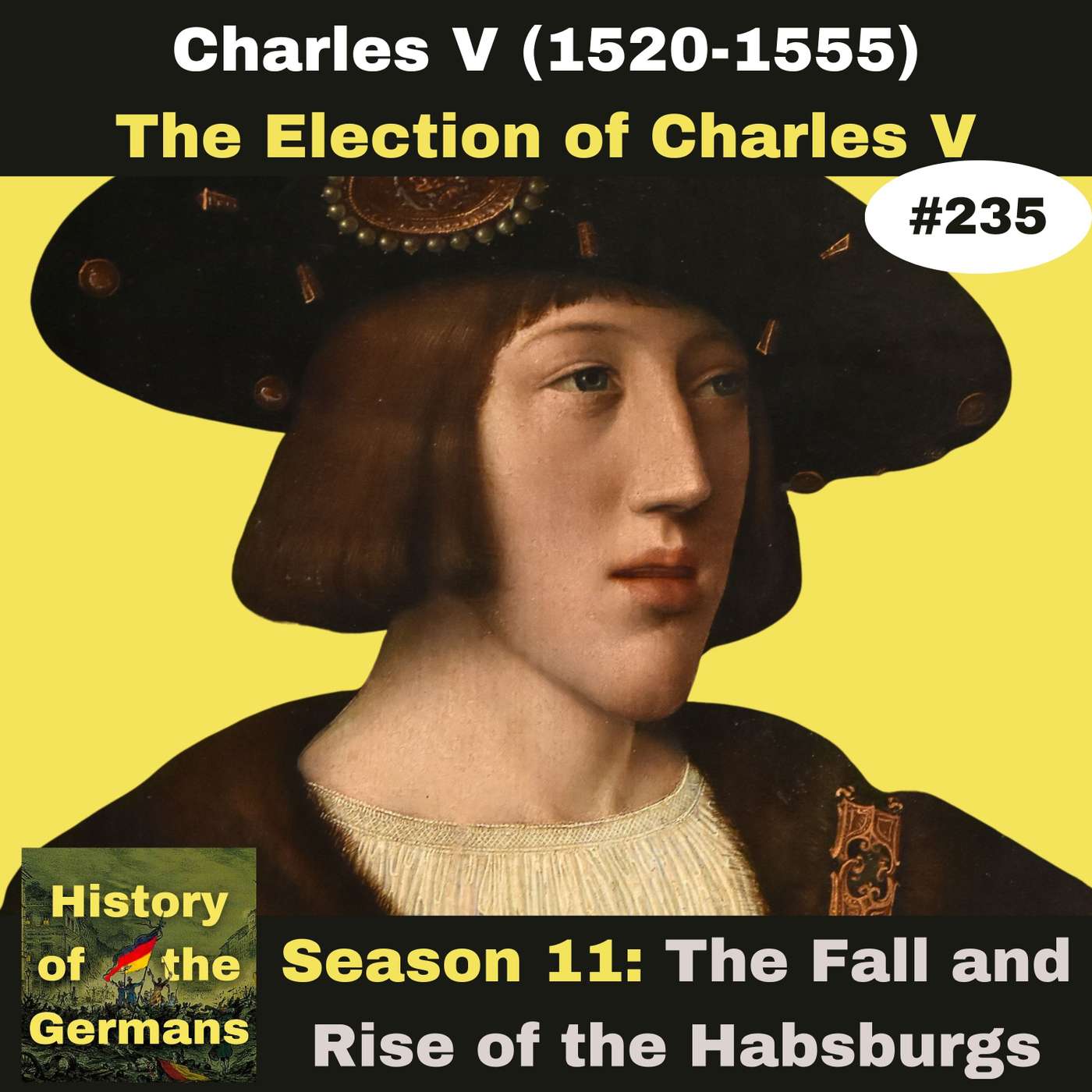
Ep. 235: The Youth and Election of the Emperor Charles V (1520-1555)
Born during a ball in Ghent on 24 February 1500, Charles of Habsburg would grow up to rule an empire stretching from the Philippines to Prague and from Lima to Lauwersoog. But who was the man behind one of history's most powerful titles — and how did an unremarkable teenager come to be elected Holy Roman Emperor?In this episode, we explore the remarkable — and often dysfunctional — upbrin
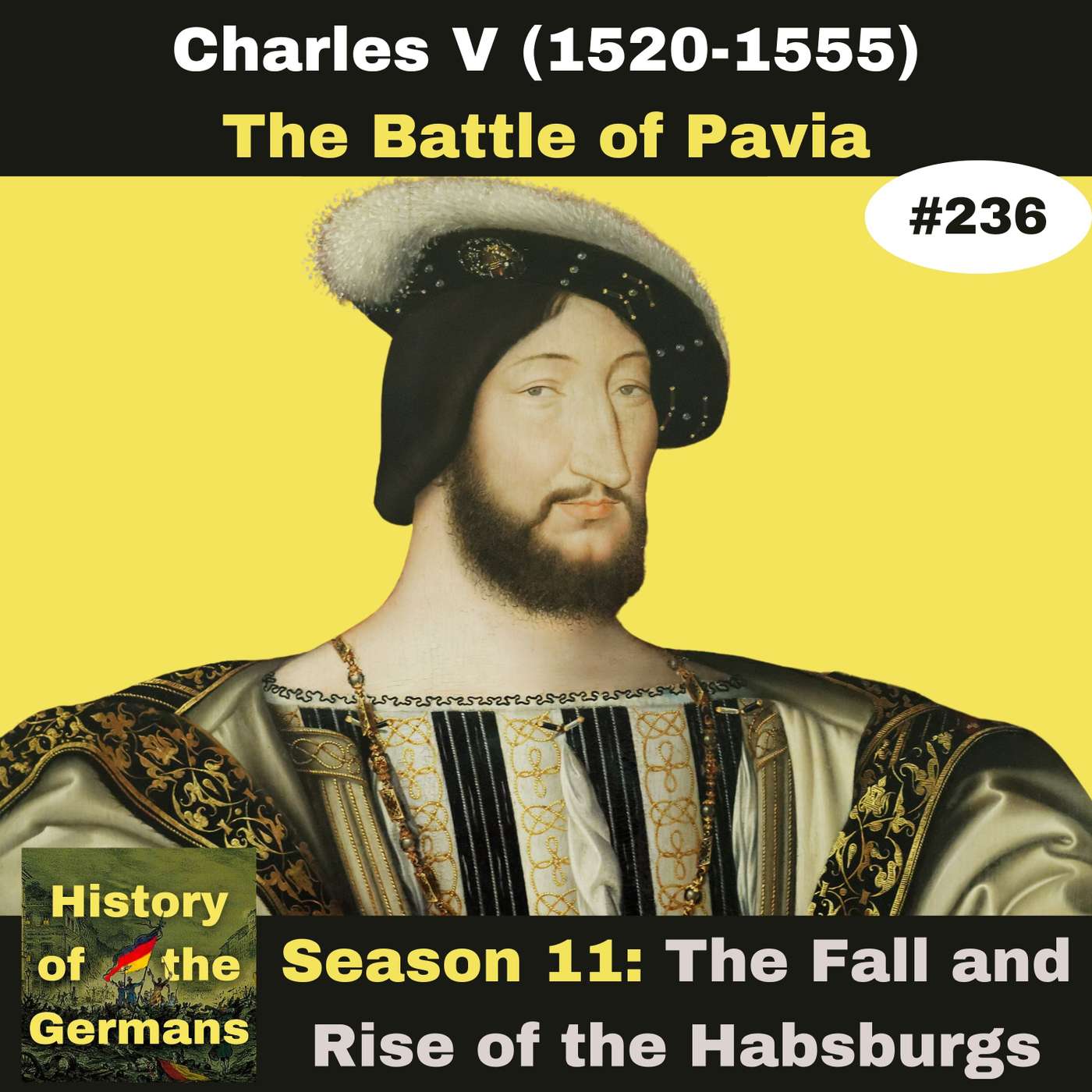
Ep. 236: Charles V (1520-1555) - The Battle of Pavia
In 1521 four men dominated Europe. They were all in their twenties: King Henry VIII of England, born 1491, King Francois I of France, born 1494, Suleiman the Magnificent, Ottoman Sultan, born that same year, 1494 and the youngest of them, Charles V, Holy Roman Emperor, King of Spain, Sicily, Naples and Sardinia, lord of the Netherlands, duke of Austria and Count of Tyrol.How the world had
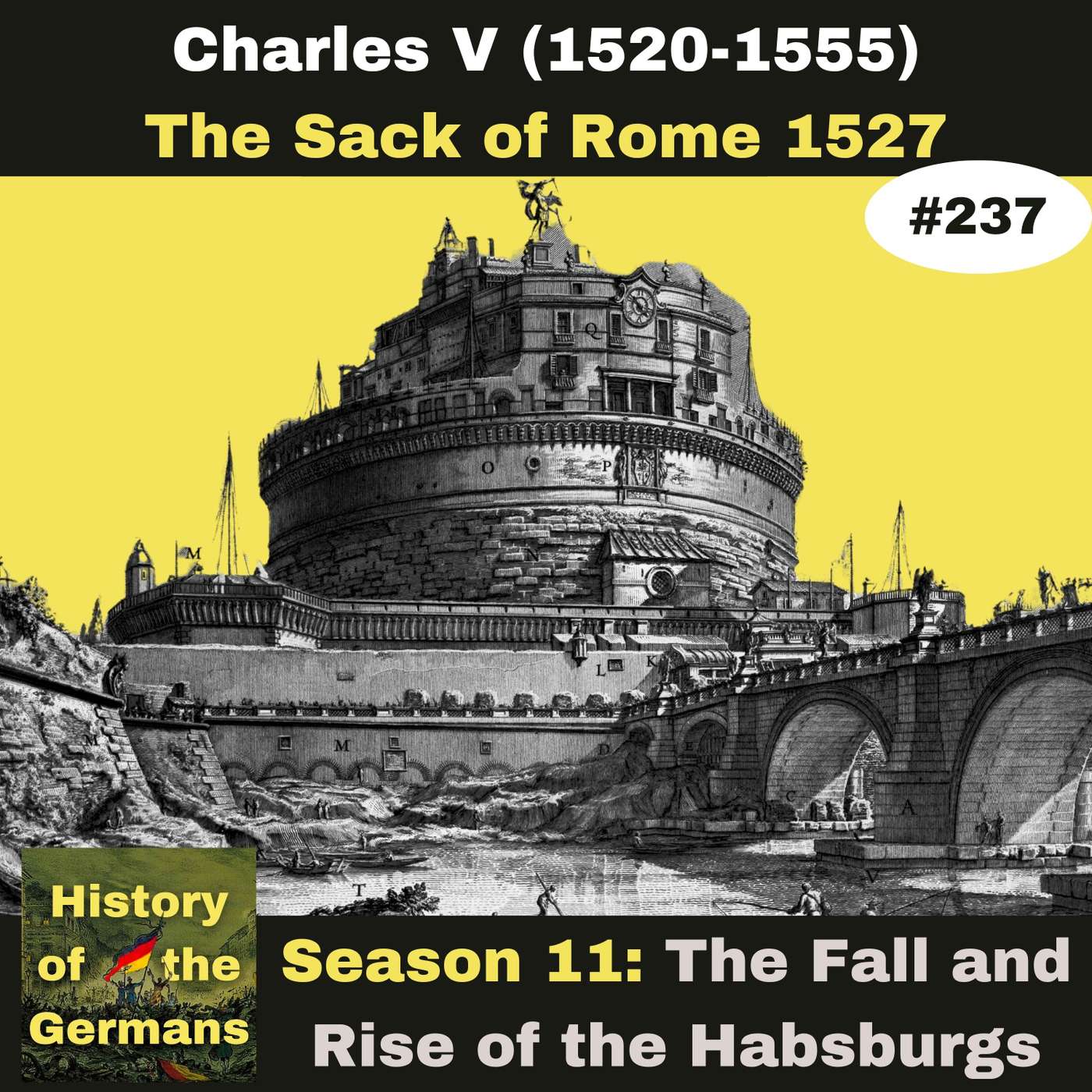
Ep. 237: How Italy Fell to the Habsburgs - From the Peace of Madrid to the Sack of Rome 1527.
We are coming closer to the end of our series on the Fall and Rise of the House of Habsburg. We have seen the reconsolidation of Austria, the acquisition of Burgundy, the inheritance of Spain and today, we will look at the last stages of the Italian wars. This conflict, kicked off by king Charles VIII in 1494 had given “rise to changes of dominions, subversion of kingdoms, desolation of c
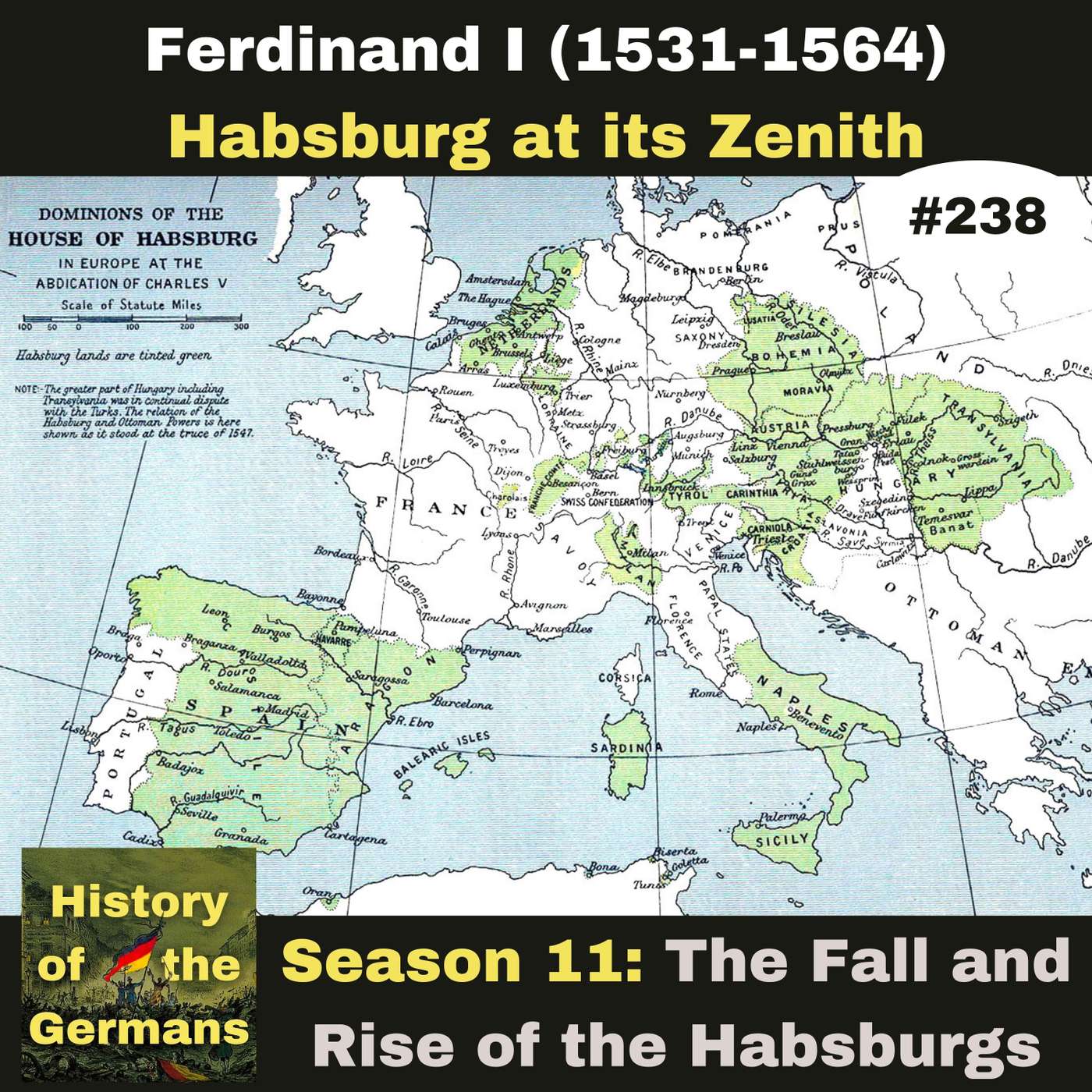
Ep. 238: The Habsburg Empire at its Zenith - Ferdinand I and the Siege of Vienna
Today we celebrate the topping out of the Habsburg empire. By the middle of the 16th century it reached its furthest extent as a political entity ruled by one man. Over the last 42 episodes we have seen this family of minor counts playing their game of snakes and ladders until they had amassed lordships over Austria, the Netherlands, Spain and large parts of Italy. Today we look at how th