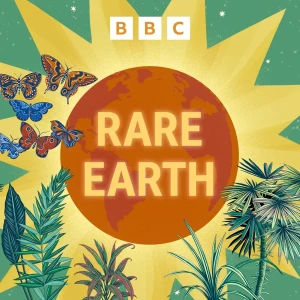
Rare Earth
Environmental journalist Tom Heap and physicist Helen Czerski explore major stories about the environment and wildlife, celebrating the wonders of nature. They meet people who are dedicated to protecting the natural world and discuss the challenges it faces. The show combines expert insight with a sense of wonder about the planet.
Episodes
Can lawyers save the planet?
What can the legal system do to protect the environment? Tom Heap and Helen Czerski gather together a panel of legal and environmental experts to discuss their battles for the planet. How much protection does nature have in law at the moment, and do legal rights make any real difference in practice? They debate whether nature should be given official legal rights, like human rights.Today's panel:
Tentacular: The Wonderful World of the Octopus
Cornish fishermen this summer have had their usual catch of lobster and crab replaced by voracious octopus. Restaurant menus have had to be wiped and rewritten across the south-west, but what else has changed? Tom Heap and Helen Czerski ask why octopus have such a hold on our imagination and the science world, why the octopus has moved north and what its journey can tell us about the changing oc
All In This Together
Helen Czerski and Tom Heap ask if nature is really red in tooth and claw. Is life all about survival of the fittest or are we all working together on a changing planet? They're joined by Rowan Hooper, author of Togetherness, lichen expert April Windle and Isabel Hardman, assistant editor of the Spectator magazine and author of The Natural Health Service: How Nature Can Mend Your Mind. Together t
Andy's Green In-Tray
How will the environment be changed by an Andy Burnham government? As the new parliamentary session opens, Tom Heap and Helen Czerski leaf through the government in-tray to reveal the big decisions that will need to be taken on energy, transport and nature protection.Discussing the issues from Rosebank to wildfires are Sky News Economics Editor, Ed Conway, climate scientist Corrine Le Quéré from
Volcano
Helen Czerski and Tom Heap investigate the environmental impact of volcanoes from prehistory to the present day, and find out about their cultural significance in art and literature. On today's panel: Dr Will Hutchison, volcanologist at the University of St Andrews; Hólmfríður Sigurðardóttir, who chairs the Surtsey Research Society in Iceland; and Fiona Stafford, Professor of English Language and
Drawing Our Future Homes
Who's the hero that will protect us from the impact of extreme heat, rain and whatever else climate change might throw at us in future? Forget someone in a cape, maybe it's the person quietly sketching buildings on a bit of paper. Architects shape the buildings we live in and rely on - can they change the way they work to make sure that our homes are smart enough to outpace the challenges of clima
The Sound of Water
Helen Czerski and Tom Heap discover how new technology lets us listen in to the extraordinary sounds of the planet's waterways. From the deepest ocean to the tributaries, rivers and streams, this is an exploration of the sound made under water by animals, humans, and yes even plants. From the snapping of shrimp to the bark of a John Dory, Tom and Helen ask how sound travels through water, how im
Into the Wild
Is there any true wilderness left on our planet? Tom Heap and Helen Czerski consider the fear and fascination of the wild. They're joined by the writer Cal Flyn who has spent the last few years travelling the world in search of wilderness for her new book The Savage Landscape. Also with them are Steve Carver, professor of Rewilding and Wilderness Science at Leeds University and Sophie Grig, Res
Hotter Than Hell
How can Britain- and the world- prepare itself for extreme heat? Tom Heap and Helen Czerski hear from the experts and from the people facing up to the hottest temperatures on the planet.David Shukman, former BBC Science Editor asks how Britain should react to the threat in his new book, The Response, while Alex Riley, author of Super Natural guides us through the strategies used by animals that t
Eye of Newt and Toe of Frog
Amphibians are the most threatened type of vertebrates on the planet since the dinosaurs- and some of the most fascinating. Tom Heap and Helen Czerski are joined by a panel of amphibi-fans to celebrate the very best in frogs, toads, newts and salamanders. What can we do to reverse their rapid decline?Jeanne Tarrant, founder of Anura Africa is an expert on the extraordinary diversity of frog life
Leaving Fossil Fuels Behind
Is the conflict in Iran, with its knock-on effect on oil supplies, accelerating the shift away from fossil fuels? Tom Heap and Helen Czerski debate the issues with a panel of experts: Josh Gabbatiss from the environmental journalism website Carbon Brief; Helen Thompson, Professor of Political Economy at Cambridge University; and Cornish farmer Stuart Oates.Producer: Emma Campbell
World of Flowers
Tom and Helen explore why the evolution of flowers created the world we know today, uncover some of the fascinating ways flowers use shape, colour and scent to bewitch pollinators, and dig into how pollen can reveal the secrets of ancient crime scenes and help us restore lost landscapes. Guests will include writer David George Haskell, pollen expert Michelle Farrell and botanist Sandra Knapp, Dire
The Joy of Soil
Beneath our feet is a world wide web that keeps us all alive. Estimated to be the origin of about 97% of the calories we eat, soil is fundamental to life. But it's a whole living world of its own. A biological engine, a carbon sink, and home to an abundance of bacteria, insects and worms. Tom Heap and Helen Czerski find out how soil is made, how it's faring in a world of intensive farming and ho
Hot Sport
The 2026 World Cup is expected to be the most environmentally costly yet. But are there alternative models that provide sporting thrills without the carbon cost?Helen Czerski and Qasa Alom consider the climate impact of the biggest events and the impact of climate on sport at every level. Whether you're a hugely rich footballer sweltering in a World Cup final or a kid who can't play on a waterlo
America and the Planet
President Trump has been very clear in his views on climate change but how much of his rhetoric will have real impacts on the environment in the US and worldwide? Tom Heap and Helen Czerski are joined by an expert panel to examine the consequences for the planet's temperature and its wildlife of the second Trump administration.Producer: Beth Sagar-FentonAssistant Producer: Toby FieldRare Earth is
Lakes, Lochs and Loughs
Plunge into the chilly embrace of the UK's lakes and you enter troubled waters. They're a place for recreation and an inspiration for our greatest poets but they're also on the frontline in the battle against pollution. The biggest lake in the British Isles, Lough Neagh, is plagued with toxic green algae that sucks the life out of its waters, but nobody seems able to stop the relentless flow of
Should we still have zoos?
This year London Zoological Society marks its 200th anniversary. Established in 1826, today it has around 8000 animals and claims to be "the original scientific zoo". In this programme, Helen Czerski and Tom Heap look back at the role of zoos across the centuries and ask where their future lies. From public entertainment to conservation projects, do they have a part to play in an age when technolo
Ocean Explorers
150 years ago the British research ship Challenger returned from a three and a half year voyage that changed the world. Plucking species from every ocean, at depths never explored before, the Challenger kick-started the science of oceanography and paved the way for a world connected by undersea communication cables.To celebrate the Challenger's legacy, Helen Czerski and Tom Heap are at the world'
Love of a Cold Climate
What does the arrival of winter mean for plants and animals? In this programme Tom Heap and Helen Czerski find out how wildlife survives the freezing temperatures and short days of the winter months. In a time of climate change, they also ask how warmer weather patterns are affecting the natural world at this time of year. Do we have to get used to the idea of winters without snow and ice, and wil
City Transport: Faster, Cheaper, Greener
How we get around town has never been more political, with controversies over low traffic neighbourhoods and 15 minute cities, and rows about congestion charging and public transport breaking out all over the country. Tom and Helen are in search of the kind of consensus that makes things faster, cheaper and smoother for all of us. What works and what’s been a complete flop? Should we all stop moan
Hiding in Plain Sight
We tend to think of wildlife as something which exists in the countryside or in nature reserves, but in fact there are plenty of plants and animals which thrive in an urban environment. In this programme Tom Heap and Helen Czerski explore the species that live alongside us in our towns and cities - finding out what makes a good habitat for them, asking why they're important, and discovering what a
The Evolution of Evolution
190 years ago Charles Darwin stepped ashore in Falmouth at the end of a five year voyage that would transform the way in which we all think about nature. But how does his work and that of his fellow evolutionary theorist, Alfred Russel Wallace stand up in a world of climate change and habitat destruction?To find out, Tom Heap and Helen Czerski are joined by Sandra Knapp of the Natural History Mus
Fashioning the Future
Whether you love to express yourself through fashion, or find getting dressed a chore, clothing isn’t optional - and every choice has an impact. So how do our fashion choices affect the environment? Who's paying the price? And - most importantly - how can we do things differently? Can individuals and business rethink how we see clothes to prioritise the planet? Tom Heap and Helen Czerski get bene
COP30: A New Hope?
For thirty years world leaders have been gathering to negotiate the planet's route away from climate disaster. For thirty years carbon emissions have been rising and hopes have been fading. Is it time to admit defeat and search for a new strategy to persuade corporations and individuals to cut their pollution and save the planet?As the COP30 summit begins in Brazil, Helen Czerski and Tom Heap wi
Trains on Trial
It's 200 years since the first passenger rail journey saw George Stephenson’s Locomotion No.1 travel 26 miles between Shildon, Darlington and Stockton. Environmentalists love trains - making a journey by rail can be up to 80% greener than doing it by car - and there are exciting new inventions hoping to make train travel even greener. But can we pin part of the blame for global warming on the inve
Great Migrations
New technology gives fresh insights into the great animal migrations. Tom Heap and Helen Czerski discuss the great spectacles of the bird, mammal and insect worlds and consider how they're changing in an era of climate change and habitat destruction.They're joined by insect migration expert, Will Hawkes, David Barrie, author of Incredible Journeys and the leader of the ICARUS satellite monitoring
World of Steel
The modern world is built on steel but can it ever be green? Tom Heap and Helen Czerski search for the holy grail of environmentally friendly steel.Panellists: Ed Conway – Sky Economics & Data Editor and Author of “Material World”
Will Arnold – Head of Climate Action, The Institution of Structural Engineers
Dr Abi Ackerman – Imperial College London
Caroline Ashley – Director, SteelWatch
Engineering the Planet
Efforts to reduce our carbon emissions are falling far short of what’s necessary to keep our temperature rise below 2 degrees centigrade. Is it time to seriously consider another option- using technology to cool the planet? Tom Heap and Helen Czerski explore the controversial field of geoengineering.They're joined by Shaun Fitzgerald, Director of the Centre for Climate Repair at Cambridge Univers
Creatures of the Night
A celebration of the wildlife that works while we sleep. Tom Heap and Helen Czerski explore the world of animals that provoke fear and wonder in equal measure.Producer: Emma CampbellRare Earth is produced in collaboration with the Open University
The Risk Takers
Can the insurance industry save the planet? With the nod from insurance companies a must for everything from coal mines to new homes, is the industry ready and willing to wield its power? When huge swathes of Los Angeles were destroyed by wildfire in 2025 the spotlight shone on the insurance industry. Would insurers pay out billions of dollars to rebuild in exactly the same way, in exactly the sa
After the Bomb
80 years since the dropping of the first atomic bomb on Hiroshima, Tom Heap and Helen Czerski ask how our relationship with nuclear power has evolved.At 8.15 on the morning of the 6th of August 1945 a new era began for this planet. For the first time humankind had the power not just to exploit or damage nature, but to destroy it utterly.Tom and Helen are joined by Mark Lynas, author of Six Minutes
A Whale's Life
A ban on commercial hunting for whales came into force 40 years ago. Tom Heap and Helen Czerski look back on the whaling industry with one of the last of Shetland's whalers and ask if our largest mammals have bounced back from the extinction that so many species were close to reaching.They're joined by Jayne Pierce of the South Georgia Heritage Trust, the marine biologist and author of Eat, Poop,
Metals and Minerals
The transition to an economy based on renewable energy and electric cars needs huge quantities of materials like copper and rare earth metals. Sourcing them can be a problem. Mining damages the surrounding landscape and many of the materials come from unstable regions with poor records on child labour and environmental regulation. Are there alternative materials or do we simply need to consume
Powering Our Robot Overlords
Datacentres are big business, and vast numbers of them are being built around the world. In the UK, Amazon has announced plans to invest £8bn over the next five years building new datacentres, £3bn has been spent in the UK by Amazon’s cloud computing business since 2020 and Google is spending millions on a new centre in Hertfordshire. All this data handling is necessary because we're storing more
Is Net Zero a toxic brand?
In 2019 the UK made a commitment to reach net zero carbon emissions by 2050. Since then the political consensus has broken down and analysts doubt that current government policy has any chance of reaching the net zero goal. Tom Heap, Helen Czerski and an expert panel stress-test net zero. Is it still achievable? Is it even politically possible in a world of trade wars, Trump's anti-environment
Are insects the answer?
Insects are the quiet engineers of the environment - pollinating our plants, balancing our ecosystems and clearing up our waste. Some insects can digest plastic, and they play a vital role in crop production. At the same time their populations are under threat from pesticides, habitat loss and climate change. In this programme, Helen Czerski and Tom Heap explore the largely ignored world of insect
Set in Concrete
From ancient Rome onwards our civilisation has been built on concrete. It's incredibly useful but emits huge quantities of carbon dioxide in its production. What are the alternatives? Tom Heap and Helen Czerski explore the issues with a panel of experts: Professor Colin Hills from Greenwich University, Smith Mordak Chief Executive of UK Green Building Council, and structural engineer Roma Agrawal,
Paradise on the Edge
The islands of the Pacific Ocean are on the frontline of climate change. Sea level rise will eventually erase some from the map and make many more uninhabitable. Tom Heap and Helen Czerski hear from the people of the region and explore its stunning wildlife both above and below the waves.With them in the studio are Professor Tammy Horton from the National Oceanography Centre in Southampton and B
How to Clean Up the Shipping Industry
The shipping industry is an enormous source of pollution. Ships burn dirty fuel oil that helps contribute to the industry's global carbon emissions and even in port they continue to belch out noxious fumes that pollute the air of many of our major port cities. Tom Heap and Helen Czerski search for the solutions, from a return to sailing ships to new fuels - and even the possibility of ships bei
Forever Chemicals
PFAS chemicals are all around us. They're used in frying pans, food packaging and waterproof coats but they have been linked to thyroid disease, liver damage and cancer. The trouble is that PFAS just doesn't go away- these 'forever chemicals' build up in our bodies and the environment.Tom Heap and Helen Czerski look back at the invention of these miracle chemicals, their use in the Second World
The Hole That Changed the World
40 years ago a hole was discovered in the ozone layer. It provoked an international effort to ban the chemicals that were destroying our protection from the sun. Tom Heap and Helen Czerski are joined by Jonathan Shanklin, one of the team that realised that CFC chemicals used in aerosol cans and refrigerants were helping to create a 20 million square kilometre hole in the ozone layer above Antarc
Cry Wolf
The wolf has mounted an extraordinary comeback. Once hunted to extinction across Western Europe, the wolf has taken advantage of the collapse of the Iron Curtain and the depopulation of the countryside to spread from east to west, reaching the suburbs of Amsterdam and Brussels. Only Britain, Ireland, Malta, Cyprus and Iceland now lack the top predator that haunts our fairytales.Tom Heap and Hele
Arctic Goldrush
For the Arctic, 2024 was the second-warmest year on record, with temperatures rising much faster than the global rate. The region's resources- oil, gas, iron ore, uranium, even diamonds and the rare earth metals used in electric cars- suddenly seem accessible. That's caught the attention of China, Russia and the US, with President Trump, eager to mount a hostile takeover bid for Greenland.In the f
Reasons To Be Cheerful
Could 2025 be a year of progress on climate change and the nature crisis? Tom Heap and Helen Czerski search for some tentative green shoots with former Green MP Caroline Lucas, editor in chief of Business Green James Murray, and climate comedian Stuart Goldsmith.Producer: Emma CampbellAssistant Producer: Toby FieldRare Earth is produced in association with the Open University
Christmas Trees
An ancient Babylonian text, Hammurabi’s Code of Laws, forbids the cutting down of street trees without permission. Nearly 4000 years later, threats to our urban trees still arouse the strongest passions. Coventry residents organised a record-breaking mass tree hug in November to save 26 trees marked for the chainsaws and the battle to save thousands of Sheffield's street trees from the council's
Good Clean Fun
With fans travelling halfway across the country, stars expecting first class flights and venues serving up beefburgers and drinks in plastic cups the worlds of professional sport and live music share a pretty poor reputation for environmental impact. Add in the wasteful habits of high end film and TV productions and it starts to look as though anything that's fun has a disproportionate impact on
Amazon Future
It's been a hard year for the Amazon rainforest. The toughest drought on record has helped spread fires that have been the worst in two decades. That combination has hit the local people. “If these fires continue, we indigenous people will die,” says Raimundinha Rodrigues Da Sousa who runs the voluntary fire service for the Caititu indigenous community in the Brazilian Amazon. Her land is suppo
The Final Frontier
Some of the wealthiest tech entrepreneurs share a vision of life beyond the horizon. They see a future for humankind that abandons our tired, dirty planet and creates new colonies of health and creativity on the Moon, on Mars or even further into deep space. Is this a wise precaution for all our futures or an insurance policy for the super-wealthy as they continue to trash our home planet? Tom
Who's in charge: us or plastic?
Our love affair with plastic has grown beyond all expectations since we were first introduced to the substance in the mid 20th century, and the rate at which we're using it shows no sign of slowing. But the tidal wave of plastic pollution we've unleashed is causing serious environmental problems. In this programme, Helen Czerski and Tom Heap hear how some of our plastic waste is burnt in incinerat
Beak and Talon
Nothing beats the sight of a top predator as it hunts. In the British Isles that means looking up. Our birds of prey are bouncing back after decades of shooting, poisoning and habitat loss. Buzzard numbers are up by 80% since 1995 and Red Kite by 2000%. Peregrine Falcon are thriving in London and Marsh Harriers have returned to our wetlands. Helen gets up close to Black Kites and an Eagle Owl
Clean energy or green fields?
How can we build new green infrastructure without wrecking the countryside? Helen Czerski and Tom Heap debate the issue with a panel of experts, and ask what the measures outlined in last week's budget will mean for planning decisions and the environment. On the panel this week: Emma Pinchbeck, new CEO of the Climate Change Committee; Roger Mortlock, chief executive of the CPRE - the Countryside C
Rise of the Tuna
It's four metres long, the weight of two grizzly bears and dangerously delicious. The Bluefin Tuna is back in British waters so Tom Heap and Helen Czerski are here to celebrate the role of the tuna in food, culture and nature. Unseen since the 1960s, these enormous fish have surprised surfers and anglers by leaping clear out of the waters of South-West England. Rare Earth takes a deep dive with
Battle for the Planet
US elections always have an outsized impact on the planet. As the world's second largest polluter and one of the primary sources of green technology and finance, America's lead on environmental issues is a vital part of our battle against climate change.Tom Heap and Helen Czerski analyse the efforts of the Biden regime and examine the rival policies of Harris and Trump. Joe Biden's Inflation Red
The Magic of Microbes
The environment and wildlife show returns with a celebration of the humble microbe. Tom Heap and Helen Czerski are joined by a ‘microbe explorer’ who travels to some of the Earth’s most hostile environments in search of microbes with a huge appetite for carbon dioxide. They also be visit the crop trial field station of Imperial College London where researchers are studying changes to bacteria in
Save Our Seabirds
Seabirds face many challenges - avian flu, plastic pollution, overfishing and climate change have all had an impact - but despite all of this, these resilient birds are surviving and in some cases, thriving. Tom Heap and Helen Czerski explore all things seabird, from the urban kittiwakes of Tyneside to the sea cliffs of Shetland.They're joined by Adam Nicolson, the author of The Seabird's Cry. He
How to Floodproof A City
Tom Heap and Helen Czerski meet the people with fresh ideas to combat rising sea levels, from Enfield to Indonesia. Average sea levels across the world are rising fast. That puts 570 cities with a combined population of 800 million people at significant threat of inundation. Add in the impact of extreme rainfall events and you have a huge slice of our urban planet that needs protection from flo
The Seabed: out of sight, out of mind?
Over the centuries, bottom-trawling activities have transformed our coastal seas both ecologically and physically, mostly for the worse. As the habitat has declined, so has the success of fisheries. Is it time we said goodbye to bottom trawling? Or can we manage our coastal seas more effectively to protect nature and provide seafood and jobs?Tom Heap and Helen Czerski discuss the issues with a pan
World on Fire
Is the rise in global wild fires unstoppable? Helen Czerski and Tom Heap discuss the terrifying march of the flames and search for fresh answers. They're joined by John Vaillant, author of the award-wining exploration of Canada's Fort McMurray disaster, 'Fire Weather' and by Dr Stacey New from the Met Office.Tom and Helen take a look at the ways in which indigenous knowledge is being applied to fi
The Future of Meat
Can meat ever be environmentally friendly, or do we need better substitutes? Helen Czerski and Tom Heap discuss the cutting edge technology being developed to reduce the carbon cost of our diet.Producer: Emma CampbellAssistant Producer: Toby FieldRare Earth is a BBC Audio Wales and West production in conjunction with the Open University
Can an oil rig be a nature reserve?
What should we do with our old oil rigs? Can the relics of the fossil fuel age be good for wildlife? Helen Czerski and Tom Heap investigate the future for the steel and concrete that's fuelled the modern age.Helen visits a highly specialist scrapyard on Teeside which dismantles oil rigs bought ashore at the end of their lives. Tom and Helen discuss whether the rules on what happens to old oil and
Environment and the General Election
With the general election now two weeks away, Helen Czerski and Tom Heap take a look at how the environment is featuring on the political agenda. They are joined by a panel of guests: energy and climate commentator Sepi Golzari-Munro; senior policy editor at the independent climate news website Carbon Brief, Simon Evans; Chief Executive of the Wildlife Trusts, Craig Bennett; and environment corres
Can writers save the planet?
Nature-writing is going through a renaissance. What started largely with TV tie-ins has evolved into a genre encompassing books about climate change, the countryside, walking, and off-grid living. For Radio 4's new landmark environment and nature series, Rare Earth, presenters Tom Heap and Helen Czerski are joined on-stage at the Hay Festival by Mark Cocker, Philippa Forrester and Chris Thorogood
Hush! Don't Mention the Environment
In the first edition of a new series of Rare Earth Tom Heap and Helen Czerski reveal a new phenomenon- 'Greenhushing'. Big corporations that once trumpeted their green credentials are now staying very quiet about the environment. From the left they've been attacked by green zealots eager to expose greenwashing, when their claims don't stand up to scrutiny. Meanwhile from the right any hint of e
How do we get our healthy rivers back?
With river pollution more in the news than ever before, and sewage now a hot topic, Helen Czerski and Tom Heap investigate how we can restore the health of our rivers. They talk to the Rivers Trust, which this week released its latest ‘State of our Rivers’ report, and ask whether water quality has got better or worse since the last survey three years ago. They delve into the history of our water s
Can the Oceans Save Us from Climate Change?
The world's oceans have absorbed huge quantities of carbon dioxide, protecting us from the worst effects of climate change, but how much longer can they defend us? Join Helen Czerski in New Orleans at the world's biggest conference of marine science to meet the experts working to keep the ocean working for us.Tom and Helen's guests from the American Geophysical Union conference include Jeremy Werd
Can Politicians Save the Planet?
Why do politicians have such trouble sticking to their environmental promises? Why are they happy to hug a husky one minute, desperate to ditch the 'green crap' the next?As Labour ditch their £28bn commitment to green the economy, Tom Heap and Helen Czerski are joined by a panel of insiders to analyse the electoral gains and costs of environmental policies and consider the best strategies to main
Alien Invasion
Should we celebrate the arrival of new species to the UK or drive them out? Tom Heap and Helen Czerski investigate the role of alien invasive species in the British countryside and beyond.
Tom and Helen hear about non native earthworms invading North America, posing a threat to forests by changing the soil. They discuss whether it's now time to be less judgmental about alien invasive species with
Can We Build a Better World with Wood?
From the emotional balm of a walk in the woods to the first wooden skyscrapers, Tom Heap and Helen Czerski ask if we can replace a world of concrete and steel with a wooden utopia. Will the Wood Age be healthier for us and for the planet?Michael Ramage of Cambridge University explains how the development of Cross-Laminated Timber makes it possible to build pretty much any building with wood while
Can we live without waste?
Rare Earth is a new weekly podcast and radio show from BBC Radio Four which digs deeper into the biggest issues for our planet. Each week, environmental journalist Tom Heap and physicist Helen Czerski will tackle a major story about our environment and wildlife, work out how we got here and meet the brave and clever people with fresh ideas to help us- and nature- thrive.Helen and Tom won’t shy awa
Is Nature Better Off Without Us?
Rare Earth is a new weekly podcast and radio show from BBC Radio Four which digs deeper into the biggest issues for our planet. Each week, environmental journalist Tom Heap and physicist Helen Czerski will tackle a major story about our environment and wildlife, work out how we got here and meet the brave and clever people with fresh ideas to help us- and nature- thrive. Helen and Tom won’t shy
Welcome to the future
Journalist Tom Heap and physicist Helen Czerski unpack a burning environmental issue each week, discovering fresh ideas and new ways to approach our relationship with nature.