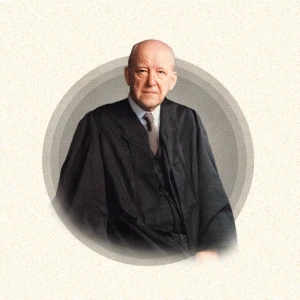
Sermons of Dr. Martyn Lloyd-Jones
The MLJ Trust presents original audio recordings of the sermons of Dr. Martyn Lloyd-Jones (1899-1981). Dr. Lloyd-Jones was a Welsh minister who preached and taught in the Reformed tradition. He is considered by many evangelical leaders today to be an authority on biblical truth and the sufficiency of Scripture. Dr. Lloyd-Jones’ principal ministry was at Westminster Chapel, in central London, from 1939-1968, where he delivered multi-year expositions on books of the bible such as Romans, Ephesians and the Gospel of John.
Episodes

The Wisdom of God
What is the greatest manifestation of the wisdom of God? In this sermon on the manifold wisdom of God from Ephesians 3:10 titled “The Wisdom of God,” Dr. Martyn Lloyd-Jones points to the church. The church, that is Christianity and the salvation that it proclaims, is the greatest manifestation of God’s wisdom ever witnessed. Even the angels in Heaven see it and are amazed. It is this manifestation
Hope for the World
Is there hope for the world? Is there a purpose and plan for the Christian? In this sermon on Ephesians 3:9–11 titled “Hope for the World,” Dr. Martyn Lloyd-Jones addresses the question of hope amidst the seeming chaos and pointlessness of life on earth. The only hope is in the gospel of Jesus Christ. In the darkness of the world and in the minds of men and women, Christ is the light of the world.
The Minister - Task and Calling
In this sermon on Ephesians 3:7–8 titled “The Minister – Task and Calling,” Dr. Martyn Lloyd-Jones lays out the calling and job of the minister as addressed here by Paul. The minister is called and appointed by God alone. He is called to preach the unsearchable treasures of Christ, that is Christ himself. Dr. Lloyd-Jones goes on to show that the treasures of Christ are for all believers. In Christ
Two Mysteries - Jew, Gentile
True unity can exist within the church. Since Christians are fellow heirs, members of the same body, and partakers of the promise, harmony can be found between Jew and Gentile. In this sermon on Ephesians 3:2–7 titled “Two Mysteries – Jew, Gentile,” Dr. Martyn Lloyd-Jones discusses the general mystery of Christ that is the glorious story of the gospel and the particular mystery of the Gentiles now
The Mystery of Christ
What is the mystery of Christ? Why did God wait so long for Him to be revealed? In this sermon on Ephesians 3:2–7 titled “The Mystery of Christ,” Dr. Lloyd-Jones explores the importance and uniqueness of the apostles and the glorious message not revealed until the New Testament. The mystery of the gospel has been revealed and can now be understood. It is not the vague feelings found in mysticism b
Suffering as Christ's Prisoner
Is there something worth giving up one’s life for? In this sermon on Ephesians 3:1 titled “Suffering as Christ’s Prisoner,” Dr. Martyn Lloyd-Jones contends with Paul that Jesus is worth it. Paul was concerned because he knew his suffering would trouble the Ephesians because suffering is confusing. However, he also gives the Ephesians the principles by which to process his suffering and theirs. Acc
Personal Evangelism
“How can we have unity without uniformity?” In this sermon on evangelism from Ephesians 2:20–22 , Dr. Martyn Lloyd-Jones seeks to answer this question. Titled “Personal Evangelism,” His desire is to look at the application of the passage, namely the work of the Holy Spirit in building the church. First, according to Dr. Lloyd-Jones, Christians must not let others dictate their callings. As he stat
Parts of the Whole
If an employee of a company decides that they are not going to consider the good of the company when making decisions, the employee is not going to last long. In humanity’s natural state, this selfish attitude will invade all of life. How can the church be different? In this sermon on Ephesians 2:20–22 titled “Parts of the Whole,” Dr. Martyn Lloyd-Jones examines the startling reality of unity and
Built Together by the Holy Spirit
How can something be one and yet many different things? This is the nature of the church where each member is different, but part of one body. In this sermon on Ephesians 2:20–22 titled “Built Together by the Holy Spirit,” Dr. Martyn Lloyd-Jones probes into how this can happen and who produces it. First, Dr. Lloyd-Jones makes a distinction between individuals and being individualistic. The former
The Growth of the Church
According to Dr. Martyn Lloyd-Jones, every Christian is a part of “something more”—the church. This church is described as a “temple” in Ephesians 2:21. In this sermon on Ephesians 2:20–22 titled “The Growth of the Church,” Dr. Lloyd-Jones dives deeper into this illustration given by Paul and helps the Christian understand the privilege and responsibility that comes with being a part of the church
Fitly Framed Together
What is the most important part of a building? Some may think the walls or the floor, but it is always the foundation. In the church, it is no different. In this sermon on Ephesians 2:20–22 titled “Fitly Framed Together,” Dr. Martyn Lloyd-Jones continues teaching a further understanding of the nature of the church and the application that truth has for the Christian. Previously, Dr. Lloyd-Jones ex
The Only Foundation
If a foundation is bad, the building will collapse. Therefore, one must ask, “What is the foundation of the church?” By the grace of God, the church has a stable foundation in the apostles and prophets, with Christ as the chief cornerstone. In this sermon on the foundation of the church from Ephesians 2:20–22 titled “The Only Foundation,” Dr. Martyn Lloyd-Jones preaches on the nature and importanc
An Habitation of God
In his continued exposition of the analogies that are used for the church, Dr. Martyn Lloyd-Jones comes to what he views as the deepest analogy of them all—a temple of God. In this sermon on building the temple of God from Ephesians 2:20–22 titled “A Habitation of God,” Dr. Lloyd-Jones points to the two themes of unity and privilege. Unity can be seen by the closeness and necessity of each brick o
Of the Household of God
How would one’s life change if they knew that not only were they a citizen of a country, but they were a child of the king? This question is posed in a much deeper way by Dr. Martyn Lloyd-Jones in this sermon on Ephesians 2:19 titled “Of the Household of God.” In his continued sermon series on Ephesians 2:19, he plunges further into the depths of the Christian’s position and privilege. Paul uses t
Privileges and Responsibilities
Many people vie for the opportunity to be a citizen of a great nation, but Dr. Martyn Lloyd-Jones dives into the reality that Christians have a far greater privilege and responsibility as citizens of the kingdom of God. In this sermon on Ephesians 2:19 titled “Privileges and Responsibilities,” Dr. Lloyd-Jones explains the magnificent realities that entail being made a citizen of the kingdom. God i
Heavenly Citizenship
In a time of instability, it can seem like there is no foundation. Each nation has its own issues and is destined to end at some point. However, is there a nation that will last forever? In this sermon on Ephesians 2:19 titled “Heavenly Citizenship,” Dr. Martyn Lloyd-Jones points out there is a kingdom that will last forever—the kingdom of God— and Ephesians 2:19 gives this hope. According to Dr.
No Longer Strangers
In this sermon on Ephesians 2:19 titled “No Longer Strangers,” Dr. Martyn Lloyd-Jones addresses the reality that Christians are citizens of the kingdom of God and “no longer strangers.” Dr. Lloyd-Jones notes that the imagery used by Paul (“strangers” and “foreigners”) to describe the past tense for the Christian implies several things. Before salvation, they were around the people of God and may h
Christian Unity
What makes people unified? Is it the way they act? The same interest? In this sermon on unity from Ephesians 2:19 titled “Christian Unity,” Dr. Martyn Lloyd-Jones states “Nothing else can bring men together truly but this—this gospel.” In Ephesians, Paul is addressing the reality that both Jew and Gentile were side by side in standing before God through Jesus. This reality would have stunned the r
Praying in the Spirit
What does the Holy Spirit have to do with prayer? In his sermon on Ephesians 2:18 titled “Praying in the Spirit,” Dr. Martyn Lloyd-Jones seeks to impress on the believer the absolute necessity of prayer and of the role of the Holy Spirit in prayer. According to Dr. Lloyd-Jones, praying in the Holy Spirit “is the very essence of prayer.” Also, in light of God’s stunning love that brings His childre
Lord, Teach Us to Pray
In this sermon on Ephesians 2:18 titled “Lord, Teach Us to Pray,” Dr. Martyn Lloyd-Jones addresses some of the reasons prayers can be so ineffective. Ephesians 2:18 states that “through him we both have access in one Spirit to the Father.” This verse shows the complexity of prayer. According to Dr. Lloyd-Jones, a detrimental fallacy in the church is that prayer is simple. Some people focus on the
Access to the Father
In this sermon on Ephesians 2:18 titled “Access to the Father,” Dr. Martyn Lloyd-Jones speaks of the solution to the struggle to understand the love of God. It could be because people don’t understand that the three persons of the Trinity have acted in time, each to pursue the Christian’s salvation who must feel the weight of that truth. The Father planned salvation, the Son was sent by the Father
Peace With God
What some describe as loneliness is actually a lack of peace with God. It is a worldwide problem that often goes undiagnosed and is the most pervasive disease on the planet. In this sermon on Ephesians 2:17 titled “Peace With God,” Dr. Martyn Lloyd-Jones explains Paul’s words to the Ephesian church, primarily focusing on the necessity of peace with God. An important emphasis Dr. Lloyd-Jones makes
The One Mediator
Because of sin, all are alienated from one another and God. In this sermon on Ephesians 2:16 titled “The One Mediator,” Dr. Martyn Lloyd-Jones is quick to explain that by the blood of Christ, sinful people can be reconciled to one another and God. Jew and Gentile can be one in the new body of Christ where all who repent and believe in His name are adopted. Rebellious sinners can only be made right
Christ's Way of Making Peace
In Jesus Christ a new harmony formed, not along the lines of race, family, or country, but in the basis of membership in the family of God. In this sermon on Ephesians 2:15 titled “Christ’s Way of Making Peace,” Dr. Martyn Lloyd-Jones proclaims the words of Paul, saying all who believe are adopted into God’s family and become inheritors with Christ of the whole world. In this new people there is n
He is Our Peace
In this sermon on Ephesians 2:14–16 titled “He is Our Peace,” Dr. Lloyd-Jones explains that the main purpose of Paul’s letter to the Ephesians is to encourage the church in the peace of Christ. Christians have been saved and are in the body of Christ and as such, they have been redeemed and the war with God is over. They now have the peace of Christ that governs them. Dr. Lloyd-Jones says that the
The Blood of Christ
A new pathway to God cannot be invented. Whether through morality and good deeds or by the ritual of religion and mysticism, there is no human invention that will save humanity. On their own, none of these are sufficient to bring people near to God. In this sermon on the blood of Christ from Ephesians 2:13, Dr. Martyn Lloyd-Jones shares that the theology of blood is offensive to modern people. The
You Who Were Far Off
Everyone has a past. It is often painful to look back on one’s life and see the suffering their sin caused others and how it offends a holy and righteous God. But if one recognizes God’s power in salvation, “looking back” is an important ingredient. In this sermon on Ephesians 2:13 titled “You Who Were Far Off,” Dr. Martyn Lloyd-Jones states that the other ingredient to consider is the Christian’s
Without Christ
The greater one understands the depths of their sin, the more they understand the greatness of God’s mercy. For the Christian there is a reciprocal relationship between looking to their life before Christ and the amount of praise they offer to God. If the believer never examines their state of being without Christ, thanksgiving to God for salvation will unlikely mark their life. In this sermon on
Jew and Gentile
Political debates, class warfare, as well as ethnic and religious conflict, seem to dominate the media’s attention. What could an ancient text like Paul’s letter to the Ephesians say to such matters, especially for the people of God? Dr. Martyn Lloyd-Jones walks through an ancient conflict of Jew and Gentile which mirrors all conflicts, both past and present. While unregenerate people will certain
His Workmanship
It is through salvation that Christians instantly join the eternal family of Christ. In this sermon on Ephesians 2:10 titled “His Workmanship,” Dr. Martyn Lloyd-Jones shows how redeemed men and women now live new lives that are marked by the work of Christ in their hearts. This continual work in the life of believers is what is commonly called sanctification. Dr. Lloyd-Jones proclaims that part of
By Grace Through Faith
Salvation is the result of God’s grace alone. In this sermon on Ephesians 2:8–10 titled “ By Grace Through Faith,” Dr. Martyn Lloyd-Jones preaches that no one is saved by anything they do or any merits they earn, but it is wholly the result of grace. For in their sin, no one is able to do anything pleasing to God nor able to even believe the good news of the gospel without the work of the Holy Spi
Through Christ Jesus
In this sermon on Ephesians 2:7 titled “Through Jesus Christ,” Dr. Martyn Lloyd-Jones unpacks the words of Luke in Acts 2:7. In the incarnation, the second person of the Godhead descends and takes up a true human nature for the redemption of all those whom God elected. He did not count equality a thing to be grasped, but He came to earth as a baby born in a manger. Not only this, but He suffered a
The Exceeding Riches of His Grace
God uses the salvation of guilty and rebellious sinners as a means to bring glory and honor to His name. In this sermon on Ephesians 2:7 titled “The Exceeding Riches of His Grace,” Dr. Martyn Lloyd-Jones brings this convicting truth as he speaks of God’s Son Jesus Christ who died a cruel and torturous death as a criminal upon a cross. He did not do this so that the world would be a more comfortabl
In the Heavenly Places
There is true hope in Christ. One of the most comforting and practical teachings of Scripture is that all who are united to Christ in faith have been seated with Him in the heavens. But what does it mean to be seated in the heavenly places? In this sermon on Ephesians 2:4–7 titled “In the Heavenly Places,” Dr. Martyn Lloyd-Jones brings this great news of hope with the reminder that the Christian h
Risen in Christ
On one hand, people fail to realize the depth of sin. On the other hand, they fail to see the height and glory of the gospel. The problem with the church today is that it fails at both of these points. In this sermon on Ephesians 2:4–7 titled “Risen with Christ,” Dr. Martyn Lloyd-Jones declares what makes one a Christian: their union with Christ. In this union, the Christian has been raised togeth
In Christ Jesus
What has God done for the Christian? In this sermon on Ephesians 2:4–7 titled “In Christ Jesus,” Dr. Martyn Lloyd-Jones focuses on Paul’s answer to this question. Paul is concerned that believers are clear about what God has done for them. True Christianity is what God has done to and for the believer. People can decide to be religious, to start or stop doing things, and believe that God forgives
'But God': The Christian Message to the World
It is not merely the outwardly wicked who are saved by grace who should be amazed at their salvation. Every Christian, even those who lived a supposed moral life before salvation, should be amazed at God’s grace. Salvation is entirely God’s work. In the sermon on Ephesians 2:4 titled “‘But God:’ The Christian Message to the World,” Dr. Martyn Lloyd-Jones examines Paul’s introduction of the chief c
"But God..."
Christians are citizens of heaven yet remain in the world. In this sermon on Ephesians 2:4 titled “But God…,” Dr. Martyn Lloyd Jones shares that the two powerful words that make this a reality are “but God.” Without God’s action in this world, there would be no hope for the future. Life, as Dr. Lloyd-Jones reminds, cannot be understood unless one views it in light of God. How can this done? He sug
The Wrath of God
The apostle Paul tells that all are in sin and ruled by sin. Apart from the gospel all are dead in their sins and trespasses. In this sermon on Ephesians 2:1–3 titled “The Wrath of God,” Dr. Martyn Lloyd-Jones preaches that the judgement of God is the only answer for the children of wrath. It is vital to understand the wrath of God in order to understand both the grace and love of God. One can onl
Life Without God
Without God, there is no hope, no peace, and no relief from the guilt and stain of sin. In this sermon on life without God from Ephesians 2:1–3 titled “Life Without God,” Dr. Martyn Lloyd-Jones thoroughly explains the pervasiveness of the state of sinfulness derived from the absence of God’s presence. The only remedy, Dr. Lloyd-Jones explains, is the exceeding greatness of God’s power toward His b
Original Sin
How can one make sense out of the awful state of the world? In this sermon on Ephesians 2:1–3 titled “Original Sin,” Dr. Martyn Lloyd-Jones brings much needed clarity to today’s chaos, showing how humanity’s sinful nature is behind the wickedness seen all around. Since human nature is wholly given over to sin, one is unable to do good and obey all that the law of God requires. Those, like the huma
Man in Sin
What’s the fundamental problem with humanity? Is it a lack of education? Poor policies in the public sphere? Why are humans the way they are? In this sermon on Ephesians 2:1–3 titled “Man in Sin,” Dr. Martyn Lloyd-Jones explains that the problem is much deeper. The problem is this: humanity is dead. Not physically dead––physically, people are very much alive––but in regards to spiritual things, hu
Dead in Trespasses and Sins
What is the state of a person before Christ? Is the problem with humanity that it needs more morality or is it much deeper? The apostle Paul explains that humanity’s greatest problem is that it is dead in trespasses and sins. In this sermon on Ephesians 2:1 titled “Dead in Trespasses and Sins,” Dr. Martyn Lloyd-Jones expounds on Paul’s words and preaches how when the Christian has a strong underst
The Final Consummation
Can a Christian ever err by focusing on the future glory too much? Is it possible to spend so much energy looking to the future that they underestimate the present power of Christ? In this sermon on Ephesians 1:19–23 titled “The Final Consummation,” Dr. Martyn Lloyd-Jones focuses on these questions. Some evangelical Christians are capable of forgetting the current rule of Christ. Forgetting that t
The Church Which is His Body
One of the most exalted ways the church is depicted in Scripture is through the metaphor of the body of Christ. Not only is it an exalted picture of the church, but the church as the body of Christ is one of the most intimate metaphors of the New Testament church. In this sermon on Ephesians 1:20–23 titled “The Church Which is His Body,” Dr. Martyn Lloyd-Jones explains that the metaphor of the bod
His Power from Beginning to End
Does the Christian need God’s power just a little bit? Is it only God working as He is asked to work that sustains Christians? In this sermon on Ephesians 1:19 titled “His Power from Beginning to End,” Dr. Martyn Lloyd-Jones argues in this message that Christians would not stand a single hour if it wasn’t for the power of God. The Christian life is only sustained by the continuing working of God.
Power to Us-ward Who Believe
Hardly anyone claiming the title “Christian” would deny the need for God’s power in salvation. There is, however, a fundamental difference between the person who says salvation is the power of God in addition to something they do, and those who say salvation is God’s power working in them and through them. The latter has roots in the apostolic testimony but the former does not. Neither is this a m
The Greatness of His Power
Are Christians guilty of underestimating the need for God’s power? At first it may sound like a silly question. After all, any Christian will rightly affirm their daily need of God’s power. But while Christians may correctly affirm the continual need of God’s power in their lives, many times they will assume initial belief in the gospel is easy. Conversations among some Christians often assume any
Riches of His Inheritance
There are common objections to Christianity. Christianity is only for the weak. It is of no consequence today because it does not care about what is happening in the “real” world. Christianity is a waste of time because it is caught-up in other-worldly matters. These objections are as common today as they were in Dr. Martyn Lloyd-Jones’s day. In this sermon on inheritance from Ephesians 1:18 titl
The Hope of His Calling
Christians can often feel distant from God. What is their response when coldness towards spiritual matters creeps into their heart? Does their assurance waver? How can they have a steady anchor for their Christian life? Rather than wait for another experience, the prayer of the apostle Paul for Christians is that they may know the hope of their calling. This is not a general hopefulness, but hope
Recommended

Miles From Ordinary Podcast

Off The Telly

Murder of a Famous Bastard

Learn UK English By Podcast

My IELTS Classroom Podcast

People Fixing the World

The History Hour

The Healing Childhood Trauma Podcast

Frank Off The Radio: The Frank Skinner Podcast

Newscast

Learning English from the News

It's a Superpower??
