Take on Tomorrow
Take on Tomorrow is an award-winning podcast from PwC that examines the biggest problems facing society and the role business can play in solving them. Hosts Femi Oke and Lizzie O'Leary speak with industry innovators, tech trailblazers, and visionary leaders from around the world. Episodes cover timely topics such as the climate transition, AI and data, the future of food, and how we build, move, and power the world.
Episodes
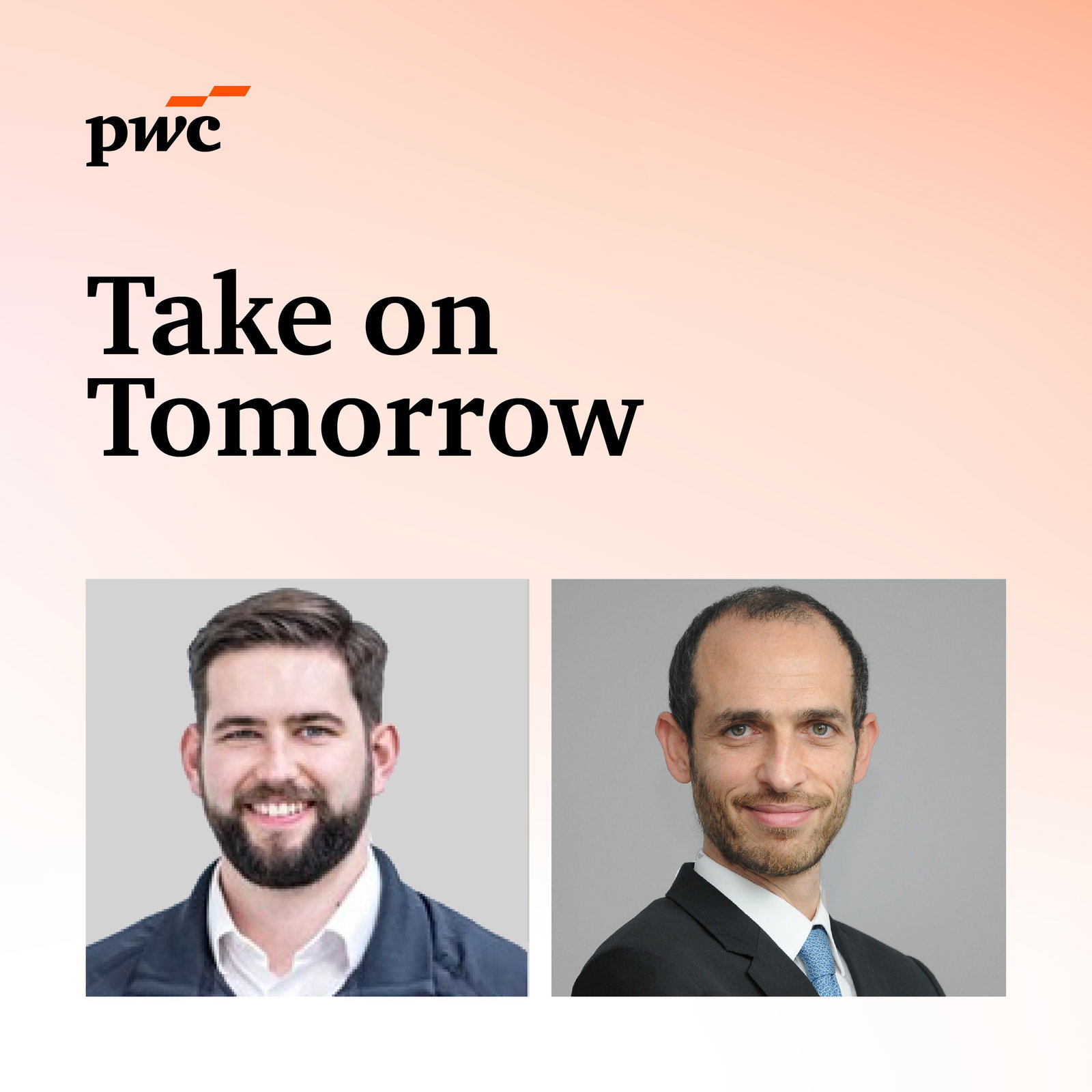
Space, the next business frontier?
Space has inspired imagination and innovation for ages. Today, that same curiosity is driving a new wave of industry. In this episode of Take on Tomorrow, we explore how momentum is building within the space economy—and what it takes to turn moon-shot ideas into real-world impact. We speak with Josh Western, CEO and co-founder of Space Forge, a company using the unique conditions of orbit to

How can business help us take charge of our health?
Most people only think about healthcare when something goes wrong. But wearables, AI, and other new technologies are giving us access to more information about our bodies and delivering it more frequently than ever before — putting more control over our health in our own hands.In this episode of Take on Tomorrow we explore the momentum behind a people-powered health system. And we consider what ha
Are AI agents changing the rules of business?
AI is entering a new phase. Instead of simply answering questions or generating content, AI agents can now act: planning, reasoning, collaborating, and completing tasks alongside people. But as agents’ capabilities accelerate, are businesses thinking big enough? In this episode of Take on Tomorrow we explore what it takes to build momentum around agentic AI, from employees’ first experiments
Is your business built to survive?
Every business plans for growth. But how many are built to survive? Disruption today is increasingly interconnected. Crises such as cyberattacks, geopolitical shocks, and supply chain failures rarely arrive one at a time—and all are heightened by AI risk. So, if your business lost everything tomorrow, what would it need to continue to operate? And how can you maintain momentum when disruption
Introducing Series 5 of Take on Tomorrow
Technologies that once seemed improbable are now reshaping how people work and grow. In Series 5 of Take on Tomorrow—PwC’s award-winning podcast exploring the biggest challenges facing business and society—we ask one critical question: How do bold ideas gain momentum? Join us, as we speak with experts from around the world, each working at the forefront of innovation, to learn what it takes t
How can CEOs sharpen their focus on the now and what's next?
Confidence is down. Pressure is up. And CEOs are being asked to lead through more uncertainty than ever. Take on Tomorrow is on the ground in Davos, Switzerland, at the World Economic Forum Annual Meeting, where Sarah von Fischer discusses key findings from PwC’s 29th Global CEO Survey—and what this year’s results could mean fo
How can AI scale our capabilities at work?
Have you noticed something different about customer service calls lately? Maybe even something...delightful? Perhaps the service rep not only anticipated your question but had the perfect suggestion? That could be AI working behind the scenes, supporting those call center employees and making life a little smoother for you. It’s just one way technology is shaping our everyday lives and changing ho
Are factories the new frontier of big tech?
Making all the items we need and use in our everyday lives requires an intricate network of producers, suppliers, and distributors. But intricacy can have consequences: supply chains today are frequently disrupted, even as new technologies are changing everything we thought we knew about manufacturing. Long-standing processes are being revamped to try to make them more efficient, and that means a
Can government be the catalyst for breakthrough innovation?
Big breakthrough innovations are on the horizon, and they could be coming from an unlikely place. We’re talking about the sort of ideas that would reshape how we move, the medical treatments we receive, and how we adapt to the changing climate and generate new kinds of energy—and they could all stem from a space not typically associated with innovation: the government. Rethinking the public sector
How to fund the data-center boom?
Throughout this special series, we’ve been exploring what happens to business and society when people try to do things differently. But without the funding to pay for that change, real progress can stall. In this episode, we’ll look at the way projects are financed and how it’s unlocking innovation and new partnerships across industries. Hosts Femi Oke and Lizzie O’Leary are following the mon
Will your next sushi roll come from a laboratory?
Farmers produce, traders distribute, manufacturers process, retailers sell, and governments regulate. And it all comes together so that we can eat each day. But this delicate, complex global system is under immense pressure. Drought and heat stress threaten crops. Geopolitical crises, population growth, and global food waste mean the hunt is on for new solutions. In the decade ahead, feeding the w
What does the future of mobility look like?
The way we move people and things is changing—transportation is becoming more electric, more autonomous, and more informed by advanced technology. These shifts present significant opportunity, both for new players to enter the mix and existing companies to reinvent themselves—with great potential benefit for society. In this episode of our special Take on Tomorrow series, h
Could robots be renovating our homes in the future?
What if we completely rethought the way we build? What if the places where we live and work helped cut emissions, and we could drastically improve energy efficiency with a new kind of construction? What if most construction wasn’t even done on-site? These changes, some of them already underway today by businesses establishing new kinds of partnerships, are redefining an age-old industry. &nbs
How will personalized health data transform the way we care?
People need to be cared for—but the way we approach healthcare treatments hasn’t changed much in recent years. Now, in the age of AI, and with the emergence of more collaborative partnerships, we’re seeing a shift. And it brings a new opportunity for providers to make effective, affordable, preventative, and personalized care a priority—the kind of care that puts the patient at the center. &n
Could your car power your home?
The way we power society is transforming, and it’s not happening in a silo. As energy demand and geopolitical tensions both rise, and the shift toward new ways to fuel and power our lives picks up speed, how should businesses rethink the opportunities and challenges ahead? Where can they find new value? And what could the world look like with more collaboration and innovative solutions that have n
Introducing a special series of Take on Tomorrow
This special series of Take on Tomorrow, PwC’s award-winning podcast, unpacks how the global economy will change over the decade ahead and what that means for business and society. We’ll explore how business will navigate—and shape—the challenges and opportunities ahead, including emerging technology, climate impacts, and new ways of collaborating across industries. Though basic human needs
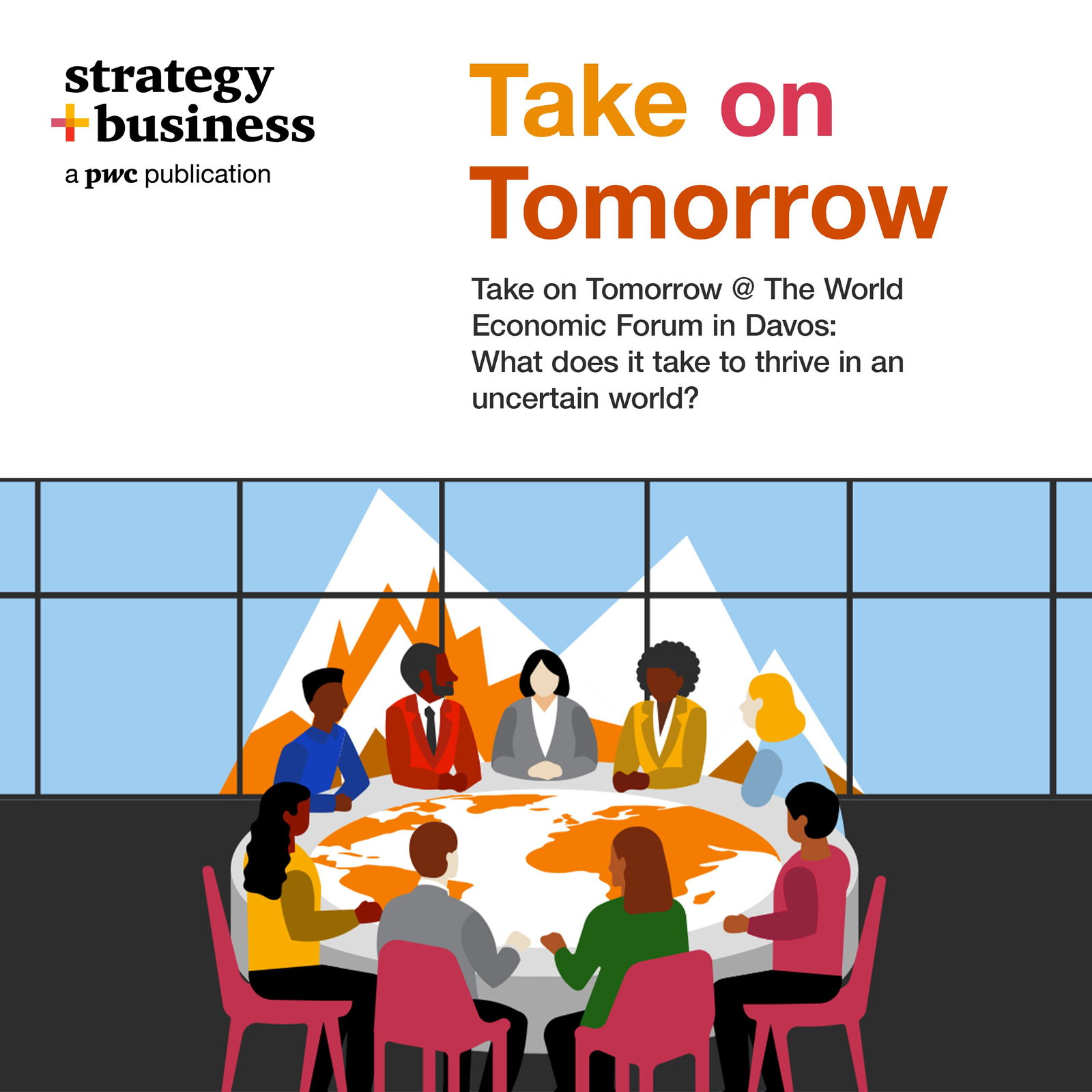
Take on Tomorrow @ The World Economic Forum in Davos: What does it take to thrive in an uncertain world?
There are strong forces at play right now—deep and profound trends such as technological disruption and social instability, that are changing our lives and the world around us. Business leaders can’t ignore these megatrends. But what actions are they taking? How can they plan amid a constantly shifting landscape? We’ve gathered insights from thousands of CEOs around the world to try to learn
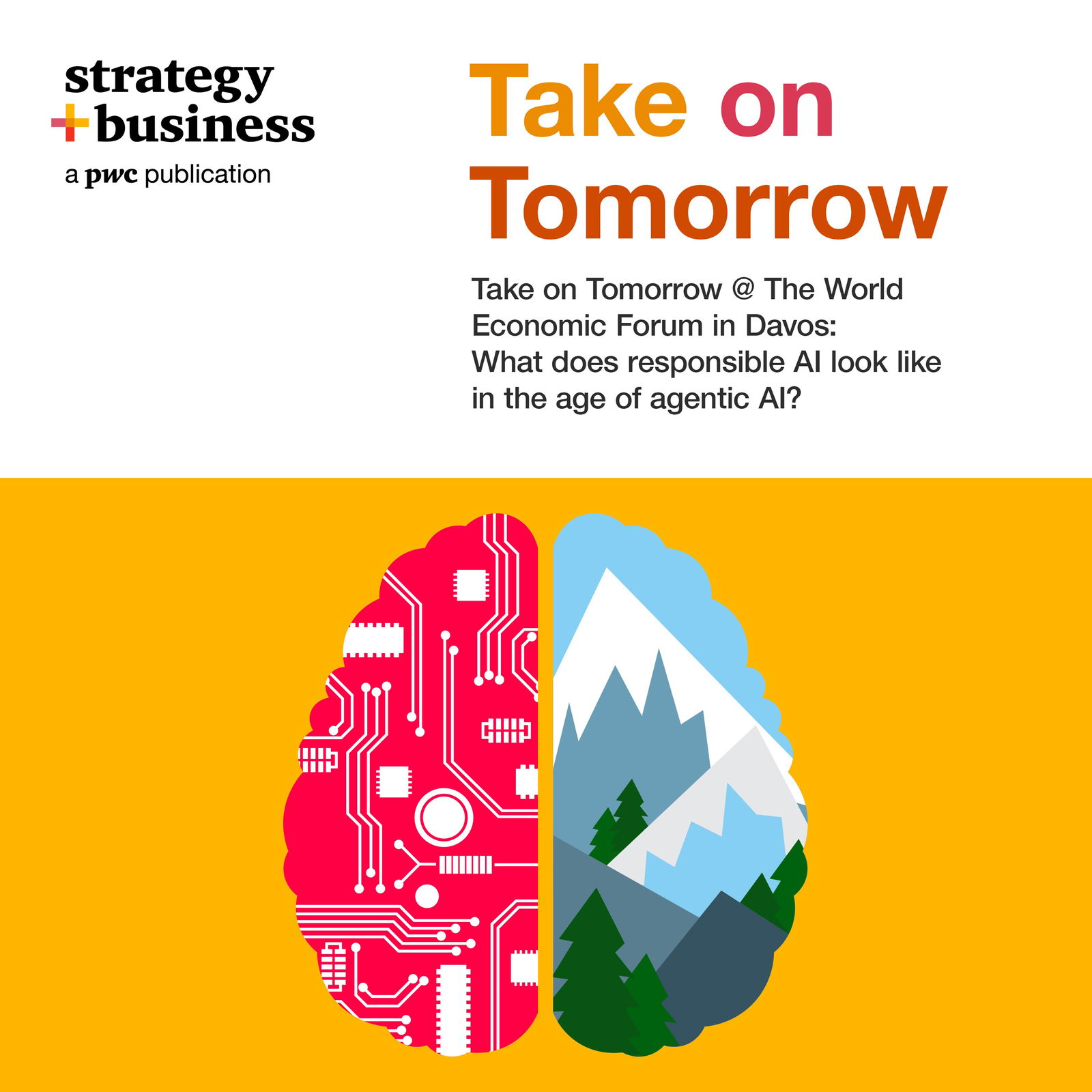
Take on Tomorrow @ the World Economic Forum in Davos: What does responsible AI look like in the age of agentic AI?
AI is being embedded in everything we do, from the way our cities operate to how we live and work. Information, decision-making, and problem-solving are all being transformed. Enter the “AI agent,” here to help people work smarter and more productively. But will people trust this rapidly evolving technology? And what happens if that trust erodes? Business and society are working to navigate the my
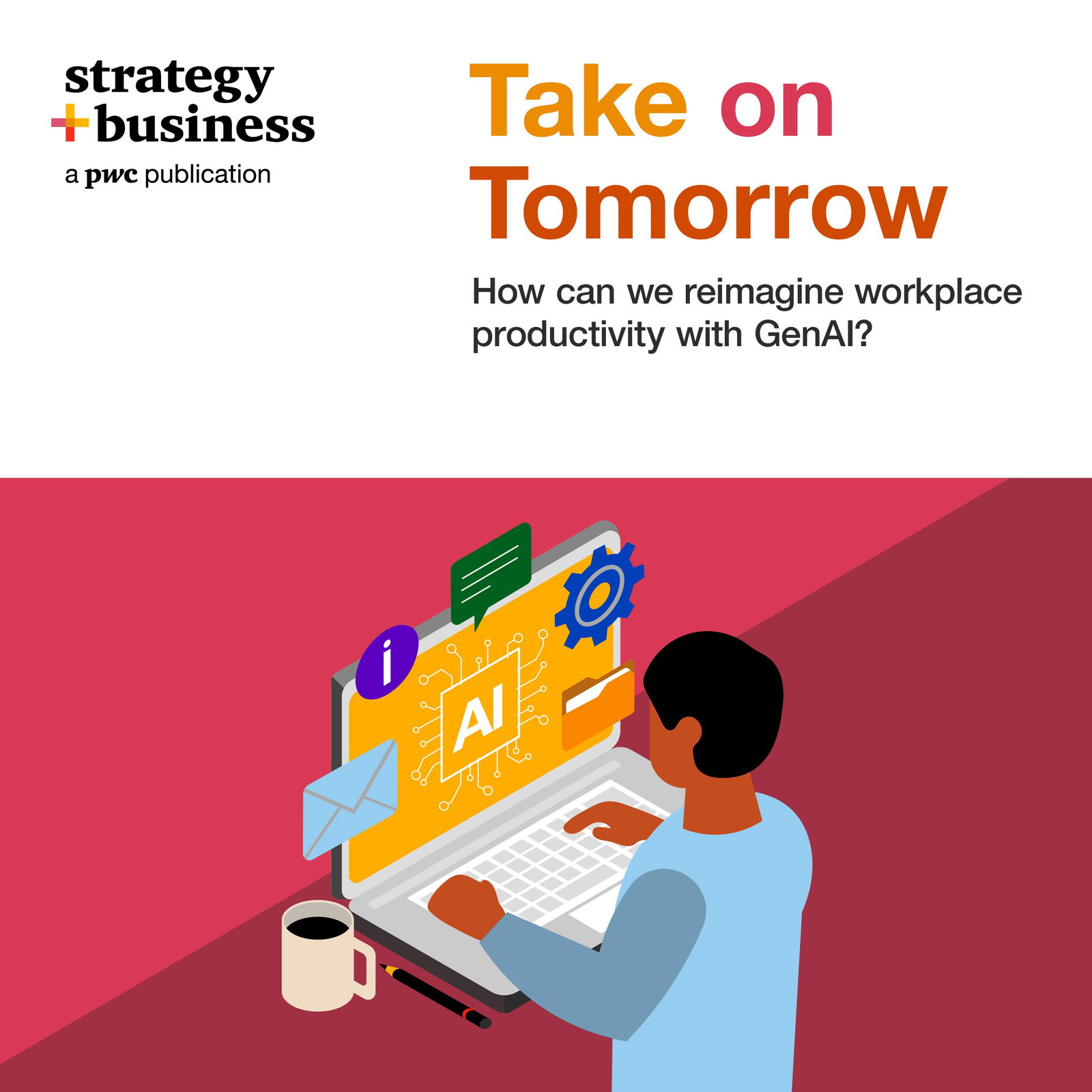
How can we reimagine workplace productivity with GenAI?
More than two years have passed since generative AI went mainstream. Now the pressure is on for the technology to deliver concrete results. So has it lived up to all the hype? And, in particular, has GenAI met its early promise to boost workplace productivity and help employees engage in more high-impact work? Hosts Lizzie O’Leary and Femi Oke talk with Svenja Gudell, Chief Econom
What does it take to run a responsible business?
Business leaders are asked to perform the ultimate balancing act. They face pressure to manage their company’s environmental footprint, adjust to the impacts of climate change, and build rewarding experiences for employees and customers, all while continuing to deliver financial performance. So, how do they accomplish that? And what can the business world learn from companie
Take on Tomorrow @ the APEC CEO Summit: In unprecedented times, how can we create growth that’s both inclusive and sustainable?
The world is full of uncertainties right now. But there’s also opportunity: a chance for reinvention on a global scale, for business and society to work together to create a future that’s inclusive, sustainable, and resilient.To learn more about that vision of the future, Take on Tomorrow is recording live from the APEC CEO Summit—the most influential annual gathering of business and pol
Can ideas be the engine of growth?
Consider this: more than half of the companies that were listed on the Fortune 500 in 2003 have since gone bankrupt, been acquired, or otherwise ceased to exist. And the question of survival is just as urgent for businesses today: 45% of respondents in PwC’s most recent Global CEO Survey said their company won’t be viable in ten years if it sticks to its current path. So how do businesses stay ahe
How can we secure the future of food?
Food is essential for our health, survival and social well-being. But global food security is facing increased threats. Climate change, global tensions and supply chain disruptions mean our food systems are becoming more precarious. And as the global population grows, demand for food shows no signs of slowing. So, what role can businesses play in reimagining our food systems? And h
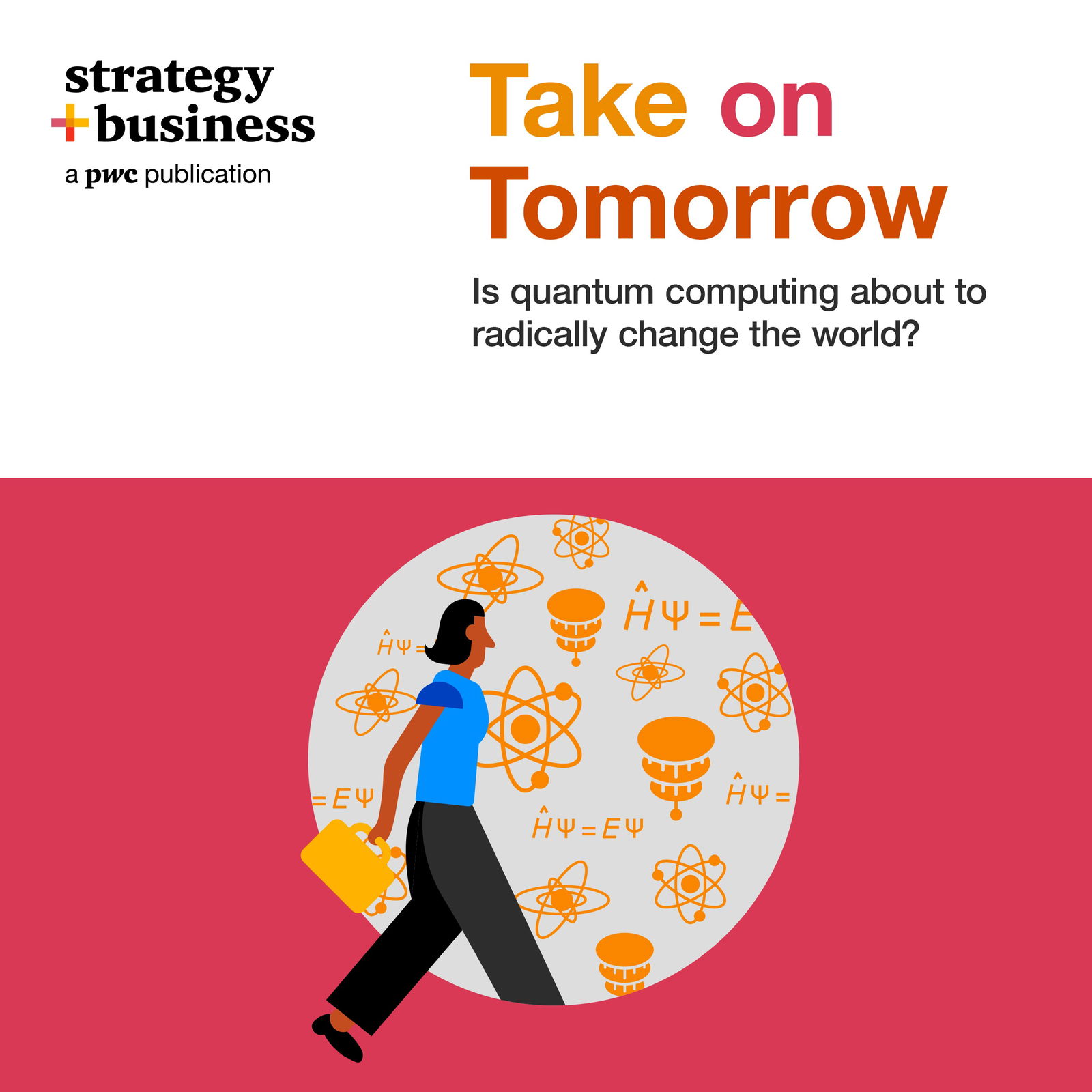
Is quantum computing about to radically change the world?
Quantum computing could revolutionize how we live, and it's fast approaching reality—but is the world ready? Quantum computers use the laws of quantum mechanics to solve complex problems in seconds—making them far more powerful than the most advanced supercomputer. The possibilities seem limitless: it could help treat previously incurable diseases, help us make better informed decisions, and
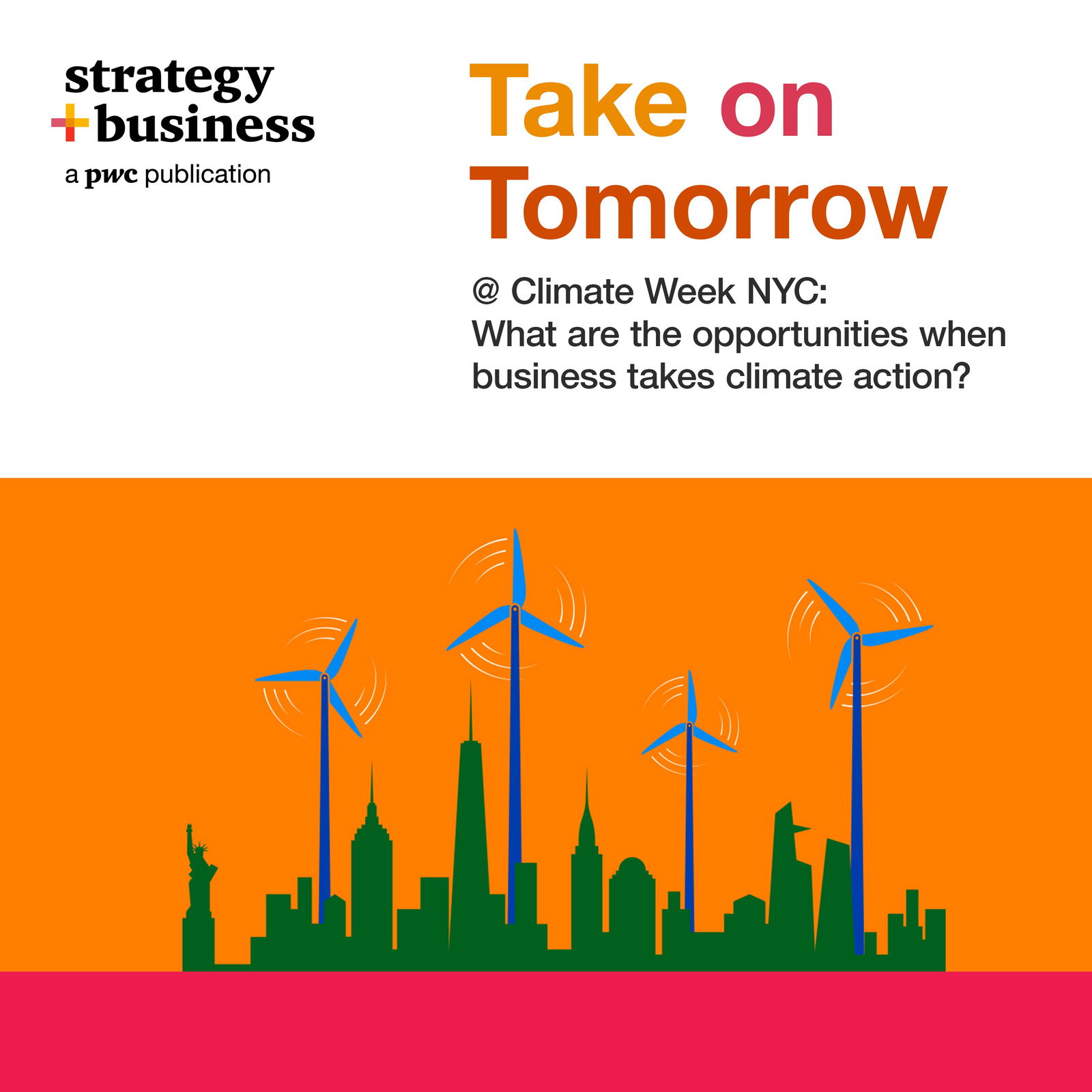
Take on Tomorrow @ Climate Week NYC: What are the opportunities when business takes climate action?
No one is untouched by the effects of climate change. That includes businesses of all sizes, which face the mounting risks of nature loss and a warming planet. But these challenges can also reveal opportunities. The transformation, and sometimes complete reinvention, of how a business functions could be just what’s needed to spark the new ways of thinking that will lead to green growth.  
Get ready for Series 3
Take on Tomorrow, the award-winning podcast from PwC’s management publication, strategy and business, returns on Friday 27 September for Series 3. Join hosts Lizzie O’Leary and Femi Oke and hear some of the brightest minds and boldest thinkers on how they’re tackling the greatest challenges facing the world. Follow Take on Tomorrow so you don’t miss an episode.
How can supply chains transform from fragile to agile?
Supply chains are the lifelines of our global economy—quietly connecting and supporting numerous facets of business operations and everyday lives. In Take On Tomorrow’s final Series 2 episode, hosts Lizzie and Ayesha delve into the seismic shifts rattling these critical networks with Darcy MacClaren, Chief Revenue Officer for SAP Digital Supply Chain, and David Wijeratne, a partner with PwC Singap
How is GenAI reshaping cybersecurity?
If cybercrime were a country, it would be the third-largest economy in the world after the US and China, according to the World Economic Forum. In the face of such a substantial and pervasive global challenge, generative AI is emerging as a tool to level the playing field—offering sophisticated capabilities for both cyberattackers and defenders. In this episode of Take on Tomorrow, Sarah Armstrong
How can cities help create social and economic sustainability?
In an increasingly urban world—in which 70% of the global population is predicted to reside in cities by 2050—thoughtful conversations about urban development are essential. How can cities transform to meet the needs of their ever-growing populations, without compromising the health of the planet or the well-being of their residents? In this episode, we’re joined by climatologist Angel Hsu, founde
@ the World Economic Forum in Davos: How can CEOs position their businesses for success in an age of continuous reinvention?
The findings from PwC’s Global CEO Survey are out, and they reveal a fascinating dichotomy: while CEOs’ optimism about global economic growth has more than doubled year-on-year, 45% don’t think their company will survive for more than a decade on its current path—a 6% increase from last year. What’s driving CEO anxiety about the long-term viability of their business models? To what extent are glob
@ the World Economic Forum in Davos: How can reducing energy demand accelerate the climate transition and create economic opportunity?
Recorded at the annual meeting of the World Economic Forum—an event convening leaders from government, business, and civil society to address the state of the world—this episode looks at the escalating global demand for energy and its impact on achieving net-zero emissions by 2050. Special guest host Sarah von Fischer from PwC sits down with Rob Turner, Energy Transition Partner for PwC UK, and Ra
How will GenAI transform the workforce?
As the capabilities of generative AI rapidly evolve, professionals around the world are watching attentively—and wondering how the technological leap will affect their careers. There is opportunity in this moment, and also some uncertainty. How disruptive will GenAI be to the workforce? Which sectors are likely to see the biggest changes? And what should business leaders be doing now to harness th
@ COP28 in Dubai: Can technology help solve the climate crisis?
Take on Tomorrow is on the move again—recording live in Dubai at COP28 to discuss a core theme at the annual climate change conference: climate technology. Host Lizzie O’Leary sits down with Dr. Yahya Anouti, PwC Middle East’s Sustainability Leader, and Patricia Keating, part of the ventures practice with PwC Middle East, to survey the landscape of climate change solutions and examine the role pla
How can we go further, faster, in the fight against climate change?
As the world grapples with the realities of climate change, a significant gap has emerged between recognizing necessary actions and implementing them effectively. So what factors are impeding progress—and is there still a way to increase the speed and scale of change? In this episode, hosts Lizzie and Ayesha are joined by Christiana Figueres, chief negotiator of the 2015 Paris Agreement, and Emma
@ the APEC CEO Summit: How will the Asia-Pacific region shape global growth?
Recorded live at the APEC CEO Summit, the most influential annual gathering of business and political leaders in the Asia-Pacific region, this quick-hit episode taps into the crucial discussions happening at this year’s event. Host Lizzie O’Leary is on-site in San Francisco, where she’s joined by PwC’s Asia-Pacific and China Chair, Raymund Chao, and PwC’s Global Chair, Bob Moritz, to explore the r
Is privacy possible in the age of AI?
Business leaders are at a crossroads with generative AI—grappling with its vast potential while untangling intricacies of privacy and trust. Join our hosts Lizzie and Ayesha as they facilitate a rich dialogue with two experts working on the leading edge of AI. Keith Enright, Chief Privacy Officer of Google, sheds light on the complexities of managing privacy in an AI-driven ecosystem. And Mona de
Is talent hiding in plain sight?
Today’s CEOs face a daunting dilemma: too many open jobs, and not enough of the right workers to fill them. In this episode, hosts Lizzie and Ayesha are joined by LinkedIn VP Aneesh Raman and PwC’s Global Workforce Leader, Peter Brown, who suggest an innovative solution to workforce gaps: skills-first hiring. By focusing on skills in addition to employment history and academic credentials, Aneesh
Why should business be nature positive?
As the global economy grapples with escalating environmental decline, the imperative to protect our natural world is climbing the agenda for both governments and businesses. In this episode, hosts Lizzie and Ayesha discuss the crucial interactions between nature and business with acclaimed global climate scientist Johan Rockström and PwC’s Daniel O’Brien. Together, they explore the intrinsic and q
@ Climate Week NYC: How can business overcome the sustainability stalemate?
Take on Tomorrow is back, and we’re kicking off the new series by taking listeners behind the scenes at Climate Week NYC. Join PwC’s Global Sustainability Leader, Will Jackson-Moore, for a special on-site recording at the largest annual climate gathering of its kind. This quick-hit episode taps into the buzz on the ground at the event, and digs into what climate actions businesses can take to deli
How can CEOs win today’s race while running tomorrow’s?
Today’s tensions vs. tomorrow’s threats: how can CEOs master the balancing act? Find out—and hear the big takeaways from our 2023 CEO Survey. Listen now.
Can capital help solve climate change?
Can you make green by going green? Could incentives be reimagined to align the power of the profit motive with the interests of the planet? Several green initiatives involving trillions of dollars in assets are already reconfiguring capital markets. But can this approach work?Ayesha and Lizzie are joined by Alison Rose, the CEO of NatWest Group, and Andrew McDowell, a Strategy& partner with Pw
How should business adapt to support a world on the move?
We live in a world of greatly increased mobility—of information, of goods and services, and of the world’s 8 billion people. We move for all sorts of reasons, and that movement can create challenges—but also opportunities. In fact, could a world on the move provide solutions to some of the challenges we face?This week, hosts Lizzie O’Leary and Ayesha Hazarika talk to Parag Khanna, author of Move,
How can we ensure the workers of tomorrow get the skills they need today?
Though the global youth population has grown by 30% in the last 20, the number of young people between the ages of 15 and 24 in the labor force has actually fallen by approximately 12%. Even as many countries face labor shortages, the global picture shows deep youth unemployment and underemployment. How can business help close the gap? And can it do so in a way that gives people the skills to succ
How do we ensure humanity stays ahead of technology?
New technology, from alternative energy sources to digitization to artificial intelligence, is changing how we live, how we work, and how our businesses function. But what happens when those advances move so fast that we can’t keep up? And, if businesses and governments don’t understand the technologies, what happens to society? We talk with Azeem Azhar, entrepreneur, author, and founder of the fu
What’s the future of worker empowerment?
People don’t want to be taken for granted. That’s the message coming from employees around the world, who are finding new confidence and empowerment in the shifting world of work. Their call to employers is to listen, learn, and engage. So, how can businesses and employees find fresh opportunities in this era of new expectations? And can they find ways to thrive together? Hosts Lizzie O’Leary an
What’s the role of tax in tackling climate change?
If you want less of something, tax it more. That’s what many governments have been trying to do with carbon. But carbon pricing is controversial and difficult to implement technically. So, given the urgency to reduce the use of fossil fuels, reduce emissions and reach more aggressive climate goals, should businesses prepare for an expansion in carbon taxation? Should it be a priority for people wh
What’s the point of stakeholder capitalism?
Stakeholder capitalism is the idea that businesses have a responsibility to groups other than their shareholders. But is that really capitalism? Why are so many businesses embracing this idea? And, given that stakeholders often have conflicting views, can it work in practice? Lizzie and Ayesha are joined by Alison Taylor, the director of Ethical Systems at NYU’s Stern School of Business, and Rich
Can corporate reporting deliver change?
The reporting of corporate data matters—and not just to accountants and stock analysts. The way in which companies make progress when dealing with climate change, building more diverse workforces, and complying with regulation has become a differentiating factor. Stakeholders of all kinds are demanding information that is more detailed, more readily measured, and more easily verified. Understandin
Will crypto revolutionize the financial system?
There’s an old saying: people overestimate the impact of technology in the short term and underestimate it in the long term. Is that what’s happening with crypto? There’s a lot of news about cryptocurrencies, but are we paying too little attention to the long-term impacts of the underlying technology? Joined by Sheila Bair, the former chair of the US Federal Deposit Insurance Corporation (FDIC), a
How can business prepare for the next disaster?
From cyber-attacks and supply-chain disruption to hurricanes and pandemics, the list of things that can go wrong for a company is long and it is growing. So how can businesses prepare for the unknown? Hosts Lizzie O’Leary and Ayesha Hazarika meet with the former head of the United States’ Federal Emergency Management Agency (FEMA) Craig Fugate - inventor of the Waffle House Index, by the way - a
How can humanity jump-start breakthrough innovation?
The rapid development of the mRNA covid vaccine shows that breakthrough innovation can happen at great pace when needed - so what’s holding us back in other areas? How can the world – and business – deliver transformational new technologies at speed? Drawing on lessons from the development of other breakthrough technologies, Chief Operating Officer of Wellcome Leap and former acting director of t
What's the price of privacy?
Data is one of the most valuable and most dangerous things a business can collect. While gathering data helps businesses better understand customers, it also exposes them to concerns about privacy, data security and trust. And if trust is lost, it is very difficult to earn back. So, does taking privacy seriously make for better business? Hosts Lizzie O’Leary and Ayesha Hazarika are joined by App
Introducing PwC's Take on Tomorrow business podcast series
How can business help solve society’s biggest problems? Take on Tomorrow brings together leading experts from around the globe to figure out what business could and should be doing to tackle the greatest challenges facing the world; from privacy to climate change to crypto. Join hosts Ayesha Hazarika, columnist and senior political advisor in London and Lizzie O’Leary, business journalist in New Y