On This Day in Working Class History
A daily podcast from the Working Class History team that marks people's history anniversaries for every day of the year. Each episode offers a short briefing on a notable event, figure, or movement from working-class and radical history. The show is part of the wider Working Class History project, which also offers exclusive content and benefits through Patreon.
Episodes
22 October 1921: Castleconnell fisheries strike
On this day, 22 October 1921, workers at the Castleconnell fisheries in Ireland went on strike after their boss repeatedly failed to attend arbitration meetings to address their demands. When he failed to make concessions, workers escalated their tactics by occupying fisheries and declaring a soviet (workers council). The Dáil cabinet instructed police and volunteers to evict the strikers, but the
21 October 1935: St Vincent Labour rebellion
On this day, 21 October 1935, the St Vincent labour rebellion began on the British-occupied Caribbean island when workers protesting against high prices in the capital, Kingstown, were fired on by police. People were protesting against plans to maintain sugar tariffs which helped producers at the expense of consumers. They held an angry rally outside the courthouse, where they smashed windows and
20 October 1901: Rosario sugar strike
On this day, 20 October 1901, hundreds of workers at the sugar refinery in Rosario, Argentina, demonstrated outside their factory for a pay increase and a maximum 10-hour working day.The strike was attended by anarchist leaders such as Romulo Ovidi. After being identified by the police, the officers tried to arrest them without provocation, unleashing disorder, which they tried to suppress with sa
19 October 1945: Chinese seamen deported
On this day, 19 October 1945, the UK Labour government decided to deport hundreds of Chinese seamen who were living in Liverpool, 20,000 of whom had been brought to the city to assist the war effort in World War II. The Home Office claimed they were "an undesirable element" in the city. However, in reality the law-abiding behaviour of Chinese migrant workers had received much official praise. Gove
18 October 1931: Braunschweig strike
On this day, 18 October 1931, German workers in Braunschweig went on strike in protest against the Nazis. In the latter half of 1931 there were 25 political strikes by 30,000 workers in protest against fascism, with many more the following year. However, they remained mostly short stoppages in small and medium enterprises and were insufficient to damage the state and stop the rise of the Nazis.Pic
17 October 1950: Salt of the Earth strike
On this day, 17 October 1950, miners of the International Union of Mine, Mill, and Smelter Workers went on strike against the Empire Zinc Company. Their initial demands were for the end of discriminatory pay which paid white workers more than Mexican workers, and an end to segregated housing. Later, they added indoor plumbing and hot water for Mexican-American homes to their list of demands. The c
16 October 1951: Spit and polish action
On this day, 16 October 1951, firefighters in Britain took their first ever national industrial action with an unofficial "spit and polish" strike, in response to attacks on pay and conditions. The action consisted of responding to emergency calls and putting out fires but refusing all other routine duties like domestic chores and training. The background to the dispute was fire services reverting
15 October 1913: Indian miners protest indenture tax
On this day, 15 October 1913, Indian workers at the Farleigh colliery near Newcastle, South Africa, went on strike in protest against a tax on former indentured servants. The move was part of an ongoing campaign against racist pass laws in the white-ruled British colony.The laws restricted the movement of Indian people, did not recognise Asian marriages or allow the immigration of spouses, and imp
14 October 1976: One million strike in Canada
On this day, 14 October 1976, over a million Canadian workers stage a one-day strike to protest wage and price controls. Prime Minister Pierre Trudeau had actually campaigned against wage controls during the 1974 elections but his measures were considered to be the worst attack on labour since the 1930s. In response to the walk out, wage controls were reversed eight months before they were initial
13 October 1948: Ruppert brewery strike
On this day, 13 October 1948, 181 drivers at the Ruppert brewery in Manhattan went on wildcat strike in support of 21 drivers who had failed to keep up with excessively quick delivery schedules. Their union, the United Brewery Workers, had sanctioned the sackings and did not approve the walkout. Bosses claimed the following morning that everything was back to normal, but had to admit by the end of
12 October 1919: Port Edgar mutiny
On this day, 12 October 1919, 150 Royal Navy sailors mutinied and broke out of their ships at Port Edgar upon hearing they were being sent to the Baltic to fight against the Russian revolution. The desertion prevented the first destroyer flotilla from departing. Most of the mutineers were arrested and 10 imprisoned: despite the government having pledged that only volunteers would be sent to fight
11 October 1884: New Straitsville mine fire
On this day, 11 October 1884, one of the longest-burning fires in the world began when striking mine workers set fire to the New Straitsville mine in Ohio.Miners employed by the Columbus & Hocking Coal and Iron Company had walked out on strike in June, and mine bosses hired scab replacement workers in their place. To prevent the mines from operating, a group of unknown people set fire to mine
10 October 1947: West Africa railway strike
On this day, 10 October 1947 a strike began by Black African railway workers in the French colonies now known as Benin and the Côte d'Ivoire. The strike spread throughout the whole of French West Africa (including what is now Senegal and Guinea as well). It lasted until March 19 the following year when workers returned to work having gain many concessions from their employer.More information, sour
9 October 1912: Little Falls textile strike
On this day, 9 October 1912, the mostly female workforce at the Phoenix Mill in Little Falls, New York, walked out on wildcat strike to force their employer to follow a new state law limiting working hours to 54 per week, down from 60. 2,000 other workers from the Phoenix and Gilberts Mills joined them on strike, and the workers joined the revolutionary Industrial Workers of the World union. The I
8 October 1916: Standard Oil workers strike
On this day, 8 October 1916, mostly migrant workers at Rockefeller's Standard Oil Company in New Jersey walked out on strike against low wages and dangerous conditions. City authorities collaborated with the company and sent in police to brutally repress the strike, killing four and injuring dozens and the strike collapsed after 10 days. This is a history of the dispute: https://libcom.org/history
7 October 1988: Montenegro mass strike
On this day, 7 October 1988, thousands of workers in Montenegro, then part of Yugoslavia, went on strike demanding the resignation of the Communist Party leadership, whom they blamed for 200% inflation and a 50% reduction in living standards over the past eight years. Montenegrins and Serbs also complained of persecution by ethnic Albanians in neighbouring Kosovo.While riot police attacked and tea
6 October 1995: Boeing machinists strike
On this day, 6 October 1995, 32,000 machinists went on strike at Boeing, one of the world's largest aircraft manufacturers. It lasted for 69 days and ended in most of their demands being met. More information, sources and map: https://stories.workingclasshistory.com/article/10666/machinists-at-boeing-strikeOur work is only possible because of support from you, our listeners on patreon. If you appr
5 October 2001: Malawi health workers strike
On this day, 5 October 2001, workers at the Queen Elizabeth Central Hospital in Blantyre, Malawi, launched a sitdown strike for better pay. In particular, the workers were complaining about wages and additional allowances, which were considerably lower for health workers than they were for workers in the justice system.The strike shut down almost all of the 1500-bed facility, with only a few beds
4 October 1945: Navy breaks oil strike
On this day, 4 October 1945, US President Harry S. Truman ordered the Navy to seize half of the US's oil refining capacity in order to break a three-week strike of the nation's oil workers. More info in this excellent book: https://shop.workingclasshistory.com/collections/books/products/strike-jeremy-brecherOur work is only possible because of support from you, our listeners on patreon. If you app
3 October 2019: Ecuador Indigenous protests
On this day, 3 October 2019, a series of protests led by Indigenous peoples began in Ecuador in protest at an austerity package backed by the International Monetary Fund (IMF) known as Decree 883. The bill, aimed at reducing public spending, included pay cuts and increases in fuel costs of at least 30%. The movement began with a strike of transport workers on 3 October. After unions called off the
2 October 1915: Morozov mill strike
On this day, 2 October 1915, the mostly women workers at the weaving mill in Morozov, Russia walked out for a pay rise to compensate for the increasing cost of living. The strike spread to tens of thousands of other workers in nearby towns, who stayed out until 7 October when they received a 20% raise. More information, sources and map: https://stories.workingclasshistory.com/article/9226/morozov-
1 October 2012: Estonia health workers strike
On 1 October 2012 health workers in Estonia began a strike for better pay and conditions. In particular, they were demanding a 23% pay increase for caretakers, 17.5% for nurses, and 11% for doctors. They also demanded reduced workloads, and pay for interns.At first, workers in Tallin and Tartu walked out from outpatient care centres, while doctors initiated a go-slow. On October 8 the strike expan
30 September 1919: Daily Sketch workers censorship
On this day, 30 September 1919, compositors and pressmen working at The Daily Sketch newspaper in London refused to print the paper until an editorial criticising an ongoing railway strike was deleted. That same day, another newspaper had its publication delayed by its workers demanding that a government advert appealing to the public to resist the strike be thrown out. However they were persuaded
29 September 1909: Missoula free-speech fight
On this day, 29 September 1909, the revolutionary Industrial Workers of the World union began the first of what became known as the free speech fights, in Missoula, Montana. Members would publicly speak on the streets of the town in open defiance of a law banning public speaking. When one speaker was arrested another took their place, including well known organisers Elizabeth Gurley Flynn, who was
28 September 1991: Shankar Guha Niyogi assassinated
On this day, 28 September 1991, leading labour organiser Shankar Guha Niyogi was assassinated in his sleep at midnight in Bhilai, India. Niyogi, who had successfully led efforts to organize cement factory and contract coalminers, as well as establish health care and cultural programs for poor workers and peasants, had angered many local industrialists, whose profits had suffered as a result. He wa
27 September 1973: UFW wins strike
On this day, 27 September 1973, the United Farm Workers in California won their second strike in a jurisdictional dispute with the Teamsters union, when yet again the Teamsters were forced to concede the UFW's jurisdiction in organising farm workers. During the dispute one UFW striker was killed, three others shot and wounded, and others were attacked or firebombed. More information, sources and m
26 September 1939: Ricky Tomlinson born
On this day, 26 September 1939, the actor Ricky Tomlinson was born. Now famous for his roles in The Royle Family, Riff Raff and Mike Bassett: England Manager, he also participated in the 1972 building workers' strike. Following the dispute, Tomlinson was one of 24 building worker trade unionists who were convicted on various charges relating to the strike in what was one of the greatest miscarriag
25 September 2005: South Korea sex workers union
On this day, 25 September 2005, sex workers in Gyeonggi province, South Korea, organised in the Democratic Coalition of Sex Workers, reached the first collective bargaining agreement with brothel owners in the country's history. Over the next five years, the union had grown to encompass some 220 members in the vicinity of the US army base camp Humphrey. And it had achieved improvements for its mem
24 September 1945: NYC elevator workers strike
On this day, 24 September 1945 in New York City, around 1.5 million workers got an impromptu day off when elevator workers in over 2,000 city high-rise buildings, including the Empire State building, went on strike against pay cuts, which workers said breached the contract recommendations of the War Labor Board. Garment workers walked out on sympathy strike. The strike remained strong for five day
23 September 2017: Video game voice actors strike ends
On this day, 23 September 2017, the strike of video game voice actors in the Screen Actors Guild-American Federation of Television and Radio Artists (SAG-AFTRA) against 11 US video game developers and publishers, including Activision, Electronic Arts, Disney and others, ended in a partial victory after 340 days. It was the longest strike in the history of the union.In particular, employers agreed
22 September 1912: Casa del Obrero Mundial founded
On this day, 22 September 1912, the syndicalist union the Casa del Obrero Mundial (House of the World Worker) was formed in Mexico during the turbulent events of the revolution, despite repression by the then-government of Francisco Madero. However, the union later began supporting a capitalist faction involved in the conflict – the constitutionalist forces of Venustiano Carranza – and wound up fi
21 September 1945: US coal supervisors strike
On 21 September 1945, a strike began of supervisors in US coal mines demanding recognition for their union, the United Clerical, Technical and Supervisory Employees of the Mining Industry, part of the United Mine Workers of America.The strike began to spread, and rank-and-file coalminers stopped work in solidarity with their supervisors. Eventually, 200,000 miners were out, shutting down at least
20 September 1979: Aotearoa/New Zealand general strike
On this day, 20 September 1979, Aotearoa's (New Zealand's) only nationwide general strike took place when the Federation of Labour called a one-day strike of all its members in support of the Drivers Union. 300,000 people took to the streets around the country after a pay agreement between transport workers and employers was blocked by the government. The government claimed that the strike had no
19 September 1795: Curaçao slave revolt crushed
On this day, 19 September 1795, two enslaved people named Tula and Karpata who had been leading a revolt on the Dutch colony of Curaçao were betrayed and taken prisoner, effectively ending a month-long rebellion. They and two other leaders, Pedro Wakao and Louis Mercier were executed, and many other rebels had been killed in the fighting. Despite this, the government was forced to grant limited ri
18 September 1809: Old price riots
On this day, 18 September 1809, the old price riots began in the Covent Garden Theatre in London during the opening night of Macbeth in protest at increased prices at the newly reopened venue. The original theatre had burned down, and when it reopened standard ticket prices had increased from 3 shillings and sixpence to 4 shillings. After the play ended, the audience refused to leave so the owner,
17 September 1941: Canada bans strikes
On this day, 17 September 1941, the Canadian government essentially made all strikes in "war industries" illegal. The new order further made it that if any worker went on strike contrary to the new regulations, or encouraged or incited others to strike, then they would be liable to a fine of $500, twelve months in prison, or both.More information, sources and map: https://stories.workingclasshisto
16 September 1937: Kirkintilloch tragedy
On this day, 16 September 1937, ten young migrants from Achill Island, Ireland died in a shed fire in Kirkintilloch, Scotland. A group of 26 young migrant workers, many of whom were siblings, were part of the many migrants looking for temporary work during the height of the harvest season. The victims were from 13 to 23-years-old and slept in quarters arranged with the boys in a shed with inverted
15 September 1978: Inco strike
On this day, 15 September 1978, a strike of 11,600 workers in Sudbury, Canada, began after the mining company Inco Ltd. proposed layoffs and cuts to pay and benefits. Concessions won were a "thirty-and-out" policy (whereby workers with thirty years at the company could retire with a full pension, regardless of age) as well as most miners receiving a wage increase. Nearly 9 months in length, it was
14 September 1889: Navassa miners' rebellion
On 14 September 1889 a rebellion of Black miners began on Navassa Island, a US territory in the Caribbean. 137 Black workers from the US had been hired to mine guano, then a crucial agricultural fertiliser, working under 11 white supervisors. The island was completely under the management of the Navassa Phosphate Company of Baltimore, Maryland.Eventually, dangerous, racist and abusive conditions r
13 September 1943: Belle Vue Harel strike
On this day, 13 September 1943, workers on the Belle Vue Harel sugar estate in Mauritius went on strike demanding a pay increase. After sugar strikes in 1937, the British colonial government set up a conciliation mechanism for industrial disputes. At conciliation, two representatives of the workers agreed to a proposal from the sugar planters to end the dispute, but they did this without consultin
12 September 2012: Georgia prison protests
On this day, 12 September 2012 (content note: sexual violence), TV channels broadcast video showing systemic torture and sexual assault of inmates in the Gldani prison number eight in Tbilisi, Georgia, resulting in mass protests. Thousands of people took to the streets of Tbilisi that night, while friends and relatives of those imprisoned headed to the prison. Protests also erupted in other cities
11 September 2017: Kenya taxi strike
On this day, 11 September 2017, in Nairobi, Kenya, drivers for rideshare services Taxify, Little and Mondo-Ride joined Uber drivers on an indefinite strike demanding a cut in commission rates. Earlier in the year, Uber had been forced to increase fares by 20% after a series of protests and strikes by drivers, but the increases failed to make up for a 30% reduction the firm made to try to undercut
10 September 1979: McDonald's strikers win
On this day, 10 September 1979, McDonald's workers in Dublin, Ireland ended their six-month strike and returned to work after winning a 24% pay increase and forcing the company to agree to Labour Court recommendations.More information, sources and map: https://stories.workingclasshistory.com/article/8260/dublin-mcdonald's-strikers-win-concessionsOur work is only possible because of support from yo
9 September 1739: Stono rebellion
On this day, 9 September 1739, the Stono rebellion began in South Carolina, the largest uprising of enslaved people in the mainland British colonies. A literate enslaved man named Jemmy (or Cato) marched with 22 others, mostly from central Africa, brandishing a banner bedecked with the word "Liberty!" and attacked a store seizing weapons and ammunition. They planned to head to Florida, where Spani
8 September 1941: Norwegian milk strike
On this day, 8 September 1941 the Norwegian Melkestreiken (milk strike) took place against the occupying Nazi authorities. Workers arriving for work on Monday found that their already-reduced milk ration had been cut completely. Workers at a shipyard and a steelworks spontaneously walked out after breakfast, and over the next two days the stoppage spread to around 50 workplaces and 20-25,000 worke
7 September 1977: Mohan Nagar clashes
On this day, 7 September 1977, violent clashes took place between workers and bosses’ thugs at a machine-tool factory in Mohan Nagar, India. Workers protested against unfair deductions to wages outside the plant but were attacked by armed security guards. Local workers and passers-by joined the demonstration and the guards opened fire, triggering violent response from the crowd who burned down the
6 September 2008: Boeing workers strike
On this day, 6 September 2008, 27,000 Boeing assembly workers went on strike over pay and outsourcing. The workers, based in Kansas, Oregon, and Washington stayed out for eight weeks, costing the company $100 million per day, until they won a 15% pay increase over 4 years, and more opportunities to challenge the company's use of outside contractors.More information, sources and map: https://storie
5 September 2013: Saint Helena Airport strike
On 5 September 2013 it was reported that South African workers employed in the construction of the Saint Helena airport went on strike. Reportedly, workers were unhappy with prefabricated steel huts which were to be their accommodation. It is unclear how the dispute concluded, although the airport was constructed on time and completed in 2016.More information, sources and map: https://stories.work
4 September 1936: Trocadero Grill strike
On this day, 4 September 1936, employees walked off the job at Trocadero Grill in Vancouver, demanding a wage increase. Bosses hired scabs to replace the striking workers, but customers supported the strike with a boycott. After one week, management agreed to the strikers' demands, but only four of the strikers were rehired. These four would subsequently organise the other new workers into the uni
3 September 1940: Eduardo Hughes Galeano born
On this day, 3 September 1940, Uruguayan radical author and journalist Eduardo Hughes Galeano was born in Montevideo. He was imprisoned following the military coup in the country in 1973, and forced into exile in Argentina. His book Open Veins of Latin America was banned by governments in Uruguay as well as Chile and Argentina. After the US-backed military coup in Argentina, he was again forced to
2 September 1963: Philippines Airlines strike
On this day, 2 September 1963 workers at Philippines Airlines walked out on strike. Within a few days, major international airlines were forced to boycott Manila airport to avoid disruption from pickets.The government of Diosdado Macapagal, which was supported by the left-wing Partido Komunista ng Pilipinas (Communist Party) and Lapiang Manggagawa (Workers Party), ordered the workers to return to
1 September 1974: Newark Labour Day riots
On this day, 1 September 1974, Puerto Rican attendees at a Labour Day event in Newark, New Jersey rioted against police after years of brutality, as well as poor living and economic standards. An argument between festival goers and police escalated when an officer's horse knocked over a game table. The police department mobilized virtually its entire 1,500‐member force as hostilities and tensions
31 August 1972: Shrewsbury Builders strike meeting
On this day, 31 August 1972, a meeting of striking building workers in the Chester and North Wales Action Committee was held at the Bull & Stirrup pub in Chester, North West England. During this meeting, it was decided to send six coaches of striking building workers to Shrewsbury the following week to picket construction sites which hadn't yet come out on strike. That day would prove fateful
30 August 1908: Birmingham coal strike ends
On this day, 30 August, 1908, union officials of the United Mine Workers called off a strike by Black and white coalminers in Birmingham, Alabama, four days after the Governor sent in the army to evict the strikers' tent colony and following a violent campaign of repression. Despite this, workers attempted to continue the stoppage but they were sadly defeated. Armed thugs terrorised the strikers,
29 August 2016: Curaçao oil workers strike
On this day, 29 August 2016, 600 oil refinery workers on the Caribbean island of Curaçao walked out demanding a pay increase. The strike continued for over two weeks, until a general strike broke out in its support. Faced with closed schools, shops, and no electricity, the employers caved in. More information, sources and map: https://stories.workingclasshistory.com/article/10083/cura%C3%A7ao-oil-
28 August 1968: Chicago Black bus drivers strike
On this day, 28 August 1968 in Chicago, Black bus drivers in the city went on wildcat strike against their racist union, the Amalgamated Transit Workers. While 80% of drivers were Black, the union leadership was white, and did not heed the concerns of Black workers. White scab drivers kept services running in wealthier areas. In this article about the Democratic National Convention protests the sa
27 August 1889: Jewish tailors strike
On this day, 27 August 1889, the great strike of East End Jewish tailors in London began during a dockers' strike. 8,000 workers, mostly Jewish immigrants from Russia, elected a strike committee and walked out, demanding a maximum 12-hour working day (they were working 14-18 hours). Despite the antipathy of the dockers' union leader, predominantly Irish Catholic dockers donated to the strike fund
26 August 1972: Falkirk FC strike
On this day, 26 August 1972, Falkirk FC was due to play against Montrose in a Scottish League Cup football match, but Falkirk players had gone on strike and stated they would refuse to play unless a financial penalty imposed by their manager was rescinded.Players, led by later Manchester United manager Alex Ferguson, walked out during a prior training session, after manager Willie Cunningham withd
25 August 1921: Battle of Blair Mountain
On this day, 25 August 1921, the Battle of Blair Mountain, the largest armed rebellion in the US since the civil war, began in West Virginia.Miners and their supporters had been killed in Welch and Sharples, and other miners were being held in jail under martial law in Mingo County, the last anti-union stronghold in the southern part of the state.Thousands of striking coal miners, dubbed "rednecks
24 August 1922: Howard Zinn born
On this day, 24 August 1922, radical historian, author, World War II bombardier and activist, Howard Zinn, was born to a Jewish immigrant family in Brooklyn, New York City. Author of the book A People’s History of the United States and many other works, Zinn did perhaps more than anyone else in recent years to popularise the history of ordinary people, our history and our struggles. For Zinn, figh
23 August 1966: Wave Hill walk-off
On this day, 23 August 1966, 200 Gurindji Aboriginal workers at the Wave Hill pastoral station in Australia walked out on strike for equal pay with white workers. At the time, it was against the law for Aboriginal workers to be paid more than a specific amount.After walking out, the workers set up a camp, and kept up their strike for nine years. They received support from other workers, who donate
22 August 2005: Air Vanuatu strike
On 22 August 2005 at 4:30 AM over 100 workers at Air Vanuatu walked out on strike in a dispute over a collective bargaining agreement, job security and severance pay.The stoppage, by members of the National Workers' Union, forced the cancellation of all international and domestic flights that day. In order to return to work, workers demanded arbitration of their complaints. Management agreed to th
21 August 1971: Angry Brigade raid
On this day, 21 August 1971, number 359 Amhurst Road, London, was raided by police investigating the Angry Brigade urban guerrilla group. Jim Greenfield, Anna Mendelson, John Barker and Hilary Creek were arrested. The four were taken to the 'Bomb Squad' HQ in Albany Street, London, where the two men were subjected to a brutal beating to extract a confession from them. Learn more about the group in
20 August 1976: Grunwick strike begins
On this day, 20 August 1976, the Grunwick strike began in London when Devshi Bhudia was dismissed from a photo processing plant for working too slowly and three colleagues walked out in his support. Three days later they began picketing in what became an iconic dispute and one of the key struggles of the working class, particularly the Asian and female working class in the UK in the late 20th cent
19 August 1909: Little Red Song Book published
On this day, 19 August 1909, the first edition of the revolutionary Industrial Workers of the World union’s Little Red Songbook was published in the US. Spreading faster than many radical texts, these songs were sung by thousands on picket lines across the country in the coming years, including perhaps the most famous, 'Solidarity Forever', written by Ralph Chaplin during a miners' strike in West
18 August 1812: Leeds food riots
On this day, 18 August 1812, food riots broke out in Leeds and Sheffield, England, primarily led by women. In Leeds the local paper described the group of women and boys who were seizing corn and wheat, and assaulting sellers, as being "dignified with the title of Lady Ludd". In Sheffield flour dealers were forced to reduce their prices to 3 shillings per stone. More information, sources and map:
17 August 1987: Hyundai occupation
On this day, 17 August 1987, workers in South Korea occupied factories and the shipyard of the Hyundai corporation in the city of Ulsan. Meanwhile, upwards of 30,000 workers took to the streets and battled riot police in the city, in one of the biggest confrontations to date between workers and the US-backed dictatorship. The strikes spread, and the "Great Workers' Struggle," as the movement would
15 August 1911: Liverpool strikers shot
On this day, 15 August 1911, prison vans containing 90 of those convicted for involvement in the Liverpool transport general strike were attacked as they made their way down Vauxhall Road to Walton Jail. The convoy was being escorted by 32 men from the cavalry unit the 18th Hussars, yet bottles and bricks were thrown at the soldiers and rioters grabbed the reins of the horses. The Hussars opened f
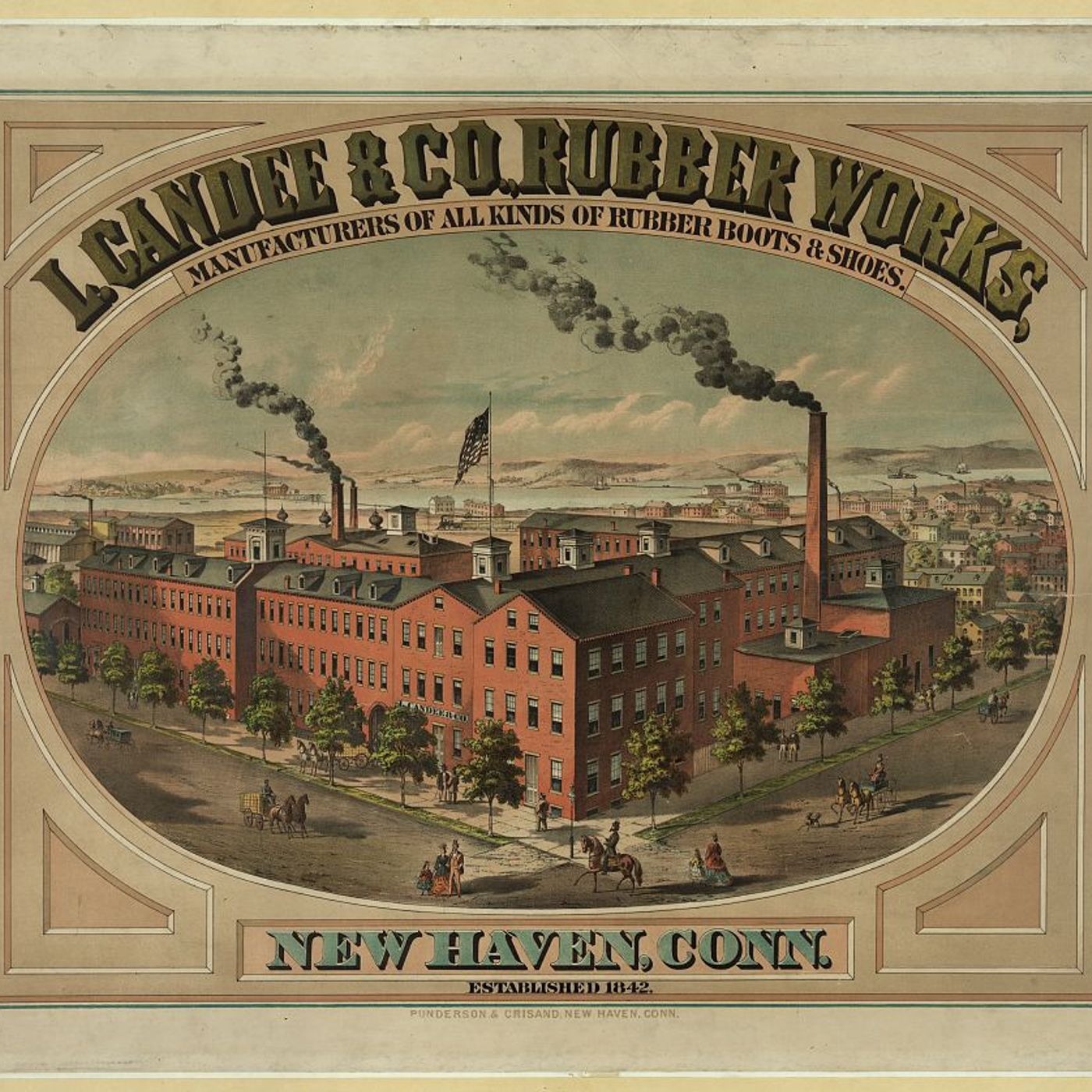
14 August 1886: New Haven rubber workers strike
On this day, 14 August 1886 50 women and girls working in the L Candee Rubber Boot Company factory in New Haven, Connecticut, walked out on strike over excessive working temperatures. The New York Times reported that the women: "complained that the heat of the room was unendurable, and insisted that the windows must be opened. The Superintendent refused to open the windows for fear of damage to th
13 August 1937: Mauritius strike massacre
On this day, 13 August 1937, striking workers were massacred at the Union Flacq Sugar Estate in Mauritius. Primarily Indian labourers on sugar plantations on the island, then a British colony, had been organising for better pay, and police were being used to intimidate workers and break strikes.Workers on the Union Flacq estate were unhappy about low pay, poor quality food rations and inadequate h
12 August 1887: Maria Cano born
On this day, 12 August 1887, pioneering Colombian socialist and women's rights advocate María Cano, known as the "Flor del trabajo" ("Labour flower"), was born in Antioquia. At the time, women in Colombia could not hold most jobs, participate in elections, or even spend their own money.Cano was from a middle-class family, but came into contact with lots of people regularly at her local library, an
11 August 1958: Dockums drugstore sit-in
On this day, 11 August 1958, civil rights activists in Wichita, Kansas won a key early successful sit-in protest against segregated lunch counters. Black students and young people sat at the counter in the Dockum's Drug Store in rotating shifts of 30 minutes to 2 hours, blocking sales and facing down police and racist harassment for 23 days until they won. After this victory, sit-ins spread rapidl
10 August 2005: Gate Gourmet dispute
On this day, 10 August 2005, the Gate Gourmet dispute began in London. British Airways (BA) had outsourced its airline meal production, primarily by Asian women workers, to Gate Gourmet, who cut wages and conditions. Planning on worsening conditions further, they brought in hundreds of agency workers to do the work of the permanent employees. Seeing agency workers in their usual posts, the workers
9 August 1979: YH wig workers occupation
On this day, 9 August 1979, the women workers of the YH wig making company in Seoul, South Korea, occupied the headquarters of the opposition New Democratic Party in protest at the closure of their employer. The workers had gone on strike against the proposed closure, but to no avail, so they attempted to escalate their protest. However, the US-backed military dictatorship instead sent 2,000 riot
8 August 1883: MSG strike benefit
On this day, 8 August 1883, over 3,000 people attended a benefit ball and concert for striking telegraphers in New York's Madison Square Garden. A procession of 800 striking workers, mostly employees of Western Union fighting for equal pay for men and women and an eight-hour day, were led into the ballroom by John Mitchell and Minnie Swan, who had emerged as key organisers of the strike in the cit
7 August 1842: Chartist mass meeting
On this day, 7 August 1842, a mass meeting of 18,000 workers took place in the UK, organised by the Chartist movement. They decided to call a general strike beginning the following day, demanding universal male suffrage, and opposing pay cuts. The strikes began and spread rapidly around the country, to towns including Manchester, Burnley, Preston, Macclesfield, Oldham, Wigan, and many more.Workers
6 August 1970: Yippies invade Disneyland
On this day, 6 August 1970, up to 300 Yippies — countercultural radical youth — invaded Disneyland, protesting against the Vietnam war and calling for the liberation of Minnie Mouse from patriarchal captivity. Disney brought in extra security, and 150 armed riot police in preparation for the event: a theatrical "convention" called by the Youth International Party, whose members were nicknamed Yipp
5 August 1981: Air-traffic controllers fired
On this day, 5 August 1981, after just two days on strike, 11,345 federal air traffic controllers were sacked by US president Ronald Reagan for refusing his order to return to work (content note: suicide). The workers in the extremely stressful industry had gone on strike demanding a pay increase and a reduction in working hours from 40 per week over five days to 32 per week over four days. Despit
4 August 1941: Moengo miners strike
On 4 August 1941, shovel operators in the Moengo bauxite mine in the then-Dutch colony of Suriname went on strike. The walkout of mostly Javanese and Creole workers was swiftly followed by mill, shipping and tow boat crews. They were soon all offered substantial pay increases, and the strikes ended. Mill workers also had their working days reduced from 12 to eight hours per day.Powerhouse workers
3 August 1945: Wagglen family squat
On this day, 3 August 1945, a group in Melbourne called the Australian Soldiers' Legion (ASL) met up with a family called the Wagglens, which included a homeless, wounded World War II veteran, his wife and children, and squatted a house in Bell Street, Hawthorn. As members of the media watched on, ASL members entered the empty home and carried furniture in through the window. The group claimed to