Your Places or Mine
Clive Aslet & John Goodall 62 episodes Nov 11, 2026
Your Places or Mine is a podcast about places and buildings, exploring the history and people connected to them. It is hosted by author and publisher Clive Aslet and John Goodall, the architectural editor of Country Life. The show offers stories and insights into architecture, heritage, and the human histories tied to particular locations.
Episodes
Montpellier
Send us Fan Mail
Bayeux Tapestry
Send us Fan Mail
SERIES FINALE: How to Make Development Beautiful (With Nicholas Boys Smith)
Send us Fan MailIn this episode Clive unveils some new research. It’s the result of a coffee shared with his guest in today’s podcast, Nicholas Boys-Smith. Nicholas founded Create Streets, a social enterprise, think tank and urban design consultancy in 2012. The coffee shop was on a schizophrenic part of the street, half of it being Victorian terrace — brick built, repeating classical windows, a l

How to Bury A Medieval Monarch: The History of Worcester Cathedral
Send us Fan MailWorcester Cathedral rises above the banks of the River Severn as one of England's great medieval buildings, its honey-coloured stone and soaring central tower dominating the city's skyline much as they have for over nine centuries. Who better to discuss its architecture and history than John Goodall?Founded in 680 as a monastic community, the earliest fabric of the cathe
Guardsmen and Grandeur: The History of Buckingham Palace
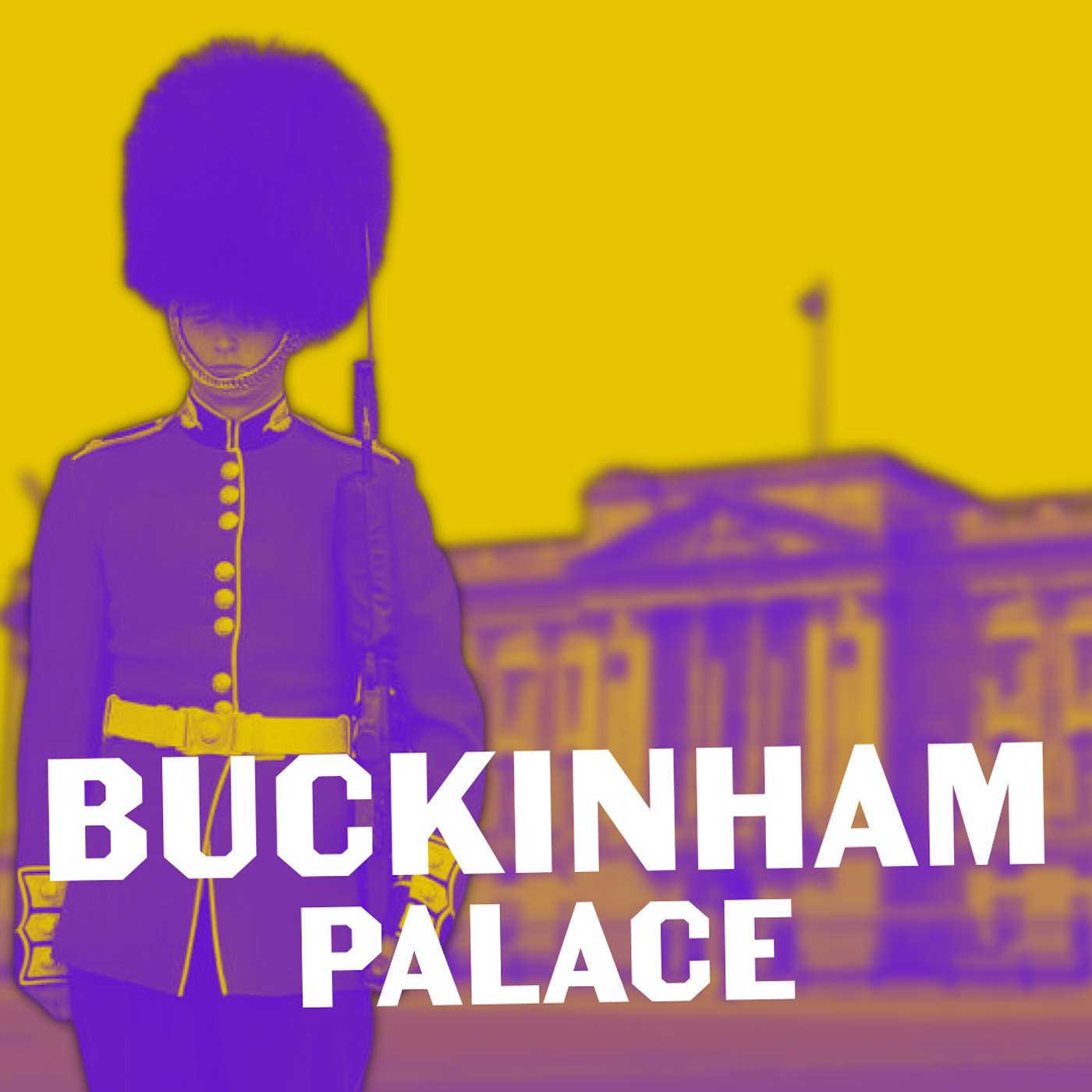
Send us Fan MailEverybody in the world has heard of Buckingham Palace. The official London residence of the British monarch, it stands at the western end of St James’s Park, very near St James’s Palace. As well as being used for great occasions of State, accompanied by the daily ritual of the changing of the guard, it was also somewhere that successive kings and queens lived when they were in tow

London’s Golden Orb: The History of Monument
Send us Fan MailThe Monument, rising above the streets near London Bridge, is one of the City of London's most striking historical landmarks - a soaring Doric column erected to commemorate the Great Fire of London of 1666. Begun in 1671 and completed in 1677, it stands 202 feet tall, a height chosen deliberately: the distance from its base to the spot on Pudding Lane where the fire is believe

An English Icon: The History of Warwick Castle
Send us Fan MailAs a great expert on the English castle, John has been thinking about one of the great icons of England: Warwick Castle. This extraordinary building, created over centuries, has come down to us intact, not having been slighted after the Civil War in the 17th century – something exceptional. Equally remarkable is the mythology that surrounds the place, including the medieval legend

The History of Greenwich, Masterpiece of the English Baroque
Send us Fan MailClive has taken the riverboat to Greenwich, one of the most spectacular sites of London. ‘Good Duke’ Humphrey, brother of Henry V, built a retreat here in the 15th century, which Henry VII developed into a palace. This was where Henry VIII jousted in his early years, and where his armour was made. To the early Stuarts Greenwich’s was important from its position at the mouth of t
A Tudor Treasure, The Gem of Lincolnshire: Doddington Hall
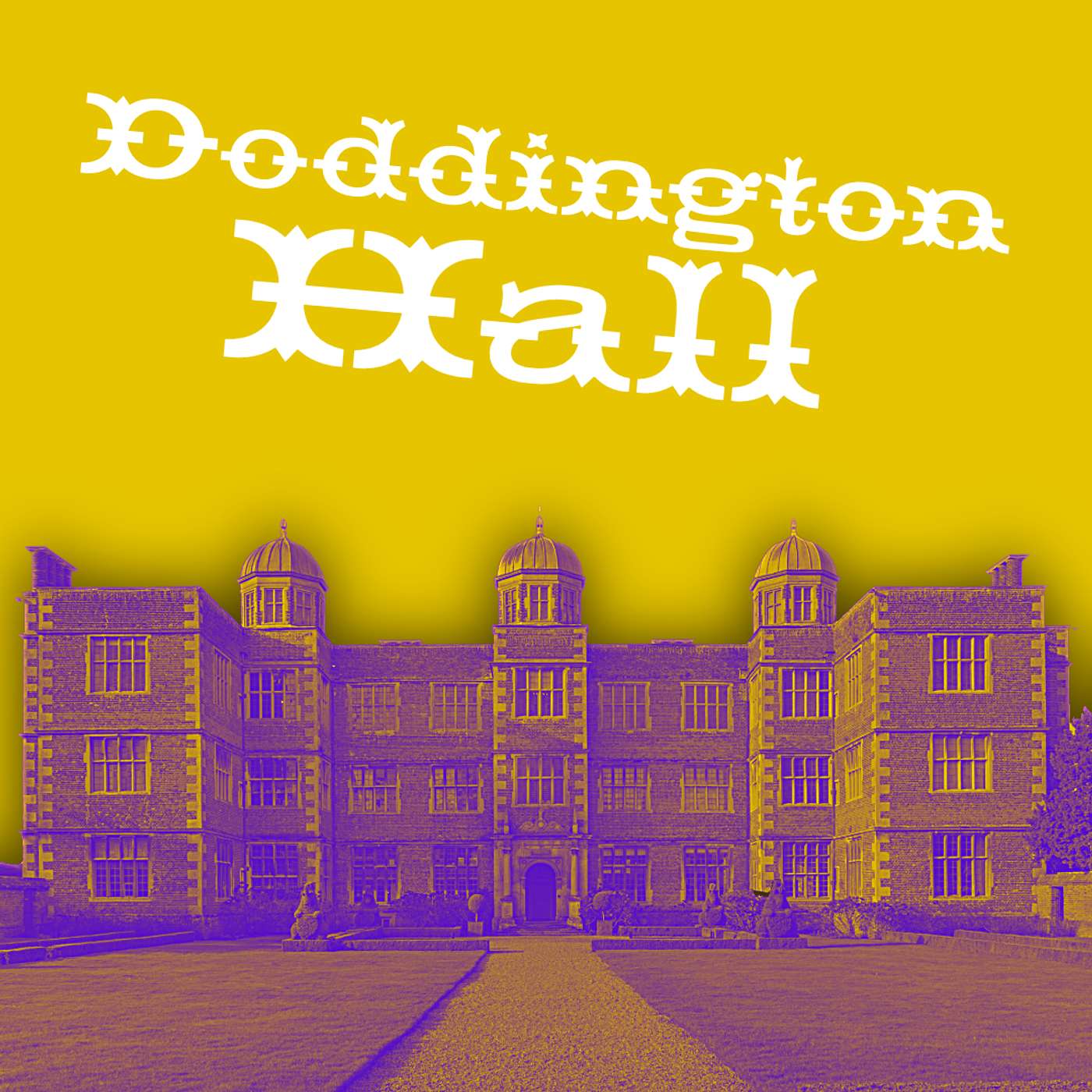
Send us Fan MailDoddington Hall in Lincolnshire is one of those country houses you find only in Britain. The attics are full of old toys, military headgear, unwanted commodes and a giant figure of the White Rabbit, left over from an Alice in Wonderland-themed event. A collection of Roman antiquities, some found on the estate, is displayed in the downstairs lavatory, along with a child’s pedal-op

A Parade of Characters and Art: the Glittering Story of Stansted Park, Sussex
Send us Fan MailClive and John have both been to Stansted Park, outside Chichester, though at different times. Clive remembers it from the time he helped the owner Eric Bessborough revise a book in the 1980s, whereas John’s connection is more recent. They both find it an astonishing example of an economic revival, apparently inspired by the Covid years when the public was desperate for open spac

Dons and Divinity: The Marvellous History of Cambridge
Send us Fan MailJohn has been to Cambridge to see the castle, the mound of which still survives. Although a graduate of Peterhouse and now a Visiting Professor of Architecture, associated with the Ax:son Johnson Centre for the Study of Classical Architecture at Downing College, Clive comes new to this early history but many stories of more recent times. Together the pair mull over the developmen

The Story of the American Country House: Developing an Idea
Send us Fan MailClive is writing a book for Yale University Press on the Story of the American Country House. John indulges him by discussing an introductory overview of the subject, with which Clive has been engaged since Yale published his The American Country House in 1990. Here is a rich and colourful theme, celebrating a sometimes spectacular architectural tradition shaped by remarkable indi

The Story of Stowe House: A School of Marble and Memory
Send us Fan MailWhen the German Prince Puckler Muskau visited England in 1826, he told his divorced wife that it would take her ‘at least 420 years to see all the parks of England, of which there are undoubtedly at least 100,000, for they swarm in every direction.’ One of the most splendid was that at Stowe in Buckinghamshire. The garden was accompanied by an equally important country house, if n

Perhaps The Finest Street In Europe - The History of The Strand
Send us Fan Mail‘Let’s all go down the Strand!’ ran a popular music hall song. But what sort of street were they singing about? The future Prime Minister Benjamin Disraeli called it ‘perhaps the finest street in Europe’ in 1847. Which is quite a claim to live up to. Certainly the Strand, one of London’s most famous and important thoroughfares, has had a long and colourful history, with much sh

Last of The Laskett? A Great British Garden Under Threat (EMERGENCY BROADCAST)
Send us Fan MailThe Laskett in Herefordshire is one of the most remarkable gardens to have been created in the 20th century but now it’s future is threatened. Sir Roy Strong, scholar, museum director and the author of over 70 erudite books, and his theatre-designer wife Julia Trevelyan Oman created it as a bolt hole from London, beginning in 1973 – a bleak time of industrial unrest and inflation.
Story of Ampleforth Chapel, Yorkshire, Masterpiece of an Architectural Giant of the 20th Century, Sir Giles Scott
Send us Fan MailOne of the most famous Catholic schools in Britain, Ampleforth College in Yorkshire this year celebrates the centenary of its chapel, designed by Sir Giles Gilbert Scott. Scott has emerged in recent years as a colossus of 20th-century architecture, bestriding it alike with his religious buildings – notably the Anglican cathedral in Liverpool – and his secular designs, such as Batt

John Kinross' Manderston: A Symbol of Edwardian England
Send us Fan MailFew houses better convey the opulence of Edwardian country house life than Manderston in the Scottish Borders. Built in the first years of the 20th century, it is an exquisite work of the scholarly architect John Kinross – which has always been kept up to the high standards set by Kinross’s client, the racehorse owner Sir James Miller. Clive reveals a particular affection for Kinr

The History of Norwich: Conquest, Castle and Cathedral
Send us Fan MailThe fascinating city of Norwich, capital of Norfolk, was one of the richest town in England during the Middle Ages. The cathedral dates from the early Norman period, as does the Castle which has recently been magnificently redisplayed. As Britain’s preeminent historian of the architecture of the Middle Ages, John has of course been to see it, and provides a superb commentary. Cl

Archer's Masterpiece: The Building and Rebuilding of St. John's Smith Square
Send us Fan Mail

Northumberland's Treasure: The History of Alnwick Castle
Send us Fan MailAlnwick Castle in Northumberland is one of the most spectacular castles in England, an immense fortification that guarded the border with Scotland for centuries. The Percy family who built it had almost king-like power over their territory – and were not above rebelling against the king himself: the impetuous Harry Hotspur was killed fighting against Henry IV at the Battle of Shre

Plinths, Columns and Controversy: The History of Trafalgar Square
Send us Fan MailTrafalgar Square has long been regarded as the centre of London. It wasn’t always. John describes its medieval configuration when it was still countryside – hence the name of James Gibbs’s church St Martin in the Fields. This was where Richard II kept his hawks in the royal mews. A square was proposed by the Prince Regent’s architect John Nash but not in the form we have it today

Detmar Blow: Disciple of Ruskin, Champion of the Arts and Crafts Movement
Send us Fan MailDetmar Blow was one of the brightest stars of the Arts and Crafts Movement – but his story is also dark and mysterious. A pupil of the Kensington School of Art, where he met Lutyens – a lifelong friend – he won a travelling scholarship to draw cathedrals in France. At Abbeville, he had a chance encounter with the great Victorian sage aesthete John Ruskin, then in the decline of h

THE HISTORY OF WINDSOR CASTLE (PART 2) – FROM CHARLES II TO CHARLES III
Send us Fan MailThis week John takes Clive through Windsor Castle, a creation not just of the Middle Ages (subject of part 1 of this series) but of successive monarchs since the Restoration of Charles II in 1660. George III, a King who had been trained in architecture, made it into a family home, before being confined here during his years of madness. Typically, his eldest son George IV had bigg

The Crisis of Liverpool Street Station (EMERGENCY BROADCAST!)
Send us Fan MailThis week John and Clive are frothing with disapproval at Network Rail’s plan to upgrade Liverpool Street Station. It is proposed that this will be funded by a development which will impose an out-of-scale tower at the entrance to the station, which will deprive the concourse of natural light and destroy the surroundings. What a pity. Liverpool Street was brilliantly reimagined

Flushed with Pride: The History of the Lavatory
Send us Fan MailThis week John and Clive present their long-awaited podcast on one of the most essential but least discussed rooms in any dwelling – the lavatory. Or (because no object in English or any other language is subject to so many euphemisms and circumlocutions) the necessary, the little house, the smallest room, the going place, the jakes, the john, the pissing place, the bog, the toile

Sin, Sculpture and Scandal: What is the Truth about Sir Francis Dashwood's West Wycombe Park?
Send us Fan MailSir Francis Dashwood, who used to dress as a Franciscan monk and allegedly took part in orgies in the ruins of Medmenham Abbey, was one of the most notorious libertines of the 18th century. Is this a correct depiction of his character? John thinks not. Instead, he acquired his dubious reputation as a result of slurs cast by his political enemies, which Sir Francis, who didn’t ca

The History of Exeter Cathedral: From Norman to Now
Send us Fan MailIn this episode of Your Places or Mine, Clive Aslet and John Goodall head west to Exeter Cathedral, one of England’s most distinctive medieval churches. From its extraordinary uninterrupted Gothic vault — the longest of its kind in the world — to its weathered towers and richly layered history, they explore how this cathedral grew, adapted and survived centuries of change. Along th

The Bank of England: Soane, Baker and the Most Controversial Building of the 20th Century
Send us Fan Mail2025 celebrates the rebuilding of the Bank of England by Sir Herbert Baker – if celebrate is the right word. It remains one of the most controversial projects in 20th century architecture. Baker’s name has been irredeemably blackened for his presumption in destroying the Bank of England created by Sir John Soane a century before. Clive and John revive the debate, describing the

Chim-Chiminee: The History of the Chimney
Send us Fan MailThis is the time of year when thoughts turn to mince pies, Christmas shopping, mulled wine – and chimneys, whether it is to settle around a roaring hearth or hope that Father Christmas pays a visit. So John and Clive are turning their attention to the development of this architectural form, beginning with the appearance of walled fireplaces in the Norman period. Chimneys reached

Vanbrugh at 300: Celebrating The Life and Times of Sir John Vanbrugh (With Charles Saumarez Smith)
Send us Fan MailIn today's episode of Your Places or Mine, John is joined by the inimitable Charles Saumarez Smith who divulges all he knows about the architect Sir John Vanbrugh in anticipation of the 300th anniversary of his death. Discover the remarkable life and legacy of Sir John Vanbrugh — playwright, architect, and one of the most unconventional figures of the English Baroque. From his

Journalists and Gentlemen: How the Georgian Group Saved London
Send us Fan MailThe founding of the Georgian Group in 1937 was a milestone in the movement to save beautiful architecture. With an anniversary around the corner, Clive and John discuss how the Group emerged from the parent organisation, the Society for the Protection of Ancient Buildings, and why it was needed. They reveal the extraordinary extent to the destruction inflicted on Georgian London

The Tale of Parliament Part 2 - The House of Lords
Send us Fan MailLast week’s Your Places of Mine celebrated the rebuilding of the House of Commons after the original interior was bombed during one of the last raids of the Blitz. This week, Clive and John consider the Palace of Westminster, otherwise known as the Houses of Parliament, as a whole. After the old Palace had been all but destroyed by fire in 1834, Charles Barry won the competition t

The Tale of Parliament Part 1 - The House of Commons
Send us Fan MailOn May 10, 1941, an incendiary bomb destroyed the seat of British democracy, the chamber of the House of Commons. This was not the first time fire had struck the Palace of Westminster: most of it had already been rebuilt after a disastrous fire of 1834, caused not by enemy action but the burning of obsolete tally sticks – a medieval system of accounting which symbolised the antiqu

Albi Cathedral: The Greatest Brick Building in the World
Send us Fan MailThis week John and Clive are bowled over by Albi Cathedral, a towering, outwardly austere edifice of rosy brick which is ‘quite unlike any other medieval structure that you will see – a work of abstract modernism made in the 13th century’. They discuss the background to its construction, in particular the merciless crusade against the Albigensian Heresy which takes its name from t

Magnates and Mansions: American Millionaires who Loved the British Country House
Send us Fan MailPhipps, Carnegie and Old Westbury GardensIn its turn of the 20th-century heyday, Long Island could boast no fewer than 900 country houses. Since then, most have disappeared, leaving Old Westbury Gardens in a unique position – the only house to have survived complete with its collections, garden and archive. Clive has just been there and shares its wonder with John, asking why the

A Spymaster's Lair: The Unmissable Splendour of Hatfield House
Send us Fan MailClive has just been to an event at Hatfield House, the palace to the North of London which stands as a monument to the political gene of the Cecil family. John is more than equal to discussing this great country house and its treasures, which the present Marquess and Marchioness of Salisbury are subtly making even more special.In the 16th-century, Robert Cecil inherited it from hi

Cathedral on Fire: The Rise, Fall, and Rebirth of Notre-Dame
Send us Fan MailIn 2019 a devastating fire consumed the cathedral of Notre Dame in Paris, one of the towering symbols of French identity, and it seemed that one of the greatest cultural monuments in Europe had, literally, gone up in smoke. But after only two short years, it has now been restored and John has been to see – and celebrate – the result. The old Notre Dame had evolved over many centur

The Story of the Bayeux Tapestry: A Threaded Tale of Heroes and Conquerors
Send us Fan MailAn extraordinary cultural loan is about to take place: soon, while its home in France is being improved, the Bayeux Tapestry will be displayed in the British Museum for two years. This will give members of the British public, along with visitors to London from overseas, the chance to get up close to one of the founding documents of England’s story. One of the foremost medievalist

War Memorials Of WW1: The Secret Meaning of The Stone
Send us Fan MailIn advance of Remembrance Sunday on November 11, Clive has been visiting the Commonwealth War Graves in France. The Imperial War Graves Commission, as it was called when established in 1917, was the brain child of Fabian Ware, a civil servant turned newspaper editor who commanded a Red Cross dressing station during the First World War and was therefore saw the horror at first hand

The History of Salisbury Cathedral: How Did They Move a Medieval Marvel?
Send us Fan MailWhich cathedral is closest to the English heart? Impossible to say but it may be Salisbury, the subject of this week’s Your Places or Mine. On September 28 a special service will be held to celebrate the 800th anniversary of the dedication of the altars at Salisbury’s east end in 1225. To many people, Salisbury Cathedral approaches architectural perfection more nearly than any of

Stucco and Style: John Nash’s Regent Street
Send us Fan MailThe creation of Regent Street under the Prince Regent is a rare instance of a master plan that reshaped London. It linked North and South, starting in the new Regent’s Park and ending at the Prince’s Carlton House on the edge of St James’s Park. Clive and John celebrate this extraordinary achievement, which sprang from the brain of the no less extraordinary John Nash.A triumph of t

Golden Hills, Golden Stone: The Story of The Cotswolds
Send us Fan MailToday, the Cotswolds are famous around the world, as can be seen from the number of celebrities making their homes here. They are a brand which commands instant recognition. This, however, is a recent phenomenon, and visitors from past centuries – such as the journalist and contrarian William Cobbett – did not take anything like such a favourable view. The change came with the A

Sennowe Park: A Gilded Age Mansion
Send us Fan MailSennowe Park in North Norfolk is one of the most ebullient country houses built during the swaggering Edwardian decade at the beginning of the 20th century. It reflects the personality of the man for whom it was built, Thomas Cook, grandson of the Thomas Cook who founded the travel business. The latter, born in 1808, had been a Baptist evangelist and temperance campaigner. His epo

The History of Bath, From Roman to Regency
Send us Fan MailThe Romans arrived at Bath in AD43, calling it Sulis Minerva – a combination of the goddess Minerva with the local deity of Sulis. They loved the hot springs, practically the only ones in the country, which gush from the ground at 40 degrees Celsius. Their bathing complex came to include a huge, vaulted structure, which collapsed at some point after the legions left Britannia.
Privacy and Power in The Country House
Send us Fan MailThese days, privacy is high on the agenda. There are huge concerns over data, images, digital identity and personal space, all of which should be kept private. But how was this possible in previous ages when almost all of life took place in the presence of other people. This was as much the case for the social elite as it was for ordinary families. As court records of divorce c
Hot History: The Great Fire of Northampton 1675
Send us Fan MailEveryone has heard about the Great Fire of London – but what about the Great Fire of Northampton…or Marlborough…or Blandford Forum? Fire has frequently wrought destruction on towns, cities and country houses, and this was particularly the case in the 17th century. Clive and John discuss why this should have been—what caused the fires, what the consequences were for the places con
Charles III's Love Affair With Romania
Send us Fan MailThe then Prince of Wales first came to Transylvania in the late 1990s on an official visit. It’s the only time he’s come on business. He fell so much under the spell of the place that he bought a house here, in one of the wooden villages, settled, many centuries ago, by Saxons from Germany. Then he acquired another property, which he has turned into a comfortable, folksy lodge.
Great British Builders: Lutyens, Wren and The City of London (LIVE at The Ned's Club)
Send us Fan MailFor the first time in the history of this podcast, Your Places or Mine has gone on location. John and Clive have been invited to The Ned's Club, the amazing complex of hospitality venues, including restaurants, hotel and private members’ club, which occupies the former head office of the Midland Bank in the City of London. This provides the podcast with an opportunity to exa
Sovereignty in Stone: The Kings of Windsor Castle
Send us Fan Mail Windsor Castle has been imbued with symbolism since William the Conqueror founded it after the invasion of 1066. He took the name of Windsor from an existing Anglo-Saxon palace which stood on a different spot. On a bluff overlooking the Thames, Windsor Castle continues to play a central role in Britain’s national identity, being a great inheritance from the Middle Ages, which no
12 Crosses That Remember a Queen (with History Alice)
Send us Fan MailThis week YPOMPOD is joined by Alice Loxton — History Alice to her many followers — to discuss the extraordinary series of crosses that King Edward I built in memory of his queen, Eleanor of Castile in the 1290s. Eleanor died in Lincolnshire. Her body was then carried back to London for burial, and at every place that the cortège stopped a beautiful cross was erected. The work of t
The Dollar Princesses Who Revolutionised The British Country House
Send us Fan MailThe American girl was a phenomenon, charming, sporty, better educated than her European counterpart. talk on a wide range of subjects. Around sixty American girls became peeresses at the turn of the 20th century. ‘We are the dollar princesses,’ ran a popular song.Crossing the Atlantic was no longer as perilous as it had been in earlier days. Huge fortunate had been made during t
Ramsgate: The Marseille Of The South East
Send us Fan MailIn this summer episode of ypompod, we got to the seaside – to Ramsgate, beloved of Queen Victoria and now home to the biggest Wetherspoon’s (in an elegant neo-Greek building called the Royal Pavilion of 1913) on the face of the planet. Five miles to the east of Ramsgate, connected by a continuous yellow carpet of sand, lies Margate, which developed as one of Britain’s first seasi
Ewelme: A Village And Its Vanished Medieval Palace
Send us Fan MailWhere is Ewelme Palace? It was one of the most splendid houses in the country when it was built in the 15th century but nothing of it now remains. There are, however, some of the ancillary buildings and monuments that went with a great medieval estate. Its chatelaine Alice, Duchess of Suffolk, is remembered by one of the most beautiful tombs in the country. A granddaughter of t
National Gallery: The Sainsbury Wing And A New Chapter
Send us Fan MailThe National Gallery, now 200 years old, occupies one of the most famous buildings in London, on the north side of Trafalgar Square. This Greek Revival masterpiece by William Wilkins was designed to take account of the view of St Martin in the Fields from Pall Mall—so unusually it was conceived as having been seen from the side. Clive and John discuss both Wilkins’s design and th
Mediterranean Caprice In Snowdonia: The Story of Portmeirion
Send us Fan MailIn this episode, Clive and John discuss the holiday village of Portmeirion, an improbable, festive vision of the Mediterranean built on a wooded peninsula of Snowdonia, whose centenary falls this year.Portmeirion was the creation of the architect and card-carrying Welshman Sir Clough Williams-Ellis, who died at the age of 94 in 1978. Clough, as everyone called him, was a conspicuo
Castle Howard: Vanbrugh's Palace Redisplayed
Send us Fan MailCastle Howard in Yorkshire is one of a select group of country houses which must be seen as complete works of art. Visitors to the great domed palace, set in the gentle landscape of the Howardian Hills north-east of York, may be bowled over by the panache of the architecture, or the beauty of the woods; by the dazzling quality of the pictures and furniture, or the charm of the por
Glyndebourne: The House That Gave Birth To The Opera Festival
Send us Fan MailPicnic hampers, black tie, world-class opera — it’s the season for Glyndebourne, the festival that sired the happy, uniquely British phenomenon of country house opera. This week Clive and John discuss the house from which it all began (still central to the experience) as well as the headstrong, eccentric but visionary John Christie, founder of the festival in the 1930s. They revea
The Tower of London: The Most Notorious Castle In England
Send us Fan MailThe Tower of London is one of the great sights of the capital, a place that is as steeped in history as it has sometimes been, through the numerous executions it has witnessed, drenched in blood. In this week’s episode of Your Places or Mine, Dr John Goodall, Britain’s foremost historian of castle architecture, discusses this extraordinary fortification-cum-palace with Professor C
Lutyens And Lady Emily: A Marriage Of Opposites
Send us Fan MailIn his mid 20s, Lutyens fell passionately in love with Lady Emily Lytton, daughter of the Earl Lytton, a diplomat and Viceroy of India who had really wanted to be a poet. He pursued her ardently, writing letters that were romantic, delightful and often funny. Beating down opposition from Lady Emily’s family, they got marriage in 1897 but were an unlikely couple. She hated beari
Lutyens And Hudson: Huddy And Ned
Send us Fan MailSir Edwin (Ned) Lutyens’s old friend Edward Hudson founded Country Life in 1897. A London printer, he was not a countryman, but commissioned three country houses as well as the Country Life office in Covent Garden. Convinced of Lutyens’s genius, he also ‘boomed’ him through the magazine and lost no opportunity to promote his career.Nobody could be better placed to discuss this ex
Lutyens And Gertrude Jekyll: Home and Garden
Send us Fan MailThe first of a series on the early-20th-century architect Sir Edwin Lutyens, this episode examines the relationship between the young Ned — gangly, witty, shy — and the craftswoman turned gardener Gertrude Jekyll, his senior by 25 years. With her deep instinct for crafts and passionate attachment to Surrey, she shaped the boyish architect and introduced him to many of his best ear
The Majesty and Splendour Of Westminster Hall
Send us Fan MailClive and John discuss one of the most spectacular medieval buildings in Britain, Westminster Hall. Originally built by William the Conqueror’s heir, the voracious William Rufus, it was a structure of immense ambition — said to be the biggest hall of its kind north of the Alps. In the 14th-century, this huge space was reimagined as a statement of royal majesty by art-loving Richar
King Charles III's Royal Passion For Architecture
Send us Fan MailOne of the greatest of HM the King’s many enthusiasms is architecture. He made his first pronouncements on the subject in 1984 with the famous ‘Carbuncle’ speech and has been championing the causes of tradition, community, Classicism and Transylvania ever since. After 40 years it is time to take stock of his achievement, seen most obviously in the model town extensions (Poundbury
Pimlico: Mr Cubitt's District
Send us Fan MailIn this first episode of Your Places or Mine, Clive and John are in London’s Pimlico, exploring the dynamic personality of the great Victorian builder Thomas Cubitt and the area’s struggle to become fashionable. The idea of Your Places or Mine is to replicate the fun that Clive and John have on their visits to old sites, towns and buildings around the country, which have often resu