The AMI Podcast
The AMI Podcast explores a range of topics including cutting-edge research in Islamic Studies, book reviews by prominent authors and academics, and discussions among scholars of diverse faiths and denominations within Islam.
Episodes
God, Jinns & Aliens: Islam & Science with Dr Shoaib Malik | Thinking Islam Ep.19
Are the claims of the Qurʾan scientific, or beyond the reach of science? And if aliens exist, are humans still the best of creation? In this episode of Thinking Islam, we discuss the relationship between Islam and science with Dr Shoaib Ahmed Malik. We begin with how Muslims have met modern science, from the Islamisation of knowledge to the scientific miracles of the Qurʾān (iʿjāz ʿilmī). Dr Malik
Shi'a Identity and Belonging in Britain with Dr Emanuelle Degli Esposti | Thinking Islam Ep.18
What happens when a community feels present in Britain but absent from the public story of British Islam? In this episode of Thinking Islam, we explore what it means to be Shi'a in Britain today with Dr Emanuelle Degli Esposti. Drawing on her ethnographic research into Shi'a Muslim communities in the UK, Dr Degli Esposti examines questions of diaspora, minority identity, sectarianism, and

The Tug of War over Imāmī Creed & ʿIlm al-Rijāl | Dr Syed Ali Hur Kamoonpuri | Research Seminar
ʿIlm al-rijāl is often treated as a technical, almost mechanical science — a matter of chains, dates and verdicts. But the criteria by which a narrator is praised or discredited are themselves shaped by theology, and theology changes.In this research seminar, Dr Syed Ali Hur Kamoonpuri (Aligarh Muslim University) traces that entanglement across a thousand years. He argues that the Baghdad school o
"The Definition of Ghulāt" by Tabriz Gasimov
In this presentation, Tabriz Gasimov revisits the meaning of ghulāt through hadith literature, tracing it to the concept of "lie" (kadhib) — understood as betraying a trust or disclosing confidential teachings — rather than divinization alone. He shows how this reframing suggests some narrators dismissed as ghulāt may in fact be reliable, with implications for re-evaluating core Shi'
"Traces of the Ghulāt in Shīʿī Hadith Literature: A Computational and Thematic Analysis of Ghulāt-Affiliated Traditions in al-Kulaynī's al-Kāfī" by Peyman Ünügür Tekin
In this presentation, Peyman Ünügür Tekin combines classical rijāl criticism with computational analysis to trace narrations transmitted by ghulāt-affiliated narrators in al-Kulaynī's al-Kāfī. She asks whether their presence reflects incidental infiltration or a deliberate transmission strategy concentrated on particular doctrinal themes.
"The Historical Link between Jesus and Ghuluww: Jesus's Function in Ghulāt Thought and its Impact on Shi'a Hadith" by Hossein Barati & Sobhan Ranjbarzadeh
In this presentation, Hossein Barati and Sobhan Ranjbarzadeh trace how various ghulāt sects appropriated Jesus's ascension and extraordinary attributes to legitimize claims about ʿAlī, Ḥusayn, and the Hidden Imam. They show how Shi'i Imams and later Qom theologians responded directly to these Christological analogies in shaping mainstream doctrine.
"Esotericism Embodied: Traces of Ghulāt Thought and Symbolic Expression in Yemeni Islamic Architecture" by Mohamed Enab
In this presentation, Mohamed Enab shifts the study of ghulāt currents from hadith and polemic to material culture, reading Yemeni mosques and inscriptions from the Ṣulayḥīd and Qāsimī periods as a visual archive of Shi'i esoteric authority. He shows how architecture became a site where reverence, legitimacy, and accusations of religious excess were negotiated.
"Between Bāṭin and Sharīʿa: The Druze as Ghulāt in Formative Shiism" by Wissam H. Halawi
In this presentation, Wissam H. Halawi situates Druze doctrine within the long-running tension between esoteric knowledge and legal normativity in early Shi'ism. Rather than a radical break, he argues the Druze intensify existing ghulāt dynamics — hierarchical knowledge, a divinized guiding figure, and the suspension of exoteric law — reframing them as a distinct legal school.
"Tracing the Legacy of the Mufawwiḍa Ghulāt in Imami Shi'a Theology" by Mohsen Kadivar
In this presentation, Mohsen Kadivar distinguishes rubūbī ghuluww (attributing lordship to the Imams) from tafwīḍī ghuluww (attributing supra-human but non-divine status), tracing how the latter — though initially contested by the Imams' own companions — gradually became mainstream Imami theology from the fourth century onward, sidelining its early opponents.
"Ghulāt in the Sunnī Tafsīr Tradition: The Historical Trajectory and Function of the Concept from the Classical to the Contemporary Period" by Ayşe Uzun
In this presentation, Ayşe Uzun traces how the term ghulāt functioned in Sunni tafsīr — originally a broad marker of "excessiveness" applied well beyond Shi'ism, before narrowing and intensifying in 20th-century works like Tafsīr al-Manār. She shows how this shift reflects changing sectarian, political, and ethical concerns rather than a purely doctrinal one.
"The Ghulāt and Abbasid Culture Polemics in Kitāb al-Ṣirāṭ" by Mushegh Asatryan
In this presentation, Mushegh Asatryan examines Kitāb al-Ṣirāṭ, a rare ghulāt text that engages directly with the surrounding world rather than staying purely cosmological. He unpacks its polemics against the Caliphate, mainstream Imami Shi'ism, and Abbasid "exoteric" scholarship, situating the ghulāt's esoteric epistemology within the wider intellectual landscape of their time.
"Juridical Esotericism: Ghuluww, the Palāsī–Ibn Miʿmār Network, and the Mamluk Criminalization of Shīʿī–Sufi Metaphysics" by Seyed Amir Asghari
In this presentation, Seyed Amir Asghari treats ghuluww not as a doctrine but as a historically produced accusation, tracing its use in 14th-century Mamluk Syria through Ibn Taymiyya's writings and the Damascus execution narratives. Set against an Ilkhanid-Iranian Shi'i Sufi network, he shows how a juridical apparatus converted esoteric Shi'i-Sufi thought into a criminal offence.
"The Docetic Doctrine and the Image of the Imām in Early Ghulāt Literature" by Abdullah Ansar & Mohammad Al Mosawi
In this presentation, Abdullah Ansar and Mohammad Al Mosawi trace a docetic Imamology within early Ghulāt literature — the idea that the Imām, as a timeless theophany, never truly dies, with death serving only as a veil over an enduring divine reality. Drawing parallels to early Christian Gnostic docetism, they show how these motifs were later reshaped into more familiar Twelver concepts, includin
"Ghulūw and Esoteric Qur'anic Interpretation in the Early Islamic Centuries: Jābir ibn Yazīd al-Juʿfī as a Case Study" by Mohammad Khalil Tarraf
In this presentation, Mohammad Khalil Tarraf critically examines the esoteric (bāṭinī) interpretive method attributed to Jābir ibn Yazīd al-Juʿfī, questioning its coherence against established linguistic and contextual frameworks of exegesis. He explores how the concepts of ẓāhir and bāṭin were used to construct alternative layers of Qur'ānic meaning within early ghulāt-linked tradition.
"The Jewish Convert as Ghulāt Architect: Abd Allah ibn Saba and the Construction of Heterodoxy in Early Shiism" by Iqbal Akhtar
In this presentation, Iqbal Akhtar traces how allegations of Abd Allah ibn Saba's Jewish origins became a recurring polemical device in Sunni and Shi'i heresiography, used to cast early esoteric Shi'i currents as foreign infiltration rather than internal doctrinal development. He shows how this narrative served to police the boundaries of orthodoxy while embedding deeper anxieties abou
"Verificatory Inconsistency and the Accommodation of Ghulūw-Adjacent Idioms in Imāmī Literature" by Arif Abdul Hussain
In this presentation, Shaykh Arif Abdul Hussain examines how doctrines now central to mainstream Shi'i theology and piety — such as wilāya takwīniyya, the Imams' knowledge of the unseen, and tawassul — sit within a broader Qur'ānic definition of ghuluww. He traces this to an inconsistency in how verification standards are applied across different genres of Imāmī literature, and argues
"Navigating the 'Mid-Sized Cushion': Defining Ghuluww Through Qur'ānic Parameters within Contemporary Twelver Scholarship" by Syed Ali Hur Kamoonpuri
In this presentation, Syed Ali Hur Kamoonpuri develops a Qur'ānically grounded definition of ghuluww (religious exaggeration), challenging reductionist readings that limit it only to claims of divinity or prophethood for the Imams. Engaging the views of scholars like Grand Ayatullah Sistani and Ayatullah al-Muhsini, he argues for a rigorous, evidence-based standard — one anchored in the Imams&
"Literary Analysis of Polemical Anecdotes: A Neglected Source for the Study of the Early Ghulāt" by Ammaar Muslim
In this presentation, Ammaar Muslim turns to the biographical work Rijāl al-Kashshī as an underused source for studying the early ghulāt, focusing on the contested profile of the Kufan narrator Mufaḍḍal b. ʿUmar al-Juʿfī. Reading the competing reports as polemical literary creations rather than historical record, he shows what they reveal about early ghulāt attitudes toward antinomianism and the t
"From Remembrance to Insight: Hudur al-Qalb and Basirah in Salat and Dhikr" by Mishaal Javed and Miguel Farias
In this presentation, Mishaal Javed and Miguel Farias present original qualitative research into how practitioners of salat and dhikr experience heart-centred insight and clarity. Comparing Islamic devotional practice with mindfulness meditation, and situating their findings alongside neuroimaging research, they show how classical concepts like ḥuḍūr al-qalb and yaqeen map onto lived, reported exp
"Fiṭra and Presential Consciousness: Qur'anic Ways of Knowing Beyond Physicalism" by Syed AmirHossein Asghari
In this presentation, Syed AmirHossein Asghari develops a Sufi account of fiṭra — humanity's innate God-orientation — as a genuine mode of non-conceptual, presential knowledge. Drawing on Qur'anic verses and later thinkers like Mullā Ṣadrā and ʿAllāmah Ṭabāṭabāʾī, he connects this classical framework to modern debates on consciousness, near-death experience, and the limits of physicalism.
"Sufism as 'Mysticism': A Global Religious History Approach" by Liana Saif
In this presentation, Liana Saif interrogates the now-automatic pairing of Sufism with the word "mysticism." Tracing this label back through Orientalist, Traditionalist, and Perennialist thinkers, she argues that "mysticism" obscures more historically grounded frameworks like al-bāṭiniyya, and reveals it instead as a modern, Western-inflected construct.
"The Heart We Mean is not the Pinecone Shaped Organ of the Body" by Aiyub Palmer
In this presentation, Aiyub Palmer traces how Sufi epistemology's heart-centered theory of knowledge became intellectually mainstream — made possible only once Ashʿarī theology, culminating with Fakhr al-Dīn al-Rāzī, developed a way to describe the self beyond bodies and accidents. He shows how Avicennian and early Sufi models of the soul converged into a distinctly Islamic phenomenology of sp
"Taqwā as an Epistemic Filter in Sufi Ways of Knowing" by Muhammad Sajjad Qadeer
In this presentation, Muhammad Sajjad Qadeer reframes taqwā not as a mere ethical virtue but as a mechanism for testing the reliability of mystical experience. Through close Qur'anic analysis, he shows how murāqaba — sustained self-monitoring — becomes the practical tool by which unveilings, dreams, and inspiration are calibrated against revelation and intellect.
"Why knowledge is only ḥuṣūlī" by Davlat Dadikhuda
In this presentation, Davlat Dadikhuda challenges the primacy that Sufi and Illuminationist thinkers give to presential, mystical knowledge. Drawing on the Peripatetic tradition of Avicenna and contemporary philosopher Ayman al-Maṣrī, he argues that only discursive, representational knowledge meets the standards of truth-aptness — while mystical awareness, though real, carries more psychological t
"Religious and Mystical Experience in Shia Ḥadīth" by Hashem Morvarid
In this presentation, Hashem Morvarid turns to an underexplored archive — Shia ḥadīth and devotional literature — to build a typology of mystical experience. Moving through phenomenology, metaphysics, and epistemology, he examines how texts like Nahj al-Balāgha and al-Munājāt al-Shaʿbāniyya describe heart-based perception, and what marks distinguish authentic experience from delusion.
"Whoever Has Seen Me in their Dream has Certainly Seen Me" by Zoheir Esmail
In this presentation, Zoheir Esmail investigates one of Islamic mysticism's most provocative claims: that dreams of the Prophet offer direct, unmediated access to him. Tracing this tradition across Sunni and Shiʿi sources, he asks what it means for rational, historically-grounded scholarship when a vision seemingly outperforms every conventional method of religious verification.
"The Wish to Be Known: An Existential Reading of Soul and Knowledge in Akbarian and Ṣadrian Thought" by Arif Abdulhussain
In this presentation, Arif Abdulhussain reads the famous saying "one who knows his soul knows his Lord" as describing an ontological event, not merely a cognitive one. Weaving together Ibn ʿArabī, al-Qayṣarī, and Mullā Ṣadrā, he builds a constructive argument that self-realisation is the very mechanism by which the Divine comes to know itself through creation.
"From Letter to Spirit: The Role of Spiritual Unveiling in Sufi Exegesis" by Omneya Nabil Muhammad Ayad Ibrahim
In this presentation, Omneya Ayad explores spiritual unveiling as the foundation of Sufi Qur'anic interpretation, centered on a rare unpublished manuscript by Ruzbihān al-Baqlī devoted entirely to defending kashf's authenticity. She traces the rigorous criteria Sufi exegetes developed to keep esoteric readings accountable to the Qur'an's literal meaning.
"The Classification of Kashf as a Source of Knowledge in Dāwūd al-Qayṣarī's Thought" by Mehmet Akif Aydin
In this presentation, Mehmet Akif Aydin looks past Ibn ʿArabī to one of his most influential early interpreters, Dāwūd al-Qayṣarī. He unpacks Qayṣarī's detailed typology of unveiling — including its five sensory modalities — and shows how this systematic framework helped anchor Akbarian metaphysics within Ottoman scholarly culture.
"Between Intelligibility and Sensation: Divine Self-Disclosure in Ibn ʿAjība's Mystical Epistemology" by Lahouari Taleb
In this presentation, Lahouari Taleb examines the 19th-century Moroccan Sufi Ahmad ibn ʿAjība's account of how sense experience relates to mystical gnosis. Unpacking Ibn ʿAjība's treatise on the Oneness of Existence, he shows how the perceived divide between the sensory and the intelligible dissolves into a cognitive veil rather than a fixed feature of reality — with striking implications
"The Diversity of Religious Experience: A Ṣadrāean Perspective with Contemporary Reflections" by Mohammadmahdi Morvarid
In this presentation, Mohammadmahdi Morvarid uses Mullā Ṣadrā's philosophy of graded existence to explain why religious experiences vary so widely across traditions — not as mere interpretive differences, but as real metaphysical distinctions. He brings Ṣadrā's framework into conversation with contemporary philosophy of religion's debates on the nature and validity of religious experie
The Making of British Shia Islam: Ritual, Migration & Belonging with Dr Jaffer Mirza | Thinking Islam Ep. 17
Where did Shia communities in Britain actually come from, and why has their history remained largely unrecorded?In this episode of Thinking Islam, we explore the untold history of Shia Muslim settlement in Britain with Dr Jaffer Mirza. Focusing on the period 1950 to 1980, Jaffer explains why he moved away from the three dominant lenses used to study Shia Islam in Britain — sectarianism, diaspora,
The Problem of Ghayba in Twelver Shīʿism | Dr Hashem Morvarid | Research Seminar
What is the Problem of Ghayba in Twelver Shi'ism? And why does the occultation of the Twelfth Imam remain one of the most debated questions in Twelver Shīʿism? Dr Hashem Morvarid explores.The occultation (ghayba) of the Twelfth Imam sits at the heart of one of Twelver Shīʿī theology's most persistent challenges: how can an Imamate defined by presence and public authority be occupied by an
Key Lessons from Developing the 'Understanding Mental Health in Muslim Communities' Online Course by Dr Asma Shahin Khan
In this presentation, Dr Asma Shahin Khan explores insights gathered while developing an online course on Muslim mental health at Cardiff University's Centre for the Study of Islam in the UK. Drawing on interviews with mental health experts, she identifies key themes around using Islamic knowledge in treatment, community-based support, and the barriers and stereotypes British Muslims face when
Care as Resistance: A Response Framework for Practitioners Advancing Muslim Youth Wellbeing by Dr Siham Elkassem
In this presentation, Dr Siham Elkassem explores a justice-oriented approach to caring for Muslim youth facing racial, colonial, and spiritual harm in Canada. Drawing on two studies—including national research conducted amid the Gaza genocide—she introduces a Justice-Oriented Response Framework grounded in Islamic ethical commitments to mercy, justice, and trust.
Who Cares About the Crisis of Masculinity Among Young British Muslim Men? – An Exploration of Interventions Which Provide Hope and Healing by Dr Sadek Hamid
In this presentation, Dr Sadek Hamid explores the emerging crisis of masculinity among young British Muslim men, shaped by structural racism, Islamophobia, and conflicting cultural expectations. Through case studies of grassroots initiatives and interviews with participants and practitioners, he examines care-centred approaches helping young men reconcile faith, identity, and wellbeing.
Shepherding the Police: The Journey of a Female Muslim Chaplain to Multifaith Police Chaplaincy Lead by Dr Mansur Ali & Khadija Sulaiman
In this presentation, Dr Mansur Ali and Khadija Sulaiman explore the professional journey of a British Muslim woman who became a Multifaith Police Chaplaincy Lead, tracing her path from hospital chaplaincy through to policing. The presentation highlights the gendered, theological, and racialised barriers she navigated, and how these experiences shaped her commitment to inclusive, multifaith spirit
"God Made You This Way": Ambivalent Acceptance, Relational Labor, and the Politics of Care in Queer and Trans Muslim Families by Dr Nuha Dwaikat-Shaer
In this presentation, Dr Nuha Dwaikat-Shaer explores how Canadian Muslim families navigate support and acceptance of queer and trans relatives, drawing on interviews with 30 individuals and their family members. She identifies key facilitators—such as education and religious reframing—and barriers to acceptance, introducing the concept of "ambivalent acceptance" sustained through ongoing
The Practitioners' Predicament – Challenges in Counselling Clients on the Shia-LGB Nexus by Dr Muhammed R. Tajri
In this presentation, Dr Muhammed R. Tajri explores how Shīʿa Muslim imams, chaplains, and therapists navigate counselling clients who experience same-sex attraction. Based on interviews with fifteen practitioners, he reveals a pronounced sense of moral and professional uncertainty and highlights the need for formalised training and stronger collaboration between religious scholars and mental heal
Empathy as Ethical Discipline: Chaplaincy and Caring Co-Existence in Plural Contexts by Dr Naveed Baig
In this presentation, Dr Naveed Baig explores empathy not as sentimentality but as a disciplined ethical practice essential to chaplaincy and care. Drawing on qualitative research with hospitalised Muslim patients during COVID-19 and his own chaplaincy experience, he argues that empathy—rooted in Islamic concepts such as rahma and rifq—is the ethical foundation of responsible, humane care.
Who Cares for the Carers? Understanding the Pastoral Burden on British Imams by Dr Riyaz Timol
In this presentation, Dr Riyaz Timol explores findings from Understanding British Imams, the largest academic study of mosque-based religious leadership in Britain, drawing on survey data from over 2,000 imams and 40 in-depth interviews. He focuses on how imams respond to mental health issues raised by congregants despite limited training, poor institutional support, and entrenched stigma, and cal
Traditional Forms of Care and the Challenges of Modern Society: Islamic Spiritual Care as an Emerging Field from Germany by Dr Mahmoud Abdallah
In this presentation, Dr Mahmoud Abdallah explores the emergence of Islamic spiritual care in Germany as a response to gaps in traditional family- and community-based support. He examines its academic and social value for Muslim communities and considers its relationship to established theological disciplines such as fiqh, Qur'anic studies, and Hadith studies.
Reading the Signs: A Model for Muslim Chaplaincy by Dr Mahshid Turner
In this presentation, Dr Mahshid Turner explores a theologically grounded model for Muslim chaplaincy rooted in the Qur'anic concepts of fitrah, the primordial covenant (alast), and the Divine Names and Attributes. She proposes that chaplains can help individuals "read" life events, relationships, and suffering as signs of Divine communication, offering a pastoral approach that works
Care, Emotions, and Spiritual Meaning: A Psycho-educational Framework Inspired by Ibn al-ʿArabī for Muslim Mental Health Practice by Zeynep İrem Çeven
In this presentation, Zeynep İrem Çeven explores how Ibn al-ʿArabī's understanding of emotions as spiritual states (aḥwāl) can inform a psychoeducational model for Muslim mental health care. She reframes emotions such as fear, sorrow, and joy as meaningful signals inviting reflection rather than problems to be corrected, offering practitioners a way to address distress without pathologisation
Between Khidmah and Exhaustion: An Islamic Ethical Model of Care for Muslim Care Practitioners by Dr Sulaimon Owoseni
In this presentation, Dr Sulaimon Owoseni explores the tension between religiously-motivated service (khidmah) and work-related exhaustion among Muslim care practitioners. Drawing on mixed-method research with around 200 Muslim professionals, he proposes an Islamic ethical model of care—grounded in ṣabr (patience), amānah (trust), and mīzān (balance)—that honours service without sanctifying self-n
Integrating Islamic Spirituality into Psychotherapy: Clinical Opportunities, Ethical Dilemmas, and Practitioner Challenges by Professor G. Hussein Rassool
In this presentation, Professor G. Hussein Rassool explores how Islamic spiritual practices—such as dhikr, murāqabah, duʿāʾ, and tawakkul—can be integrated into established therapeutic modalities including CBT, EMDR, and trauma-informed approaches. He also examines the ethical dilemmas this integration raises, from role confusion between therapist and religious authority to the risks of misinterpr
Islamic Spiritual Care and Psychotherapy at the Intersection of Theology and Social Sciences by Dr Nazila Isgandarova
In this presentation, Dr Nazila Isgandarova explores the bio-psycho-social-spiritual (BPSS) model of Islamic spiritual care, tracing its roots to Ibn Sina's (Avicenna's) biopsychosocial framework and older traditions of "medicine of the heart." She examines how integrating Islamic theology with contemporary psychology and social science can strengthen the effectiveness of this mo
Faith and Professional Ethics in Therapy: A Qualitative Study of Muslim Psychologists in Lebanon by Dr Faten El Skafi
In this presentation, Dr Faten El Skafi explores how licensed Muslim psychologists in Lebanon integrate religiosity and spirituality into their clinical practice. Combining a systematic literature review with semi-structured interviews, she investigates the ethical dilemmas practitioners encounter and the strategies they use to preserve professional integrity, with a view to informing culturally s
Ashura in a Wartime World: Karbala, Resistance & Geopolitics with Zahra Ladha | Thinking Islam Ep.16
How can a 7th-century tragedy like Karbala still shape the way millions understand war, injustice and resistance today?In this episode of Thinking Islam, we explore the enduring power of Ashura and the story of Karbala across Iran, Iraq, and Lebanon. The conversation begins with the idea of Karbala as ever-present, a story lived rather than merely remembered, woven into names, daily speech, and a
What Was Modern Islamic Art? Empire, Resistance, and the Hidden | Prof. William Gallois | Seminar
Was there such a thing as modern Islamic art? In this seminar, delivered at Al-Mahdi Institute on 29th April 2026, Professor Gallois challenges the dominant view that colonialism brought Islamic visual culture to an end. Instead, he argues that the colonial period produced some of the most sophisticated and spiritually rich art in Islamic history — much of it deliberately hidden from imperial eyes
Shi'a Islam in Colonial India with Prof. Justin Jones | Thinking Islam Ep.15
Were the Shi'as of colonial India at the periphery of the Shi'i religious universe, or did they develop an autonomous identity of their own? What were their hopes and fears about the creation of Pakistan?In this episode of Thinking Islam, we explore the themes of Professor Justin Jones's landmark book Shi'a Islam in Colonial India. The conversation begins by challenging the assumpt
Who Controls the Story of Power? Islamism & Narrative with Dr Fatemeh Sadeghi | Thinking Islam Ep.14
Is political power built on institutions or on the stories we choose to believe?What is Islamism, and how do political narratives shape power in the Muslim world?In this episode of Thinking Islam, Dr Fatemeh Sadeghi explores Islamism, political narratives, and how storytelling shapes political power and legitimacy. Drawing on both Islamic intellectual traditions and modern social theory, Dr Sadegh
Muslim Rights, Same-Sex Marriage & the Future of Tolerance by Prof. Robert Wintemute | Seminar
Can Christian majority societies and Muslim communities find common ground on some of the most contested issues of our time?In this research seminar, Professor Robert Wintemute, Professor of Human Rights Law at King's College London, explores a compelling framework of reciprocal tolerance: if Christian-majority societies continue to legally protect visible Muslim religious practices, can Musli
Why Imam Ali Still Matters: The Prophet’s Heir with Dr Hassan Abbas | Thinking Islam | Ep.13
Is Imam Ali a source of division or the grounds for friendship among Muslims?How did a man who asked that his killer's ropes be loosened in his dying moments become the most contested figure in Islamic history?In this episode of Thinking Islam, we explore Dr Hassan Abbas's acclaimed book, "The Prophet's Heir" through the lens of a policy maker and conflict resolution scholar.
Rumi and the Pure Heart: Reading the Qur’an Existentially with Dr Soroush | Thinking Islam | Ep.12
How does listening to the Qur'an differ from reading it? What does it mean to approach the Qur'an not with your mind but with your whole existence?In this episode of Thinking Islam, Dr Abdolkarim Soroush proposes an existential encounter with the Qur'an, one that asks us to set aside our assumptions and approach it not as a book of law or philosophy but as maw'iẓa (admonition) that
A People's History of Islam: Tales of Mystics, Pilgrims and the Ordinary by Dr Hassan Abbas
Who writes Islamic history — empires and rulers, or ordinary believers?In this research seminar hosted by AMI on 14 January 2026, Dr Hassan Abbas presents insights from his forthcoming book project, A People’s History of Islam. Challenging state-centred and court-sponsored historiography, Dr Abbas explores Islam through the lived faith of pilgrims, mystics, poets, and everyday communities across c
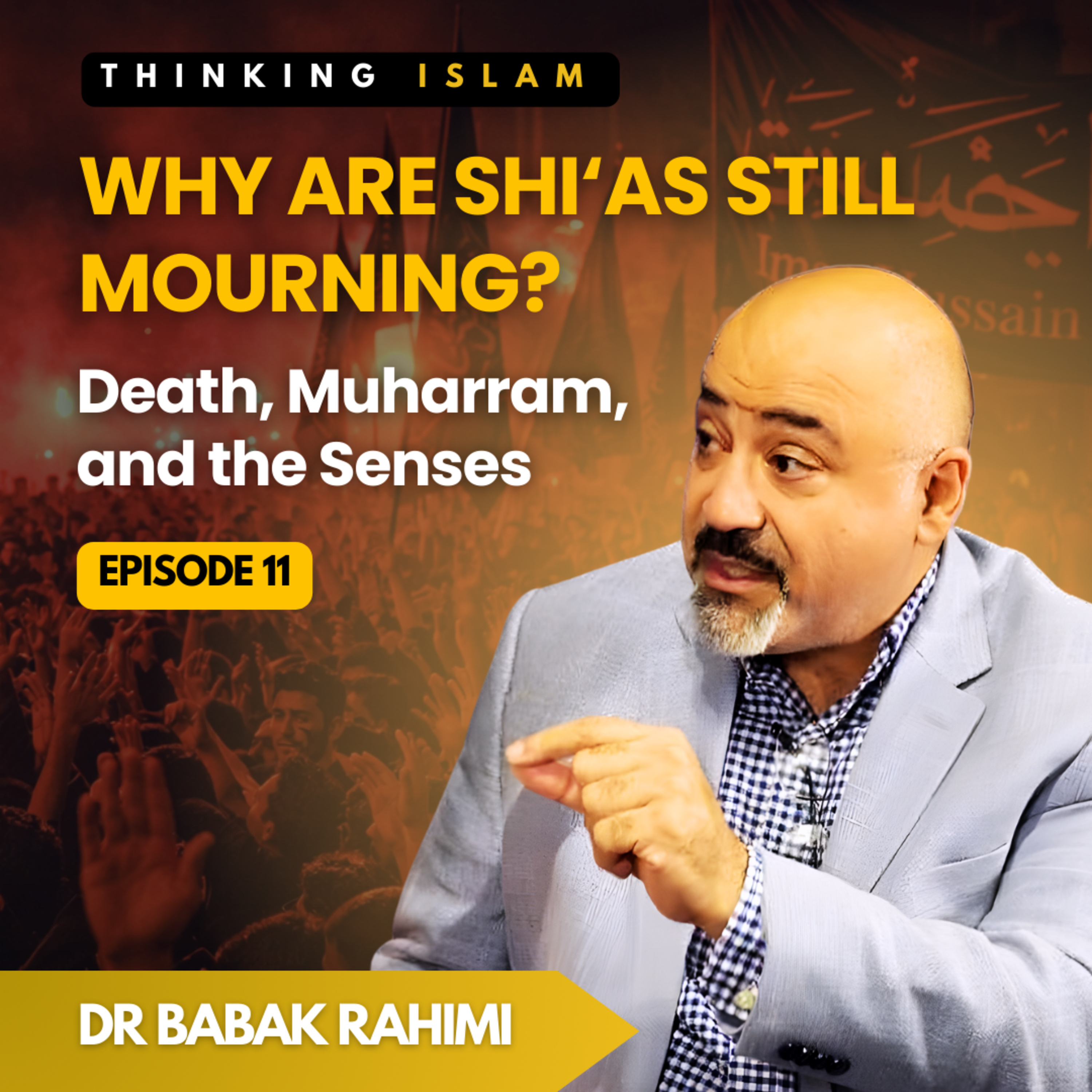
Why Are Shi‘as Still Mourning? Death, Muharram & Senses with Dr Babak Rahimi | Thinking Islam Ep. 11
Can mourning become a pathway to the divine? Has the modern world sanitised death, and does Muharram insist we don’t look away?Drawing from his forthcoming book Senses of Mourning, Dr Babak Rahimi of UC San Diego asks a question many have wondered, but few have explored: why do Shi'as keep mourning? This episode reveals mourning not as passive grief but as active devotion, a technique for conn
Digital Spiritualism: A New Meaning to Religious Secularism in India by Dr Zairu Nisha
Dr Nisha explores how digital technologies are reshaping religious life in contemporary India. Challenging the strict divide between the secular and the religious, she argues that digital media has given rise to new hybrid forms of belief, practice, and spiritual experience.
Techno-Gnosticism for the Digital Age: AI, Transhumanism, and the Flight from Embodiment by Professor Michal Valčo
This talk critically examines transhumanism and AI through the lens of Christian theological anthropology. Professor Valčo contrasts visions of technological “optimization” with religious understandings of embodiment, vulnerability, and communion, offering an alternative ethical vision for the digital future.
Blue Notes and Black Codes: Womanism, Digital Faith, and the Algorithmic Future by Rev. Dr Shonda Nicole Gladden
This talk centres Black women’s digital religious leadership through a Womanist lens. Rev. Dr Gladden explores how digital rituals, online worship, and algorithmic systems intersect with justice, creativity, and resilience in contemporary faith communities.
Between the ‘Digital’ and the ‘Analogue’: Intergenerational Transformations within Muslim Communities by Professor Sariya Cheruvallil-Contractor
Drawing on major UK and European research projects, this talk explores how digital spaces are reshaping Muslim religious authority, identity, and practice. Professor Cheruvallil-Contractor examines how different generations navigate faith across online and offline worlds.
Re-making the Human Being according to the Transhumanist’s Image and Likeness by Rev. Ugochukwu Stophynus Anyanwu
This presentation critiques transhumanist visions of remaking humanity through technology. Rev. Anyanwu examines how such ideas challenge religious understandings of human nature, divine providence, and moral limits in an age of rapid technological enhancement.
Ethics, Human Nature and AI’s Challenge by Dr Rahul Kumar Maurya
This talk explores how classical ethical traditions and religious philosophy can respond to the growing moral challenges posed by artificial intelligence. Drawing on Buddhist thought and contemporary philosophy, Dr Maurya examines whether AI threatens human agency and how ethical frameworks might help safeguard humanity in an increasingly automated world.
Techno Apocalypse in Islam: Between Utopia and Dystopia by Professor Mahan Mirza
This presentation examines Islamic apocalyptic thought in relation to modern technological change. Professor Mirza explores how digital culture, scientific worldviews, and rapid social transformation shape Muslim imaginaries of the future, offering a balanced theological response beyond fear or utopianism.
Equivocation and Erosion: How LLMs Undermine Catholic Religious Discourse by Jonathan Karr & Louisa Conwill
This joint presentation investigates how large language models influence Catholic theology and moral reasoning. Karr and Conwill examine how AI systems can blur doctrinal distinctions, while also considering how faith-based ethical frameworks might guide responsible religious uses of AI.
Technology and the Crisis of Modernity: Romano Guardini, Faith and the Transformations of Power by Professor João J. Vila-Chã
Focusing on the work of Romano Guardini, this talk examines how modern technology reshapes human power, faith, and social structures. Professor Vila-Chã reflects on the loss of authentic human experience and considers how religious thought can help address the dehumanising tendencies of modern technological systems.
Understanding Digital Othering and Religious Bias in Internet Memes by Professor Heidi A. Campbell
Professor Campbell analyses how internet memes shape public perceptions of religious communities. She explores how humour, stereotypes, and digital culture can reinforce religious bias, while also highlighting how faith communities can critically engage and respond.
Safeguarding Human Agency in the Age of the Cyber-Leviathan: An Islamic Perspective by Professor Seyed Mohammad Fatemi
Professor Fatemi introduces the concept of the “Cyber-Leviathan” to describe the totalising power of digital surveillance and algorithmic governance. From an Islamic ethical and theological perspective, he argues for rethinking human rights and moral responsibility in order to protect human agency in the digital age.
On Accountability for the Taking of Human Life: Toward an Interfaith Ethic of Weapons Control by Prof. Esther D. Reed
Professor Reed addresses the ethical challenges of weapons control through Jewish, Christian, and Islamic traditions. She explores how shared moral resources can contribute to contemporary debates on warfare, accountability, and emerging military technologies.
On the Technicity of Muharram Devotional Performances by Dr Babak Rahimi
Dr Rahimi explores Muharram rituals as embodied, technical practices that shape religious experience and communal life. By examining devotional performance, material culture, and sensory engagement, he shows how religious traditions adapt and endure through specific technologies of practice.
Engaging Technology from Noodiverse and Local Perspectives by Professor Arvind-Pal S. Mandair
This presentation challenges instrumental views of technology by drawing on Sikh philosophy and global traditions of thought. Professor Mandair explores how alternative models of individuation and spirituality can reshape our relationship with technology beyond modern Western frameworks.
Infertility, Technology, & Muslim Women in India | Dr Zairu Nisha | Research Seminar
In this Research Seminar, Dr Zairu Nisha (University of Delhi) explores infertility among Muslim women in India through feminist bioethics and phenomenology. She introduces the concept of the body as a site of moral injury, showing how reproductive expectations, religious belief, and assisted reproductive technologies shape women’s moral identities and lived experiences.Drawing on thinkers such as
The Politics of Narrative: Making & Unmaking Political Legitimacy with Dr Fatemeh Sadeghi | Research Seminar
How do stories create political power? Why do narratives matter in shaping legitimacy, justice, and belonging? In this Research Seminar, Dr Fatemeh Sadeghi (University College London – Institute for Global Prosperity) examines the powerful role of narratives and storytelling in legitimising political authority. Drawing on examples from Islamism, nationalism, and contemporary far-right populism, sh
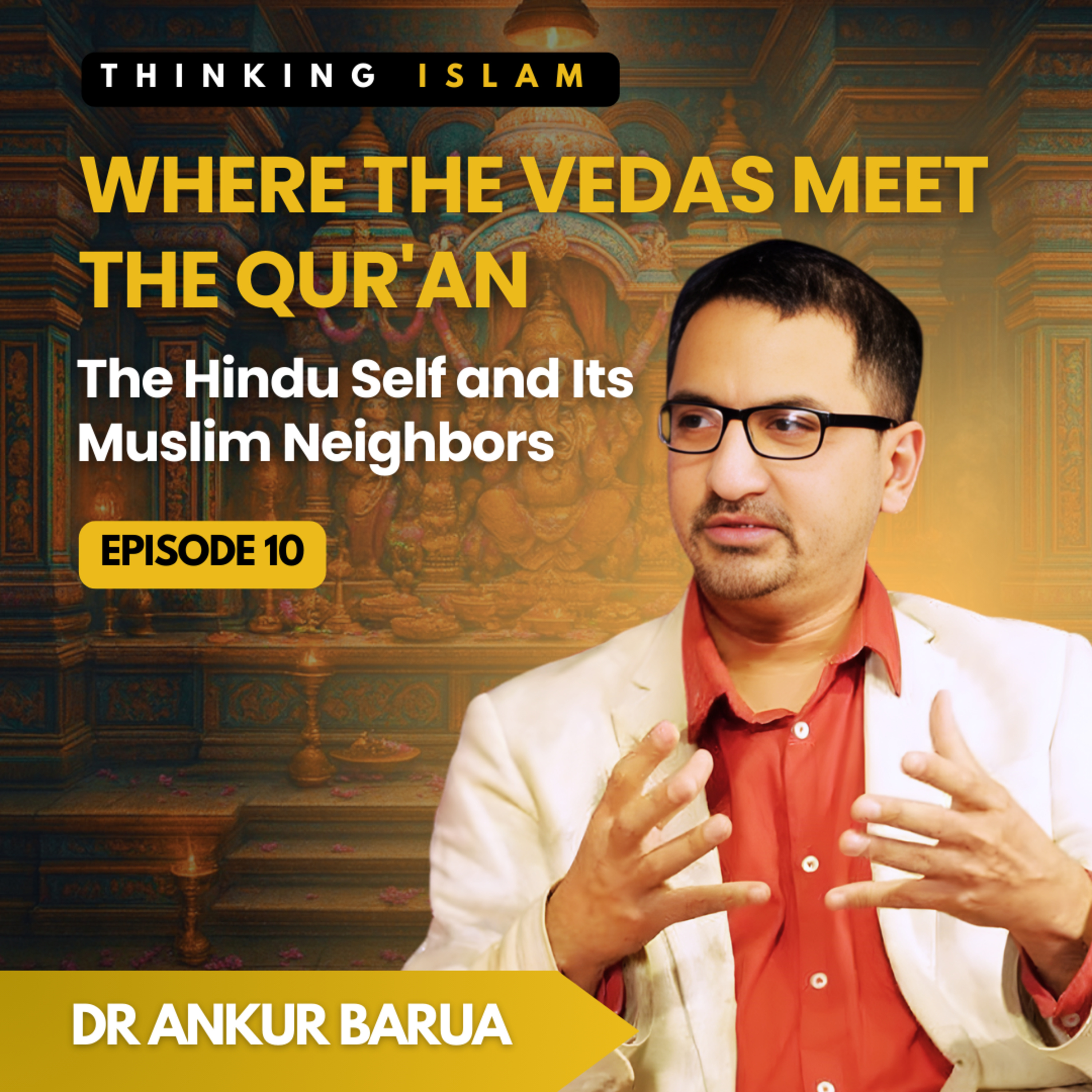
Where Vedas Meet Qur'an: Hindu Self & its Muslim Neighbours with Dr Ankur Barua | Thinking Islam | Ep.10
If God is everywhere, why can't God be in an image? If devotion dissolves the self before the Beloved, what remains to draw the line between Hindu and Muslim? And can we ever find an answer to suffering that satisfies both the heart and the mind? Drawing from his acclaimed book, "The Hindu Self and Its Muslim Neighbors," Dr Barua guides us through the shared devotional languages of Bhakti and Sufi
Ghazālī and Rāzī on Miracles and the Occult by Dr Muhammad Fariduddin Attar
In this episode, Dr Attar explores how two major theologians — al-Ghazālī and Fakhr al-Dīn al-Rāzī — challenged the idea that miracles serve as proof of prophethood. Drawing on their engagement with the occult sciences, Dr Attar shows how both thinkers believed that extraordinary acts could be imitated by magicians and thaumaturges, raising new questions about what truly verifies a prophet. He con
Divine Speech, Revelation, and Prophethood in Akbarī Thought by Dr Halim Calis
Dr Calis introduces listeners to the rich metaphysical world of Ibn al-‘Arabī and the Akbarī tradition, where revelation is seen as an ontological process rather than a historical event. He explains how divine speech unfolds through the hierarchical realms of existence and clarifies the misunderstood distinction between risāla (messengership) and wilāya (sainthood). The discussion connects classic
Ibn Taymiyya’s Epistemology of Prophethood and Miracles by Dr Nazir Khan
Dr Nazir Khan presents Ibn Taymiyya’s comprehensive rethinking of prophetic evidence. Rather than relying solely on miracles, Ibn Taymiyya integrates moral integrity, rational coherence, and alignment with human nature into a broader epistemology of prophethood. The episode examines his critique of kalām theologians, his distinction between angelic and jinn-assisted feats, and his preference for Q
Hume’s ‘Of Miracles,’ Islam, and Prophetic Revelation by Professor Imran Aijaz
In this presentation, Professor Aijaz revisits David Hume’s famous critique of miracles and argues that it has major — and often overlooked — implications for Muslim philosophy of religion. He explains why arguments for prophecy based on miracle reports fail under Hume’s analysis and calls for Muslim philosophers to rethink the epistemological foundations of belief in prophecy and revelation.
Where Falsafa Meets Analytic Philosophy of Religion: A Farabian-Hickian View of Prophecy by Dr Jamie Turner
Dr Jamie Turner brings the medieval philosophy of al-Fārābī into conversation with the modern thought of John Hick. He proposes that both thinkers offer a “bottom-up” model of prophecy that emphasises human intellectual and moral refinement. This model opens possibilities for religious pluralism and offers new ways to respond to epistemic and moral challenges in Islam, while still preserving much
The Moral Function of Revelation in an Age of Reason by Dr Amir Saemi
Dr Saemi tackles the tension between revelation and independent moral judgment. He argues that when a believer perceives a moral conflict, it is rational to follow their moral reasoning — but this does not render revelation redundant. Instead, revelation provides new moral reasons, including coordination solutions and relationship-based reasons tied to one’s bond with God.