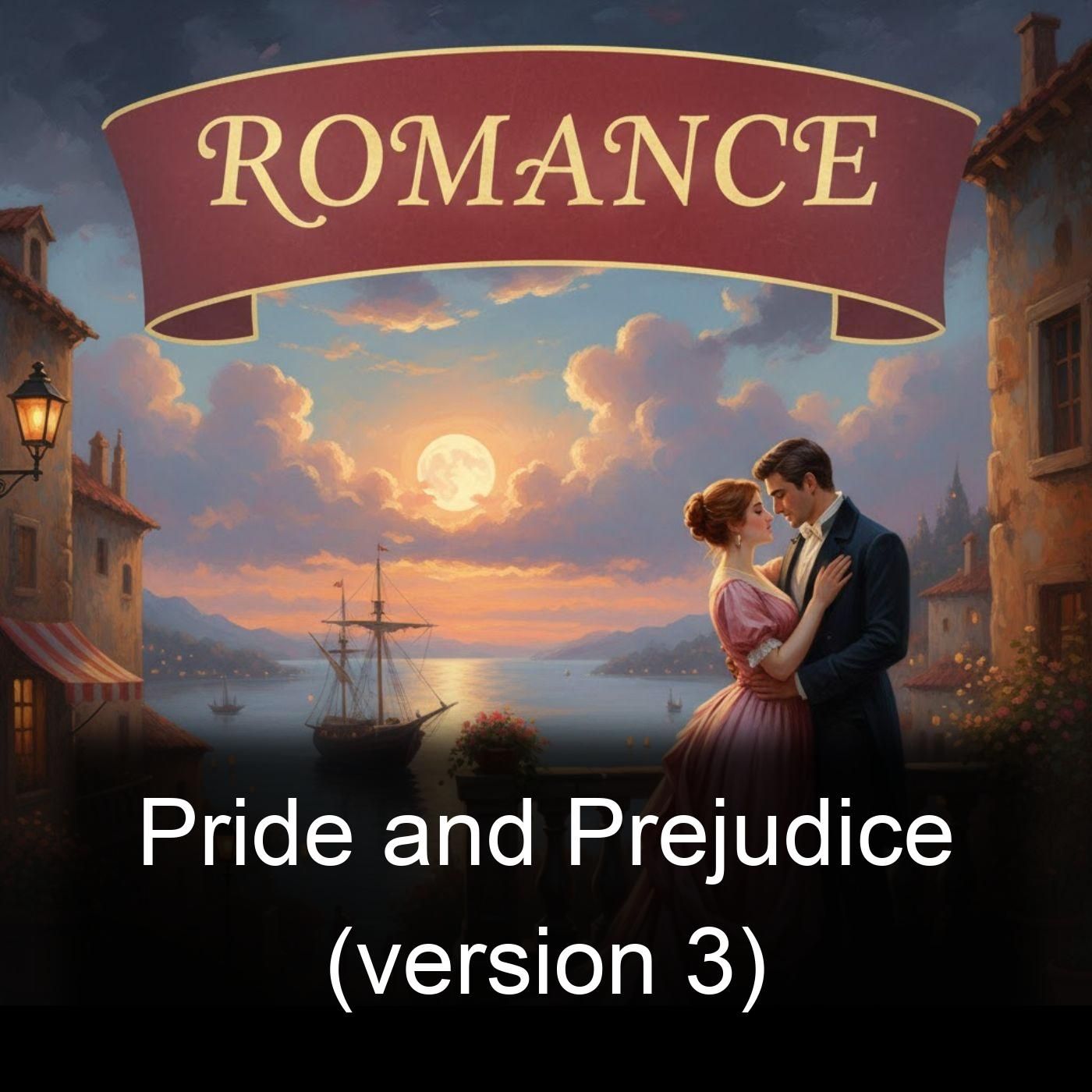
Pride and Prejudice (version 3)
Pride and Prejudice is Jane Austen's most celebrated novel, beginning with the iconic line about a single man in possession of a good fortune. Originally titled First Impressions, it was written between 1796 and 1797 and published in 1813. This classic story of love, class, and reputation is narrated in this audiobook version.
Episodes
Selected Poems - Urbina-Luis Urbina
"Selected Poems" by Urbina-Luis Urbina offers a curated collection of evocative verses that explore the depths of human emotion and experience. Urbina's work resonates with themes of love, identity, and the intricacies of life, making it a timeless reflection on the human condition. The lyrical beauty and profound insights found in these poems invite listeners to pause and reflect on their own liv
American Politician-Francis Marion Crawford
"American Politician" by Francis Marion Crawford delves into the intricacies of American political life, capturing the essence of ambition, power, and the moral dilemmas faced by those who seek to influence the course of governance. This work remains relevant today as it explores themes of integrity, the complexities of leadership, and the impact of personal values on public life. Crawford's keen
H.M.S. Pinafore; Or, The Lass That Loved A Sailor-W. S. Gilbert
H.M.S. Pinafore; Or, The Lass That Loved A Sailor by W. S. Gilbert is a delightful operetta that explores themes of love, class, and loyalty aboard a British warship. The story humorously examines the romantic entanglements between a sailor and the captain's daughter, highlighting the absurdities of social hierarchy and the power of true love. Its witty dialogue and catchy melodies make it a timel
Germania-Publius Cornelius Tacitus
"Germania" by Publius Cornelius Tacitus offers a detailed ethnographic account of the tribes inhabiting ancient Germany, reflecting on their customs, governance, and societal structures. This work is not only a historical document but also a profound exploration of cultural identity and the contrasts between civilization and barbarism. Tacitus's observations invite listeners to contemplate the com
Golden Age-Kenneth Grahame
"Golden Age" by Kenneth Grahame invites listeners into a whimsical exploration of childhood and the enchanting world of nature, reflecting on the joys and trials of youth. This collection of stories captures the essence of innocence and adventure, resonating with anyone who cherishes the fleeting moments of childhood wonder. Grahame's lyrical prose and vivid imagery create a timeless charm that co
Power-House-John Buchan
"Power-House-John Buchan" is a compelling exploration of ambition, power, and the human spirit, reflecting the timeless struggle for influence and success. Buchan's narrative delves into the complexities of leadership and the moral dilemmas faced by those who seek to wield power, making it a thought-provoking listen for anyone interested in the dynamics of authority and responsibility. The themes
House of Cobwebs and Other Stories-George Gissing
"House of Cobwebs and Other Stories" by George Gissing invites listeners into a world where the intricacies of human relationships and the struggles of everyday life unfold with poignant clarity. Gissing's exploration of themes such as social class, the passage of time, and the complexities of love and ambition resonate deeply, reflecting the timeless nature of human experience. His keen observati
Robinson Crusoe in Words of One Syllable-Lucy Aikin, Daniel Defoe
"Robinson Crusoe in Words of One Syllable" by Lucy Aikin and Daniel Defoe retells the classic tale of survival and adventure in a simplified format. This adaptation captures the essence of Crusoe's journey as he faces isolation and challenges on a deserted island, emphasizing themes of resilience, ingenuity, and the human spirit's capacity to endure. Hearing this version now allows listeners to ap
At A Lunar Eclipse-Thomas Hardy
"At A Lunar Eclipse" by Thomas Hardy invites listeners into a contemplative exploration of human experience against the backdrop of a celestial event. Hardy's work reflects on the interplay between nature and the human condition, highlighting themes of introspection and the profound impact of the universe on our lives. The lunar eclipse serves as a metaphor for transformation and the cyclical natu
Dogs Of Boytown-Walter Alden Dyer
"Dogs Of Boytown" by Walter Alden Dyer invites listeners into a vivid exploration of canine companionship and the unique bond between dogs and their human counterparts. This work captures the essence of loyalty, friendship, and the joy that dogs bring to our lives, themes that resonate deeply even today as many seek solace and connection in the company of their pets. The narrative celebrates the e
Mary Louise-L. Frank Baum
"Mary Louise-L. Frank Baum" invites listeners into a captivating narrative that showcases the imaginative storytelling of Frank Baum, best known for his iconic "Wizard of Oz." This audiobook offers a glimpse into Baum's unique style and whimsical world, reflecting themes of adventure, courage, and self-discovery that continue to resonate with audiences today. The enduring appeal of Baum's work lie
Coming of Bill (or Their Mutual Child; or The White Hope, Version 2)-P. G. Wodehouse
"Coming of Bill (or Their Mutual Child; or The White Hope, Version 2)" by P. G. Wodehouse is a delightful exploration of relationships and the complexities of life through humor and wit. This engaging tale captures the essence of human connection, focusing on the themes of love, misunderstanding, and the pursuit of happiness. Wodehouse's signature comedic style brings a timeless charm that continu
France At War On the Frontier of Civilization-Rudyard Kipling
"France At War On the Frontier of Civilization" by Rudyard Kipling delves into the complexities of conflict and the human experience amid the turmoil of war. This insightful work captures the essence of a nation grappling with the challenges of its time, reflecting themes of courage, resilience, and the impact of war on civilization. Kipling's poignant observations resonate today, reminding us of
Affair at the Semiramis Hotel-A. E. W. Mason
"Affair at the Semiramis Hotel" by A. E. W. Mason invites listeners into a world of intrigue and mystery set against the backdrop of a luxurious hotel. The narrative unfolds with a captivating exploration of human relationships and the complexities that arise within them, making it a timeless tale of love, betrayal, and the pursuit of happiness. Its themes of deception and the moral dilemmas faced
Selections from Harris's Cabinet-William Roscoe
"Selections from Harris's Cabinet" by William Roscoe offers a curated glimpse into the rich tapestry of knowledge and thought from a pivotal era. This collection showcases a variety of essays and reflections that illuminate the intellectual landscape of its time, making it a significant resource for those interested in historical perspectives on culture and society. The enduring themes of inquiry,
Afternoon in July-Rosanna Eleanor Leprohon
"Afternoon in July" by Rosanna Eleanor Leprohon captures the essence of a summer's day, inviting listeners to immerse themselves in a narrative that reflects the beauty and simplicity of life. This timeless tale resonates with themes of nature, introspection, and the fleeting moments that shape our experiences, making it a perfect companion for those seeking solace in the written word. Leprohon's
Wooden Horse-Hugh Walpole
"Wooden Horse" by Hugh Walpole invites listeners into a captivating narrative that explores themes of resilience, human nature, and the complexities of life. This enduring tale resonates with audiences today as it reflects the struggles and triumphs that define the human experience. Walpole's masterful storytelling captures the essence of courage in the face of adversity, making it a poignant remi
Mary Louise Solves a Mystery-L. Frank Baum
"Mary Louise Solves a Mystery" by L. Frank Baum invites listeners into a captivating tale of intrigue and adventure as the clever Mary Louise takes on the challenge of unraveling a mystery. This engaging story showcases the themes of curiosity, bravery, and the pursuit of truth, making it a timeless narrative that resonates with audiences today. Baum's ability to blend imaginative storytelling wit
No More Parades-Ford Madox Ford
No More Parades by Ford Madox Ford is a profound exploration of the human experience amid the chaos of war and societal change. This powerful narrative delves into themes of disillusionment, identity, and the relentless pursuit of meaning in turbulent times. Its rich characterizations and evocative prose invite listeners to reflect on the complexities of life, making it a timeless work that resona
Some Short Christmas Stories-Charles Dickens
"Some Short Christmas Stories" by Charles Dickens captures the spirit of the holiday season through a collection of heartwarming tales that reflect themes of generosity, redemption, and the joy of togetherness. Dickens, a master storyteller, weaves narratives that resonate with the timeless values of compassion and goodwill, making this audiobook a perfect companion during the festive period. The
061 - Chapter 61
Pride and Prejudice stands as Jane Austen’s most celebrated novel, beginning with one of literatures most iconic lines “It is a truth universally acknowledged, that a single man in possession of a good fortune, must be in want of a wife.” Originally penned between 1796 and 1797 under the title First Impressions, it underwent significant revisions before finally being published on January 28, 1813,
060 - Chapter 60
Pride and Prejudice stands as Jane Austen’s most celebrated novel, beginning with one of literatures most iconic lines “It is a truth universally acknowledged, that a single man in possession of a good fortune, must be in want of a wife.” Originally penned between 1796 and 1797 under the title First Impressions, it underwent significant revisions before finally being published on January 28, 1813,
059 - Chapter 59
Pride and Prejudice stands as Jane Austen’s most celebrated novel, beginning with one of literatures most iconic lines “It is a truth universally acknowledged, that a single man in possession of a good fortune, must be in want of a wife.” Originally penned between 1796 and 1797 under the title First Impressions, it underwent significant revisions before finally being published on January 28, 1813,
058 - Chapter 58
Pride and Prejudice stands as Jane Austen’s most celebrated novel, beginning with one of literatures most iconic lines “It is a truth universally acknowledged, that a single man in possession of a good fortune, must be in want of a wife.” Originally penned between 1796 and 1797 under the title First Impressions, it underwent significant revisions before finally being published on January 28, 1813,
057 - Chapter 57
Pride and Prejudice stands as Jane Austen’s most celebrated novel, beginning with one of literatures most iconic lines “It is a truth universally acknowledged, that a single man in possession of a good fortune, must be in want of a wife.” Originally penned between 1796 and 1797 under the title First Impressions, it underwent significant revisions before finally being published on January 28, 1813,
056 - Chapter 56
Pride and Prejudice stands as Jane Austen’s most celebrated novel, beginning with one of literatures most iconic lines “It is a truth universally acknowledged, that a single man in possession of a good fortune, must be in want of a wife.” Originally penned between 1796 and 1797 under the title First Impressions, it underwent significant revisions before finally being published on January 28, 1813,
055 - Chapter 55
Pride and Prejudice stands as Jane Austen’s most celebrated novel, beginning with one of literatures most iconic lines “It is a truth universally acknowledged, that a single man in possession of a good fortune, must be in want of a wife.” Originally penned between 1796 and 1797 under the title First Impressions, it underwent significant revisions before finally being published on January 28, 1813,
054 - Chapter 54
Pride and Prejudice stands as Jane Austen’s most celebrated novel, beginning with one of literatures most iconic lines “It is a truth universally acknowledged, that a single man in possession of a good fortune, must be in want of a wife.” Originally penned between 1796 and 1797 under the title First Impressions, it underwent significant revisions before finally being published on January 28, 1813,
053 - Chapter 53
Pride and Prejudice stands as Jane Austen’s most celebrated novel, beginning with one of literatures most iconic lines “It is a truth universally acknowledged, that a single man in possession of a good fortune, must be in want of a wife.” Originally penned between 1796 and 1797 under the title First Impressions, it underwent significant revisions before finally being published on January 28, 1813,
052 - Chapter 52
Pride and Prejudice stands as Jane Austen’s most celebrated novel, beginning with one of literatures most iconic lines “It is a truth universally acknowledged, that a single man in possession of a good fortune, must be in want of a wife.” Originally penned between 1796 and 1797 under the title First Impressions, it underwent significant revisions before finally being published on January 28, 1813,
051 - Chapter 51
Pride and Prejudice stands as Jane Austen’s most celebrated novel, beginning with one of literatures most iconic lines “It is a truth universally acknowledged, that a single man in possession of a good fortune, must be in want of a wife.” Originally penned between 1796 and 1797 under the title First Impressions, it underwent significant revisions before finally being published on January 28, 1813,
050 - Chapter 50
Pride and Prejudice stands as Jane Austen’s most celebrated novel, beginning with one of literatures most iconic lines “It is a truth universally acknowledged, that a single man in possession of a good fortune, must be in want of a wife.” Originally penned between 1796 and 1797 under the title First Impressions, it underwent significant revisions before finally being published on January 28, 1813,
049 - Chapter 49
Pride and Prejudice stands as Jane Austen’s most celebrated novel, beginning with one of literatures most iconic lines “It is a truth universally acknowledged, that a single man in possession of a good fortune, must be in want of a wife.” Originally penned between 1796 and 1797 under the title First Impressions, it underwent significant revisions before finally being published on January 28, 1813,
048 - Chapter 48
Pride and Prejudice stands as Jane Austen’s most celebrated novel, beginning with one of literatures most iconic lines “It is a truth universally acknowledged, that a single man in possession of a good fortune, must be in want of a wife.” Originally penned between 1796 and 1797 under the title First Impressions, it underwent significant revisions before finally being published on January 28, 1813,
047 - Chapter 47
Pride and Prejudice stands as Jane Austen’s most celebrated novel, beginning with one of literatures most iconic lines “It is a truth universally acknowledged, that a single man in possession of a good fortune, must be in want of a wife.” Originally penned between 1796 and 1797 under the title First Impressions, it underwent significant revisions before finally being published on January 28, 1813,
046 - Chapter 46
Pride and Prejudice stands as Jane Austen’s most celebrated novel, beginning with one of literatures most iconic lines “It is a truth universally acknowledged, that a single man in possession of a good fortune, must be in want of a wife.” Originally penned between 1796 and 1797 under the title First Impressions, it underwent significant revisions before finally being published on January 28, 1813,
045 - Chapter 45
Pride and Prejudice stands as Jane Austen’s most celebrated novel, beginning with one of literatures most iconic lines “It is a truth universally acknowledged, that a single man in possession of a good fortune, must be in want of a wife.” Originally penned between 1796 and 1797 under the title First Impressions, it underwent significant revisions before finally being published on January 28, 1813,
044 - Chapter 44
Pride and Prejudice stands as Jane Austen’s most celebrated novel, beginning with one of literatures most iconic lines “It is a truth universally acknowledged, that a single man in possession of a good fortune, must be in want of a wife.” Originally penned between 1796 and 1797 under the title First Impressions, it underwent significant revisions before finally being published on January 28, 1813,
043 - Chapter 43
Pride and Prejudice stands as Jane Austen’s most celebrated novel, beginning with one of literatures most iconic lines “It is a truth universally acknowledged, that a single man in possession of a good fortune, must be in want of a wife.” Originally penned between 1796 and 1797 under the title First Impressions, it underwent significant revisions before finally being published on January 28, 1813,
042 - Chapter 42
Pride and Prejudice stands as Jane Austen’s most celebrated novel, beginning with one of literatures most iconic lines “It is a truth universally acknowledged, that a single man in possession of a good fortune, must be in want of a wife.” Originally penned between 1796 and 1797 under the title First Impressions, it underwent significant revisions before finally being published on January 28, 1813,
041 - Chapter 41
Pride and Prejudice stands as Jane Austen’s most celebrated novel, beginning with one of literatures most iconic lines “It is a truth universally acknowledged, that a single man in possession of a good fortune, must be in want of a wife.” Originally penned between 1796 and 1797 under the title First Impressions, it underwent significant revisions before finally being published on January 28, 1813,
040 - Chapter 40
Pride and Prejudice stands as Jane Austen’s most celebrated novel, beginning with one of literatures most iconic lines “It is a truth universally acknowledged, that a single man in possession of a good fortune, must be in want of a wife.” Originally penned between 1796 and 1797 under the title First Impressions, it underwent significant revisions before finally being published on January 28, 1813,
039 - Chapter 39
Pride and Prejudice stands as Jane Austen’s most celebrated novel, beginning with one of literatures most iconic lines “It is a truth universally acknowledged, that a single man in possession of a good fortune, must be in want of a wife.” Originally penned between 1796 and 1797 under the title First Impressions, it underwent significant revisions before finally being published on January 28, 1813,
038 - Chapter 38
Pride and Prejudice stands as Jane Austen’s most celebrated novel, beginning with one of literatures most iconic lines “It is a truth universally acknowledged, that a single man in possession of a good fortune, must be in want of a wife.” Originally penned between 1796 and 1797 under the title First Impressions, it underwent significant revisions before finally being published on January 28, 1813,
037 - Chapter 37
Pride and Prejudice stands as Jane Austen’s most celebrated novel, beginning with one of literatures most iconic lines “It is a truth universally acknowledged, that a single man in possession of a good fortune, must be in want of a wife.” Originally penned between 1796 and 1797 under the title First Impressions, it underwent significant revisions before finally being published on January 28, 1813,
036 - Chapter 36
Pride and Prejudice stands as Jane Austen’s most celebrated novel, beginning with one of literatures most iconic lines “It is a truth universally acknowledged, that a single man in possession of a good fortune, must be in want of a wife.” Originally penned between 1796 and 1797 under the title First Impressions, it underwent significant revisions before finally being published on January 28, 1813,
035 - Chapter 35
Pride and Prejudice stands as Jane Austen’s most celebrated novel, beginning with one of literatures most iconic lines “It is a truth universally acknowledged, that a single man in possession of a good fortune, must be in want of a wife.” Originally penned between 1796 and 1797 under the title First Impressions, it underwent significant revisions before finally being published on January 28, 1813,
034 - Chapter 34
Pride and Prejudice stands as Jane Austen’s most celebrated novel, beginning with one of literatures most iconic lines “It is a truth universally acknowledged, that a single man in possession of a good fortune, must be in want of a wife.” Originally penned between 1796 and 1797 under the title First Impressions, it underwent significant revisions before finally being published on January 28, 1813,
033 - Chapter 33
Pride and Prejudice stands as Jane Austen’s most celebrated novel, beginning with one of literatures most iconic lines “It is a truth universally acknowledged, that a single man in possession of a good fortune, must be in want of a wife.” Originally penned between 1796 and 1797 under the title First Impressions, it underwent significant revisions before finally being published on January 28, 1813,
032 - Chapter 32
Pride and Prejudice stands as Jane Austen’s most celebrated novel, beginning with one of literatures most iconic lines “It is a truth universally acknowledged, that a single man in possession of a good fortune, must be in want of a wife.” Originally penned between 1796 and 1797 under the title First Impressions, it underwent significant revisions before finally being published on January 28, 1813,
031 - Chapter 31
Pride and Prejudice stands as Jane Austen’s most celebrated novel, beginning with one of literatures most iconic lines “It is a truth universally acknowledged, that a single man in possession of a good fortune, must be in want of a wife.” Originally penned between 1796 and 1797 under the title First Impressions, it underwent significant revisions before finally being published on January 28, 1813,
030 - Chapter 30
Pride and Prejudice stands as Jane Austen’s most celebrated novel, beginning with one of literatures most iconic lines “It is a truth universally acknowledged, that a single man in possession of a good fortune, must be in want of a wife.” Originally penned between 1796 and 1797 under the title First Impressions, it underwent significant revisions before finally being published on January 28, 1813,
029 - Chapter 29
Pride and Prejudice stands as Jane Austen’s most celebrated novel, beginning with one of literatures most iconic lines “It is a truth universally acknowledged, that a single man in possession of a good fortune, must be in want of a wife.” Originally penned between 1796 and 1797 under the title First Impressions, it underwent significant revisions before finally being published on January 28, 1813,
028 - Chapter 28
Pride and Prejudice stands as Jane Austen’s most celebrated novel, beginning with one of literatures most iconic lines “It is a truth universally acknowledged, that a single man in possession of a good fortune, must be in want of a wife.” Originally penned between 1796 and 1797 under the title First Impressions, it underwent significant revisions before finally being published on January 28, 1813,
027 - Chapter 27
Pride and Prejudice stands as Jane Austen’s most celebrated novel, beginning with one of literatures most iconic lines “It is a truth universally acknowledged, that a single man in possession of a good fortune, must be in want of a wife.” Originally penned between 1796 and 1797 under the title First Impressions, it underwent significant revisions before finally being published on January 28, 1813,
026 - Chapter 26
Pride and Prejudice stands as Jane Austen’s most celebrated novel, beginning with one of literatures most iconic lines “It is a truth universally acknowledged, that a single man in possession of a good fortune, must be in want of a wife.” Originally penned between 1796 and 1797 under the title First Impressions, it underwent significant revisions before finally being published on January 28, 1813,
025 - Chapter 25
Pride and Prejudice stands as Jane Austen’s most celebrated novel, beginning with one of literatures most iconic lines “It is a truth universally acknowledged, that a single man in possession of a good fortune, must be in want of a wife.” Originally penned between 1796 and 1797 under the title First Impressions, it underwent significant revisions before finally being published on January 28, 1813,
024 - Chapter 24
Pride and Prejudice stands as Jane Austen’s most celebrated novel, beginning with one of literatures most iconic lines “It is a truth universally acknowledged, that a single man in possession of a good fortune, must be in want of a wife.” Originally penned between 1796 and 1797 under the title First Impressions, it underwent significant revisions before finally being published on January 28, 1813,
023 - Chapter 23
Pride and Prejudice stands as Jane Austen’s most celebrated novel, beginning with one of literatures most iconic lines “It is a truth universally acknowledged, that a single man in possession of a good fortune, must be in want of a wife.” Originally penned between 1796 and 1797 under the title First Impressions, it underwent significant revisions before finally being published on January 28, 1813,
022 - Chapter 22
Pride and Prejudice stands as Jane Austen’s most celebrated novel, beginning with one of literatures most iconic lines “It is a truth universally acknowledged, that a single man in possession of a good fortune, must be in want of a wife.” Originally penned between 1796 and 1797 under the title First Impressions, it underwent significant revisions before finally being published on January 28, 1813,
021 - Chapter 21
Pride and Prejudice stands as Jane Austen’s most celebrated novel, beginning with one of literatures most iconic lines “It is a truth universally acknowledged, that a single man in possession of a good fortune, must be in want of a wife.” Originally penned between 1796 and 1797 under the title First Impressions, it underwent significant revisions before finally being published on January 28, 1813,
020 - Chapter 20
Pride and Prejudice stands as Jane Austen’s most celebrated novel, beginning with one of literatures most iconic lines “It is a truth universally acknowledged, that a single man in possession of a good fortune, must be in want of a wife.” Originally penned between 1796 and 1797 under the title First Impressions, it underwent significant revisions before finally being published on January 28, 1813,
019 - Chapter 19
Pride and Prejudice stands as Jane Austen’s most celebrated novel, beginning with one of literatures most iconic lines “It is a truth universally acknowledged, that a single man in possession of a good fortune, must be in want of a wife.” Originally penned between 1796 and 1797 under the title First Impressions, it underwent significant revisions before finally being published on January 28, 1813,
018 - Chapter 18
Pride and Prejudice stands as Jane Austen’s most celebrated novel, beginning with one of literatures most iconic lines “It is a truth universally acknowledged, that a single man in possession of a good fortune, must be in want of a wife.” Originally penned between 1796 and 1797 under the title First Impressions, it underwent significant revisions before finally being published on January 28, 1813,
017 - Chapter 17
Pride and Prejudice stands as Jane Austen’s most celebrated novel, beginning with one of literatures most iconic lines “It is a truth universally acknowledged, that a single man in possession of a good fortune, must be in want of a wife.” Originally penned between 1796 and 1797 under the title First Impressions, it underwent significant revisions before finally being published on January 28, 1813,
016 - Chapter 16
Pride and Prejudice stands as Jane Austen’s most celebrated novel, beginning with one of literatures most iconic lines “It is a truth universally acknowledged, that a single man in possession of a good fortune, must be in want of a wife.” Originally penned between 1796 and 1797 under the title First Impressions, it underwent significant revisions before finally being published on January 28, 1813,
015 - Chapter 15
Pride and Prejudice stands as Jane Austen’s most celebrated novel, beginning with one of literatures most iconic lines “It is a truth universally acknowledged, that a single man in possession of a good fortune, must be in want of a wife.” Originally penned between 1796 and 1797 under the title First Impressions, it underwent significant revisions before finally being published on January 28, 1813,
014 - Chapter 14
Pride and Prejudice stands as Jane Austen’s most celebrated novel, beginning with one of literatures most iconic lines “It is a truth universally acknowledged, that a single man in possession of a good fortune, must be in want of a wife.” Originally penned between 1796 and 1797 under the title First Impressions, it underwent significant revisions before finally being published on January 28, 1813,
013 - Chapter 13
Pride and Prejudice stands as Jane Austen’s most celebrated novel, beginning with one of literatures most iconic lines “It is a truth universally acknowledged, that a single man in possession of a good fortune, must be in want of a wife.” Originally penned between 1796 and 1797 under the title First Impressions, it underwent significant revisions before finally being published on January 28, 1813,
012 - Chapter 12
Pride and Prejudice stands as Jane Austen’s most celebrated novel, beginning with one of literatures most iconic lines “It is a truth universally acknowledged, that a single man in possession of a good fortune, must be in want of a wife.” Originally penned between 1796 and 1797 under the title First Impressions, it underwent significant revisions before finally being published on January 28, 1813,
011 - Chapter 11
Pride and Prejudice stands as Jane Austen’s most celebrated novel, beginning with one of literatures most iconic lines “It is a truth universally acknowledged, that a single man in possession of a good fortune, must be in want of a wife.” Originally penned between 1796 and 1797 under the title First Impressions, it underwent significant revisions before finally being published on January 28, 1813,
010 - Chapter 10
Pride and Prejudice stands as Jane Austen’s most celebrated novel, beginning with one of literatures most iconic lines “It is a truth universally acknowledged, that a single man in possession of a good fortune, must be in want of a wife.” Originally penned between 1796 and 1797 under the title First Impressions, it underwent significant revisions before finally being published on January 28, 1813,
009 - Chapter 09
Pride and Prejudice stands as Jane Austen’s most celebrated novel, beginning with one of literatures most iconic lines “It is a truth universally acknowledged, that a single man in possession of a good fortune, must be in want of a wife.” Originally penned between 1796 and 1797 under the title First Impressions, it underwent significant revisions before finally being published on January 28, 1813,
008 - Chapter 08
Pride and Prejudice stands as Jane Austen’s most celebrated novel, beginning with one of literatures most iconic lines “It is a truth universally acknowledged, that a single man in possession of a good fortune, must be in want of a wife.” Originally penned between 1796 and 1797 under the title First Impressions, it underwent significant revisions before finally being published on January 28, 1813,
007 - Chapter 07
Pride and Prejudice stands as Jane Austen’s most celebrated novel, beginning with one of literatures most iconic lines “It is a truth universally acknowledged, that a single man in possession of a good fortune, must be in want of a wife.” Originally penned between 1796 and 1797 under the title First Impressions, it underwent significant revisions before finally being published on January 28, 1813,
006 - Chapter 06
Pride and Prejudice stands as Jane Austen’s most celebrated novel, beginning with one of literatures most iconic lines “It is a truth universally acknowledged, that a single man in possession of a good fortune, must be in want of a wife.” Originally penned between 1796 and 1797 under the title First Impressions, it underwent significant revisions before finally being published on January 28, 1813,
005 - Chapter 05
Pride and Prejudice stands as Jane Austen’s most celebrated novel, beginning with one of literatures most iconic lines “It is a truth universally acknowledged, that a single man in possession of a good fortune, must be in want of a wife.” Originally penned between 1796 and 1797 under the title First Impressions, it underwent significant revisions before finally being published on January 28, 1813,
004 - Chapter 04
Pride and Prejudice stands as Jane Austen’s most celebrated novel, beginning with one of literatures most iconic lines “It is a truth universally acknowledged, that a single man in possession of a good fortune, must be in want of a wife.” Originally penned between 1796 and 1797 under the title First Impressions, it underwent significant revisions before finally being published on January 28, 1813,
003 - Chapter 03
Pride and Prejudice stands as Jane Austen’s most celebrated novel, beginning with one of literatures most iconic lines “It is a truth universally acknowledged, that a single man in possession of a good fortune, must be in want of a wife.” Originally penned between 1796 and 1797 under the title First Impressions, it underwent significant revisions before finally being published on January 28, 1813,
002 - Chapter 02
Pride and Prejudice stands as Jane Austen’s most celebrated novel, beginning with one of literatures most iconic lines “It is a truth universally acknowledged, that a single man in possession of a good fortune, must be in want of a wife.” Originally penned between 1796 and 1797 under the title First Impressions, it underwent significant revisions before finally being published on January 28, 1813,