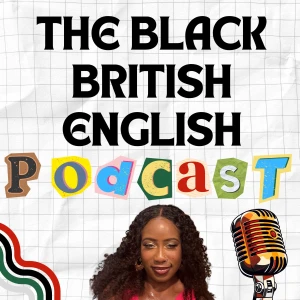
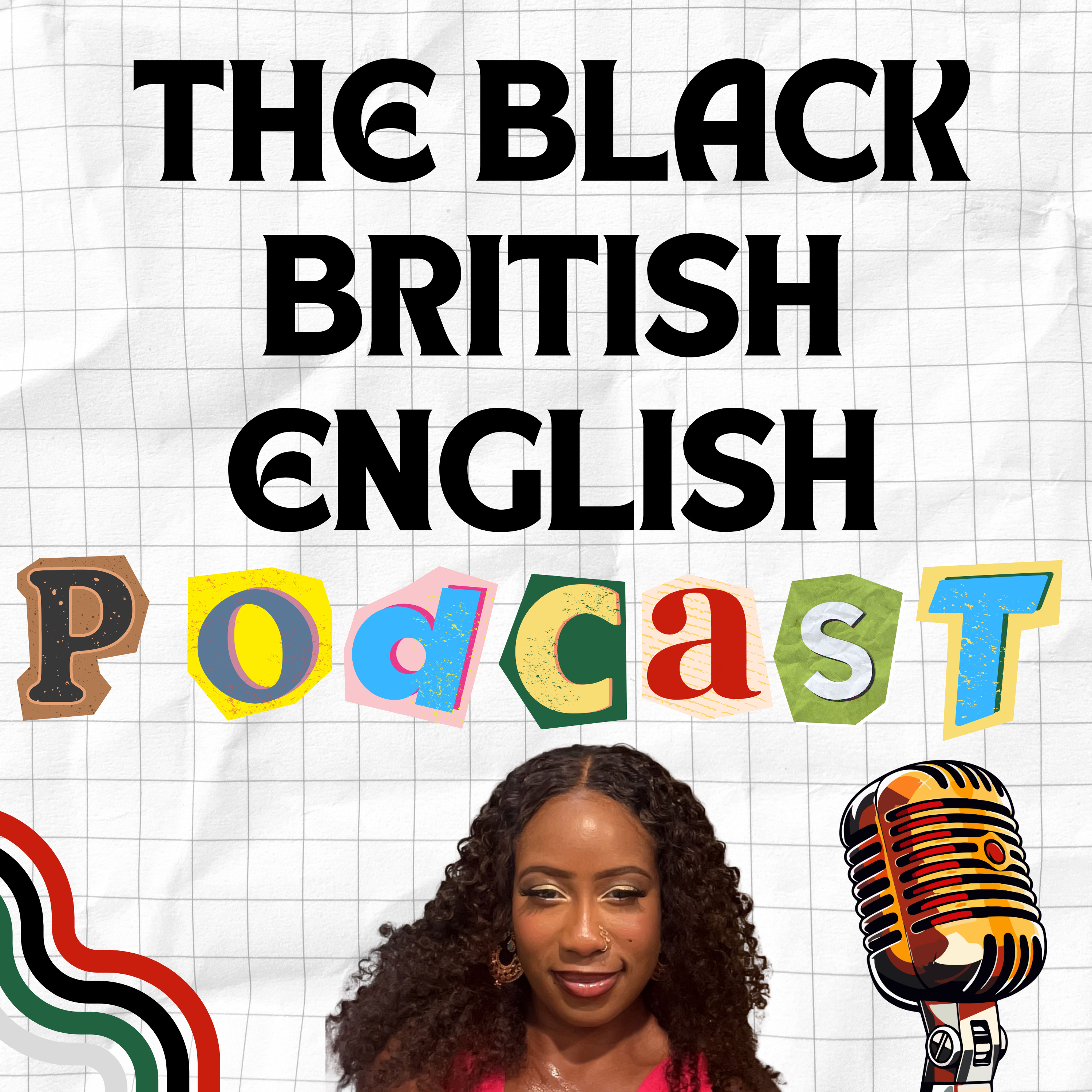
The Black British English Podcast
The Black British English Podcast, hosted by Ife Thompson, explores Black British English and Black language practices. It covers topics of language justice and the joy found in Black linguistic traditions. Ife, a self-described Creole polyglot, brings personal insight to these conversations.
Episodes
A Yoruba Museum Without Yoruba: Language, Erasure & My Trip to Lagos 🇳🇬🖼️
In this episode, I reflect on my recent trip to Lagos and my visit to the John Randle Yoruba Museum, a space dedicated to Yoruba history and heritage, yet one that left me with a pressing linguistic question:Where is the Yoruba language?As a Lawyer who loves African languages , I went in expecting to see Yoruba not only represented culturally and spiritually, but also recognised as a living, compl
Silencing Patwa? My Thoughts on Jamaica’s Parliament Language Ban 🇯🇲
In this episode, I share my honest thoughts on the controversy surrounding Jamaican Patwa being restricted in Jamaica’s Parliament. From culture and identity to classism, colonial influence, and accessibility.This isn’t just about language preference, it raises deeper questions about power, identity, class, and whose voice is considered “legitimate” in formal spaces.
Africa Stayed Multilingual… The Diaspora Needs to Catch Up
In this episode, we’re talking about the power of language and why Black people across the diaspora should embrace becoming more multilingual. Across Africa, it’s normal for many people to speak 3, 4, 5 languages and some even 9 or more. That ability creates connection, opportunity, cultural pride, and unity.Meanwhile, many of us in the diaspora were disconnected from our ancestral languages throu
Babylon Can’t Name Wi - why all Black Languages are Creoles 🇯🇲🇳🇬🇱🇷🇧🇧🇬🇭
This podcast episode is rooted in a Pan African understanding that language lives through people, memory, and relationship rather than through external classification. It moves away from the idea that speech must be measured, ranked, or validated by inherited Western frameworks. The word creole and similar labels are examined not as neutral descriptions but as products of particular histories that
A Black Man was Recalled to a UK Prison for saying “My Nigga” ! Linguistic Injustice ⚖️🇬🇧 (PART 1)
In this powerful and timely episode, I take you inside one of the many legal cases I have acted on where Black languages practices have been criminalised. In this case a Black man was recalled to prison simply for saying “my nigga” to a Black police officer while on licence. What followed was a wrongful prosecution rooted not in a fundamental misunderstanding of African American Vernacular English
Why Gatekeeping the AAVE Term “Fed” Is Counter-Revolutionary
In this episode, we unpack why gatekeeping the AAVE term “fed” when used between Black people across the diaspora is not revolutionary, but counter-revolutionary.For many Black people outside the United States, Black Americanness is often the most visible, and sometimes the only, representation of Blackness we encounter on television, in music, and across global media. That visibility has shaped s
🎙️ Clock It 🤏🏾🤏🏾🤏🏾: Black/Ballroom Expression in Sign Language 🖐🏾
From ballroom culture to Yoruba sign language, Black expression is all about movement, rhythm, and style. In this episode, we explore how Clock It and finger-tapping gestures from ballroom culture have influenced Black sign language, and how Black people naturally use gestures to communicate every day. We dive into the history, the cultural connections, and the creativity behind these movements, s
Code-Switching Is Political
Code-switching isn’t just a habit; it’s a response to racial power. In this episode, we call out the denial of the “white voice,” explore how Black folks are pushed to alter their language for safety and survival, and argue that fighting for linguistic freedom is fighting for liberation itself.. This episode argues that language is not neutral—it’s a battleground. And choosing to speak in your own
White People Don’t Get to Police Our Languages! ✋🏾🗣️🔥
Black language, Black rules. 🖤🔥💬 In this episode, I call out white commentary policing our words, dismantle the idea that the academy gets to decide what counts as ‘proper’ language, and reclaim our voices on our own terms. From AAVE to Black British English, this is a bold reminder that our speech belongs to us and us alone. I’m encouraging every Black person to speak freely, unapologetically, an
What Makes Black British Words So Popular in South Africa? 🔥🇿🇦
What happens when South Africans start dropping “Mandem” and “calm” the moment they find out you’re from London? Join me as I recount my experiences navigating South African social scenes and how the rhythm, swagger, and vocabulary of Black British English have found a home far from the UK. More than just slang, BBE stands as a vibrant marker of Black Britishness, a language born of diaspora and n
🎭📱 “Digital Blackface 2.0: Stop Sharing Those AI ‘Roadman in Parliament’ Videos”
Black British English is a language full of cultural rhythm shaped by generations of Caribbean and African influence. Yet on TikTok, it’s being copied, filtered and remixed into something hollow. White content creators are using AI, especially tools like Sora 2, to generate videos that mimic the sound and swagger of “roadman” speech, the same language they still mocked yet these audiences are eati
Assata Shakur’s Rejection of Her European Name & Language Justice
By rejecting her Eurocentric name, Assata reclaimed the right to self-definition on her own terms and in ancestral languages. • “Assata” (Swahili: she who struggles), “Olugbala” (Yoruba: savior), and “Shakur” (Arabic: thankful) each root her in African and diasporic linguistic traditions. • This is language justice in action: choosing names that restore cultural dignity and affirm African linguist
🇳🇬 Pidgin Na Full Language & Owambe vs Owanbe 🎉🍾”
🎙️ Episode Explainer (English):In this episode, we dive deep to show that Pidgin English isn’t “half a language” at all, it stands strong 💪🏽 as a complete language spoken by millions. Then we shift to Yoruba culture 🎶🥁, breaking down why both Owambe and Owanbe are correct when it comes to party talk 🍾💃. Expect laughter, good vibes, and some spicy debates on language and culture!🎙️ Episode Explaine
🚫 Stop Explaining Black Words Online 📱 London’s 6 Black Accents 🔊
Black British English, AAVE, Pidgin, Creoles and Patwa are not trends. Yet online, every word, phrase, and term gets packaged into a TikTok explainer video for the world to decode. 📱🚫 Enough.
In this episode, we take on: Why “MLE” is a lazy, erasing label for Black British language. ❌ How over-explaining Black speech perpetuates cultural appropriation and erases our voices. The difference betwe
Rolling Ray Changed the Way We Talk… and Why I’m Learning Haitian 🇭🇹Creole
In this episode I reflect on the cultural impact of Rolling Ray and the unique ways he influenced African American Vernacular English. Since his passing many people have been thinking about how language and identity evolve through voices like his and it is super important that his impact is written about and widely acknowledged.I also share my own journey of picking up Haitian Creole on Duolingo a
Our Languages, Our Legacy: International Day for People of African Descent 🇲🇶🇰🇳🇧🇫🇬🇭🇳🇬🇯🇲
🌍✨ Join us as we celebrate International Day for People of African Descent by diving into the incredible world of Creole languages and the cultures they carry across the diaspora. From Haitian Creole 🇭🇹 on Duolingo to BBC Pidgin 🇳🇬, and the vibrant braadkyaasjamiekan 🇯🇲 and TwoSaints 🇱🇨on instagram , we explore how language connects us to our African roots and the history of our people.Learn how w
Carnival Is Resistance: Soca, Creole, and the Politics of Joy at Notting Hill
Last week, I found myself dancing to soca from Antigua 🇦🇬and without even meaning to, I started picking up words and phrases in Antiguan Creole. In this episode, I unpack that moment: how soca isn’t just music to move your body, but a living archive of language, culture, and identity. We’ll talk about what makes Antiguan soca unique, how artists weave creole into their lyrics, and why Carnival mus
❤️🖤💚 Do For Self 2.0: Marcus Garvey’s Vision in Creole & Digital Spaces
Marcus Garvey told us: “One God, One Aim, One Destiny.”But what does that destiny look like in 2025 in the age of TikTok, Instagram, and global Creole culture?
On this special BBE Podcast episode marking Marcus Garvey’s 138th birthday, we explore how his Pan-African vision continues to live and breathe through the words we speak, the cultures we protect, and the digital tools we now hold in our ha
Asake, Yoruba, and the Lingering Legacy of Colonial Language Control
In this episode, I dive into the recent backlash against Nigerian artist Asake for using Yoruba on his Gunna feature and why the anger reveals something deeper: our communities are still wrestling with internalised anti-Black linguistic racism, a legacy of colonial language control that refuses to die quietly.I unpack the colonial history that positioned European languages like English as the “pro
Black Language, white systems: How schools police Black speech !!
What do a courtroom in 1979 Michigan and a government report in 1985 Britain have in common? The answer: Black language, and the systems that tried to silence it.This episode dives into why the way we speak is about so much more than grammar — it’s about race, power, and who gets to be heard. From the Ann Arbor AAVE case to the Swan Report in the UK, we’re looking at how schools, governments, and
Is Black British English a form of Time Travel via Afrofuturism?⏳
What does it mean to speak the future while carrying the past? In this episode, we dive into Black British English as an Afrofuturist language, one shaped by migration, resistance, and imagination. We explore how the hybrid dialects of Black Britain remix ancestral languages, colonizer tongues, and global Black languages to create something radically new: a sonic space where survival and style con
The Diaspora Loved It 🇯🇲🇸🇷🇸🇱 Nigerians Dragged Me Over Sabi & Pikini 🤓
What if Jamaican Patwa and West African Pidgin aren’t broken English but living African languages?
After my viral interview with Professor Hubert Devonish on the Caribbean roots of words like “pikini” and “sabi”, the diaspora responded with love — but not without backlash. Some people in the comments called us liars and a conversation about language and unity became distracted by a fight about ide
🇳🇬God Forbid Challenge : Why This Trend is Not Non-Black People’s Portion
In this podcast episode, I talk about all things wrong with non-Black people jumping aboard and on the “God Forbid Challenge” currently trending on social media. I take you through a range of issues mentioned below too, including:1. Accent Discrimination- Research shows that attention to linguistic cues like accents may be more potent than visual cues like skin color (Kinzler et al., 2007, 2009) w
Reflections on my trip to the Jamaican Language Unit
This episode is all about my visit to the Jamaican Language Unit (JLU) at the University of the West Indies, Mona—and trust me, it was a beautiful experience! I got to sit down with Professor Hubert Devonish, the man behind it all, to talk about his work globally and locally on giving Jamaican Patois the recognition and flowers it deserves and the push to make Patois an official language.
If you’
Anti-Black Linguistic Racism
In this episode, I explore the meaning of this term coined by Dr April Baker Bell and explore the ways in which we see this type of linguistic racism come up. I lastly go into the ways in which we can call it out as Black language speakers.
Can UK Slang be a Language?
Join your host Black Language Researcher Ife Thompson as she explores what makes something a “slang” and if what is called “UK Slang” meets the definition.
The Black British English Podcast (Trailer)
Recommended

Ukraine: The Latest
In Our Time: History
The Documentary Podcast
World Business Report
The Rest Is Money
The Rest Is History

Who We Are Now with Izzy & Richard Hammond

True Crime Investigators UK
Uk Mix RadioShow

CAA on General Aviation
Pod Save The King

Pride and Prejudice (version 6, dramatic reading)
