Voices - Conversations on Business and Human Rights from Around the World
In this ongoing series, activists, business executives, government officials, lawyers, academics, and other experts from around the world share topical stories about how businesses affect people's everyday lives. Developed by the Institute for Human Rights and Business (IHRB), the podcast elevates voices from governments, businesses, and civil society. It focuses on current events and real-world examples to examine the intersection of business and human rights. The show aims to make human rights a normal part of business practice through diverse perspectives and discussions.
Episodes

Lessons from Oman: Balancing a green transition with worker rights
Oman's economy has relied on oil and gas for decades. Now, the country is investing heavily in green hydrogen and renewables, whilst also rolling out one of the most significant social protection reforms for workers seen in the region in recent decades.
IHRB's Sarah Mostafa-Kamel speaks to Rumaitha Al Busaidi, an Omani scientist and environmental advocate, and Anfal Al Alawi, an energy sector and
AI and responsible business: emerging risks and opportunities
What do companies need to know about AI's impact on human rights, and how can it be harnessed as a force for good?
Ray Eitel-Porter is a global expert in AI governance, safety and ethics who advises multinational companies and the public sector, and is a member of IHRB’s International Advisory Council. He’s also the author of “Governing the Machine: How to Navigate the Risks of AI and Unlock its T
Navigating ‘Distributive Justice’ in the energy transition
IHRB's Head of Just Transitions, Haley St Dennis, and IHRB Research Fellow, Judy Hofmeyr, discuss the concept of ‘distributive justice’ - what is it really, how does it relate to the other forms of justice at the heart of any just transition, and why it can be a useful tool to help business practitioners involved in transition decision making.
World Cup special: business, human rights, and the beautiful game
IHRB’s Salil Tripathi speaks to Mary Harvey, CEO of the Centre for Sport and Human Rights, and Minky Worden, Director of Global Initiatives at Human Rights Watch. With the 2026 World Cup underway, they discuss whether FIFA's human rights framework is being upheld in practice.
Have the UNGPs really changed corporate behaviour?
IHRB's Salil Tripathi speaks to Anita Ramasastry, Professor of Law at the University of Washington, about whether the UNGPs have been effective at strengthening corporate accountability, and how they might evolve in the years to come.
Are the United Nations’ Guiding Principles on Business and Human Rights still relevant?
The UN Guiding Principles on Business and Human Rights were adopted 15 years. In this episode, IHRB’s Salil Tripathi speaks to Jane Nelson, the Director of the Corporate Responsibility Initiative at Harvard Kennedy Business School, about whether, in the current climate, the UNGPs are out of touch or more relevant than ever, and how both states and business actors can implement the Principles in th
Meaningful engagement: what it really takes to work well with communities
IHRB’s Salil Tripathi hears from Froydis Cameron-Johansson, a consultant who has spent nearly 30 years working with oil, gas, and mining companies. In this episode, you’ll hear why it’s so important to treat consultation with communities as an ongoing relationship and why FPIC (Free Prior and Informed Consent) goes far beyond getting a legal permit.
Crises colliding: the impact of dark fleets and conflict on seafarers
IHRB’s Francesca Fairbairn speaks to Mark Dickinson, outgoing General Secretary of Nautilus International, and Nathan Smith, a ship inspector with the International Transport Workers' Federation, to find out more about dark fleets. Together they examine the weaknesses in international maritime law that allow dark fleets to thrive, and the human cost borne by the seafarers on board.
The Dyson Case: a landmark moment for business and human rights?
A recent legal case involving Dyson and 24 migrant workers is being called a landmark moment for business and human rights—but why? After the UK Court of Appeal allowed the case to be heard in the UK, despite the alleged abuses taking place at a supplier factory in Malaysia, big questions are being raised about corporate accountability overseas.
In this episode, IHRB's Salil Tripathi is joined by
Financing a just transition for farmers: a story from Brazil
In this episode of Voices, IHRB’s Haley St. Dennis brings you closer to the world of agroforestry in Brazil. Haley speaks to Isabel Britez of Belterra, a B Corp working with farmers to turn climate and deforestation risks into real opportunities for resilient business and thriving rural livelihoods.
The biggest business and human rights issues in 2026
IHRB’s new CEO Brandee Butler is joined by Michael Clements, the newly appointed CEO of the Business and Human Rights Centre, for a conversation about leadership, and the shifting landscape for business and human rights.
Catalonia’s housing revolution: where affordability meets sustainability
In this episode of Voices, IHRB’s Haley St Dennis and Ainara Fernandez discuss an emerging housing model in Catalonia, which is aligning decarbonisation efforts with solutions to address issues like affordability and extreme temperatures. Can Catalonia’s housing model be a blueprint for just transitions in other housing markets around the world?
Just transitions in the Gujarat desert: a signal of a cleaner, fairer future for informal workers
Solar power is reshaping life for Gujarat’s salt farmers. Haley St. Dennis talks with SEWA’s Reema Nanavaty about the partnerships and training behind this just transition—and how women like Manguben are moving from debt to becoming solar technicians and community leaders. This episode features an audio story from IHRB’s JUST Stories project.
Looking back, looking forward - the future of human rights and business (Part 2)
How can the business and human rights agenda move forward amid the climate crisis, ongoing conflicts, and growing political divides?
Join Brandee M. Butler, IHRB’s new CEO, and John Morrison, founding CEO, for a reflective and inspiring conversation about the future of business and human rights.
Looking back, looking forward - lessons in human rights and business (Part 1)
In a special two-part series , join IHRB’s new CEO, Brandee M. Butler, and outgoing CEO, John Morrison, for a reflective and illuminating conversation on their work to strengthen respect for human rights in the business world - and the lessons they’ve learned along the way.
Are seafarers’ rights in crisis?
On World Maritime Day, join IHRB’s Francesca Fairbairn and Ben Bailey and Father Stephen Thanapaul from Mission to Seafarers for a discussion on seafarers' rights. What are the most pressing challenges facing seafarers? What protections do they need? What action is needed from the maritime industry? Are there examples of shipping companies getting it right?
Are business practices intensifying water scarcity?
Climate change has put a spotlight on our relationship with natural resources, especially water. In many parts of the world, the water scarcity crisis is being intensified by companies. Salil Tripathi from IHRB speaks to Peter Waldman, a senior reporter at Bloomberg Businessweek, and to Ravi Mariwala, the Founder and Chief Executive of an Indian water management company called Smaart Water. Peter
What key moments have shaped corporate responsibility?
How did the business and human rights movement evolve? What important moments and historic cases have helped shape responsible business today?
Anita Ramasastry, Professor of Law at the University of Washington and faculty member on IHRB’s Masters course in Business and Human Rights, joins IHRB’s Salil Tripathi to discuss the evolution of the business and human rights movement by exploring the piv
Human rights reporting and disclosure - what’s the view from the ground amidst evolving EU regulation?
IHRB's Vicky Bowman speaks to Giles Bolton from membership body Ethical Trading Initiative (ETI); Natalie Grillon from Open Supply Hub; and Emily Casswell from clothing retailer Bestseller. Together, they explore the role of voluntary standards and reporting to strengthen transparency in global supply chains and how these link to evolving regulatory requirements.
Human rights in the fishing industry: what are the pressing risks?
Over 60 million people make a living catching, farming and processing seafood. What are the predominant challenges they face?
IHRB’s Francesca Fairbairn explores human rights abuses in the global seafood industry with Pulitzer Prize winning journalist Ian Urbina, who has just released the second series of The Outlaw Ocean Podcast.
Collie’s just transition: a blueprint for the world’s eight million coal workers?
IHRB’s Haley St Dennis sits down with Darcy Gunning, the lead union organiser behind Collie’s transition negotiations, one of the world’s most successful examples of a just transition happening today. They talk about the high and lows so far, as well as insights for managers of transitions - whether working in a company, government department, union, or local community group - to replicate the mos
Just transitions - how can theory become reality?
In this episode, IHRB’s CEO, John Morrison, and colleague Haley St Dennis, discuss the state of just transitions in 2025, and the urgent need to tackle social, economic and environmental challenges as one, systemic challenge. John shares ideas for how to apply this thinking in practice.
Are we about to see a retreat from corporate responsibility?
The international architecture that underpins universal human rights is under attack. What does this mean for responsible business?
IHRB’s Salil Tripathi, speaks to Kenneth Roth, author, attorney and the former head of international organisation, Human Rights Watch. Ken and Salil discuss progress in corporate responsibility and accountability in recent decades, and what this might mean for the fu
The UK Modern Slavery Act - 10 years on where are we now?
Has the UK Modern Slavery Act introduced in 2015 been effective in eradicating modern slavery?
IHRB’s Head of Migrant Workers Programme, Neill Wilkins, speaks to from Eleanor Lyons, the UK's Independent Anti-Slavery Commissioner. They discuss the effectiveness of the legislation; the importance of corporate accountability in the fight to end modern slavery; and the need for more robust measures
How can European Chambers of Commerce support effective human rights due diligence?
IHRB Senior Advisor, Vicky Bowman, speaks to Karina Ufert from the European Chamber of Commerce in Myanmar. Against the backdrop of the EU's proposed ‘omnibus package’ of sustainability directives, Karina shares how her organisation is helping companies with their human rights due diligence on the ground.
Vicky also speaks to IHRB colleague Sarah Mostafa-Kamel to discuss similar work being done
How can companies respect human rights while pursuing profits?
The adoption of the UNGPs in 2011 was a seminal moment and acknowledgement of the influence of business on people’s rights.
In the years that have passed since then, what have we learned about whether and how companies can respect human rights while pursuing profits?
To help answer this question IHRB’s CEO, John Morrison, speaks to Mike Posner, a human rights lawyer, former Assistant Secretary
Global challenges in 2025 - what do they mean for responsible business?
IHRB’s CEO, John Morrison, sits down with three colleagues, Salil Tripathi, Francesca Fairbairn, and Haley St. Dennis, to discuss a wide range of topics, from the backlash to DEI, to the value of international norms and standards, to how a second Trump term could impact just transitions.
Could a Fair Work Agency help enforce worker rights in the UK?
The organisations and government bodies responsible for enforcement of labour rights in the UK are fragmented - as they are in many countries around the world. Could proposals to create a single labour enforcement body - a Fair Work Agency - help improve business compliance with labour laws?
In this episode, Neill Wilkins (Head of IHRB’s Migrant Workers Programme) delves into UK labour regulatio
40 years later: what are the lessons from the Bhopal gas disaster?
40 years since the Bhopal gas disasters, which killed thousands and injured millions more, what have been the lessons for corporate accountability? IHRB’s Salil Tripathi speaks to survivor, Tahira Sultan, as well as Dr Usha Ramanathan, a human rights and legal scholar who has studied and worked on the Bhopal case extensively.
Just Energy Transition Partnerships, or JETPs - what are they and why do they matter?
What is a JETP and why is it so important to the just transition agenda? And what can we learn from South Africa’s JETP progress?
IHRB’s Haley St Dennis talks to Yuri Ramkissoon from South Africa’s Presidential Climate Commission, who is deeply involved in South Africa’s JETP. Together, they unpack the JETP and explores how this form of climate finance is supporting a just and equitable transitio
Real-world examples of just transitions - what can we learn?
What can we learn from real-world examples of transitions as they play out in countries at the centre of climate action, such as Brazil – home to the Amazon rainforest and host of COP30 in 2025?
In this episode IHRB’s Haley St Dennis is joined by Brazilian journalist Leonardo Sakamoto to discuss the human rights impacts of the Brazil's climate action.
Turning soft law into hard law - what are the implications of the EU CSDDD?
Heidi is the former Vice President of the European Parliament and has also recently joined IHRB's International Advisory Council.
What does the recent ruling against Chiquita mean for human rights?
This episode discusses a recent ruling in Florida that has found the company Chiquita liable for killings committed by a paramilitary group that was on the company's payroll in Colombia. It also explores the broader implications for businesses worldwide and the importance of adhering to international standards and codes of conduct when engaging private security companies.
Preventing ‘Greenlash’: what can we learn from positive climate action?
IHRB’s Head of Built Environment, Giulio Ferrini and host Deborah Sagoe have been speaking to people working on green transitions in cities around the world. They all share challenges and successes of green initiatives, from problems with ‘renovictions’, to pioneering housing developments driven by the right to housing.
The ESG backlash: where do we go from here?
David Schilling from the Interfaith Centre on Corporate Responsibility discusses the history and evolution of ESG with author and ESG expert Vasuki Shastry and IHRB’s Salil Tripathi.
They discuss the role of ethical investors; the current backlash to ESG and the importance of regulatory frameworks in promoting responsible business practices.
Working in a warzone: what risks do seafarers face?
In this episode, IHRB’s Francesca Fairbairn talks to John Attenborough from Mission to Seafarers and Ian Ralby, an expert in maritime law, about the safety and security of seafarers during times of conflict.
Listen for accounts from seafarers caught in attacks on commercial shipping vessels in the Red Sea; insights into the complexities of maritime law that can leave seafarers vulnerable; and ho
How should companies respond to snap military drafts?
When a state announces snap military conscription, how might companies respond to protect its employees?In this episode, IHRB’s Salil Tripathi and Vicky Bowman, explore the delicate balance companies must strike between compliance and resistance, and the creative strategies employed to protect their workforce. Salil is also joined by Nabi Abdullaev from Control Risks, a risk management consultant
How can companies respect the rights of Indigenous peoples impacted by renewable projects?
In the rush for renewable energy, what are the impacts on Indigenous peoples?In this episode, IHRB’s Frances House sits down with two human rights defenders, Robie Halip from the Philippines and Prabindra Shakya from Nepal. Robie is the coordinator of The Indigenous Peoples Major Group for Sustainable Development. Prabin is convenor of Asia Indigenous Peoples Network in Extractiv
What are the major challenges for business when it comes to human rights in 2024?
IHRB’s Salil Tripathi sits down with renowned human rights scholar Usha Ramanathan to explore the balance of rights and responsibilities for both states and business.They discuss everything from data, surveillance and privacy, to climate change, agriculture - and even space. Usha offers a profound analysis of how businesses and states shape the lives of the vulnerable and shares her vision for a
How can Ukraine start a green recovery in the midst of war?
‘Measuring the environmental effects of war breaks new ground’Is it possible to rebuild Ukraine in a greener, fairer way and can this be done while the country is still immersed in war?Two years have now passed since Russia invaded Ukraine. Tens of thousands have been killed and the fighting has caused immense damage to the environment. A groundbreaking new report has catalogued the environmental
Why must companies listen to indigenous communities?
This episode discusses the impacts of corporate activity on fishing communities in Kerala, and the imperative for businesses to listen to the voices of indigenous communities and take proactive remedial action when things go wrong.
How can tech companies tackle misinformation and disinformation in this record election year?
2024 is a record year for elections. Across the globe nearly four billion people will be heading to the polls - half the world’s population.In the digital age, misinformation and disinformation can spread easily, with big implications for human rights. How can social media companies protect truth and mitigate these risks?To answer this question, IHRB’s Salil Tripathi sits down with Priyanka Motap
What has the Universal Declaration of Human Rights meant for worker rights?
”The UDHR is the heart and soul of the United Nations”The Universal Declaration of Human Rights (UDHR) is clear that "all organs of society" need to respect human rights, and Eleanor Roosevelt spoke about making these rights a reality "on the farm, in the factory and in the office". As we mark 75 years of the UDHR, how has this foundation of human rights guided and improved the fulfilment of work
Is the ‘decoupling’ phenomenon just hot air or a human rights concern?
What is the phenomenon of ‘decoupling’ and how is it affecting human rights and business?
IHRB’s Salil Tripathi, along with guests Vasuki Shastry and Isabel Hilton, unpack what ‘decoupling’ is, whether it’s just hot air, how it’s more than an economic phenomenon, and why human rights practitioners should pay close attention.
Advancing people and planet agendas in the GCC - how can it be done?
How do you transform GCC economies to a new system that’s both sustainable and takes into account the welfare of workers? IHRB’s Tamara Juburi discusses this question with Tariq Al Olaimy, as well as the challenges and opportunities in this process, and how the role of finance can incentivise this change.
Why do human rights matter when it comes to transition minerals?
The Democratic Republic of Congo is one of the countries where these materials are mined. Often the mining of these commodities isn’t regulated, or regulation around this mining isn’t enforced.
IHRB's Deborah Sagoe speaks to Francesca Fairbairn about her conversation with Dr Isokelo Munyuku Fama, a Doctor and human rights defender in the area of South Kivu Province in DRC, where a lot of mining
Protecting the workforce in the 'wild watery west'
Hear from Ian Urbina, the Pulitzer Prize winning journalist who has been reporting on environmental and human rights crimes on the high seas for many years. In this episode of Voices he talks to IHRB's Francesca Fairbairn about maritime human rights violations and what governments and companies can do to improve respect for human rights on the ocean.
What is labour mobility and what impact do migrant workers have on the global economy?
‘We could build a future with shared prosperity’Migration has become a highly politicised issue. Yet labour mobility is hugely important to the future health of the global economy. OECD countries are rapidly ageing and unfilled jobs cost the global economy 3 - 7 billion dollars every day. At the same time, migration is one of the most powerful anti-poverty tools in the world today, with benefits
What does one of the first corporate just transition strategies look like?
In this episode of Voices, you will learn about one of the world’s first corporate just transition strategies from Rachel McEwan, Chief Sustainability Officer at energy company SSE, who talks with IHRB’s Haley St. Dennis about how SSE had to learn by doing.
What is the responsibility of business during armed conflict?
In this episode of Voices, you’ll meet Mark Taylor, an expert in human rights and business, and senior program manager with the Clooney Foundation of Justice’s Docket Initiative. Mark talks with IHRB’s Salil Tripathi about the risk of corporate complicity when operating in zones of conflict, as well as the need for greater company transparency, and more investigative power for civil society to hol

What is the built environment and how does it impact human rights in Lagos?
In this episode of Voices you will hear from Kenny Aderogba from Spaces for Change - a non profit organisation based in Lagos, Nigeria. Kenny talks with IHRB’s Annabel Short about how her organisation is improving the city’s built environment.
Lagos is a megacity, with a population of 24 million. Two thirds of its inhabitants live in informal housing. Annabel discovers how Kenny’s work with Spac
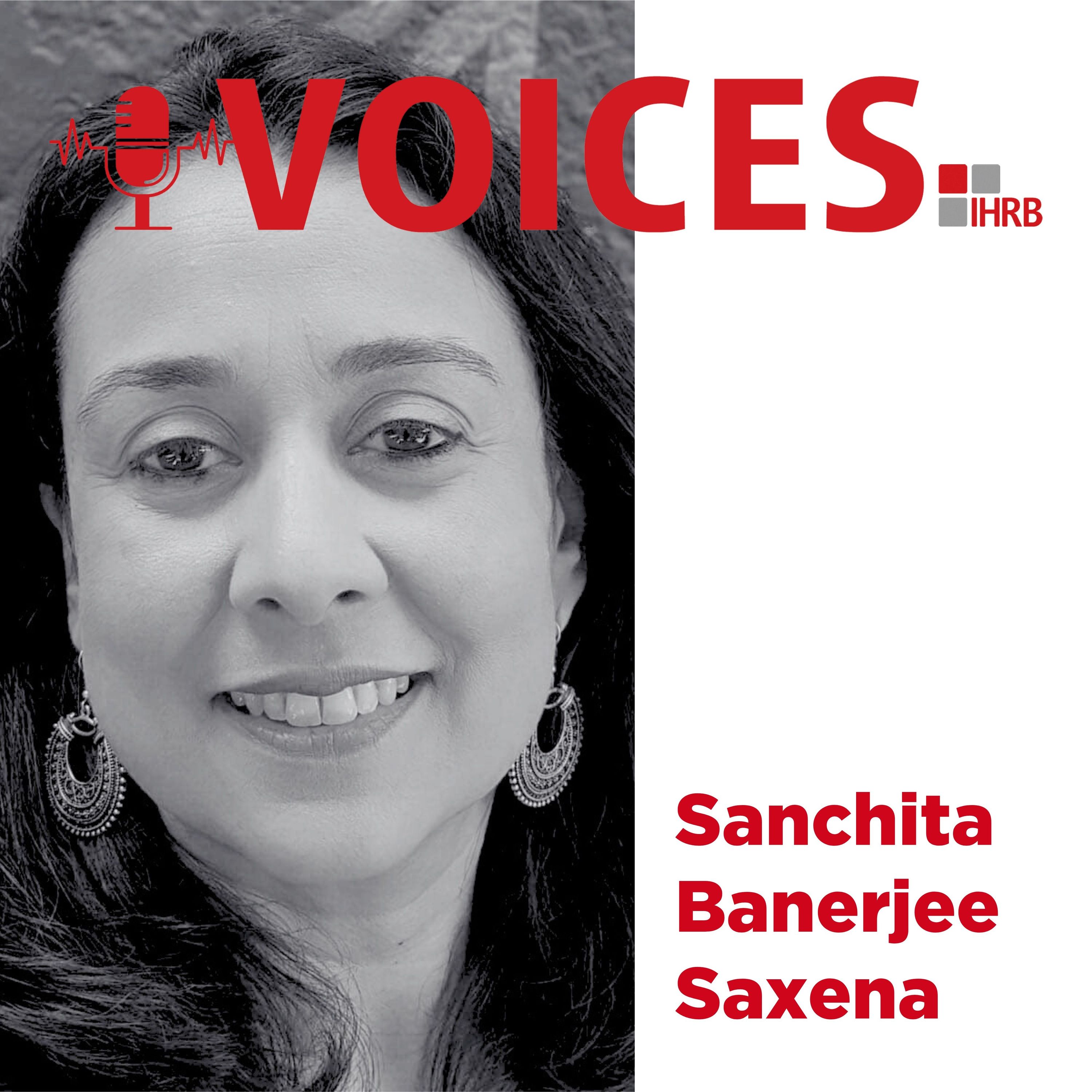
Rana Plaza disaster: what are the lessons for human rights and business?
April 24 marks the ten-years since the collapse of the Rana Plaza building in Bangladesh. What did we learn from this disaster about how businesses and governments can better protect the rights of workers?
Salil and Sanchita examine the impacts of the disaster and consider the renewed action needed to stop a similar tragedy from happening again. You will also hear Salil speak to Nazma Akter, a f
Constructive or Confrontational Dialogue? Engaging business in human rights, with Peter Frankental from Amnesty International UK
In this episode you’ll meet Peter Frankental, an expert in human rights and business, and the Economic Affairs Programme Director at Amnesty International UK. Having marked 25 years at Amnesty, Peter shares his reflections and lessons about attitudes of business towards human rights since the 90s.
Muetter Iliqud on the Use of Uyghur Forced Labour
Muetter is a project analyst at the Uyghur Transitional Justice Database (UTJD), based in Norway. The UTJD is an ongoing project that focuses on the registration of the disappeared and extrajudicially interned Uyghurs in East Turkistan. The UTJD project was founded by the Norwegian Uyghur Committee (NUC) in 2018; Muetter has served as the Head of Communications for the NUC, and as project analyst
Eli Friedman on the Urbanization of People
China has seen large-scale migration of workers from rural into urban areas. While the phenomenon of “left behind children” in rural areas has been widely reported, many children travel with their parents to cities. Given barriers to accessing public services that rest on a residency-status policy known as “hukou”, many of these migrant worker children are educated in privately-run migrant schools
Adriano Nuvunga on Being an Anti-Corruption Human Rights Defender
Adriano Nuvunga is a courageous anti-corruption activist from Mozambique who has played a leading role in building civil society institutions in Mozambique. At the Centre for Public Integrity, he raised many challenging questions about corruption in Mozambique. A keen critic of the extractive sector and how it affects political systems, he has been threatened personally but he continues to advocat
Anton Mifsud-Bonnici on the Role of Business in Conflict
Anton Mifsud-Bonnici is a Mediterranean-based independent business advocate. He specialises in ESG master strategy related to the low carbon energy transition. He is a thought leader on governance and an expert in stakeholder management and relationship building. He serves as a Commissioner overseeing the ongoing review of the Voluntary Principles on Security and Human Rights multi-stakeholder ini
Egbert Wesselink on Corporate Crime and Sudan
Egbert Wesselink is a historian by training and serves as Senior Advisor with PAX, the Dutch peace movement. Before joining PAX he worked at the Dutch parliament, as a teacher in a French Lycée d’État, as Human Rights officer with UNTAC, and as a Russia/Caucasus expert with the UNHCR. He has been deeply involved with civil society in Russia and continues to be so today.At PAX, he leads the progra
Mark Dickinson on the Updated Maritime Labour Convention
Mark Dickinson began his maritime career at age 16 and has been advocating for seafarers for several decades. He was instrumental in the original drafting of the Maritime Labour Convention, and leads the seafarers' representatives delegation at the STC in pushing for improvements to the convention.
SO8E20 Spenser Bomholt Fain on the Digital Training Platform Quizrr
In this Voices Podcast Neill Wilkins from IHRB talks to Spenser Bomholt Fain, Global Programme Manager at Quizrr a digital training platform which is used in the supply chains of a growing number of International Brands. Jump-to points: (1:00) What is Quizrr?(3:34) How does Quizrr work?(5:20) User centricity in Quizrr’s work(6:00) Suppliers gain from Quizrr(9:00) Quizrr and Responsible Recruitment

SO8E19 Transparentem on Social Audit Deception
Jump-to:(00:45) The case of labour rights in the apparel industry(1:30) What is Transparentem?(2:50) What does the Transparentum report cover?(4:35) Audits beyond the apparel industry(7:00) Suppliers and their methods to conceal labour abuses(8:00) Why would workers lie during audits?(11:10) Concerning examples of recruitment agencies methods for extortion (15:30) Do legislations on supply chains
S08E18 Saul Díaz on the Reintegration of Returning Migrants
S08E17 On Utopias and the Climate Crisis with Danilo Palazzo
The dystopian mood music surrounding the United Nations 26th annual climate change conference (COP26) is stark. Government and business leaders are not meeting the targets set in the landmark 2015 Paris Agreement, and humanity is quickly running out of time to correct course.
In this special episode of Voices, IHRB’s Haley St. Dennis and John Morrison unpack the concept and study of dystopian and

S08E16 Archana Kotecha on Access to Remedy for Migrant Workers
S08E15 Sophia Kagan on Technology for Responsible Recruitment
S08E14 Nissara Spence on Employer Obligations and Cultural Sensitivity
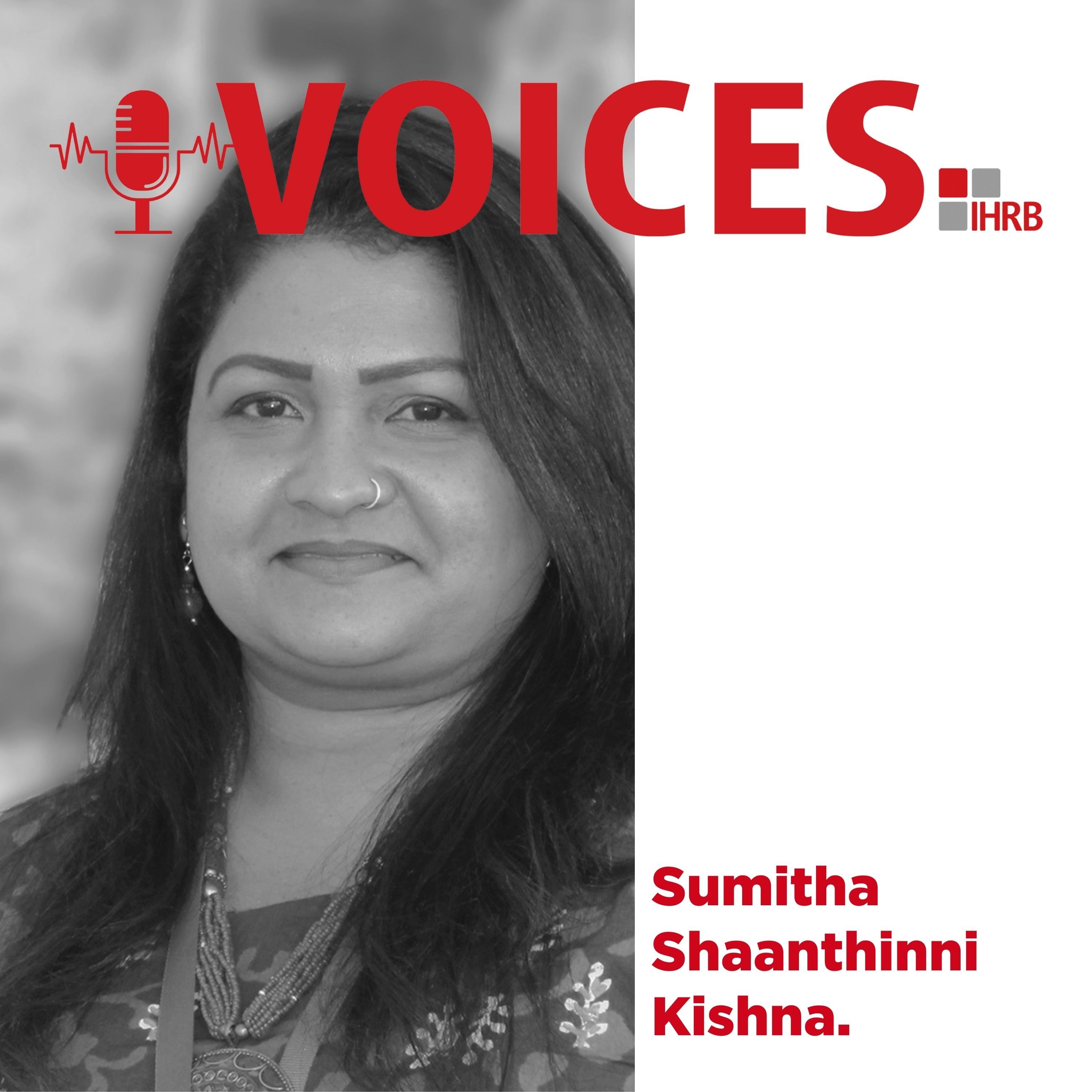
S08E13 Sumitha Shaanthinni Kishna on Malaysia, Migrants, and the Pandemic
Jump-to points: (03:20) The work of Our Journey in Malaysia(4:40) The impact of the pandemic on migrant workers in Malaysia(07:00) The additional burden on women(8:44) The risks for businesses in the absence of effective enforcement of migrant workers' rights(12:00) The active role of businesses and what businesses should do to avoid unethical recruiting (24:45) The need to strengthen the collab
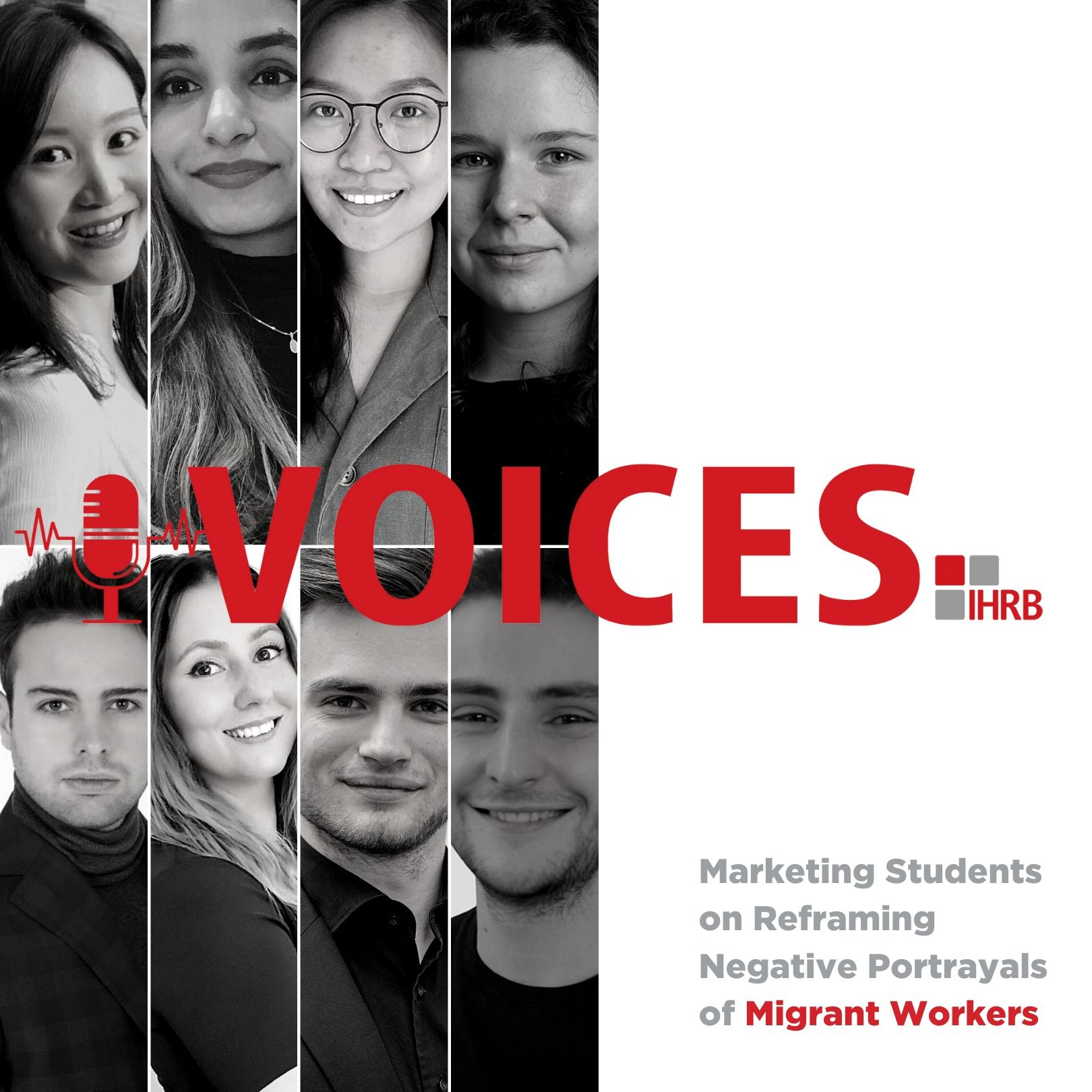
S08E12 Marketing Students on Reframing Negative Portrayals of Migrant Workers
PART I: #InvisibleHeroes Team(02:46) Why Singapore? (07:23) A pronged strategy: Social media + cultural fairs + employee engagement(09:34) Scaling migrant workers stories on social media(12:50) The power of cultural fairs in making human connection(16:04) Breaking down silo’s across employees through mentoring(20:15) The importance of branding and messaging to tell stories effectively PART II: #NF

S08E11 Andrew Stephens and Simon Bennett on Delivering on Seafarers’ Rights
This Day of the Seafarer podcast brings together Andrew Stephens of the Sustainable Shipping Initiative (SSI), and Simon Bennett of Swire Shipping to reflect on the ongoing maritime crew change crisis and wider human rights issues among the world’s 1.6 million seafarers.
In conversation with IHRB's Francesca Fairbairn, they discuss the impact on seafarers of being unable to disembark ships, somet
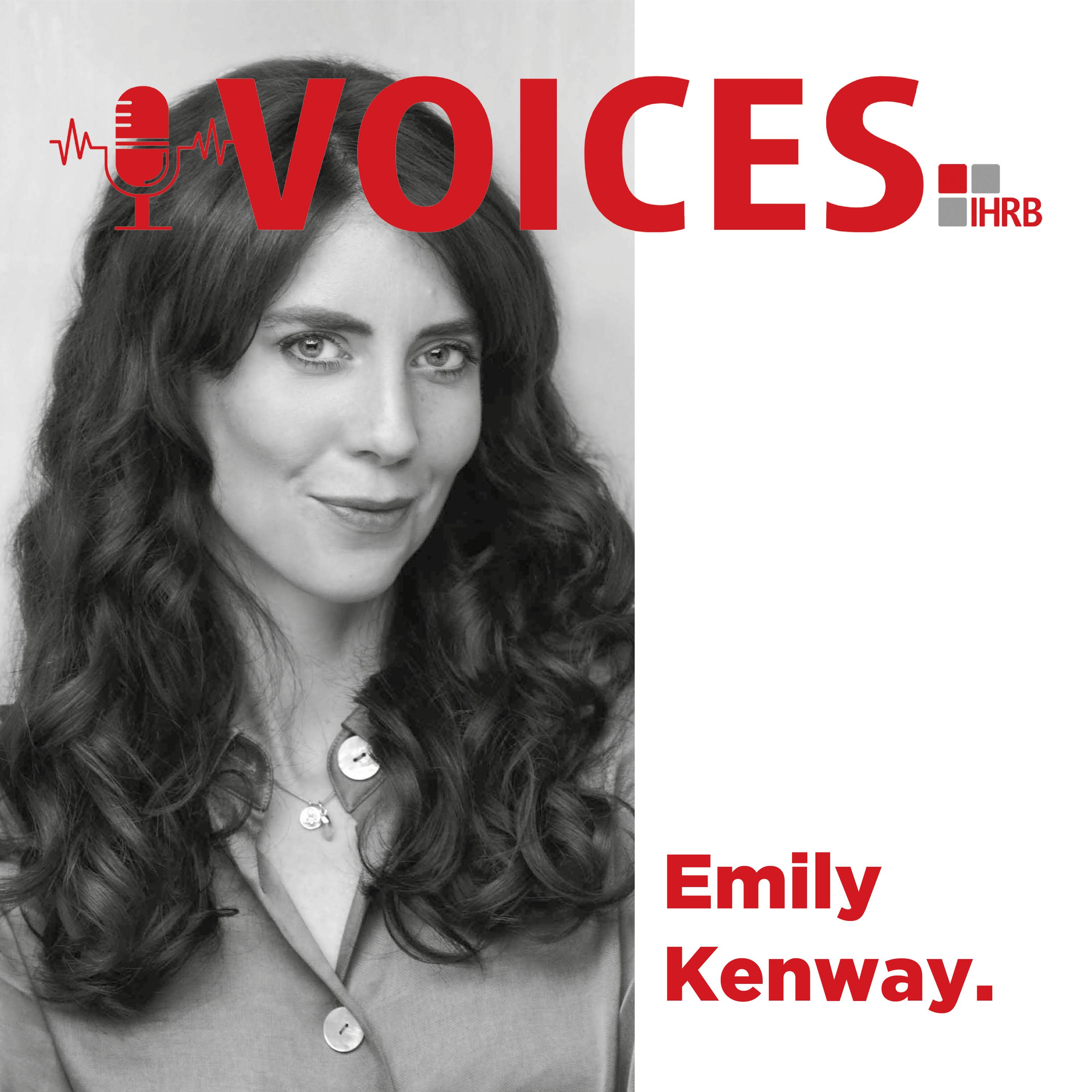
S08E10 Emily Kenway on The Truth About Modern Slavery
Emily Kenway is an activist and author who was involved with the establishment of the office of the UK and slavery, Commissioner, where she was responsible for private sector engagement and has also worked for a number of organisations focused on Labor rights in both the UK and abroad.Find out more about the book
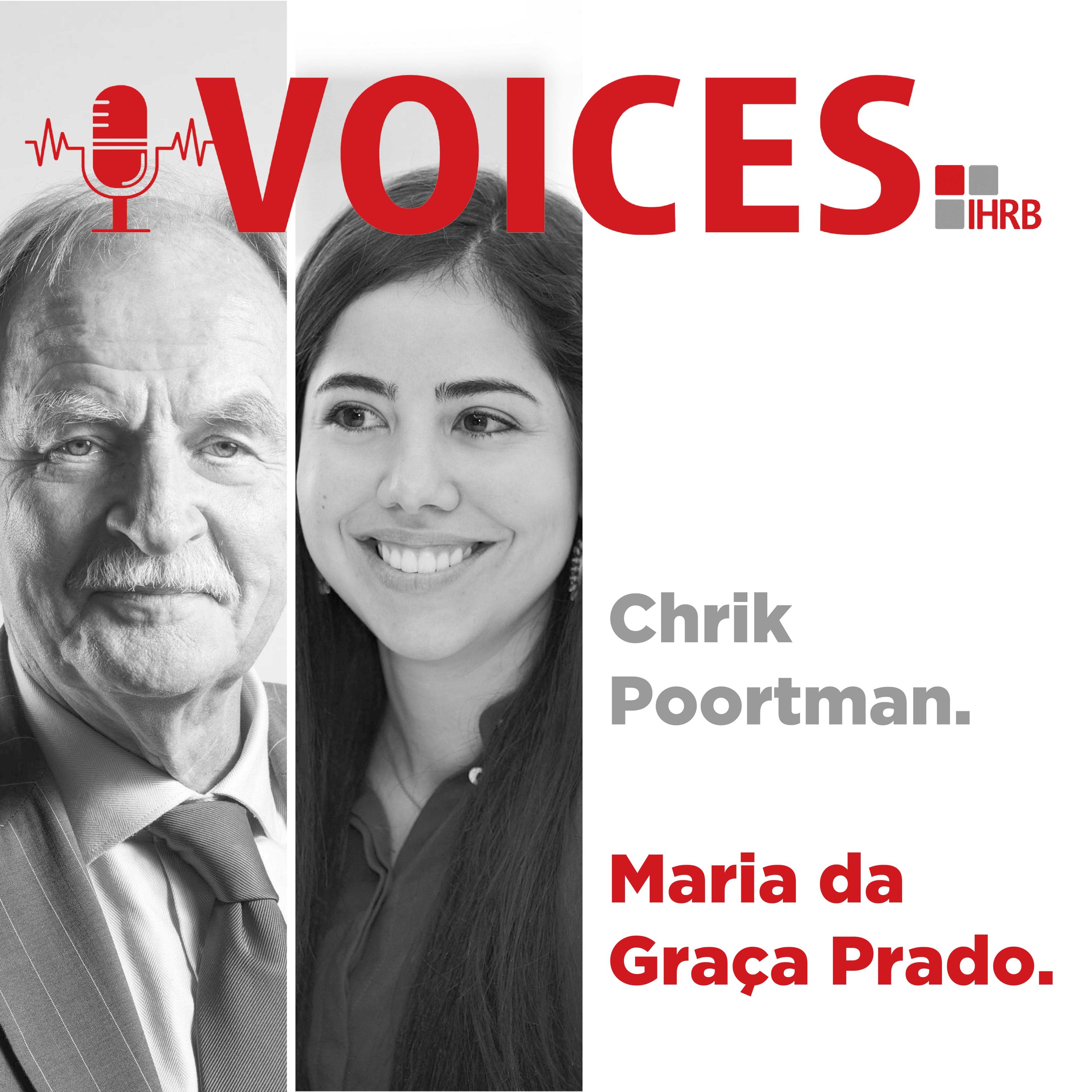
S08E09 Chrik Poortman and Maria da Graça Prado on Corruption in Infrastructure
Chrik Poortman has chaired the CoST Board since 2011. In addition to his role with CoST, he is Senior Adviser at Transparency International, where he was Director of Global Programmes for the International Secretariat until 2010. Prior to TI, Chrik worked for the World Bank in many regions. Maria da Graça Prado is CoST’s Senior Policy & Research Adviser. She is a legal professional whose experienc
S08E08 Felicitas Weber on Benchmarking Responsible Recruitment
Know the Chain is a resource for companies and investors that ranks the 180 largest global ICT, food, and apparel companies on their efforts to address forced labour in their supply chains.

S08E07 Francesca Mangano on Addressing the Crew Change Crisis
Hundreds of thousands of seafarers are still stranded at sea due to port restrictions. The global crew change crisis, one of the Top 10 Business and Human Rights Issues for 2021, is now well into its second year.About Francesca Mangano and TFG LondonFrancesca Mangano is the CSR and Sustainability Executive at TFG London. As head of the CSR and Sustainability Department, and with over 15 years' exp
S08E06 James Cockayne on The Sustainable Development Case for Ending Modern Slavery
A new report Developing Freedom from the UN University suggests a new way of understanding and addressing slavery may be helpful. If slavery is a systemic issue deeply embedded in economic models which deny people any agency, how could improved development outcomes and the realisation of the Sustainable Development Goals be used to understand the drivers and leverage better responses to prevent ex
S08E05 Bibek Dhakal on Supporting Migrant Workers in the Gulf
About Shramik SanjalShramik Sanjal is a membership-based, worker-led network of migrant workers. Most members are low-income migrants in the Gulf states and Malaysia. Shramik Sanjal work to educate, empower, and support migrant workers and advocate for the right of migrant workers to live and work abroad with dignity and with respect for rights.
S08E04 Miranda Sissons on Facebook's First Human Rights Policy
In March 2021, social media giant Facebook released its first human rights policy. Given the multiple challenges the company faces on a range of human rights issues, the announcement has generated great interest and questions about how it will be implemented. Few companies have an impact on society as vast as Facebook does. By offering a social network that brings together 2.8 billion users, it re
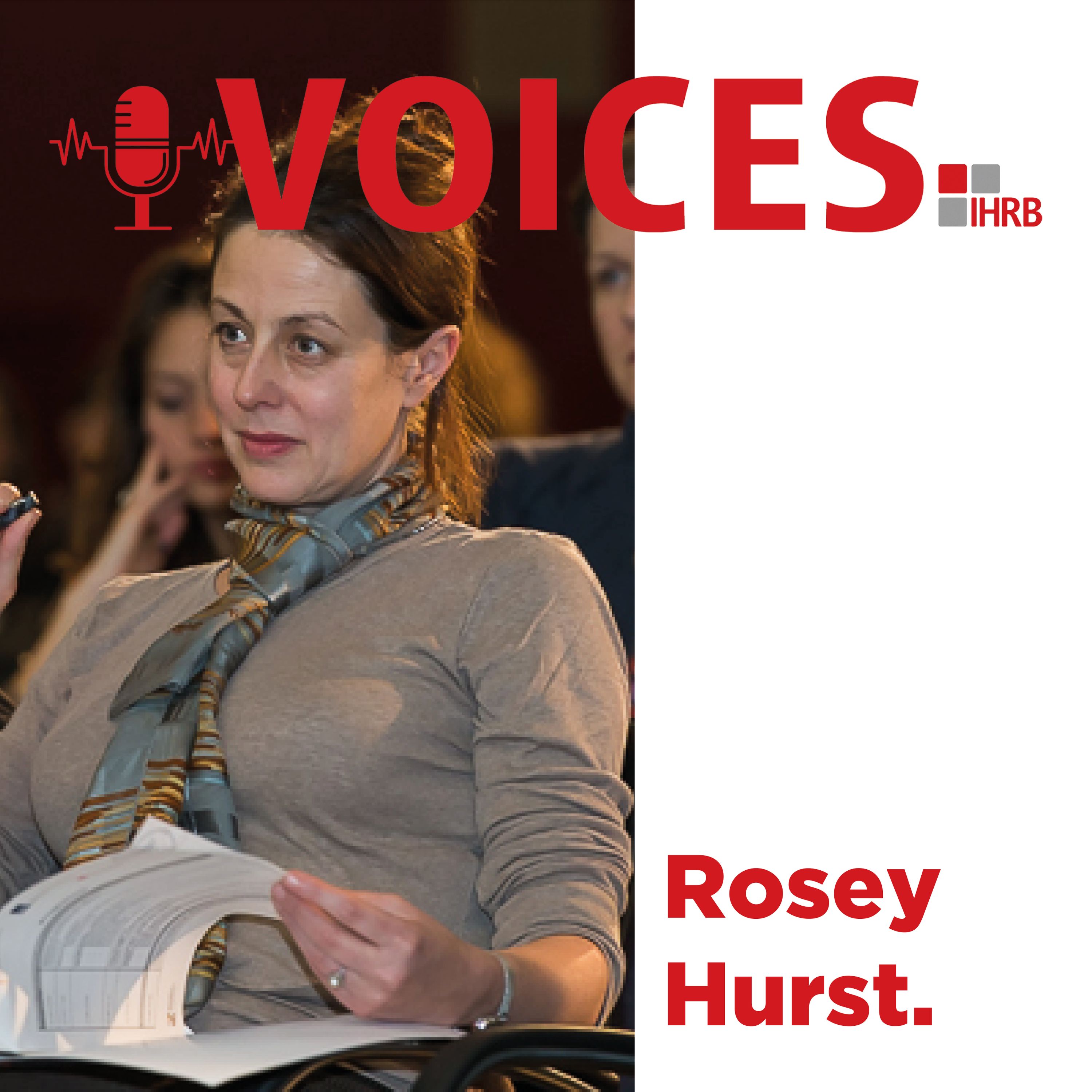
S08E03 Rosey Hurst on Repaying Recruitment Fees
About Impactt:Founded in 1997, Impactt were founded in 1997 specialises in ethical trade, human rights, labour standards and international development – working with organisations to improve working conditions and livelihoods, across global supply chains.Read more about Impactt's standards for maximising the impact of repayment of recruitment fees here: https://impacttlimited.com/standards-for-rep
S08E02 Kate Pike on the Mental Health of Stranded Seafarers
Dr Kate Pike is Associate Professor Emeritus at Solent University and Director of Field Research, a company specialising extensively on the social science and human elements of the maritime industry. Kate is an experienced maritime researcher with applied expertise and project experience in seafarer’s welfare, gender equality and diversity, management and leadership and on-board safety cultures. K
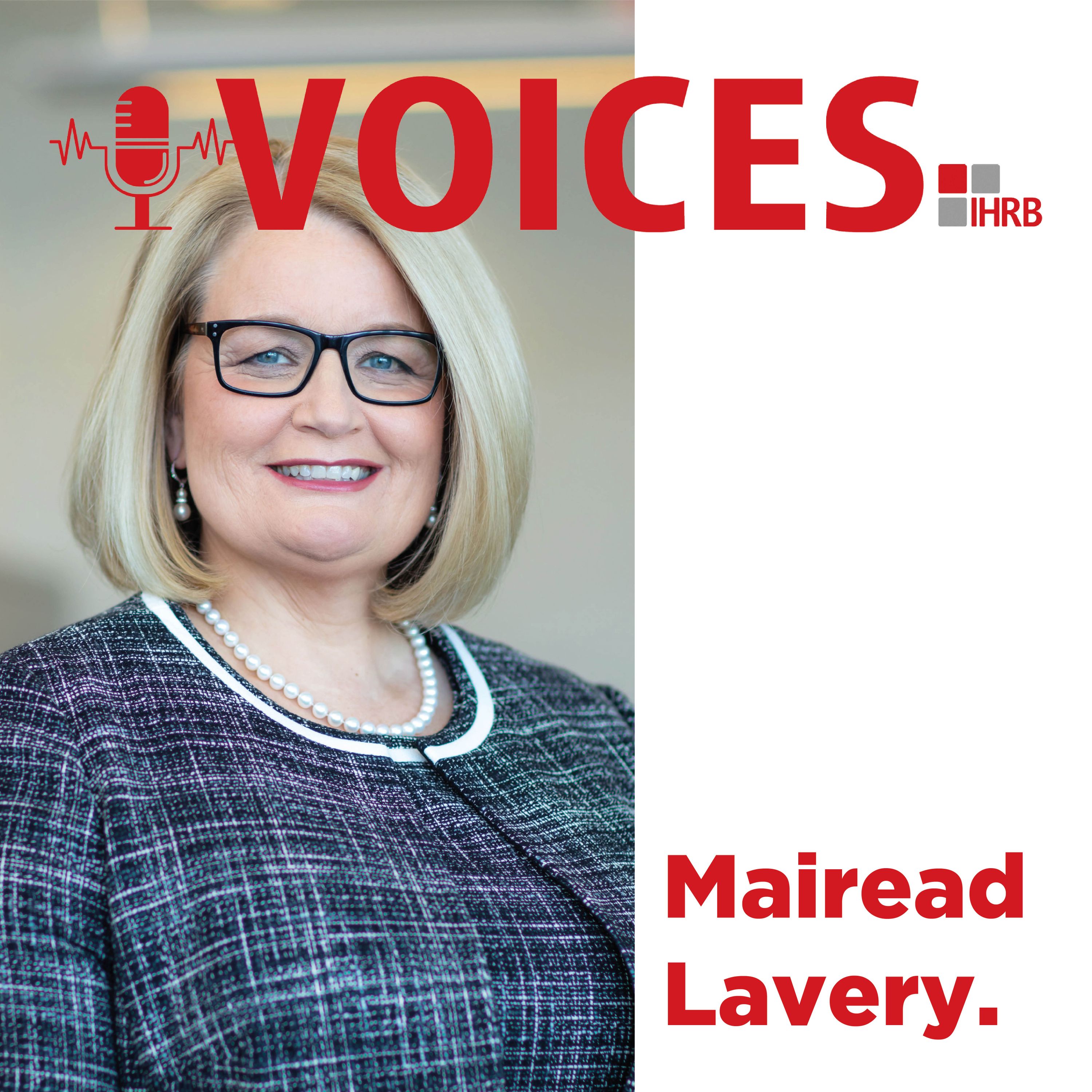
S08E01 Mairead Lavery on Export Finance and Just Transitions
Export Development Canada (EDC) is a Crown corporation dedicated to helping Canadian companies of all sizes succeed on the world stage. As international risk experts, we equip them with the tools they need – the trade knowledge, financial solutions, equity, insurance, and connections – to grow their business with confidence. Read more: https://www.edc.ca/
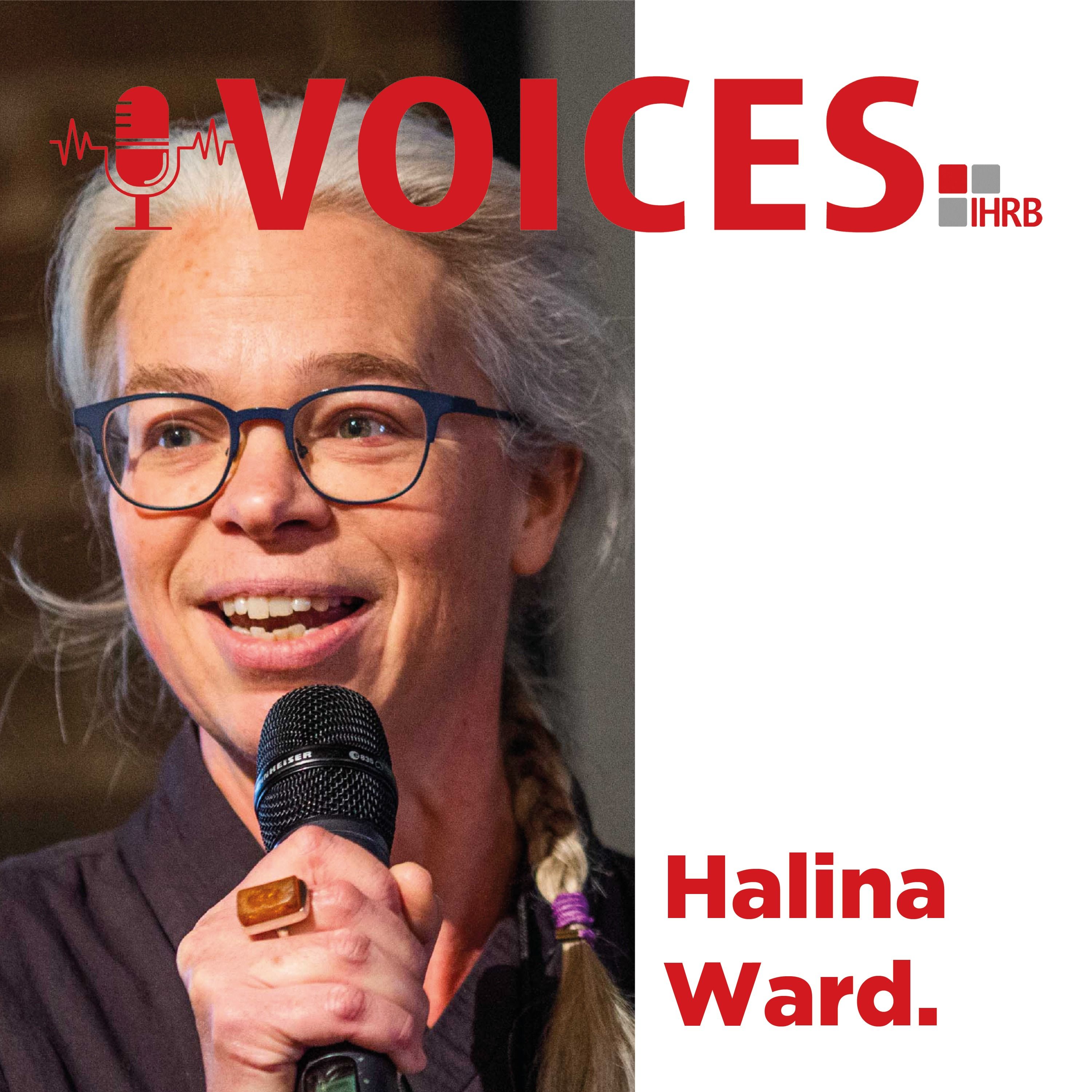
S07E16 Halina Ward on Just Transitions
Climate action needs to happen fast. But it also needs to be participatory and fair. This is where the growing agenda around a ‘just’ transition to a zero-carbon future comes in.
In this episode of Voices, IHRB CEO John Morrison speaks with Halina Ward, author of IHRB's latest report, about the ways that business and human rights good practice can strengthen implementation of just transitions.