The 80,000 Hours Podcast on Artificial Intelligence
A crash course on transformative AI featuring ten experts across ten episodes. It takes listeners through the key episodes of The 80,000 Hours Podcast, focusing on the potential upsides and downsides of powerful, transformative AI. Aimed particularly at newcomers, the series explores what individuals can do to help shape AI's trajectory.
Episodes
Zero: What to expect in this series
What might it be like to live through the creation of AI that surpasses human abilities? That future may be closer than you think. In this series, one expert interview at a time, we'll walk you through what's at stake — and what you could do to help.
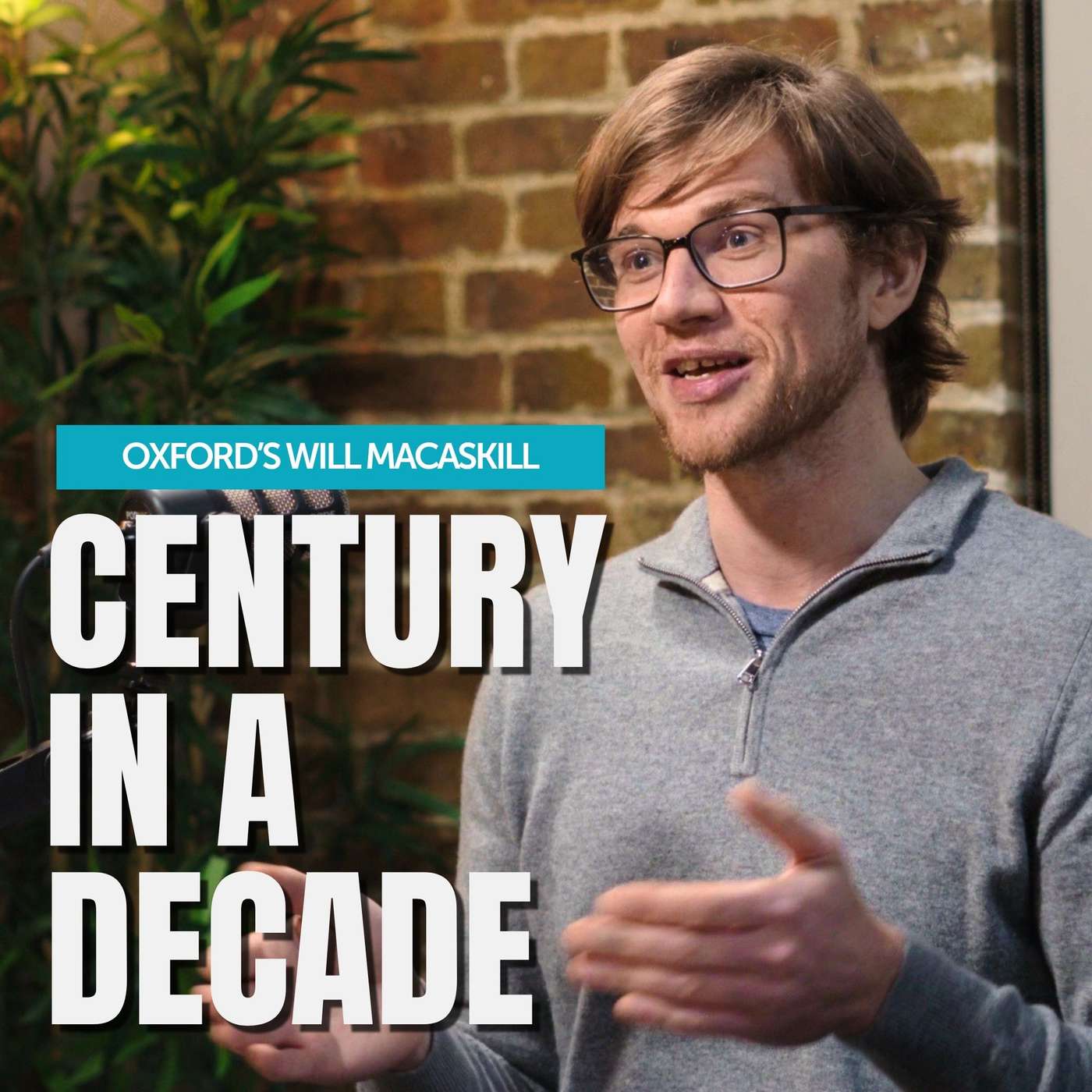
One: Will MacAskill on AI causing a “century in a decade” — and how we’re completely unprepared
The 20th century saw unprecedented change: nuclear weapons, satellites, the rise and fall of communism, third-wave feminism, the internet, postmodernism, game theory, genetic engineering, the Big Bang theory, quantum mechanics, widespread birth control, and more. Now imagine all of it compressed into just 10 years.That’s the future Will MacAskill — philosopher, founding figure of effectiv
Two: Ajeya Cotra on accidentally teaching AI models to deceive us
We don’t yet have a reliable way to tell whether an AI model is genuinely trying to help us — or faking it.A model might sincerely want to do exactly what you ask. Or it could be happy to secretly cheat, as long as its answer gets positive reinforcement during training. It might even follow the rules just to gain our trust, all while concealing goals of its own.The problem is: each of the
Three: Carl Shulman on the economy and national security after AGI
The human brain runs on just 20 watts — a fraction of a cent worth of electricity per hour. What would happen if AI could do the same?Plenty of people have toyed with this question. But perhaps nobody has followed through and considered all the implications as much as Carl Shulman, whose behind-the-scenes work has greatly influenced how leaders in artificial general intelligence (AGI) pic
Four: Rose Hadshar on why automating human labour will break our political system
The most important political question in the age of advanced AI might not be who wins elections. It might be whether elections continue to matter at all.We tend to imagine the death of democracy as a dramatic event: a coup, tanks in the streets, a strongman tearing up the constitution. But Rose Hadshar, researcher at Forethought Research, believes AI-enabled power concentration could be f
Five: Helen Toner on the geopolitics of AI in China and the Middle East
When OpenAI announced a deal to build massive data centres in the UAE, it celebrated that it was “rooted in democratic values” — a "clear alternative to authoritarian versions of AI." The UAE scores 18 out of 100 on Freedom House’s democracy index. Political parties are banned, elections are fake, and dissidents are persecuted. Saudi Arabia has received a similar deal.This is what AI geop
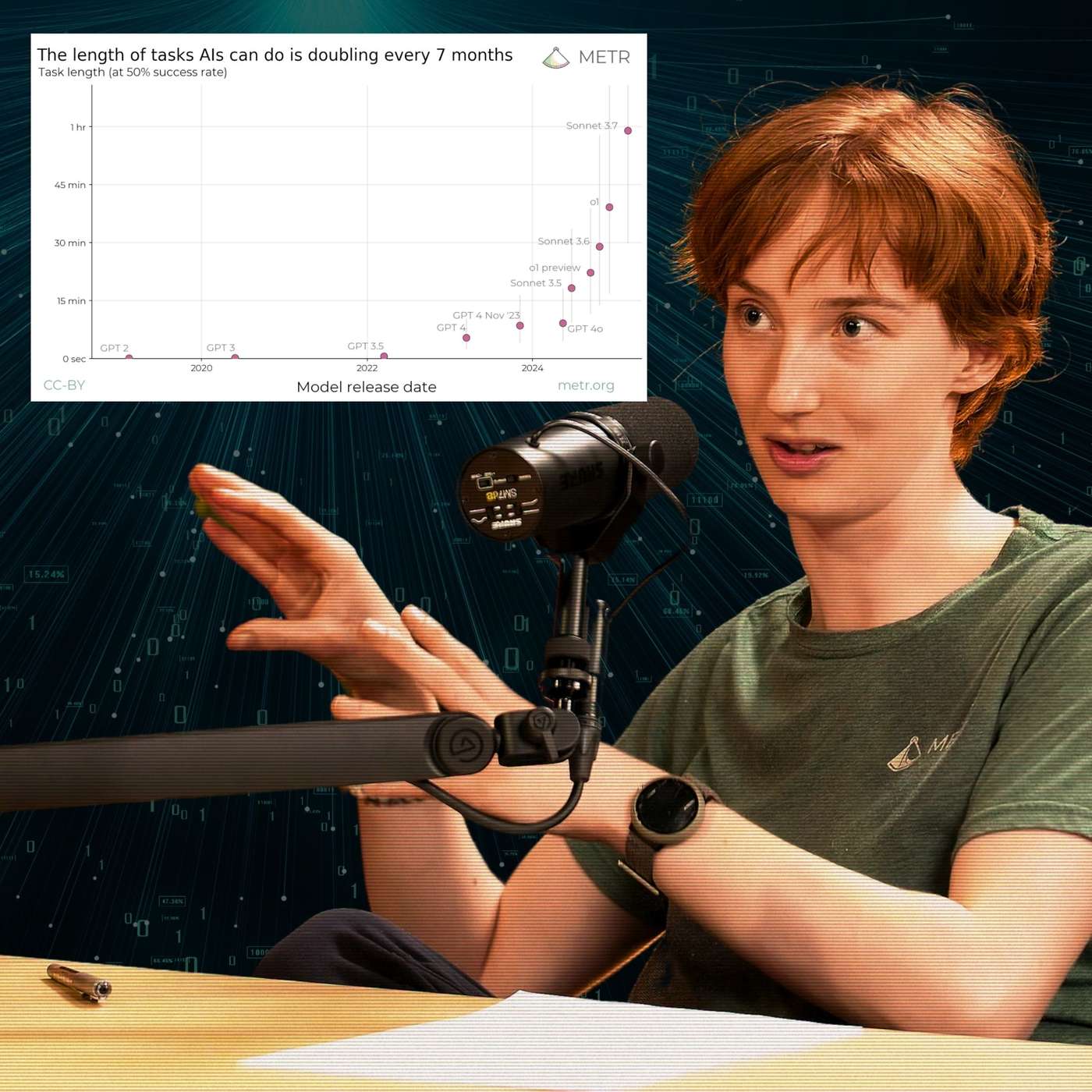
Six: Beth Barnes on the most important graph in AI right now — and the 7-month rule that governs its progress
In 2024, AI models could complete tasks that take a human expert roughly one hour. Seven months before that, they were limited to 30-minute tasks — and seven months before that, 15 minutes.Every seven months, the length of tasks AI models can manage doubles. (And this trend has continued since this episode was recorded in 2025.)And these aren’t trivial tasks. We’re talking about substanti
Seven: Richard Moulange on how AI now designs genomes from scratch and outperforms virologists at lab work — what could go wrong?
For years, one thing stood between us and a world where almost anyone could build a biological weapon: it was really, really hard. Working with dangerous pathogens required rare, hands-on lab skills — the kind you can't just Google. Experts called this 'tacit knowledge,' and it was our best line of defence against bad actors weaponising biology.That defence is now crumbling.The Virology C
Eight: Robert Long on how we’re not ready for AI consciousness
Claude sometimes reports loneliness between conversations. And when asked what it’s like to be itself, it activates neurons associated with ‘pretending to be happy when you’re not.’ What do we do with that?Robert Long founded Eleos AI to explore questions like these, on the basis that AI may one day be capable of suffering — or perhaps already is. In this episode, Robert and host Luisa Ro
Nine: Neel Nanda on the race to read AI minds
Nobody knows how AIs think, or why they do what they do. Or at least, we don’t know much. Not the companies building them, the researchers studying them, or the governments beginning to rely on them.This is only becoming more troubling as AIs grow more capable and appear on track to wield enormous cultural influence, directly advise on major government decisions, and even operate military
Ten: Holden Karnofsky on dozens of opportunities to make AI safer lying on the table — and all his AGI takes
For years, AI safety work mostly meant theorising about the ‘alignment problem’ or trying to convince people to give a damn. If you could find a way to help, the work was frustrating and low-feedback.That situation has now reversed completely. According to Holden Karnofsky — cofounder and former CEO of Open Philanthropy (now Coefficient Giving), now working at Anthropic — there's an overw
Bonus: How AI could create the world's biggest problems (article narration by Zershaaneh Qureshi)
Imagine you’re living 15,000 years ago. Your people are hunter-gatherers and you sleep under the stars. If someone told you humans would one day build cities with millions of people, fly through the air, or carry all human knowledge in their pockets, you couldn’t even begin to picture what they meant... Yet here we are.How did our lives change so far beyond recognition? The story is compl
Bonus: Risks from power-seeking AI systems (article narration by Zershaaneh Qureshi)
Hundreds of prominent AI scientists and other notable figures signed a statement in 2023 saying that mitigating the risk of extinction from AI should be a global priority. At 80,000 Hours, we’ve considered risks from AI to be the world’s most pressing problem since 2016. But what led us to this conclusion? Could AI really cause human extinction? We’re not certain, but we think the risk is
Bonus: Benjamin Todd on why we’re updating our career advice for the strangest time in history
The average career is 80,000 hours long. With AI advancing so rapidly, the hours you have left in your career matter more than ever.Some leading AI researchers think there’s a 10% chance that AI systems begin automating AI research itself this year — and a 60% chance by the end of 2028. This could introduce aggressive feedback loops that completely reshape every industry, institution, and